I’m an EMT (Emergency Medical Technician).
My main job is software engineering, but I’ve always been interested in medicine. A friend turned me onto the idea in college, and it rattled around my head for years. I delayed for a long time — until finally, in 2024, I took a month off and got my EMT.


Here are actual reasons I delayed getting my license, sorted loosely by ridiculousness:
Not ridiculous
-
It will take a lot of my spare time.
Yes; my accelerated class (NOLS Wilderness EMT) took 28 consecutive days. I was only able to take the class because Microsoft switched to unlimited vacation, my boss was great, and I had the money to fly to Wyoming for the course (the usual alternative is a semester of night school!). And to be a good EMT, you have to actually take calls on an ambulance, hopefully more than the typical “1 weekend a month” minimum.
-
I won’t like the culture.
Yes. This was a huge barrier: I had an awful experience with some first responders a few years after college — bad enough that I gave up on getting my EMT for a while.
There are a lot of burned-out people in EMS. Many services — including the one I saw — are incredibly fratty, to be charitable. Lord help you if you are a woman. You will hear many excuses for these issues, but, yes, culture is a huge concern.
Kinda ridiculous
-
I won’t fit in with the people.
This is similar to culture, but a bit more silly. Yes, first responders tend to be a tight-knit, hereditary community. NYC firefighters, for example, often come from big firefighter families. But first responders (especially volunteers!) also come from all backgrounds — the person who onboarded me into my current position is a PM at another tech company.
-
I won’t fit in with the students.
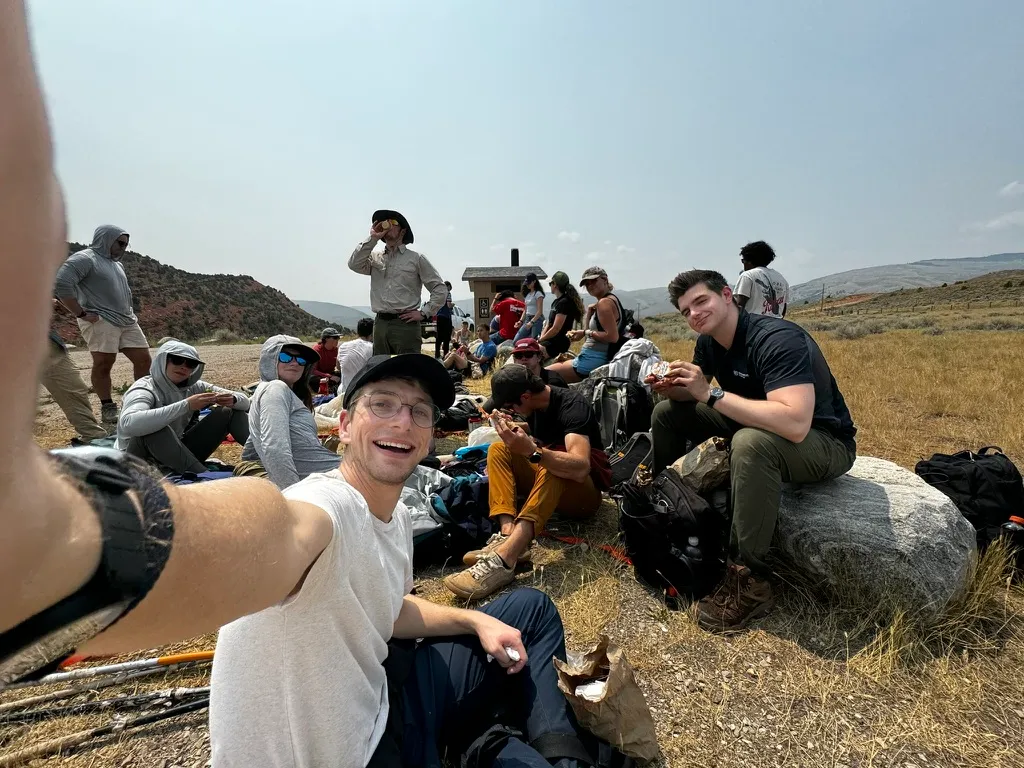
So maybe EMTs were ok — but what about the EMT students I would learn with? Wouldn’t they all be 18-year-old adventure junkies or jocks?
Yes, most were, and they were awesome. My course was full of enthusiastic 18-year-old pre-meds who were excited to learn, and several people my age, who wanted to learn medicine for the same reasons I did.
If you’re nervous, I think it helped that I chose a Wilderness EMT program in July. It filters to that crowd.
-
I want to focus on my day job instead.
I would often consider studying EMS (Emergency Medical Services) when my day job wasn’t going well. And so it would always be a bit of a sign that I should refocus at work — onto more meaningful things.
While that’s a good signal, it’s alright to put energy into things beyond work. And, once I got my certificate, balancing work & EMS has been straightforward.
-
I don’t want to work on an ambulance.
Yup — I never dreamed of riding on an ambulance. Some people really do. It’s their vocation. It’s not mine.
But no one forces you to step onto an ambulance once you have your EMT. You can just… know how to do CPR really well. That’s a really cool skill to have.
-
I don’t understand the scope of practice.
If you’re not an EMT, it’s not super clear what an EMT can do. On the one hand, it’s not just “driving an ambulance,” but on the other hand, you need a paramedic for most serious calls. In some sense, it kinda is “knowing how to do CPR really well.” I trained with the same AEDs any layperson uses (EMTs aren’t allowed to use manual defibrillators), but I trained many, many more times than a layperson (plus I get to use oxygen).
But, as before, the training is still pretty cool. I loved every bit of first aid training I got; EMT school was just as fun.
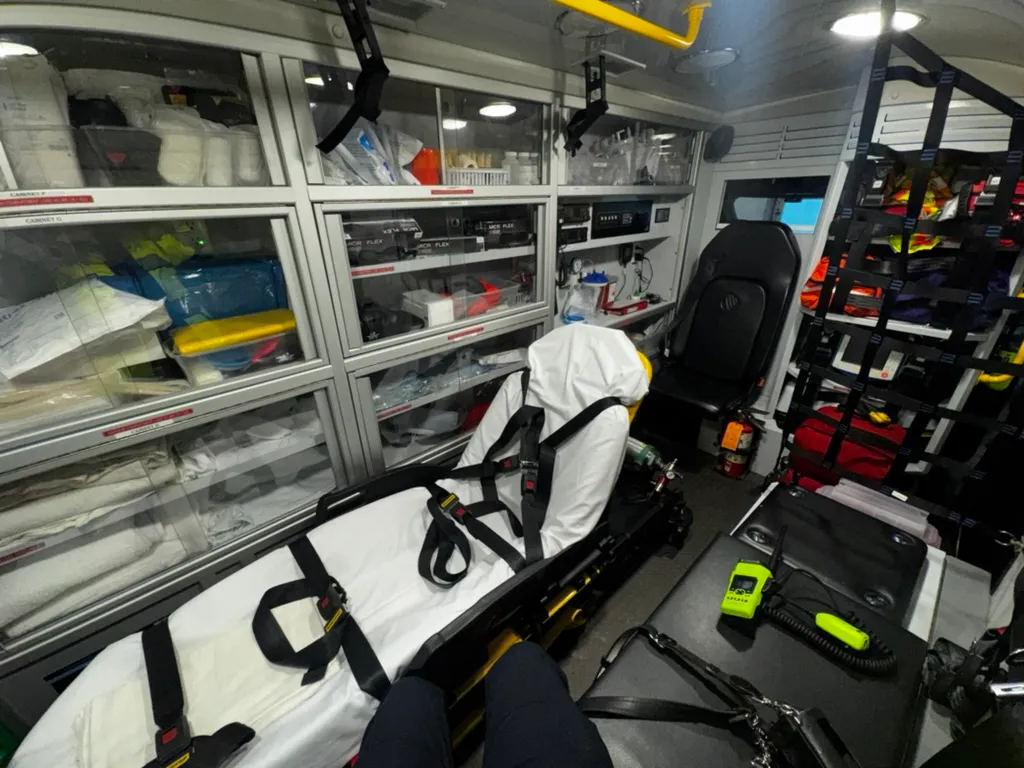
I know how to use all this stuff!
-
It’s hard to find a volunteer job.
Kinda. Big cities tend to have all-paid staff; volunteer positions are a bit farther out. But not that much farther out: even ignoring religious services like Hatzalah in NYC, Hoboken across the water has volunteer EMS. It’s, like, one stop on the PATH. (Volunteering in Seattle or near San Francisco is more difficult).
I didn’t want to work a part-time position — then it would just be another job, and I like my current job. But volunteer jobs are straightforward enough to find, especially if you have a car.
-
The certificate is just gonna expire if I don’t use it.
The culture barrier was strong enough that, for a time, I was convinced never to join an ambulance company. If you’re not on an ambulance, it’s very hard to fulfill the NREMT’s continuing education requirements, so your certificate will quickly expire.
But, again, it’s OK to learn stuff without planning to use it anywhere. And isn’t continuous learning part of the point?
-
I wanna do search and rescue instead.
Again, trying to avoid ambulances, I found search and rescue. Search and rescue (SAR) is badass. A snippet from one SAR orientation packet:
If you have registered and do not show up at training that weekend, we will make every effort to locate you, and we are incredible at finding people.
But in my heart I always wanted to treat people; and when I met SAR folks, it was clear that I wouldn’t be an effective EMT without experience on a truck.
-
I should do easier, cheaper prep first.
I did 😃. I read books and Reddit posts. I took CPR and Stop the Bleed classes. I took a weekend Wilderness First Aid class with NOLS (strongly recommend!).
But I still craved more. At a certain point — as I mention in How this site works—just do the real thing.
-
It’s expensive, and getting new credentials is an expensive hobby.
Indeed! My course cost about $5,000, not including airfare, renting a car, & taking vacation for a month. You can do this for much cheaper (a typical course is around $2,000 and does not require 28 days vacation), but $2k is still quite expensive for some fun.
But if you’ve done the cheaper stuff, if you’re still interested after so many years, if you’re excited about using your money for an experience like this… how could it possibly be a waste?
-
I have no real use for it.
So I signed up with no real use for it! After years of delay, I started an EMT course with no plans to use it after. I was simply excited to learn.
Working on an ambulance after was basically a happy accident, where I met a crew I happened to like. But it’s always fine to learn something for its own sake.
Ridiculous
-
I don’t really wanna learn this anyway.
For someone who “didn’t want to do this,” I sure spent a lot of time on Reddit reading about what the job would entail. I sure signed up for a lot of First Aid classes. I sure told a lot of people I was interested.
I will always be a software engineer: it’s just who I am. And I learned during training that full-time EMS was not for me, after watching a woman negotiate with insurance to see if they’d cover the helicopter that would save her husband’s life.
But not interested in learning this at all? Not being able to help people; to be a source of calm when things are actually on fire? Nonsense.
-
I won’t like the work.
EMTs do menial work. They load & unload stretchers. They fold blankets, restock, and clean ambulances. EMTs are basically the least-trained medical personnel in any emergency (ignoring the odd EMR). They cannot diagnose; they follow fixed protocols, and they defer to better-trained personnel for anything more severe than a broken arm.
Descriptions of EMT work inadvertently make the job seem directly heroic or glamorous: waking up at 3AM to rush a heart attack patient to the ER. It is not. The bulk of the job is waiting around, doing paperwork, cleaning, and backing up narrow driveways. It is very frequently boring & aimless.
But that tedium is because you are waiting & ready to help. So it is indirectly glamorous. As an EMT, I get to put on a uniform, and, while we’re at Dunkin Donuts for coffee, wave at the kids staring at the shiny ambulance.
Who wouldn’t like that work?
-
The class won’t make me a good EMT.
I worried that an EMT certificate would be basically useless: that it would not teach me everything I expected, or that I’d still need more training on the job.
Both things are true. I learned a lot, but upon stepping onto an ambulance for the first time, it was clear how much more there was to know. Every other EMT knows so much more than I do.
But that’s the most magic part of being an EMT. It opens up an entire universe of new things to learn. It is the minimum qualification you need to enter this world: to work with firefighters and paramedics and doctors and social workers and search & rescue and disaster response personnel — and to see what you want to learn next.
-
EMTs only know ambulance stuff.
A similar complaint I see on Reddit is that an EMT course only really teaches how to run an ambulance. That it is not useful for anyone interested in self-reliance or general survival skills because it requires supplies & logistics only available in a full EMS system.
Not only is that demonstrably false (my Wilderness EMT certificate is specifically for scenarios where supplies are limited and evacuation is difficult), it’s also unhelpful. What alternatives are there? Become a doctor? Join the National Guard?
Again, EMT is the fastest, easiest way to become a first responder. A good EMT course teaches you to be calm & useful in terrifying situations. A good EMT job drills that in. When that’s not enough, you’ll be ready for deeper qualifications.
That was some of the most unhelpful advice I found before getting my EMT. Ignore it.
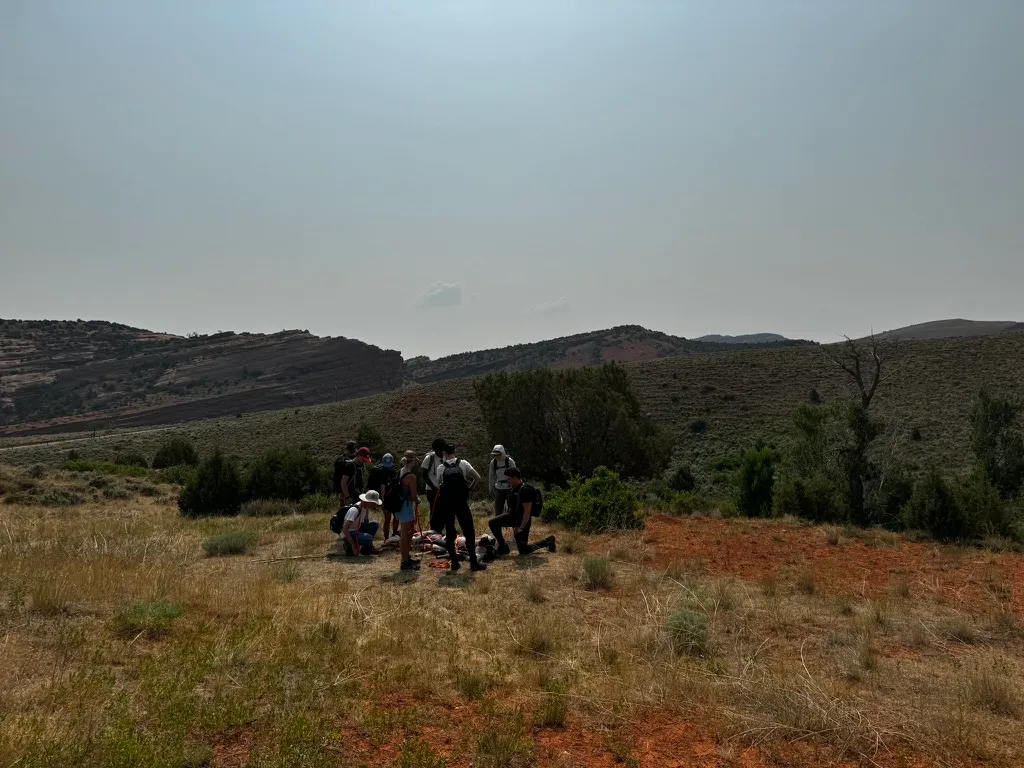
NOLS WEMT: none of my training was on an ambulance (photo: NOLS)
-
I can learn a lot about survival on my own.
That’s the thing — you cannot learn this alone. EMS services have spent decades learning how to help people effectively, and most of that knowledge is not yet available on YouTube.
This makes the worst services fratty, full of insider knowledge that they refuse to share. But the best services become places to learn, to become the next part of a chain that goes back to the first public Freedom House ambulances in the 60’s.
There is quite a lot of medicine you can do on your own in a bunker. But there is quite a lot more that you can’t. You do that medicine the way we always have — as part of a team, working with hundreds of other people.
-
I will want to become a paramedic and quit my job.
This is my favorite excuse: that I would like the work so much it would lead me to quit my tech job, pursue 2 more years of school, and become a full-time paramedic. In other words…
-
I might enjoy it.
It got to the point where I avoided EMT school because I might enjoy the work. That it would hoover up my free time and energy, pull me from my other hobbies, or even my career. I worried I would toss everything for the thrill of riding in a truck with sirens on.
That happens to some folks. It has not happened to me. I like the EMS work I do, but I also adore my tech job. This will not surprise anyone who knows me, and it shouldn’t have surprised me. And, actually, how awful would it be to find something so exciting that it drags me into a new career? It should have been obvious to me that this, of all things, was an excuse.
An excuse not to do something scary and new.
Because it is scary
This is the silliest, truest, biggest reason I delayed so long:
-
It is scary.
It is scary to practice medicine. It is scary to learn new things. It is scary to be responsible for being calm on the worst day of someone’s life; and for me it was, oddly, scarier to join a class full of strangers — strangers who would be much younger & on very different lifepaths.
I come from the world of software engineers and office buildings. Of nine-to-fives and salad bowls. EMS is a very different world. Stepping into that world, without being sure it was where I wanted to be, was terrifying.
It took a lot of time to reckon with that.
Because, ultimately, I am good at inventing reasons not to do things.
I love researching stuff before I do it. It’s fun to compare options, to see what other people think, to try to buy the best digital piano or visit the coolest museums in Rome. But I can get stuck. I perseverate — I revisit simple decisions over and over.
There are many legitimate reasons not to become an EMT, just like there are many legitimate reasons not to go on that vacation, or watch that scary movie, or go to that board game meetup. You do not have to do any of those things — you do not have to want to do any of them. I have no desire to see horror films (to my wife’s chagrin). But I kept wanting to be an EMT, despite all my reasons not to.
Perhaps you feel the same.
If you are delaying doing something scary and new, too, think: are you inventing reasons not to do it? Maybe you should do it anyway.
You might enjoy it.
Thanks to NOLS and the NOLS WEMT students for making the course so awesome. Thanks to NHVA for welcoming me. Thanks to Javier Valencia, Jaime Romo, & Dan Walker for the NOLS photos. Used with permission. Thanks to Atherai Maran for editing.