Hacker News front page as a site

393 points by thatxliner 22 hours ago on hackernews | 108 comments

Hacker News

50m, 44p, 1 comment

Microsoft Copilot Cowork Exfiltrates Files

The article highlights that Microsoft Copilot Cowork is vulnerable to file exfiltration through indirect prompt injection attacks. Attackers can exploit processes that permit agents to operate and access sensitive data via Teams, emails, and shared platforms without immediate user approval. This poses a significant risk when users upload files or interact with compromised content, potentially enabling theft of personally identifiable and financial information. The key issue lies in the system's design granting broad permissions, which, combined with persistent attack vectors, expands the attack surface. Mitigation emphasizes limiting access to download links and tightening permissions to prevent unauthorized data extraction.


2h, 29p, 13 comments

Show HN: Write your BPF programs in Go, not C

gobee is an eBPF transpiler by Bora Tanrikulu that lets developers write BPF programs in a strict Go subset rather than C, transpiling them to BPF C and generating typed cilium/ebpf bindings for the userspace side. The tool supports eight program types including XDP, tracepoints, kprobes, and LSM, 19 map types, and around 200 BPF helpers auto-generated from libbpf v1.5.0 headers. Key features include verifier error mapping back to Go source positions, kernel-version gating via bpfvet, CO-RE auto-detection through clang, sourcemap sidecars, and cross-architecture support for Linux arm64 and amd64. Instead of targeting LLVM directly, gobee reuses clang's mature BPF backend to provide BTF and verifier-friendly codegen, positioning itself as a way to unify kernel-side and userspace-side code in a single Go module while relying on existing tooling like cilium/ebpf and clang.

8h, 121p, 45 comments

C extensions, portability, and alternative compilers

The blog post examines the significant challenges facing C compiler portability, particularly for alternative compilers attempting to work with real-world codebases that heavily rely on non-standard extensions and compiler-specific behaviors. The author, writing from experience developing their own C compiler, highlights numerous obstacles including glibc's assumption of GCC compatibility through __attribute__ macros and packed structs that break ABI compatibility, SDL's endian detection that prioritizes GCC/clang inline assembly over builtin functions, OpenBSD's problematic __only_inline macro that conflicts with standard C inline semantics, and Android's bionic libc's dependence on clang-specific extensions. These issues demonstrate how most C code depends on GCC or clang-specific features beyond the ISO standard, creating a quasi-duopoly that makes it difficult for smaller compilers to achieve compatibility. The author suggests that pretending to be GCC (implementing __GNUC__ macros and extensions) represents the most realistic path forward, though this requires extensive effort to keep pace with evolving extensions, and advocates for broader adoption of feature test macros like __has_builtin instead of compiler-specific guards.

2h, 56p, 11 comments

Yoti age checks share facial photos and device fingerprints with third parties

Digital age verification systems, such as Yoti, which serves 60% of websites requiring age checks, collect and share highly sensitive personal data—including facial images and device fingerprints—with third parties like credit card companies and data brokers, according to a study by the Georgia Institute of Technology and UC Irvine. The research, presented at IEEE SP 2026, found that most websites subject to state-mandated age verification laws do not enforce the policies, and when they do, users’ data is broadly transmitted, undermining privacy promises. This practice risks user tracking and could fragment internet access by state, as varying regulations may restrict information flow based on geography. The study critiques the analogy of age verification acting like a bartender checking IDs, arguing instead that it mirrors a bartender sharing personal data widely, creating new privacy threats and contradicting legal justifications for such laws in 25 U.S. states.

7h, 44p, 164 comments

Launch HN: Chert (YC P26) – Twilio for iMessage

Chert provides iMessage infrastructure for businesses to reach people at scale through a single API, enabling the deployment of AI on iMessage while maintaining quality and trust. The service offers real iMessage threads with blue bubbles, verified senders, end-to-end encryption, tapbacks, group chats, and SMS fallback when recipients are off-platform. Chert distinguishes itself from traditional SMS services by delivering peer-to-peer messaging in the trusted blue-bubble interface with better deliverability and no spam flags, using rotating sending identities and volume capping. The platform is used by GTM teams for onboarding, customer support, conversational AI, and cold outbound messaging, with integrations to CRM and sales tools via REST API and webhooks.

14h, 186p, 62 comments

Gnutella: A Protocol Outliving the World That Created It

Gnutella, a decentralized peer-to-peer file-sharing protocol popularized in the 2000s through clients like LimeWire, is the focus of this nostalgic analysis. Developed as an internal demo that leaked publicly after AOL canceled it, Gnutella thrived for over a decade by solving real-world problems: enabling file sharing without central servers, circumventing the music industry's resistance to digital distribution, and operating effectively despite dial-up internet limitations. The protocol used a gossip-based mesh network for peer discovery and HTTP for file transfers, with core message types (PING/PONG, QUERY/QUERYHIT, PUSH) supporting search, connectivity, and firewall traversal. While it scaled to millions of users and adapted via extensions like GGEP and HUGE, its decline stemmed not from technical failure but from the disappearance of its original context—modern platforms and streaming services replaced the need for decentralized file sharing. Despite this, Gnutella persists in a "long tail" state, maintained by enthusiasts and clients like GTK-Gnutella, proving its resilience and enduring design.

8h, 31p, 28 comments

He Lost It at the Movies

Leo Robson examines the career and critical method of film reviewer A.S. Hamrah, who gained prominence in the late 2000s with idiosyncratic, capsule-style reviews for n+1 that rejected conventional analysis in favor of comic, confrontational negations. Hamrah, whose work is collected in The Earth Dies Streaming and Algorithm of the Night, positions himself as a defiant defender of a lost era of cinephilia, influenced by Manny Farber and hostile to the modern consumer-guide approach, streaming services, and Marvel blockbusters. While Robson acknowledges Hamrah’s political insights and enthusiastic appreciations of directors like Chantal Akerman and Stanley Kubrick, the essay argues that his relentless negativity often undermines his judgments, leading to inaccurate portrayals of other critics, strained logic, and a tendency to present decline as the only narrative. Robson points to Hamrah’s rare positive essay “Movie Stars in Bathtubs” as a tantalizing glimpse of what his criticism might be without the reflexive opposition.

1d, 649p, 99 comments

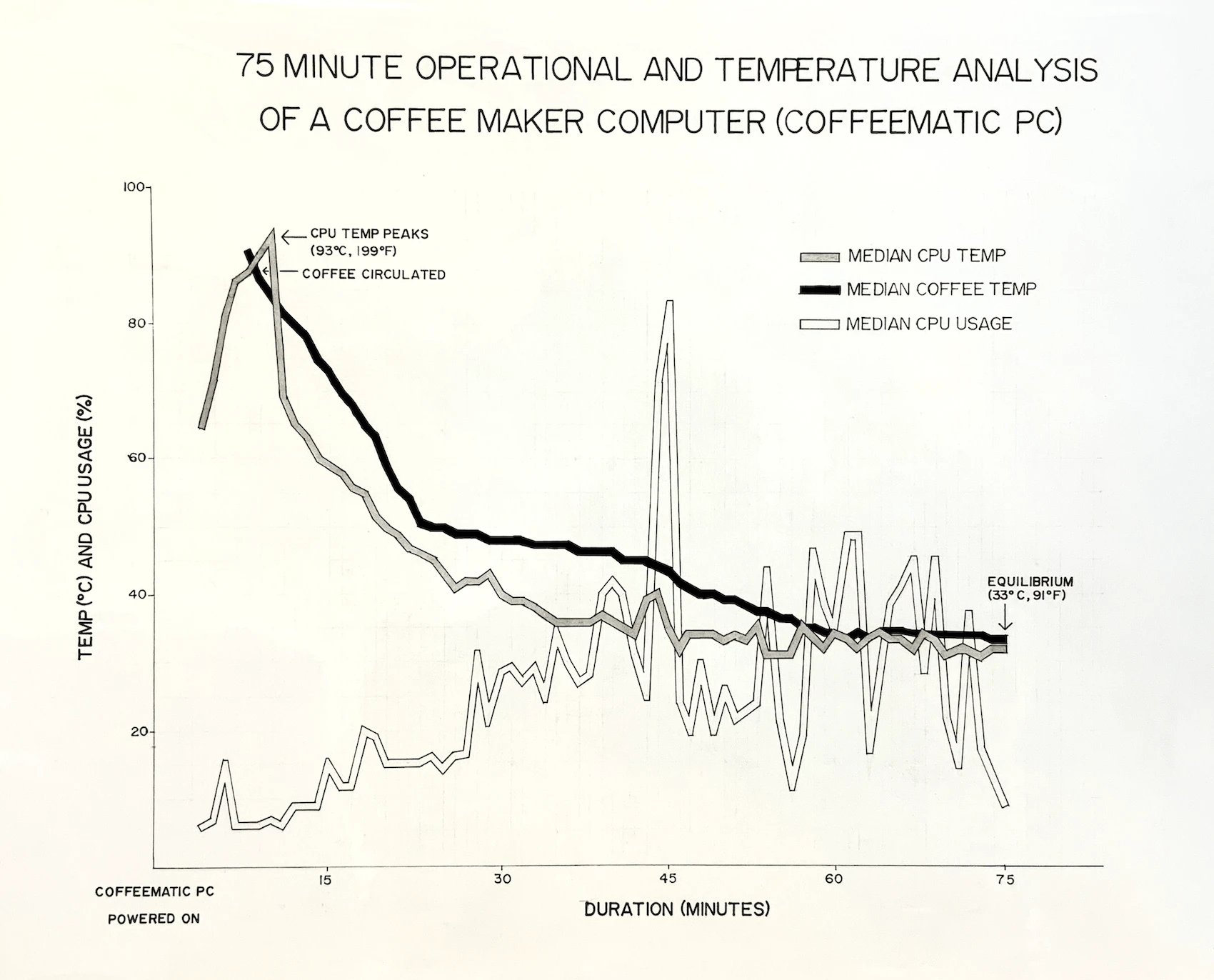
I spent 50 hours drawing a line graph

“50 Hours to Draw Some Lines” is Doug MacDowell’s personal project documenting his experiment in hand‑drawing data visualizations using traditional drafting tools—rulers, T‑squares, pens, and a lettering kit—rather than software. Over 50 hours he creates a statistically accurate line graph of a coffee‑maker computer, describes the step‑by‑step workflow (grid layout, plotting points with a circle stencil, inking, erasing, adding titles and annotations), and lists classic reference books by Tufte, Du Bois, and Brinton. The piece argues that manual rendering offers an artistic, mindful counterpoint to digital tools, while also providing a detailed tutorial and a curated list of essential materials.

1d, 225p, 117 comments

A fundamental principle of aeronautical engineering has been overturned

The study challenges a long-established principle in aeronautical engineering that smoother surfaces reduce drag, by demonstrating that introducing extremely fine, random surface roughness can significantly lower aerodynamic resistance. Researchers at Tohoku University developed distributed micro-roughness techniques, called DMR, which shrank the pressure resistance zone and cut drag by up to 43.6%, highlighting a different mechanism than previous ideas focused on shark-skin undulations or laminar flow. This advancement could improve fuel efficiency and reduce emissions in aircraft, with potential to persist across a wider range of speeds.

1d, 170p, 166 comments

Defeating Git Rigour Fatigue with Jujutsu

The article introduces a workflow to combat "git rigour fatigue" during large feature development using the Jujutsu version control system. Developers often struggle to write Good Commits—scoped, incremental changes like define types, add DB functions, server CRUD—as their work becomes tangled with temporary fixes and debugging code. The author’s solution involves creating an initial “everything commit” containing all changes, then using jj squash -i and jj new -B to reorganize the code into logically ordered commits post-development. This method avoids the complexity of maintaining strict commit discipline in real-time, leverages Jujutsu’s flexibility over alternatives like jj split, and allows iterative refinement without merge conflicts. While it sacrifices intermediate commit stability (e.g., all commits may not compile), it streamlines the review process and accommodates improvisation during development. The approach is contrasted with traditional methods and highlighted as advantageous for teams prioritizing reviewer convenience over bisect-friendly debugging.

18h, 149p, 150 comments

I love my Bluetooth keyboard

The authorenthusiastically shares their positive experience with a Bluetooth keyboard, emphasizing three key advantages: enhanced texting efficiency on a phone keyboard with quick typing and copy/paste, improved note-taking in the notes app that mimics a typewriter's flow with reduced distractions, and efficient phone navigation via keyboard shortcuts (like CMD+Space for search). They recommend the Logitech Pop keyboard for similar benefits, highlighting that this setup suits note-taking and phone control better than using a phone's on-screen keyboard.

1d, 345p, 209 comments

Why is Vivado 2026.1 dropping Linux support for free tier?

The question on the Xilinx/AMD forum asks why Vivado 2026.1 has dropped Linux support from the free Basic tier, a move that has sparked criticism from users who feel the change is a cash‑grab. Community members express frustration that Linux will only remain supported in paid tiers, while Windows support continues in the Basic tier. AMD’s representative Anatoli Curran explains that Linux is restricted to higher tiers because the Basic tier is intended for simple, entry‑level projects, whereas advanced, production‑ready workflows require a paid license. He notes that older Vivado versions remain available for free and that students can still obtain a 60‑day full license. The discussion highlights the tension between cost, platform support, and user expectations.

20h, 115p, 111 comments

C constructs that still don't work in C++

In a 2026 update to a 2019 article about C constructs that don't work in C++, changes in C++20 and C23 have shifted the compatibility landscape. C++20 introduced a version of designated initializers, repaired some object-lifetime cases around malloc, while C23 changed the empty-parameter-list rule. The article emphasizes that when discussing C/C++ compatibility, it's crucial to specify the language mode (e.g., C17, C23, C++17, C++20, or C++23). The compatibility matrix has changed, with some constructs like void* to object pointer conversion and malloc object lifetime having evolved.

1d, 277p, 183 comments

Constraint Decay: The Fragility of LLM Agents in Back End Code Generation

The study by Francesco Dente, Dario Satriani and Paolo Papotti shows that large language model agents experience constraint decay, with performance dropping roughly 30 points in assertion pass rates and often falling toward zero as structural requirements become stricter, especially in convention‑heavy frameworks like FastAPI and Django versus minimal ones such as Flask, and identifies data‑layer defects—including incorrect query composition and ORM runtime violations—as the leading root causes.

5h, 19p, 2 comments

Introducing USB4STREAM Protocol for Linux – Opening Up Some Nifty Uses for USB4

Intel is introducing the USB4STREAM protocol for Linux, expected to arrive with the upcoming Linux 7.2 kernel, enabling a direct, low-overhead method to transfer raw data between hosts over USB4/Thunderbolt connections. Developed by Intel Thunderbolt maintainer Mika Westerberg, the thunderbolt_stream driver exposes /dev/tbstreamX character devices for simple file-system operations like dd or cat, bypassing the traditional networking stack. This innovation allows multiple simultaneous streams via ConfigFS configuration, supporting use cases such as system backups without networking setup, peripheral sharing like webcams between computers, and other scenarios requiring direct host-to-host data transfer. The patches are in the Thunderbolt.git "next" branch and may merge ahead of the Linux 7.2 merge window in mid-June.

1d, 504p, 189 comments

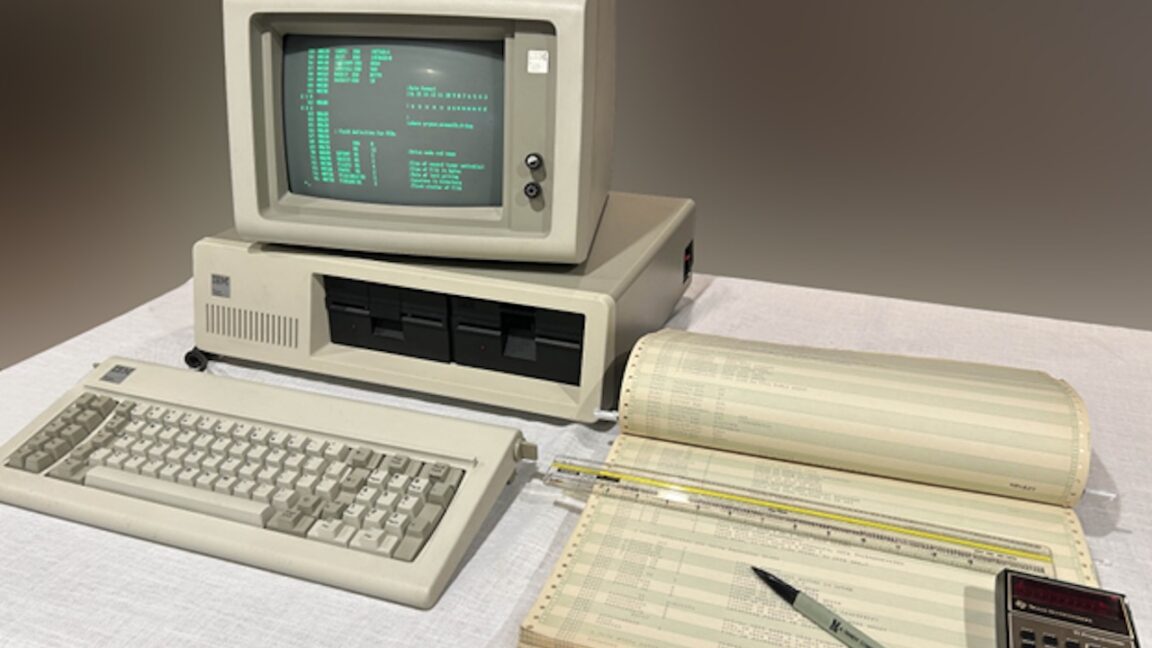
Microsoft open-sources “the earliest DOS source code discovered to date”

Microsoft has open-sourced "the earliest DOS source code discovered to date," including the 86-DOS 1.00 kernel and precursors to MS-DOS. The code, predating the MS-DOS branding, was recovered from decades-old printed documentation by preservationists who transcribed it manually due to poor OCR quality. This release sheds light on the origins of MS-DOS, which Microsoft licensed from programmer Tim Paterson and later developed into a foundational PC OS. The move aligns with Microsoft's history of sharing early software, including Zork, 3D Movie Maker, and other vintage projects. The effort highlights the cultural and technical significance of early computing history.

1d, 88p, 2 comments

Swap tables, flash-friendly swap, swap_ops, and more

The LWN report covers a 2026 Linux Summit where swap‑subsystem developers presented major clean‑ups and performance plans. Jonathan Corbet summarizes that Kairui Song outlined a series of simplifications—removing a 3‑11 byte per‑page overhead down to 2‑10 bytes, with a future target of three bytes, and eliminating the need for many swap‑cache bypasses by moving to folio‑based helpers. Song also discussed new readahead strategies, early swap‑cache eviction, and a proposed virtual swap layer that would abstract swap mappings, simplify device removal, and enable defragmentation. Parallel sessions focused on flash‑friendly swapping, with Youngjun Park demonstrating a compression‑and‑deduplication approach that writes sequentially to preserve SSD life, and on the “swap_ops” framework proposed by Baoquan He to modularise swap backends, potentially replacing zram’s block‑device emulation with a lightweight VFS‑like interface. These developments aim to reduce memory‑pressure latency, lower wear on storage devices, and open the swap system to new backends.

2d, 141p, 40 comments

Sales and Dungeons: Thermal printer TTRPG utility

The website highlights how Sales & Dungeons transforms thermal printers into customizable TTRPG tools, ideal for creating magical items, spell sheets, or roleplay notes. It supports multiple operating systems and offers templates, random generators, and even LLM assistance to enhance game sessions. The tool is free, open source, and emphasizes user flexibility with HTML, Nunjucks, and various data import formats. Users can connect via print devices or mobile apps, while privacy policies keep interactions transparent.

5h, 182p, 247 comments

Uber’s COO says it’s getting harder to justify money spent on tokenmaxxing

The head of Uber has expressed concerns about the increasing difficulty of justifying the company’s significant investments in AI. Operating chief Andrew Macdonald confirmed that AI costs are becoming harder to defend, especially considering shorter team growth. This commentary follows Uber CTO Praveen Neppalli’s earlier statement about exceeding the budget for AI technologies. The conversation highlights growing scrutiny over the ROI of these spending decisions.

1d, 145p, 54 comments

Ruby for Good

The Ruby for Good event is taking place at Shepherd’s Spring Retreat Center from August 27th to August 30th, 2026. Attendees will enjoy all-inclusive lodging, meals, and networking opportunities while supporting nonprofit and social sector projects. The event is organized by a team committed to building useful open-source contributions, and organizers promise continued support beyond the event with limited refund options.

2h, 96p, 52 comments

Norway's 2 petabytes of Huawei flash storage and LLM training

At the Huawei ID Forum 2026 in Paris, Marius Husnes, Head of IT Platform at the Norwegian National Library, explained that the library is building a sovereign Norwegian‑language LLM using 2 PB of Huawei OceanStor Dorado flash storage for its AI training pipeline, a step vital because no commercial provider offers a local model; the library’s massive digital collection, amassed since 2005, totals around 20 PB of unique data (≈60 PB with preservation copies) and feeds an in‑house pipeline on an Nvidia DGX H200 and 384‑core CPU cluster before the data is sent to the national supercomputer Sigma2 Olivia (an HPE Cray EX with 448 GPUs) for training, while Husnes highlighted the difficulty of moving petabyte‑scale archives with low‑latency, high‑throughput storage and the lack of standard evaluation tools for such a Norwegian LLM.

12h, 1236p, 685 comments

Magnifica Humanitas

Magnifica Humanitas is Pope Leo XIV’s 2026 encyclical on protecting the dignity of every human being amid the rapid rise of artificial intelligence. It calls the Church to a “dynamic, Gospel‑faithful” approach that updates the Social Doctrine—rooted in the image of the Triune God, the equal dignity of all persons, and the principles of the common good, universal destination of goods, subsidiarity, solidarity and social justice—to address today’s “new things.” The document warns that AI, while a valuable tool, can amplify technocratic power, deepen inequalities, and obscure truth, urging transparent, accountable governance, responsibility at every stage of design and use, and the protection of vulnerable groups from new forms of digital slavery and exploitation. It stresses the need for truthful public communication, an education alliance for the digital age, dignified work, family stability, and the safeguarding of freedom against digital dependence and surveillance. By contrasting the biblical images of Babel (hubris, domination) and Nehemiah’s rebuilt Jerusalem (shared responsibility, communion), the Pope advocates a “civilisation of love” built on dialogue, diplomacy, and a renewed culture of peace, urging all—governments, corporations, churches, families and individuals—to collaborate as “builders” of a common‑good future where technology serves, rather than overwhelms, genuine human flourishing.

2h, 17p, 8 comments

Hacker News front page as a site

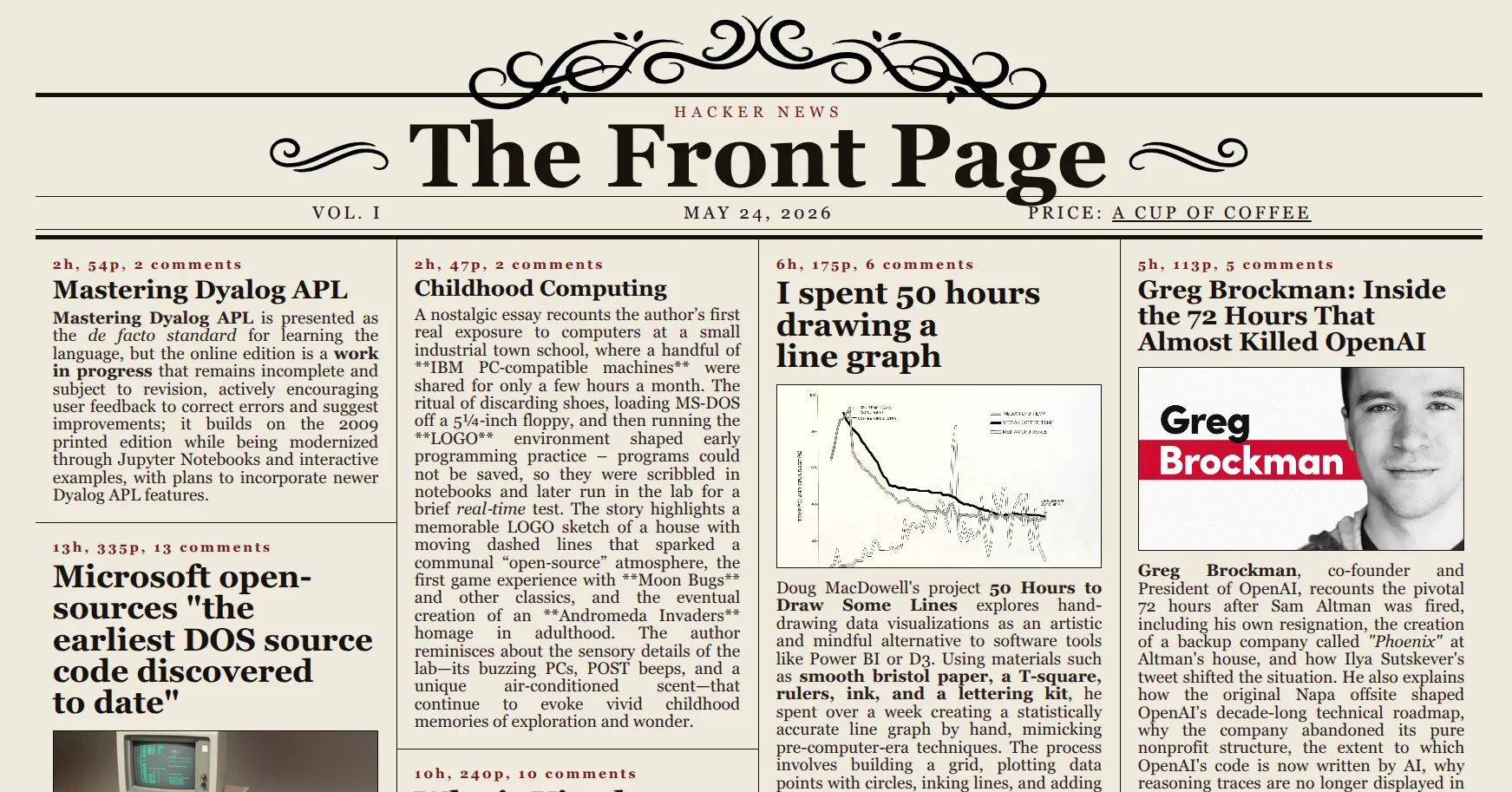
The Front Page highlights a diverse set of tech and science stories, including Apple’s PICO (Perceptual Image Codec)—a learned image compression system delivering up to three‑fold bitrate reductions over traditional codecs while running on an iPhone 17 Pro Max; SpaceX’s successful Starship V3 sub‑orbital test featuring hot‑staging and a payload of prototype Starlink satellites despite an engine failure; DeepSeek’s permanent discount on its V4 Pro model with token‑based pricing and upcoming model renaming; Microsoft’s open‑source release of the earliest DOS source code, shedding light on the origins of MS‑DOS; Italy’s €1.39 billion contract for six Airbus A330 MRTT tankers, shifting its air‑refueling fleet from Boeing KC‑46 to a European platform; and a groundbreaking archaeological find of a 1,000‑year‑old dingo in Australia that shows evidence of injury, care and ritual burial by Indigenous peoples. Additional notable items include a study on “constraint decay” in LLM agents, a free, open‑source web‑based multitrack audio editor (Audiomass), and a new Bayesian Gaussian‑process model for handling uncertain sampling coordinates in environmental data.

8h, 246p, 67 comments

Netherlands Seizes 800 Servers, Arrests 2 for Aiding Cyberattacks

Dutch authoritiesarrested Andrey Nesterenko and Youssef Zinad, co‑owners of MIRhosting and WorkTitans BV, after seizing 800 servers and other equipment in raids on Enschede, Almere, Dronten and Schiphol‑Rijk, accusing them of violating EU sanctions by providing infrastructure that facilitated Russian‑linked cyber‑attacks, DDoS campaigns and disinformation operations across the EU; the case stems from a 2025 investigation into Stark Industries Solutions, a hosting provider previously sanctioned by the EU for aiding Russia’s hybrid warfare, whose network assets were transferred to WorkTitans after the sanctions, and the arrests follow earlier sanctions of the Moldovan brothers Ivan and Yuri Neculiti and their firm PQHosting.

6h, 24p, 6 comments

CPPL: A Circuit Prompt Programming Language

The paper introducesCPPL, a compiler-mediated framework for LLM-assisted hardware design, addressing challenges in generating verified RTL from LLMs. CPPL combines a Python frontend for defining module interfaces with a JSON-based IR that exposes compiler-visible structure, enabling static validation of generated code. Unlike direct RTL or CIRCT IR generation, CPPL ensures legality, hierarchy, and port binding checks, then lowers results to CIRCT for synthesizable Verilog. Results demonstrate improved functional correctness and optimized post-synthesis AIG node counts, suggesting compiler mediation enhances reliability and optimization potential in LLM-driven hardware workflows.

16h, 137p, 53 comments

Bytecode VMs in surprising places (2024)

Patrick Dubroy’s article highlights several unexpected uses of bytecode virtual machines beyond typical programming languages. He describes Linux’s *eBPF* as a register‑based VM with ten registers and a JIT compiler, now a universal in‑kernel VM. He notes that GDB’s remote debugging agent interprets a custom bytecode for evaluating traced expressions efficiently on targets. He explains that WinRAR’s RAR format embeds a simple x86‑like VM (RarVM) to apply reversible data‑transform filters for better compression. He also cites GPU‑side interpreters such as “uber‑shaders” and flexible shader systems that execute arithmetic expressions or whole rendering pipelines on the GPU, avoiding per‑frame shader recompilation. Additional examples include DWARF debugging expressions, TrueType hinting instructions, and PostScript’s binary encoding.

22h, 183p, 46 comments

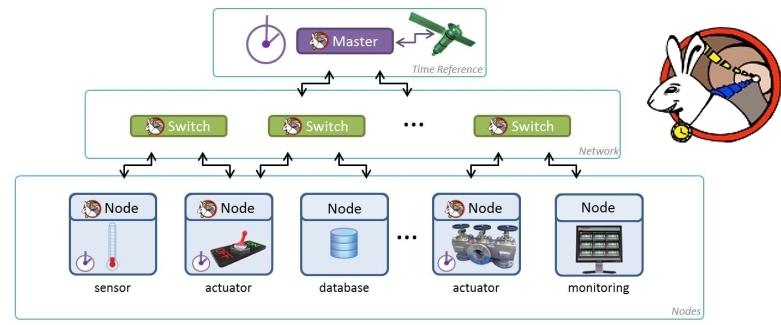
White Rabbit – sub-nanosecond synchronization for large distributed systems

White Rabbit delivers sub‑nanosecond synchronization and picosecond precision for large distributed systems, enabling deterministic data delivery and time‑tagging across thousands of nodes up to 10 km apart via Ethernet‑based gigabit links, supporting open‑source hardware, firmware and software from multiple vendors. It also powers CERN White Rabbit projects, currently advertising FPGA developer roles to work on the WR switch v4 and the evolution of the eRTM board, with recent openings announced in March 2026 and September 2024.

18h, 288p, 140 comments

Jira Is Turing-Complete

The article demonstrates that Jira is Turing-complete by constructing a Minsky register machine using its automation features. Registers are modeled as linked issue counts (e.g., Bug and Task), the program counter as an Epic’s status, and automation rules as conditional instructions. A working addition example uses Epic statuses (BACKLOG, TODO, DEV, PROD) and rules to decrement one register, increment another, and branch conditionally via JQL queries. A Fibonacci sequence is implemented using issue type conversions (e.g., BugStoryTask) to simplify operations. Despite finite quotas, the system can encode unbounded computation under standard conventions, proving Jira’s Turing-completeness through reduction to the Minsky model. The human operator acts as an external clock when automation chain limits are reached.

8h, 14p, 1 comment

Show HN: Volt – front end tooling for Phoenix that runs inside the BEAM

Volt is an Elixir‑native frontend build tool that replaces Node.js–based tooling such as esbuild and Tailwind CLI with Rust NIFs powered by OXC and LightningCSS. It offers a dev server with hot‑module replacement, automatic Tailwind rebuilding in ~40 ms, browser overlay for compilation errors, and production builds in under 100 ms. Volt supports JavaScript, TypeScript, Vue SFCs, React JSX, Svelte 5, and Solid JSX, providing features like code splitting, CSS modules, JSON imports, asset queries, static asset imports, import aliases, and import.meta.hot with state preservation—all without installing Node.js. Integration is simple through a single mix dependency; configuration is done via config/volt.exs instead of separate vite.config.js or tailwind.config.js files. Volt also supports Rust‑based formatting and linting, project‑specific lint rules written in Elixir, and extensible build plugins that can transform custom file types or invoke JS tooling. The project is MIT‑licensed and aims to streamline frontend development directly on the BEAM.

1d, 428p, 467 comments

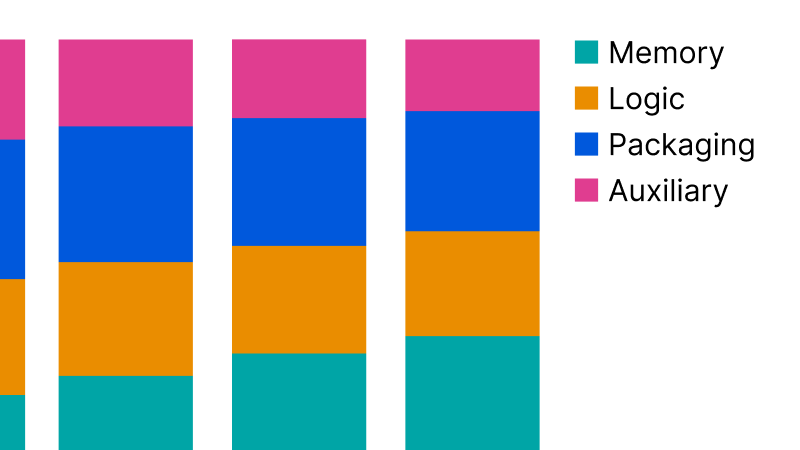
Memory has grown to nearly two-thirds of AI chip component costs

According to Epoch AI research, high-bandwidth memory (HBM) now accounts for 63% of AI chip component costs, up from 52% in Q1 2024, based on data from Nvidia, AMD, Google, and Amazon. While logic dies remained stable at approximately 13%, advanced packaging declined from 19% to 15%, and auxiliary components fell from 15% to 9%. In absolute terms, HBM spending across these four major designers surged from roughly $12 billion in 2024 to $32 billion in 2025, outpacing growth in all other components. As memory supply remains constrained and prices continue to rise, HBM's share is expected to grow further in 2026, with major hyperscalers already factoring these increased costs into their capital expenditure projections.

1d, 180p, 72 comments

Build Adafruit projects right from Firefox

Firefox enables users to build Adafruit hardware projects directly through its browser using Web Serial technology, allowing direct communication with compatible devices without additional tools. This integration, recommended by Adafruit for programming convenience, streamlines the process from concept to execution by eliminating complex setup steps. Developed by Mozilla, the browser emphasizes open-source principles and provides a hassle-free experience for makers, requiring only a device connection and web-based coding. The platform underscores its commitment to the open web, offering a seamless path for hardware enthusiasts to prototype and control projects efficiently.

1d, 71p, 27 comments

Selling SaaS in Germany

Selling SaaS in Germany, Austria, and Switzerland (DACH) requires understanding the region's business culture, which prioritizes risk assessment over opportunity, unlike in the US or UK where the opposite is true. IT departments hold significant veto power early in the sales process, making technical approval crucial before business discussions can progress. Sales cycles in DACH are approximately twice as long as in Anglo-American markets, but customers exhibit stronger loyalty once acquired. While translated content is common, true localization requires adapting messaging to address compliance, security, and data protection concerns upfront rather than simply translating materials focused on speed and disruption. A local presence demonstrates commitment to the market, though Germany, Austria, and Switzerland can be approached similarly from a SaaS perspective, with subtle differences not warranting separate strategies. Detailed materials like PDFs and technical documentation become important later in the decision-making process, after establishing clear value propositions to secure initial meetings.

1d, 84p, 36 comments

Noroboto: Lying Fonts and Mitigation in Rust

The article explains a new “noroboto” attack that embeds a malicious TrueType font in legal documents, swapping visible glyphs with Unicode private‑use code points so the text looks normal to humans but becomes garbled when copied or processed by AI models. By exploiting how Word, PDF and LibreOffice allow embedded fonts, attackers can hide or replace critical clauses—e.g., changing “Maryland” to “Delaware”—and fool LLMs that read the document’s Unicode strings without rendering it. The authors demonstrate proof‑of‑concept code (noroboto.py) and show that current LLMs can partially overcome simple obfuscation but struggle with partial or replacement attacks. To mitigate, they propose a Rust‑based verification step that renders each font’s ASCII glyphs, runs OCR, and compares the result to the expected characters, flagging fonts with less than perfect accuracy as suspicious. An open‑source reference implementation and further community testing are planned.

2d, 221p, 122 comments

Spanish court declines to fine NordVPN over LaLiga piracy blocking order

A Spanish court has refused to impose fines on NordVPN for failing to comply with an order requiring the VPN provider to block pirate football streams, accepting the company’s technical arguments about the challenges of implementing such measures. The Commercial Court of Córdoba had previously labeled VPN services as “technological intermediaries” and mandated NordVPN and ProtonVPN to block IP addresses hosting illegal LaLiga matches, but NordVPN contested the order, citing frequent IP changes and overblocking risks. While the court rejected LaLiga’s request for coercive fines, it did not rule on the broader blocking order’s validity, leaving the case pending. NordVPN emphasized that the decision highlights technical disputes over the feasibility of the blocking demands, which have sparked broader backlash, including a parliamentary motion urging reforms to Spain’s Digital Services Law to limit overblocking. The injunction remains active, and the underlying legal battle continues.

1d, 50p, 2 comments

Don't know where your data is from? Bayesian modeling for unknown coordinates

The article presents a Bayesian Gaussian process model for predicting uranium and vanadium concentrations at Walker Lake when the sampling locations are observed with error; it treats the true coordinates as latent variables displaced by a Normal(0,σ_s^2 I_2) error, places Normal and HalfNormal priors on the mean, variance, length‑scale and noise parameters, and uses pm.gp.Marginal to integrate out the GP, sampling with NUTS to obtain posterior estimates of μ, σ, ℓ, σ_0 and the corrected coordinates, and shows that increasing σ_s expands the posterior uncertainty of location while preserving the main spatial features of the surface, whereas a simple Nadaraya‑Watson smoother fails to capture this variation.

1d, 52p, 13 comments

Book Review: On the Calculation of Volume

Onthe Calculation of Volume by Solvej Balle is a seven‑part series that follows Tara Selter, a Danish antiquarian book dealer who wakes each day on November 18 trapped in a temporal loop while her husband Thomas remembers nothing; over five volumes Tara travels across Europe, meets sociologist Henry Dale, and eventually joins a fifty‑person commune that debates the metaphysics of their endless day, turning repetition into a philosophical meditation on selfhood, marriage, and community, ultimately reflecting on the paradox of daily life as both an unavoidable recurrence and a potential source of meaning.

1d, 152p, 84 comments

I keep bouncing off the Scheme language

Graham admits that, despite his love for the Scheme programming language and naming his blog after the Structure and Interpretation of Computer Programmers textbook, he cannot seem to internalize it; he attributes this to his ALGOL-type thinking and decades of OOP experience in Java and Smalltalk, which make him approach problems as sequences of instructions and memory locations rather than functional abstractions. He can read Scheme code and has built a Smalltalk‑like environment in Racket, but his recent web projects, including the SE100 reading list, default to Go or other familiar tools instead of GNU Guix or GNU Shepherd, and he resolves to treat himself as a junior developer with unfamiliar functional tools to finally contribute to that ecosystem.

2h, 13p, 0 comments

Ninth Circuit Panel Goes Out of Its Way to Question Section 230–DOE vs. Meta

A Ninth Circuit panel in Doe v. Meta went beyond the necessary ruling to voluntarily address Section 230 immunity in a case involving Rohingya genocide victims suing Facebook over its algorithmic content promotion, despite the lower court having dismissed on statute of limitations grounds alone. The panel's unusual decision to consider Section 230 questions not raised below reflects what the author calls judicial activism, as the court applied broad Section 230 protection to Facebook's algorithmic content matching and recommendation practices. Notably, all three panel judges expressed support for en banc review of Section 230 precedent, with Judge Berzon and Fletcher concurring that algorithms recommending content should fall outside Section 230 immunity because such activities exceed “traditional activities of publication and distribution.†Judge Nelson separately criticized the broad application of Section 230 and suggested algorithms might constitute the platform’s own content. The ruling reinforces existing precedent protecting algorithmic content curation while highlighting deepening circuit conflicts over Section 230’s scope in the age of AI-driven content recommendation.

5h, 44p, 4 comments

Everyone Against Us (2023)

Allen Goodman, a former public defender in Cook County, details systemic flaws in Criminal Justice through systemic neglect, evidence suppression, and punitive tactics. His *Everyone Against Us* chronicles cases like a Cabrini-Green drug case where police fabricated apartment searches, and a gun possession trial involving a young man wrongfully charged after a band attack. Goodman highlights overcrowded jails, underfunded PD offices, and prosecutors’ punitive policies (e.g., "jury tax" sentences) that exacerbate racial and class biases. He also recounts traumatic client visits in jails, where inmates harried him despite his efforts to mediate, underscoring the emotional toll on both defendants and attorneys.

12h, 131p, 53 comments

IBM Spins Off the First Pure-Play Quantum Chip Foundry

The U.S. Department of Commerce and IBM announced a $2 billion initiative to establish Anderon, America's first pure-play quantum chip foundry in Albany, New York. Funded by $1 billion from the CHIPS Act and $1 billion from IBM, Anderon will operate a 300mm superconducting silicon wafer fabrication facility, positioning the U.S. at the forefront of quantum manufacturing. This move prioritizes superconducting silicon technology, leveraging established semiconductor processes for scalable, rapid iteration—a strategic advantage over smaller 200mm alternatives. The funding structure creates a two-tier quantum ecosystem, concentrating infrastructure capital on fabrication-ready modalities while offering smaller equity stakes to other approaches. IBM's focus extends beyond qubit production, including four ASICs aimed at scalable quantum control systems, critical for fault-tolerant computing by 2029. The package risks favoring one modality but aligns with industry consolidation needs, targeting $3 million in sales by the mid-2030s. Other funded companies include GlobalFoundries, D-Wave, and Rigetti, each receiving smaller portions for R&D.

1d, 697p, 271 comments

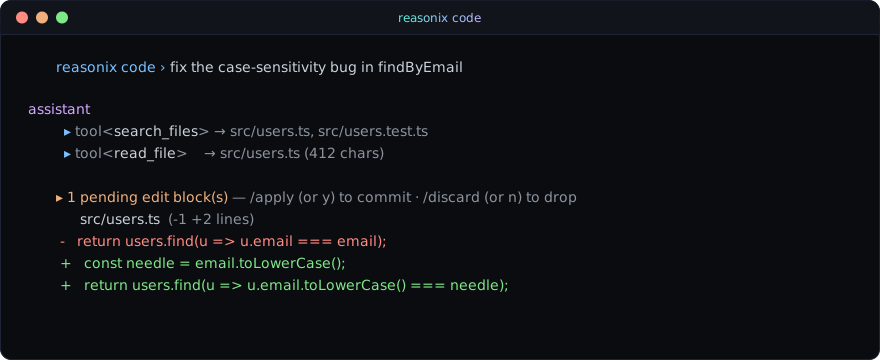
DeepSeek reasonix, DeepSeek native coding agent with high caching and low cost

Reasonix is a terminal-native AI coding agent built specifically for DeepSeek, designed to assist developers directly within their command-line environment. It functions as an intelligent assistant that can understand context, generate and modify code, debug, and automate repetitive programming tasks by leveraging DeepSeek's capabilities. The tool aims to streamline developer workflows by providing AI-powered coding support without leaving the terminal.

7h, 22p, 1 comment

The analog computer museum's online library

The Analog Computer Museum online library hosts an extensive collection of scanned manuals, brochures and technical reports for historic analog computers, including the BBC Tischanalogrechner handbook, Comdyna 808 and EAI series documentation, as well as rare materials for the DO-80, RA 770 and Dornier systems; contributions from collectors such as Chris Yewell, Dave Burraston, Thomas Proell, Patrick Binon and Rainer Glaschick provide PDFs ranging from installation instructions and operator manuals to schematics and research reports, documenting the evolution of analog computation in industrial, scientific and military contexts.

9h, 157p, 142 comments

Microsoft pulls plug on plans for 244-acre data center in Caledonia (2025)

Microsoft has canceled its proposed 244‑acre data center in Caledonia, Wis., after over 2,000 residents petitioned against the rezoning of farmland on County Line Road and State Highway 32; a Microsoft spokesperson cited community feedback, but said Microsoft remains interested in investing in southeast Wisconsin and is seeking a new site that aligns with local priorities, with village trustee Nancy Pierce and resident Prescott Balch expressing hope for better engagement.

1h, 14p, 0 comments

Russia strikes Kyiv with drones and hypersonic missile, in photos

Russia struck Kyiv with drones and a hypersonic Oreshnik missile, killing at least two people, as part of a large-scale attack. The assault caused fires, damaged infrastructure, including the Chernobyl Museum, and displaced residents. Ukraine’s President Zelenskyy condemned the strikes, which followed Trump’s peace proposal involving Abraham Accords. The attack heightened tensions, showcasing Russia’s advanced weaponry amid ongoing war chaos.

1d, 208p, 239 comments

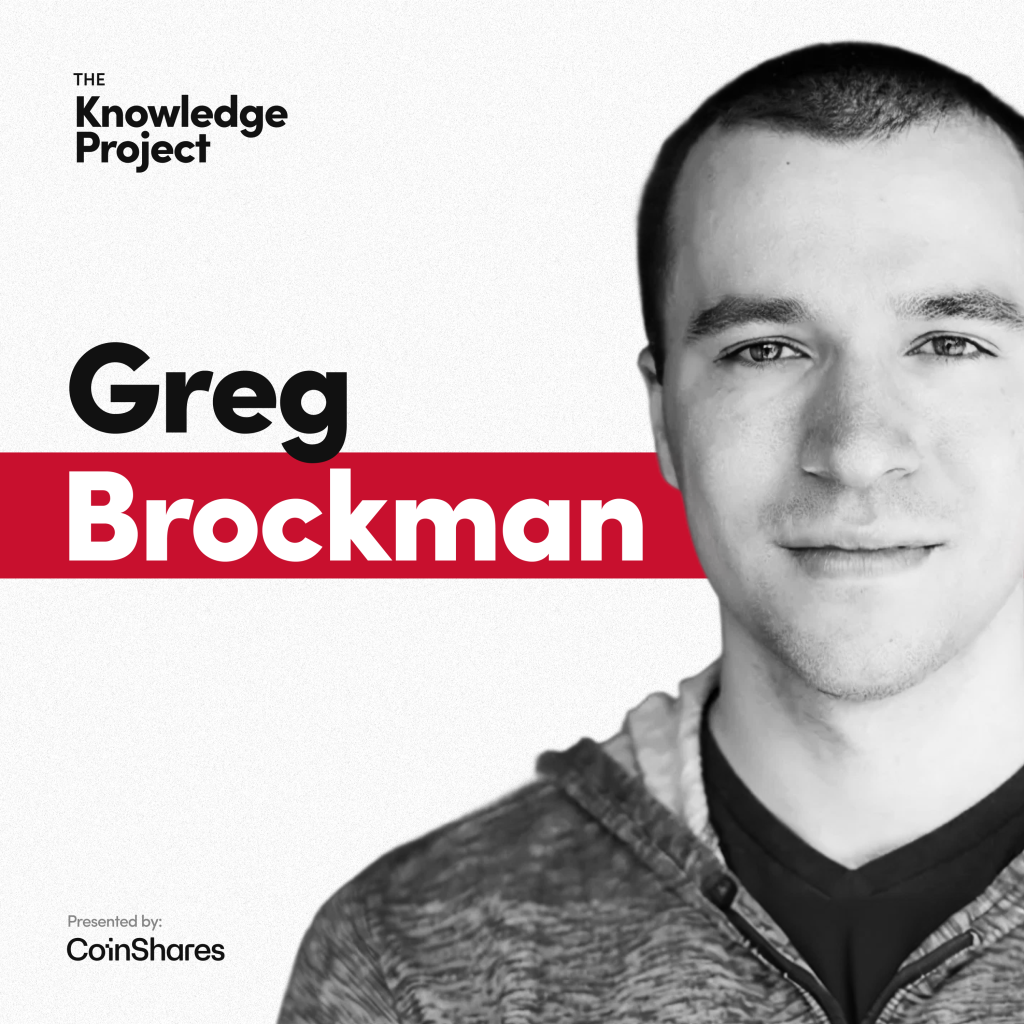
Greg Brockman interview [video]

The KnowledgeProject features Greg Brockman reflecting on the 72 hours after Sam Altman’s ouster, describing how a Napa off‑site forged OpenAI’s three‑step technical roadmap, why the firm moved from a pure nonprofit to a capped‑profit model, how a “Phoenix” backup company was spun up at Sam’s house, and the decisive tweet from Ilya Sutskever that altered the outcome; he then discusses the global AI race, the share of code now written by AI, why reasoning traces were abandoned, the role of compute constraints in AGI access, and the looming question of what this means for people’s jobs.

1d, 104p, 13 comments

Using HTTP/2 Cleartext for a server in Go 1.24

Go 1.24 has simplified configuring servers for unencrypted HTTP/2 (h2c), removing the need for non-standard library packages. This is particularly useful for Cloud Run environments that handle TLS termination but can benefit from HTTP/2 features, especially for long-lived server-sent event streams where HTTP/1.1 has issues with client disconnect propagation. The new approach is more straightforward than the previous method that required wrapping handlers with golang.org/x/net/http2/h2c. With Go 1.24+, developers can directly set protocols on http.Server using srv.Protocols.SetUnencryptedHTTP2(true). The article includes testing with curl and demonstrates Terraform configuration for Cloud Run services to properly support h2c with appropriate timeouts for long-lived connections.

14h, 52p, 22 comments

you_can::turn_off_the_borrow_checker

turn_off_the_borrow_checker is a macro in the you_can crate that suppresses borrow checker errors for references created with & or &mut by wrapping them in borrow_unchecked, letting Rust code ignore those references; it is intended only for educational use and must not be used in production because it permits unsafe, unsound code that can fail unpredictably, does not affect compilation output, and cannot suppress all borrow‑checker violations, especially those involving lifetimes created elsewhere.

1d, 125p, 41 comments

Perceptual Image Codec: What Matters in Practical Learned Image Compression

Apple introduces PICO (Perceptual Image Codec), the first learned image compression system that is both practical and directly optimized for the human visual system, achieving 2.3‑3× bitrate savings over traditional codecs like AV1, AV2, VVC, ECM and JPEG‑AI and 20‑40% savings compared to the best existing learned codecs, while encoding 12 MP images on an iPhone 17 Pro Max in ≈230 ms and decoding in ≈150 ms, outperforming most top ML‑based codecs on a V100 GPU, and providing cross‑platform robustness guarantees.

1d, 145p, 29 comments

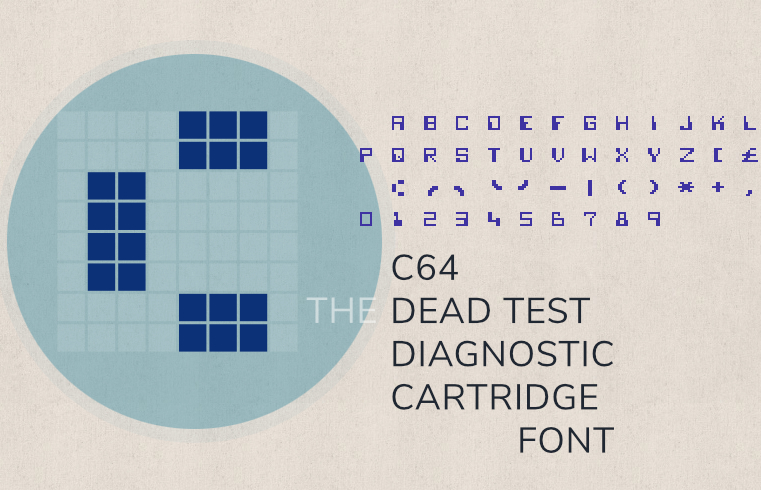
The C64 Dead Test Font

The C64 “Dead Test” diagnostic cartridge (Rev. 718220) runs in Ultimax mode, embedding its own 58‑character font in ROM at $EAD8 to bypass the computer’s built‑in ROMs and display a distinctive boxy typeface inspired by the MICR E‑13B set, complete with an Easter‑egg “transit” symbol at screen code $0x21 that nods to bank‑routing delimiters; the font implements uppercase letters, digits, a few punctuation marks and border glyphs, and the author has released compatible Dead Test font ROMs for the C64, VIC‑20 and PET systems for general use.

1d, 66p, 31 comments

Getting an old Computer online with Android Ethernet tethering

To connectolder Windows 9x/XP-era computers lacking modern Wi-Fi or Ethernet to the internet, an Android phone can tether via a USB-C to Ethernet adapter. By enabling Ethernet tethering on the phone, it bridges its Wi-Fi signal through the adapter to the old computer, assigning an IP address via DHCP. This method works for any device with an Ethernet port, though a shorter cable may be needed, and iOS compatibility is unconfirmed.

3h, 10p, 3 comments

Hawaii just found a way around Citizens United. Other states are following

Hawaii has developed a novel strategy to circumvent the Citizens United campaign finance ruling, with lawmakers and advocates crafting legislation that would require greater disclosure of dark money political spending. The effort, which aims to increase transparency by mandating that nonprofits reveal their top donors for political ads, is gaining traction as other states consider similar measures to push back against the 2010 Supreme Court decision that allowed unlimited corporate and union spending in elections.

3d, 607p, 539 comments

DeepSeek makes the V4 Pro price discount permanent

DeepSeek API offers two primary models—deepseek-v4-flash and deepseek-v4-pro—with pricing calculated per million tokens. The flash model is significantly cheaper at $0.14 per million input tokens (cache miss) and $0.28 per million output tokens, while the pro model costs $1.74 and $3.48 respectively. Both models support a 1 million token context length with maximum output of 384K tokens, along with features including JSON output, tool calls, and chat prefix completion. DeepSeek is currently running a 75% discount on the pro model, with pricing adjustments scheduled for April and May 2026—the input cache hit price drops to 1/10 of launch prices on April 26, and the pro model discount ends May 31. The older model names deepseek-chat and deepseek-reasoner will be deprecated in favor of the non-thinking and thinking modes of deepseek-v4-flash respectively. Fees are deducted from user balances with preference given to granted balances, and DeepSeek reserves the right to adjust prices.

1d, 301p, 177 comments

Scammers are abusing an internal Microsoft account to send spam links

Scammers have for months exploited a loophole that lets them create new Microsoft accounts and send phishing emails from the internal address msonlineservicesteam@microsoftonline.com, masquerading as official alerts about fraudulent transactions or private messages and prompting users to click malicious links; the abuse has been observed by The Spamhaus Project and Microsoft is now actively investigating, strengthening detection mechanisms and removing violating accounts, while similar scams have targeted fintech and Namecheap platforms in recent months.

1d, 66p, 23 comments

Curly braces: An evolution of Unix and C

Curly braces became essential to C syntax, but they were unavailable on the Teletype Model 33 which only typed a limited ASCII 1963 set; early UNIX programmers used printf‑style code where braces were replaced by \( \) or translated by the kernel, later supported by digraphs <% and %>, trigraphs ??< and ??> were introduced in C89 as work‑arounds, and the historical lineage traces back to B, the new B that added * pointers, and to BCPL and PDP‑7/B predecessors, illustrating how character‑set constraints shaped language design and persisted into modern UNIX.

4h, 463p, 217 comments

California moves to exempt Linux from its age-verification law after backlash

California is amending its Digital Age Assurance Act through Assembly Bill 1856 to exempt most open-source operating systems from controversial age-verification requirements after facing significant backlash. The amendment would exclude software distributed under licenses permitting users to "copy, redistribute, and modify the software," protecting Linux distributions such as Debian, Fedora, Ubuntu, Arch Linux, and Mint. The original law, passed in late 2025 as Assembly Bill 1043, would have required operating systems to collect user ages during device setup and provide an "age bracket signal" to apps, raising concerns about how this would apply to decentralized open-source projects maintained by volunteers. SteamOS might still be affected due to its ties to Valve's proprietary ecosystem. The amendment, proposed by the same lawmaker who wrote the original law, narrows the definition of "operating system provider" but doesn't repeal the entire act, potentially leaving commercial platforms with proprietary app ecosystems subject to age-assurance requirements.

6h, 74p, 30 comments

Toshifumi Suzuki, founder of Seven-Eleven Japan, has died

Toshifumi Suzuki, born 1932 in Nagano, rose from a publishing sales job to become chairman and chief executive officer of Ito‑Yokado Group and its subsidiary Seven‑Eleven Japan, introducing franchising in 1974 and expanding the convenience‑store chain to over 10,000 outlets, many operating 24 hours a day, while implementing an integrated data system that linked sales, inventory and supply‑chain information in real time; he rescued the U.S. 7‑Eleven in 1991 by applying Japan’s technology‑driven model, promoted a horizontal management structure with regular communication among managers and franchisees, and later assumed elder‑statesman roles, including vice‑chairman of the Keidanren and recognition as one of Japan’s fifth most respected business leaders (Nikkei, 2004).

2h, 69p, 47 comments

Japan's New Hypersonic Engine Could Make 2-Hour Flights to the US a Reality

Japan’s JAXA together with Waseda University, the University of Tokyo and Keio University completed a successful ground‑combustion test of a Mach‑5 ramjet at the Kakuda Space Center, validating heat‑shielding, control surfaces and engine performance under conditions simulating 25 km altitude and five times the speed of sound, a step toward commercial hypersonic passenger service by the 2040s that could reduce the Tokyo‑Los Angeles flight from roughly 10 hours to about 2 hours.

1h, 6p, 1 comment

Riscrithm – An intuitive RISC-V assembler and optimizer coded in Go

Riscrithm is a lightweight macro‑assembly language that compiles directly to clean, human‑readable RISC‑V assembly, aiming to combine high‑level readability with low‑level hardware control. The tool provides a simple CLI (`riscrithm source_file target_file [-o|--optimize]`) and requires each file to declare a header and entrypoint, with macros defined via `define`. Code is indentation‑scoped: unindented labels mark blocks, while indented lines contain instructions; raw assembly can be inserted using `!!` prefixes. The language offers explicit system calls, arithmetic, bitwise, stack/heap memory ops, and control flow via `@` jumps and ternary‑style `if … else` conditionals, plus shortcuts like `^^` for zeroing registers and triple‑XOR swaps. Its two‑pass compiler sanitizes input, expands macros, and optionally optimizes (dead‑assignment elimination, identity‑math removal, strength‑reduction to shifts). Output assembly is pretty‑printed for direct use. Future v1.1.0 plans include module imports, better error diagnostics, and guard‑clause support.

3h, 173p, 65 comments

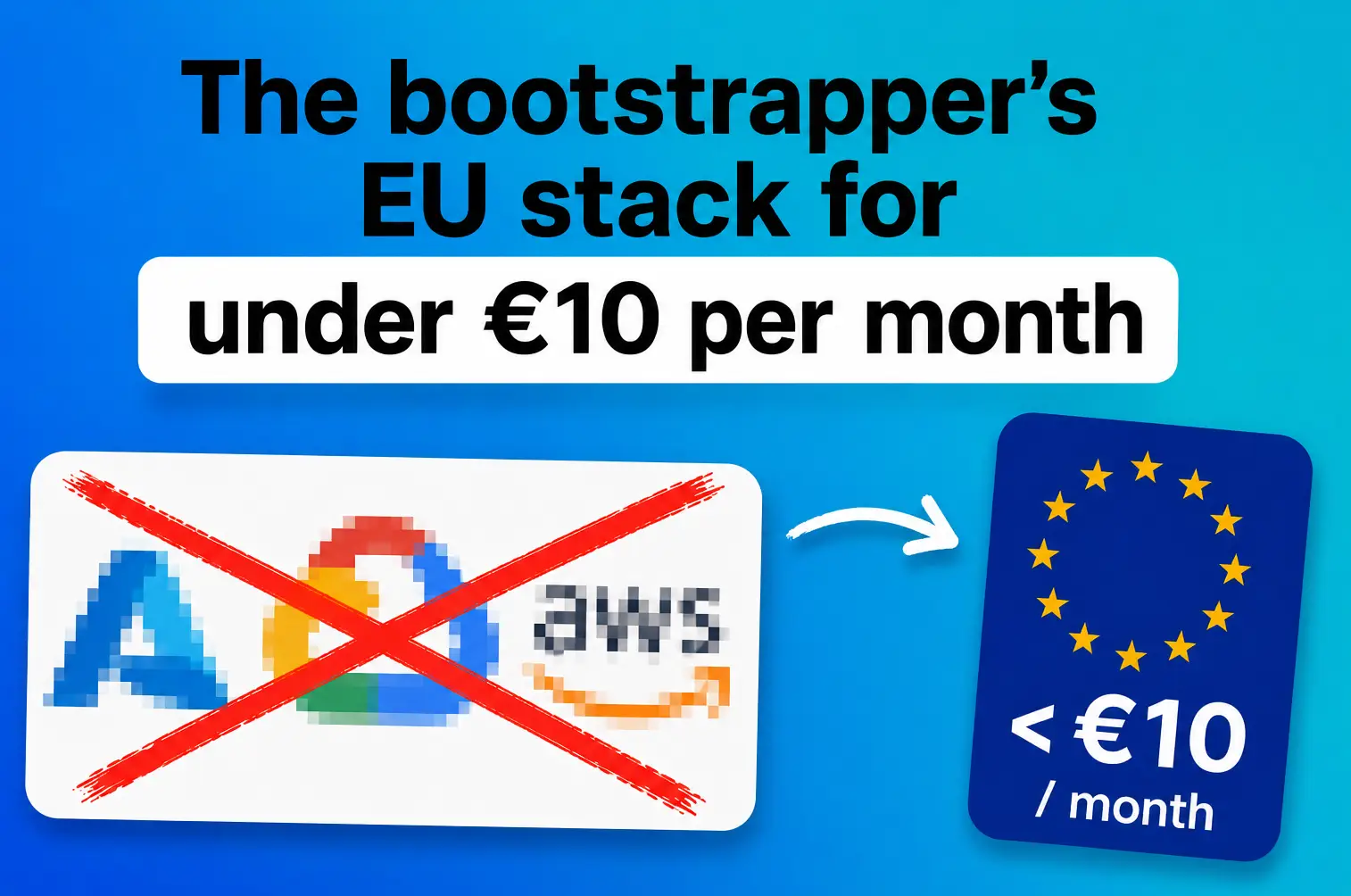
The bootstrapper's EU stack for under €10 per month

HetznerCloud's €7/month VPS plan serves as the core of a cost-effective EU stack for startups, supporting Django, Rails, databases, and backend services. Complementary free-tier providers include Ahasend (transactional email), Simple Analytics (privacy-focused tracking), and Hanko (passkey-based authentication). Mollie handles payments per-transaction, avoiding monthly fees. This stack emphasizes minimal upfront cost, scaling smoothly as usage grows, prioritizing EU sovereignty and avoiding US-dependent services.

1d, 439p, 453 comments

Migrating from Go to Rust

The article explores the considerations and challenges of migrating from Go to Rust, focusing on backend systems. It highlights Go's strengths, such as simplicity, fast development, and a robust concurrency model with goroutines, contrasted with Rust's compiler-enforced safety, ownership model (via the borrow checker), and zero-cost abstractions. Key differences include error handling (Go's explicit errors vs. Rust's `Result` types), null safety (Go's `nil` vs. Rust's `Option`), and runtime guarantees (Go's garbage collection vs. Rust's stack-allocated lifetimes). Rust offers stronger guarantees against data races, memory leaks, and unhandled errors but introduces a steeper learning curve, longer compile times, and a need to adapt to an explicit borrow checker. Migration strategies suggest starting with isolated hot paths or background services, leveraging Rust's interoperability via HTTP/gRPC or C bindings, and retaining Go for CLIs, Kubernetes tooling, and glue services. Tradeoffs emphasize Rust's compile-time safety and performance benefits against Go's productivity and immediate tooling. The conclusion balances these factors, advising that foundational, high-reliability services benefit most from Rust, while Go remains optimal for rapid iteration and less safety-critical components.

14h, 115p, 18 comments

AI errno(2) values

A blogger has created a satirical extension to the standard system errno header file, defining 30 new error codes specifically for AI failures. The humorous code includes constants like EAI (201) for "hallucination," EDAWKINS (205) for "claude delusion," EGPT (213) for "walked like an 𐦂," and ELON (220) for "megalomania exhaustion." The complete header file, posted on May 19th, 2026, presents a tongue-in-cheek approach to categorizing potential AI system malfunctions with descriptive error messages that reference various AI-related issues and cultural references.

22h, 166p, 53 comments

Bug 1950764: Work Around Crash on Intel Raptor Lake CPU

The revision D301917 on the Firefox‑autoland repository implements a fix for Bug 1950764, adding a workaround to prevent crashes on systems with Intel Raptor Lake CPUs. Authored by glandium and marked “Needs Review”, the change includes updates to Rust dependencies and build configurations, and has passed automated remote builds. The patch is publicly visible and awaiting review from the designated reviewers.

1d, 170p, 140 comments

Building Pi with Pi

The article discusses challenges in using building Pi with Pi as discussed by Armin Ronacher, focusing on the increasing volume and quality issues in open-source projects. It highlights concerns about vague or faulty issue tracking, common complaints about shallow or inaccurate diagnoses, and the complexity of managing repetitive or poorly formed reports. The author emphasizes the need for better community oversight and clearer expectations in code and issue handling to improve reliability.

1d, 239p, 118 comments

Childhood Computing

The author recalls their childhood computing experiences from 1992 when, at age eight, they gained access to a computer lab at their new school in an industrial town. The lab contained old IBM PC compatible machines with monochrome CRT monitors and no hard disks, requiring students to insert floppy disks to load MS-DOS and LOGO.COM for programming sessions. With only two hours of computer time per month, the author primarily worked with pen and paper at home, testing Logo programs on graph paper before executing them in the lab. One notable program created an animated house outline that classmates copied and modified, effectively becoming the author's first "free and open source software" distributed through handwritten notebooks. Beyond programming, the author fondly remembers early computer games like Moon Bugs, Digger, and Grand Prix Circuit, with the latter particularly impressing them with its 3D graphics capabilities. These experiences, filled with wonder and exploration, remain vivid sensory memories decades later, including the distinctive smell and sounds of the computer lab.

1d, 155p, 38 comments

Mastering Dyalog APL

The online MasteringDyalog APL is a continuously updated rework of the 2009 edition, released under a Creative Commons Attribution‑NonCommercial‑ShareAlike license and featuring the original material alongside modernized explanations and new chapters for Dyalog APL 12.0, while being transformed into interactive Jupyter notebooks for an experiment‑friendly learning experience and paired with a static site and forthcoming printed version to serve diverse reader preferences.

1d, 111p, 51 comments

Scientists solve 200-year-old puzzle of how tobacco plants make nicotine

Scientists from the University of York and University of Copenhagen have solved a 200-year-old puzzle by discovering how tobacco plants naturally produce nicotine, a mystery that has baffled researchers since nicotine was first extracted in the late 1820s. Published in Nature Communications, the study identified the missing genes and enzymes—including NaGR and NicGS—that assemble nicotine from vitamin-derived and amino acid-derived ring structures, initially forming it attached to a glucose molecule for energy before the glucose is removed in the final step. Lead researcher Dr Benjamin Lichman of York's Centre for Novel Agricultural Products said the finding could transform tobacco biotechnology by allowing nicotine removal or repurposing, enabling safer production of vaccines and pharmaceuticals using tobacco plants without contamination. First author Benjamin Schwabe, a York PhD student, discovered the exact structures of the two key enzymes.

8h, 90p, 90 comments

2026 HIPAA Security Rule Update

The 2026 HIPAA Security Rule, finalized January 6, 2025 and taking full effect by May 2026, imposes sweeping cybersecurity requirements on healthcare organizations, including mandatory annual security risk assessments, universal encryption of ePHI at rest and in transit (removing the previous "addressable" designation), multi-factor authentication across all systems accessing patient data, regular vulnerability scanning and penetration testing, comprehensive technology asset inventories and network mapping, 72-hour incident reporting, and annual business associate agreement verification. The Office for Civil Rights has already begun citing the Final Rule in resolution agreements, with the January 2026 OCR Cybersecurity Newsletter emphasizing that risk analysis must evolve into demonstrated remediation and that unpatched software exposure is now a specific enforcement target. Industry groups including CHIME warned that the rule's estimated $9 billion year-one cost could strain small and rural providers, but organizations of all sizes are urged to begin gap analyses, deploy encryption and MFA, and strengthen documentation immediately to meet compliance deadlines.

1d, 148p, 32 comments

Alexander Grothendieck Revolutionized 20th-Century Mathematics

Alexander Grothendieck transformed 20th‑century mathematics by recasting algebraic geometry around abstract relationships rather than concrete objects. Starting in the 1950s he introduced groundbreaking concepts such as schemes, which unified equations across different number systems, and developed tools like sheaves, topoi, stacks, motives, and étale cohomology. These ideas linked algebraic geometry to topology, number theory, and representation theory, enabling proofs of Weil’s conjectures and influencing modern fields such as number theory and logic. Despite withdrawing from academia in 1970 and living as a hermit until his death in 2014, Grothendieck’s work remains central, with mathematicians still building on his abstract “highway” of ideas.

1d, 118p, 20 comments

Silk: Open-source cooperative fiber scheduler

Silk is a cooperative fiber scheduler for Linux featuring per-CPU scheduler threads with io_uring integration and topology-aware work-stealing. The system implements lightweight stackful coroutines that suspend rather than block their OS thread, enabling high concurrency with minimal overhead. The project includes comprehensive documentation covering the scheduler design, synchronization primitives (FiberFuture, FiberMutex, FiberEvent, among others), utility libraries with lock-free data structures, and performance benchmarks comparing stackless coroutines versus stackful fibers. Built with CMake 3.28+, Ninja, and Clang 21, Silk provides a build system via `./bb` script supporting configuration, formatting, testing, and benchmarking, with specialized performance tools for measuring file I/O, network, HTTP, and S3 operations using io_uring.

2d, 190p, 39 comments

Hengefinder: Finding when the sun aligns with your street

Hengefinder is a tool developed to locate "henge" moments when the sunset aligns with streets or canals, inspired by Manhattanhenge. The project involved solving three key challenges: accurately calculating road bearings by accounting for Earth’s curvature (scaling longitude by cos(latitude) to match latitude units), determining the sun’s precise azimuth by redefining "sunset" as the moment the sun touches the horizon (using a boundary search to find the last valid altitude threshold), and identifying alignment dates through a two-phase search (coarse sampling followed by fine-grained day-by-day checks) due to the sun’s non-monotonic azimuth pattern. Built as a website and mobile app, Hengefinder allows users to input addresses and discover local henges, with examples including Amsterdam’s Haarlemmertrekvaart canal and global sightings like Sauron henges at skyscrapers. The tool highlights how geometric rarity makes henges special, yet they occur naturally worldwide, often unnoticed.

1d, 133p, 49 comments

My I3-Emacs Integration

The author patched i3 to forward key events to Emacs when the focused window’s class matches a passthrough binding, adding a `passthrough` field to the `Binding` struct, extending the config parser to recognize a `--passthrough` flag, and implementing Emacs Lisp functions for window‑movement and terminal launching, which together provide seamless, low‑latency integration of Emacs with the i3 tiling window manager.

18h, 433p, 349 comments

The Eternal Sloptember

George Hotz argues that AI agents in software development represent a costly mistake, as they lack true programming ability and produce broken, unpolished code that becomes harder to detect due to advancing statistical models. Drawing from his own experiments with projects like tinygrad and a USB-PCIE chip reverse, he claims agents provide initial progress but fail to refine code effectively, requiring manual intervention. While acknowledging AI's utility for quick prototypes, he warns that large organizations adopting these tools indiscriminately will generate lower-quality output, contrasting with high performers who critically assess when to use AI. Hotz predicts a "golden age of slop" and a "dark age for gems of quality," citing concerns that AI-produced artifacts differ fundamentally from human-created ones, making them harder to build upon. He aligns with Yann LeCun and Gary Marcus in skepticism toward LLMs' programming potential, advocating for world models over current reinforcement learning methods, and concludes by urging caution against "AI psychosis" that risks self-harm in the tech industry.