
Five years ago, hardly anyone had heard of Sam Altman. But by the time I ran into him, in May of 2023 in Washington, at the US Senate, he had become a superstar.
Senators called him by his first name, and flaunted the meetings they had with him. Prime Ministers welcomed him with open arms. Newspapers wrote glowing profiles, many with scarcely a critical word. Tech leaders loved him, too. Microsoft had already at that point put in billions soon after ChatGPT was released. In June 2024, Apple made a deal with him, or so it seemed. At that point Altman was widely seen as the man who would be king.
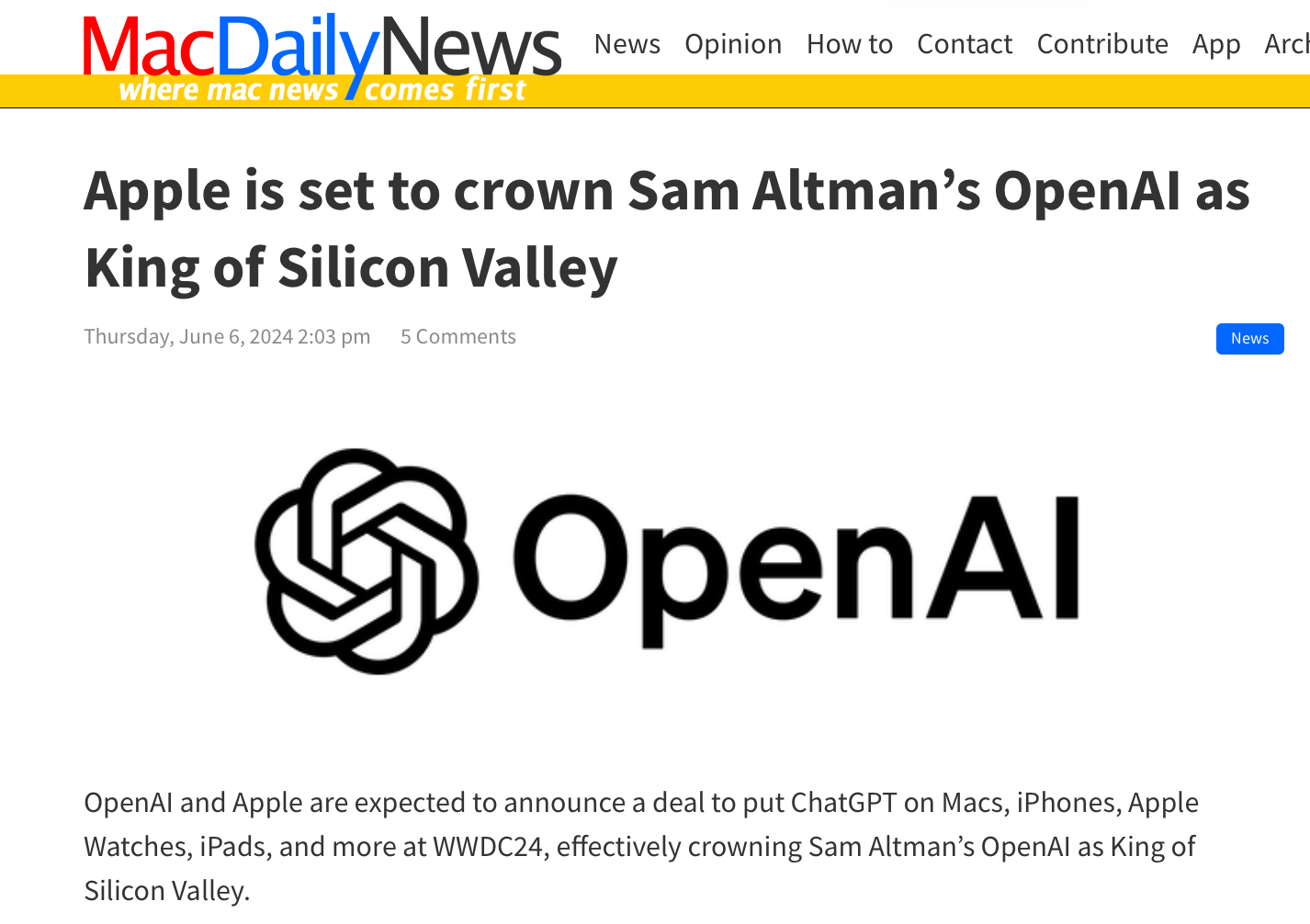
But in the end, charm is not enough. Business Insider’s Katie Notopoulous once called Altman the ultimate “personality hire”, but his only technical vision was scaling and that was never going to be enough. The company always looked like an accident waiting to happen, to me. (I have long speculated that it might turn out to be the WeWork of AI).
For a time, though, all the heavy hitters, like Tim Cook, Satya Nadella and (many years earlier) Elon Musk seemed to buy Altman’s act. Two years ago, the sky seemed like the limit for Silicon Valley’s golden child.
§
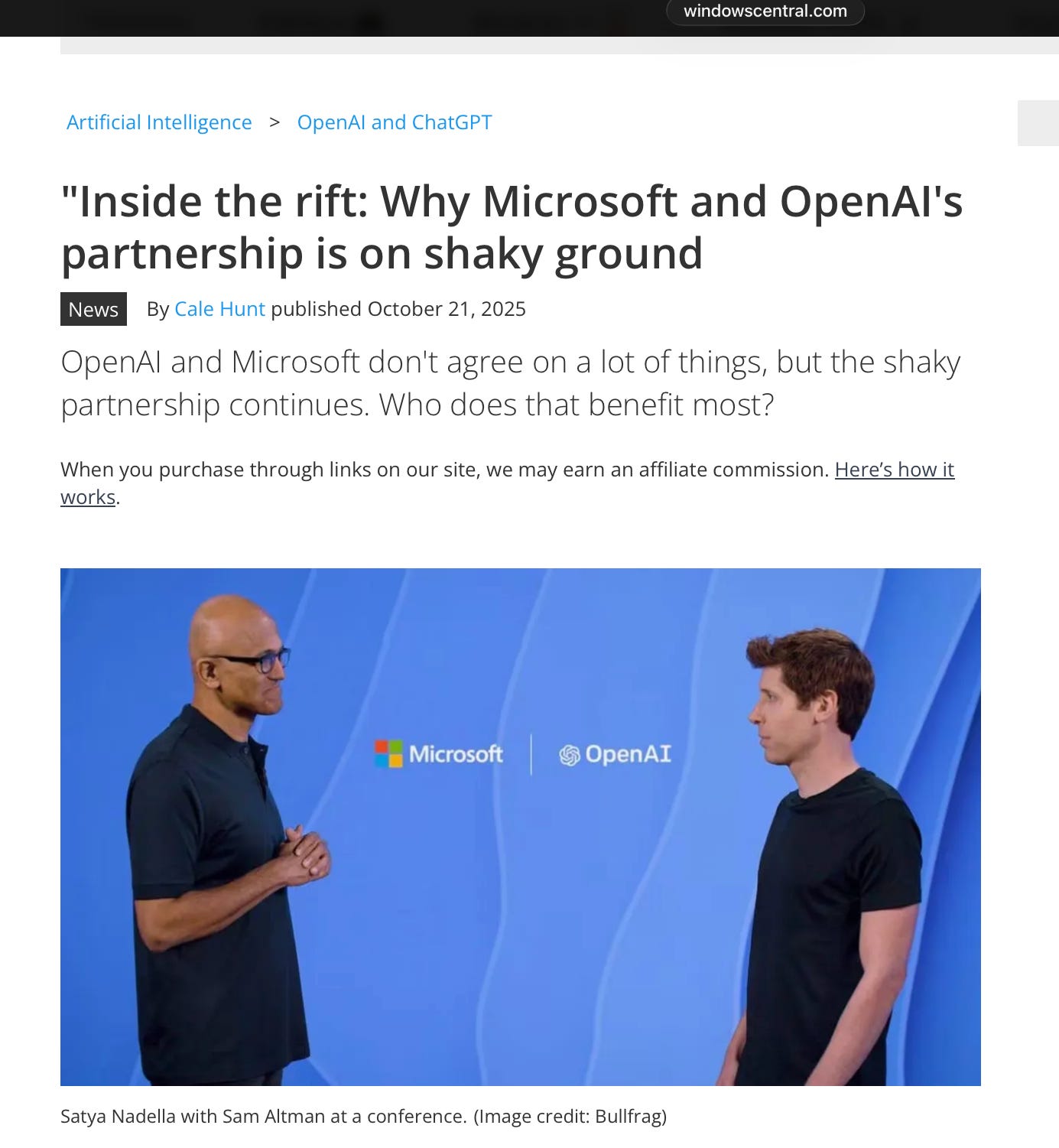
By now, though, Altman’s act is starting to wearing thin. Elon of course parted ways with Altman long ago; their dirty laundry goes before a jury soon. The Microsoft-OpenAI relationship is not what is used to be.
Over the last couple years, Altman’s public credibility has steadily waned (see e.g., Karen Hao’s bestseller, and my earlier essay on Altman in The Guardian). Lots of people have raised questions about the circular financing deals that he has been making in recent months. His defensive, empty response to investor Brad Gerstner in which he couldn’t begin to explain how he would make financial ends meet was atrocious and utterly unconvincing. More than one person has called him “Scam” Altman. His endless hints and promises around AGI haven’t helped. Many, many people were disappointed with GPT-5, arguably among the most overhyped products in history. (Altman got famous hinting at the supposed miracles of GPT-5; by any reasonable measure it was both late and short of expectations.)
If the technical achievements haven’t been quite what people were led to expect, the business achievements haven’t been either. Anthropic has started to eat a lot of OpenAI’s lunch, taking a lot of corporate customers away. DeepSeek launched a price war that forced Altman to cut prices dramatically. OpenAI has never made a profit. And more and more studies are reporting that corporate customers aren’t seeing big returns on investment. In December, Altman declared a code red
Yesterday things got worse. Although Apple ran that 2024 pilot with OpenAI, it appears now in hindsight that they must have been disappointed. For their next shot at trying to stick Generative AI inside of Siri, Apple is going with Google:
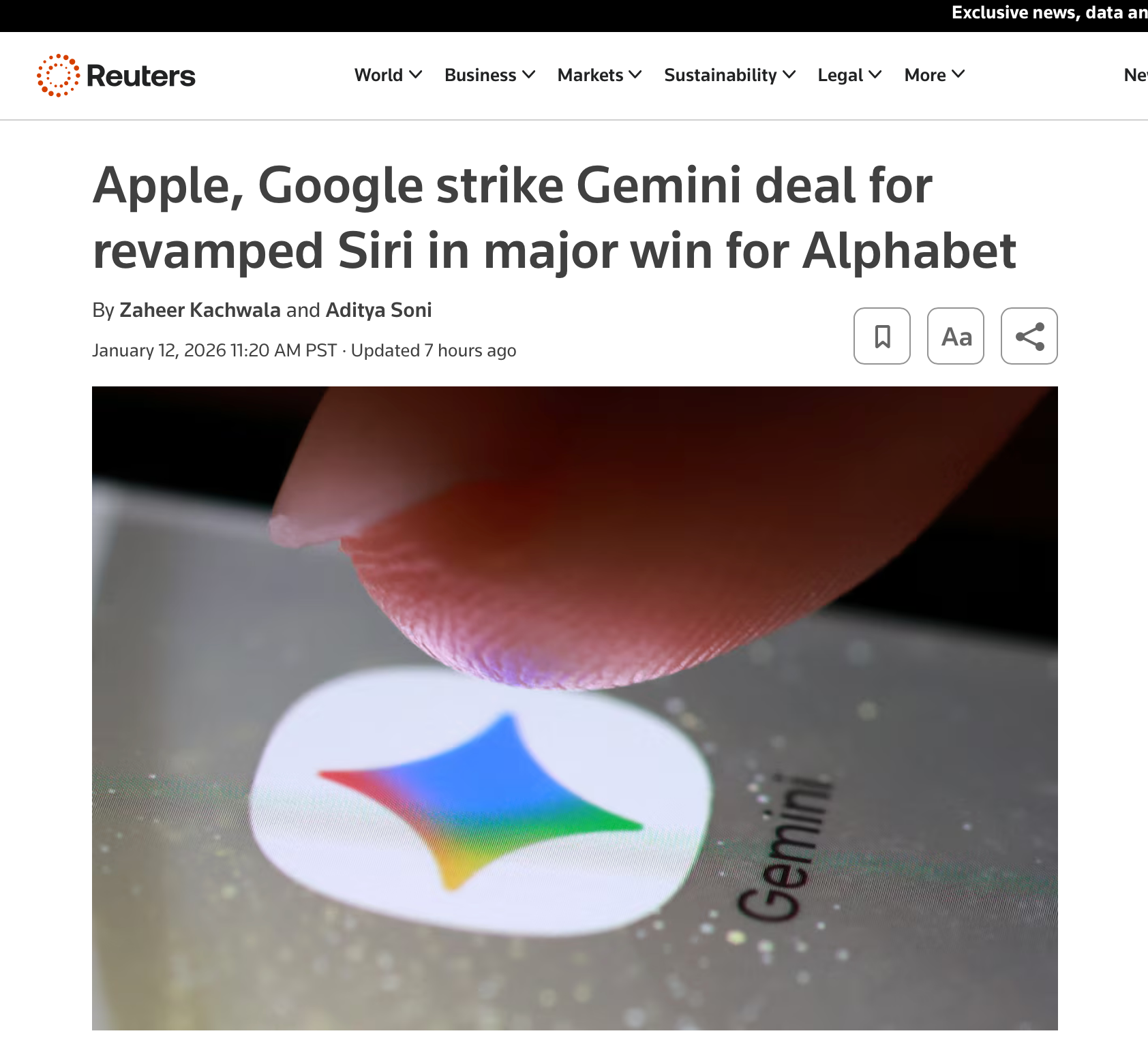
That deal was OpenAI’s to lose. And they lost it.
§
Two years ago almost to the day, I wrote an essay here called OpenAI’s got 9.5 problems, but Twitch Ain’t One, anticipating a fair bit of what has come to pass.
I warned that LLMs might plateau within a year or two, and they have, that OpenAI would be mired in a lot of litigation, and they are. I also warned that LLMs would continue to have a truthiness problem and they have.
But perhaps the most prescient paragraph was this one about how LLMs were likely to become commodities:
… at least so far OpenAI lacks both profits and a moat. The systems that they build are hugely expensive to operate, because they require massive amounts of compute for training (estimated in the tens or hundreds of millions of dollar for GPT-4, and rumored to be on the order of a billion dollars for GPT-5), but at the same time the general principles for building them have become fairly well-known in the industry. Google seems finally to be catching up, with their Gemini model, and Meta is releasing open-source competitors, perhaps not quite as good, but catching up quickly. Amazon and Apple may compete, and so on; dozens of startups are trying to as well. Large language models such as ChatGPT may quickly become commodities; we can expect price wars, and profits may continue to be elusive, or modest at best.
Those price wars did in fact come to pass; users costs per token are roughly a hundred times lower two year later. LLMs are commodities; DeepSeek proved that.
Most importantly, other companies like Anthropic and Google caught up; xAI and various Chinese companies aren’t far behind. In summer of 2024, Apple more or less had to go with OpenAI. Now they have a choice, and they have chosen to go elsewhere.
How OpenAI is ever going to turn enough profit to justify its valuation and massive commitments to other companies remains a mystery.
Small wonder OpenAI is starting to turn to “erotica” and dropping feelers about government bailouts. Between Apple going elsewhere, Anthropic taking a big chunk of the corporate market, and the disappointments of its flagship GPT-5, to say nothing of Altman’s horrendous failure to explain how ends would meet on the Gerstner podcast, it’s time to reconsider whether the boy king is really the man for the job.