AI was great until it was not
When I arrived at Oxford, I experienced what many would call a cultural shock. Beyond the flamboyant parties and visible micro-aggressions of the gowned elite, my physics and math courses felt radically different than before. The lectures were significantly more impersonal; the professors were a bit hostile; the crowd was huge, and everyone had something to prove. This would have felt rather normal if I had decided to continue my education in Argentina, but, instead, I had adapted to the American education model—at a school like Northwestern no less, which had a fairly small physics program. Not only that, I spent half of my undergraduate education surrounded by PhD students, taking the same classes as them.
But a masters in England was different. It felt bigger, more ominous. Most people opted to study and solve problem sets alone, and when we tried to work in groups there was an expectation to perform as the “genius” type. I had PhD offers from Harvard and Oxford straight from undergrad, and I felt like I had to prove I deserved it. It was partly my fault. I did feel the need to brag in order to be taken seriously, but it backfired on me. It was awkward at first, but the environment shifted drastically mid Michaelmas term. Pretty soon our discussions and ego games shifted from meaningless whiteboard debates to my classmates simply stating “I just asked ChatGPT how to do it.”
ChatGPT?
This was in late 2024. I had heard of AI in the past. Everyone was raving about it all year, but no one I knew had used it for class. I saw people complaining about how much water it used, how terrible it was for the environment and a few people even stated that it might kill us all someday. This felt like complete nonsense to me. I recall when I was writing my undergraduate thesis in mid-spring. I opened instagram to procrastinate for a few minutes, and I saw a popular “PhD influencer” (whatever that means) say she put her name in ChatGPT, and it blasted a lot of information about her and how great she was. I thought it was a bit scary for a “website” to pull up all your information like that (and I found the endeavour a bit narcissistic), but I was deeply curious, so I gave the chatbot a chance. I remember asking some question about scattering amplitudes, and it replied with nonsense. So, I pressed it and asked again with more detail, and it said:
“You should ask a theoretical physicist.”
And at that point, that was enough for me to close the window and never open it again.
That is, until a few months later, I was studying at Oxford with my “friends” at the time, and they kept raving about how ChatGPT could do their homework. Problem sets for most of the MMathPhys courses at Oxford are not graded. Real grades come from exams or your dissertation. A few classes require you to submit homework, but ‘passing’ is enough. I thought it was a bit meaningless to ask a chatbot to do everything for you when the entire purpose of the homework was to serve as exam practice. Yet, in January 2025, I found myself stuck trying to solve one QFT question, so I asked the chatbot like my friends recommended, and, again, it said some bullshit. I didn’t look at it again until a few months later.
It was a bit odd how the idea of “homework” had seemed to decay. Before, at least, we had the decency to look at Stack Overflow, and scout for similar problems or problem solving techniques that could help, but now suddenly people weren’t even doing that. They just asked ChatGPT to do everything. It defeated the purpose of doing homework to be honest. Though, I think we had lost that a while ago. I always thought that beyond practicing for the exam, problem sets were great to learn what collaboration during problem solving is like.
But in reality, collaboration has rarely been part of my reality as a student. The last time I recall truly collaborating with fellow students was in my freshman year of college. I was taking multivariable calculus with a bunch of engineering students. I knew two girls, Andrea and Juliana, from orientation and we immediately formed a small group chat to work together. We would try each problem set separately first, and then each of us would send our answers to the group chat and we would debate. For instance, one girl would ask me “oh, that’s a clever way to do this question. How did you know we had to integrate over this curve? Can you explain it to me?” or tell me “Hey, I think this question is wrong! You should use Lagrange multipliers this way instead.” And I would do the same thing for them. I learned a lot in that class, and I partly owed it to my great collaborators at the time. Debating, discussing and just learning from them was genuinely lovely. It helped me become better at math and truly grasp all the concepts.
I was deeply excited to start the physics major and collaborate with other physics peers. In the fall term of my sophomore year, I signed up for an honors differential equation math class with a friend who was also a physics major. As I thought was customary, we sent each other our solutions to check. It was my first time taking an honors math class, while that friend had taken three before. I also had to miss the first two lectures since my academic advisor insisted I wasn’t ready for honors, and I spent a week on a deeply boring standard class before I convinced the professor to let me switch. That is to say, I made a ton of mistakes in that first homework. So I messaged my friend like I had done in past and started asking: “Oh, it seems I misunderstood this concept, what do you mean here? Why is this true? I missed this class, so I thought we had to do something different” to which she accused me of trying to plagiarize her work and started ignoring me completely, and telling other people I was trying to copy her. Our friendship was never the same after that. And I learned a difficult lesson: I was alone. For the rest of the course, I worked on homework alone, I studied for exams alone, and I ended up with an A in the class. Actually, I spent most of my degree working alone, even as an undergrad among PhD students. I would explain my answers to my classmates, but I rarely had that back and forth from freshman year again.
That being said, ChatGPT just made the environment surrounding collaboration more bleak. Now, there was nothing beyond “Just ask ChatGPT.”
I was still hesitant to use AI. I saw many people in the MMathPhys use it for not only their homework, but for their dissertations and the research they expected to publish. I was confused. Another friend started using it as a therapist. I was still deeply confused. I was repelled by how agreeable it was, but it did give the weird illusion of having someone behind the screen.
Regardless, in May of 2025, all my bad decisions caught up to me. I actually spent most of my time at Oxford doing nothing. I always considered attending lectures some sort of social ritual. They have never helped me. I have always learned from books. Similarly, some problem sets were dense, uninsightful and useless, and if they were not needed for my grade, I wasn’t bothered to do them. I also had a PhD offer waiting for me at Harvard, so there was truly nothing to lose. I instead traveled a lot, went to parties, embarrassed myself, read a ton of books, played chess, fed the ducks and cried a lot. But at some point, I realized I had to get my masters degree and I had a month and a half to learn four Oxford MSc classes from scratch and pass my exams. I was cooked.
And there was ChatGPT. The thing about ChatGPT is that, well, it’s not a person. It doesn’t “think” like we do. But I realized it was very useful for one thing: rearranging what humans said in a more digestible way. So, I would sit with my cosmology and general relativity notes, and every time I got stuck or I couldn’t visualize a definition, I would just screenshot or copy the small section or sentence I did not understand and ChatGPT would re-explain it to me. Sometimes it included a quick example that helped me navigate index notation, for instance, or it would explain to me that torsion-free just meant that parallelograms closed.
One of the main incompatibilities with standard physics/math education and the way I think about problems is that definitions and derivations in a vacuum are a bit useless to me. I can follow complicated math and I can understand what a definition says, but it won’t click for me until I see a real illustrative example. This is not just a me thing. This is how Feynman thought about physics as well1, and I am sure a lot of people share this cognitive profile.
But instead of dealing with peers that got irritated at me and my stupid questions, ChatGPT provided that bridge almost instantly and with no fuss. After three weeks of using it, I realized I didn’t need it as much anymore. I could follow advanced concepts—like Penrose diagrams or Kerr Black Holes—on my own, make my own illustrative diagrams and derivations without AI. I took my exams two weeks after that. I learned the content General Relativity I&II, Cosmology and Geophysical Fluid Dynamics in a month and a half from scratch, while also taking the two Standard Model courses and a QFT in curved spacetimes class. My grades were between high passes and merits, but it was enough! I got my degree. And these were fully closed booked exams, so I did the work myself. But ChatGPT really helped me accelerate my knowledge acquisition.
That being said, I did not trust it at all for new research. Once I arrived to Harvard, I was given my first PhD project in early November of my G1 year, which is a bit early though not rare for high energy. I was working with a postdoc, and I was pleasantly surprised to see that the skills I learned in undergrad from my two mentors were incredibly useful for that problem. I embedded some twistor theory and chiral algebras into a nice mathematica notebook, which helped with a lot of calculations. I barely used AI on that project. It helped me find background literature and interpret some paragraphs/derivations in those papers. Beyond that, I only used Claude Opus to patch one piece of code in my library to help me deal with poles and residues in an expression because I wasn’t sure how to do it. That was it.
However, the single minus paper really changed the expectations surrounding AI in physics. Now, an internal model of OpenAI had found something researchers tried to work out for months before. That was cool, but it had nuance. A lot of the heavy lifting of that paper and the conceptual leaps were done by real people, but the accomplishment of AI was not to be understated. It was impressive. The proof was impressive and not straightforward, and this paper opened a lot of research directions in Celestial Holography. AI is actually great at proving things within a given framework. It’s also good at things that follow a strict logic or providing complex mathematical structures that are sound, but that’s not all that physics is. Or, I like to believe so.
The issue is that every time I showed my little mathematica notebook that I have coded mostly myself looking at the Wolfram documentation, both my seniors and PhD peers just would ask:
“Can’t ChatGPT do that?”
Maybe. But coding a problem in mathematica is not just about “efficiency” or writing fast code. It is about encoding a theory, a framework, working with corner cases, and learning. Maybe I could have asked Claude or ChatGPT to make a chiral algebras mathematica library, and it might have been good or better than mine, but then what would be the point? Maybe it would have been faster, slightly faster. Maybe I could have fed it all the different things I wanted to do, and let it code on the background and spit a ton of answers… but as a first year student that seemed to defeat the entire purpose of doing research in the first place. Furthermore, ChatGPT is not infallible. It can be very wrong. And not noticing when it’s wrong is just embarrassing for everyone involved.
I don’t believe in the grind of doing a difficult integral or proof from scratch to prove you are man enough to handle it (if a calculator or mathematica can do it, why suffer?), but I do think there is something valuable is solving an interesting problem, understanding a structure, and doing most of the conceptual heavy lifting. I finished my first project with very limited AI use, and the paper was published.
But when it was time to start my second project as a fresh G2, I did notice the environment had changed drastically. If you walk across the Harvard physics department and lean into the offices, a lot of people will have ChatGPT, Codex, Claude or similar open in their monitors. A lot of the emails I started to receive contained AI generated notes or notes based on ideas given by ChatGPT. It wasn’t just me, a lot of my peers go through this too, here and everywhere. This is a common experience now. Now, “brainstorming” means talking to ChatGPT. A lot of my time is spent deciphering ChatGPT notes, realizing it’s nonsense, and moving on to the next.
I was annoyed. I had objections, questions, and concerns, but I was shut down and told to ask ChatGPT. So, I asked ChatGPT and it just “validated” everything I said, but didn’t propose any solutions. The problem is that I wanted to debate with my superiors, ask questions… and I couldn’t. I realized a lot of doing a PhD in theoretical physics is dealing with loud people screaming at a blackboard, so it doesn’t feel very interactive either. Some people say a lot of fancy words. Bullshitting is common practice some say. I realized at some point that it wasn’t just me; there was some posturing, some performance, and ChatGPT made that worse. So, I was alone with a chatbot again. But, now, I didn’t have a set of lecture notes written by a top physicist at Cambridge about a theory that was established almost a century ago… I had a couple of papers, vague ideas, and nowhere to go because on a PhD you work out things no one has done before.
And it wasn’t good. Because I am just a second year PhD student and I don’t know anything. I know a lot of things, but in the grand scheme of things, I am inexperienced and I need mentors. And a chatbot cannot be my mentor. And then I realized that same tool that helped me so much a year ago was drowning me and my field. I don’t think technologies are evil, but I do think how humans utilize some technologies can be harmful. But it’s not AI’s fault, it’s ours.
I did realize early on that a lot of people in my field were less focused on finding the truth than they were on projecting, being right and showing off. I realized early on that for a lot of physicists teaching and mentorship is more of a burden than something they deem particularly valuable. We want the fastest PhD students, the ones that published three papers in undergrad, the ones that finish a calculation the fastest. We want the hottest topics and the most citations. But if a chatbot can replace a PhD student, if it’s faster, more efficient and it can absorb Weinberg’s QFT volumes in five minutes, why do we need students at all?
Why do we collaborate when we can just work alone with a bot?
Remember when I mentioned I had that group chat with my engineering friends and we were constantly comparing and brainstorming? Sometimes, they would catch a concept or see a clean solution I didn’t notice, and I would do that for them too. That helped us grow, and it gave me a deep understanding of a lot of those concepts. I would solve exams in unexpected ways, but that was fun! It helped truly grasp the math and how beautiful it was. But that was also a healthy collaboration. It wasn’t about getting the highest grade, or having the smartest solution, gatekeeping or screaming. We would sit down, try it out, politely discuss, and explain. We wouldn’t be mean or condescending, we would just learn from each other and improve each other.
People keep us in check. Each person is different. We all have a different background, a different way of seeing the world. We come from different training. But, you learn from others and they learn from you too.
And we are losing that now too. Should we fear that colleagues working in AI companies might take our prompts and try to get ahead to solve a problem before we do? Should we fear for threats? Should we fear that our days as PhD students will be spent telling a machine to “try harder” instead of deeply understanding something new?
Truth is, I was very impressed and excited about how ChatGPT helped me study. Would I rather have responsive professors, lecturers that know pedagogy, physicists that want to write understandable papers instead of purposefully burying insight in meaningless jargon, and peers I can talk to without having an anxiety spike? Yes. I would rather have that one hundred percent. And I fear that now, it’s all going to be worse. Because we now have in our hands a machine that validates all of our biases and buries them in dozens of pages of meaningless math.
I am just a PhD student who feels a little defeated, not because AI might take my job, I am privileged enough for that to not be a concern (and let’s be honest, I am privileged enough to have the opportunity to do a PhD in theoretical physics). But because the way we are using AI is destroying what made science fun in the first place. Is it really fun to publish thirty papers in a week using AI just for the sake of it? One of my friends in the program rightfully asks “Are those papers worth publishing?”
The entire point of solving an interesting problem or understanding the mysteries of the universe is not to win an award or have the most citations, but to get closer to that almost mythical thing we call truth, to know the universe and ourselves through the study of the nature of things.
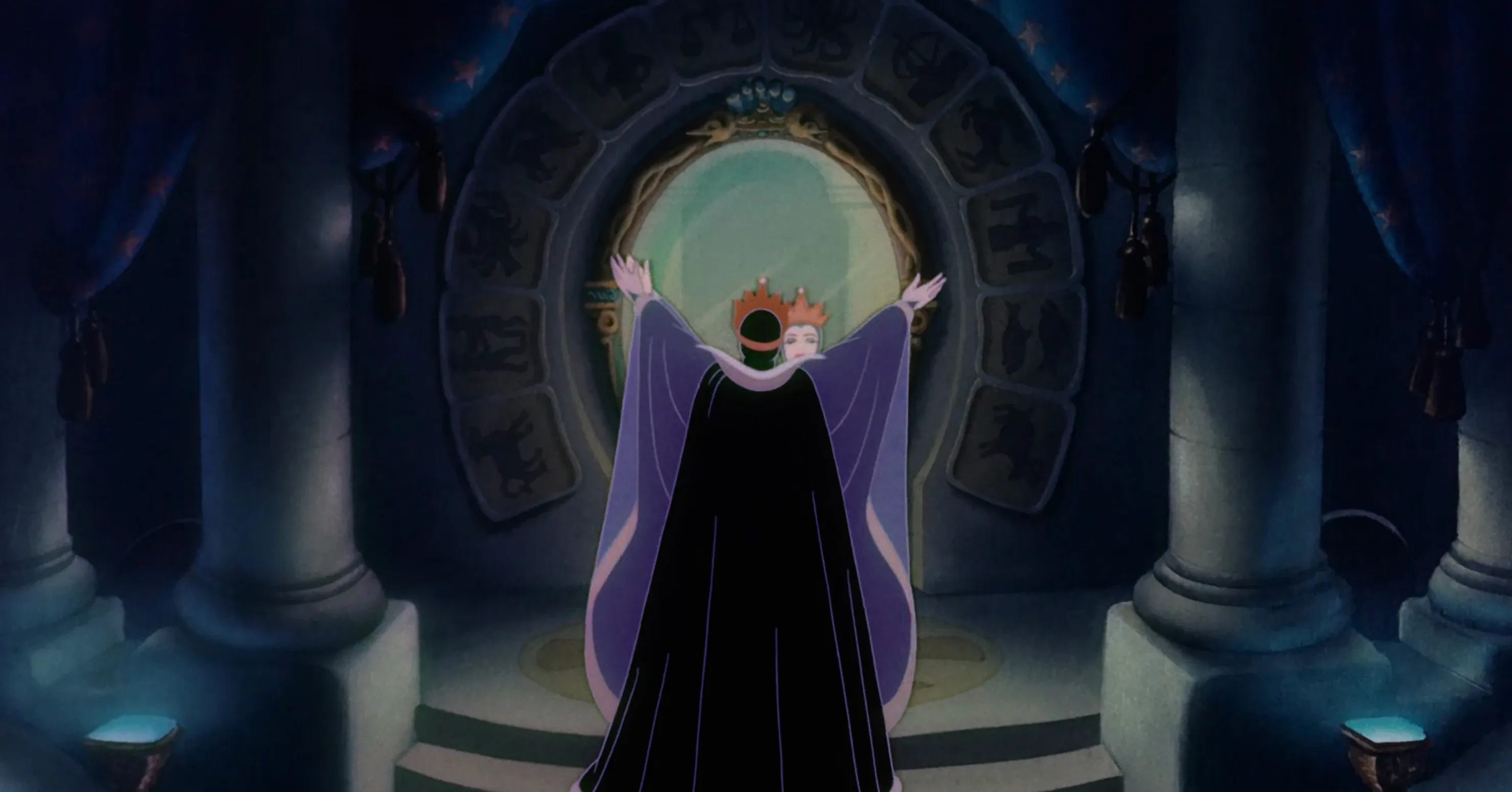
The problem is that the little chatbot in our pockets is making us more isolated and in so, it’s making us stray further from this humble goal: to learn. But it wasn’t just the chatbot, it was the culture around academia too. I think chatbots are a mirror, a deeply validating sycophantic mirror with the knowledge of the internet. But mirrors can be dangerous if we stay for too long too charmed by our own reflection, and we forget about everything and everyone else too. In particular, it would be pretty sad to destroy one of the few things that makes our life meaningful, not the fancy prize or the fancy position, but simply having a community to share and discuss and learn. To learn things. That is a beautiful thing.
-Nia
"If men could only see the cause, and why
This mountain of distress weighs down the mind,
They’d drop all else and study to find out
The Universe’s Nature and its layout—
Since it’s our status for eternity
That is at issue here, and not just one
Brief hour—the state in which all mortals must
Spend time to come, when once our days are done."
-Lucretius2