Hollywood creatives are taking gig work to train AI models to replicate their skills in a bid to offset tightening earnings in a trend one compared to being “handed a shovel and asked to dig the grave of my profession”.
Experienced and award-winning writers, directors and producers are being paid from $12 to $200 an hour to teach AI models the intricacies of their jobs, from writing a screenplay to devising a shooting schedule.
With feelings ranging from fatalism to guilt, the creatives have signed up with some of the booming training agencies, which have contracts with the biggest AI companies including Anthropic and OpenAI, to pass on hard-won human skills in industries such as finance, health, law and social work.
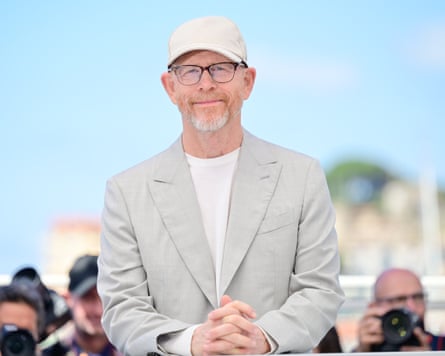
While they wait for entertainment industry work, they give notes on the AI systems’ attempts to do the tasks they would hope to be paid for themselves. It comes amid a slump in jobs in the motion picture and sound recording industries, where AI is starting to take roles from actors, editors and special effects artists. Netflix this month revealed it used AI in 300 of its 1,000 titles in 2026, and directors including Ron Howard are starting to embrace the technology.
“It’s very production specific,” said Ruth Fowler, a screenwriter and producer in Los Angeles. “It’s teaching it how to take our jobs.”
Fowler wrote and created Rules of the Game, a BBC One drama starring Maxine Peake, and co-wrote the screenplay for Little Disasters, a series for Paramount Plus starring Diane Kruger. But she started training AIs “because I was thinking: wow, I’m always broke”.
“I think production is down by 35% or something insane,” she told the Guardian. “So everybody was like: ‘what do we do?’”
She had to train an AI to devise a detailed schedule for a hypothetical two-day shoot, including identifying necessary filming permits, potential location hazards, daylight conditions for photography, lists of personnel per shot and cast needs such as child protection. She would train the AI to base the plan on documents including emails, a shooting script and other production materials. In another case, she trained an AI how to put together a pitch deck for film and TV ideas – the kind of work a production executive would do.
Another creative, an LA documentary director, took a job teaching an AI how to accurately transcribe video footage. He reviewed recordings of a Little League baseball game where the voices were muddled by music and crowd noise to teach it to tease out overlapping sounds. He also had to create a visual guide to each speaker (for example: blond woman with a buttoned-down shirt with a gold necklace) and characterise accents, such as English, Scottish, African American or Asian – which sparked concern among the freelance workers.
“I would not have embarked on this work if I did not have a realistic and perhaps a bit fatalistic understanding of how the world is working,” he said, requesting anonymity. “This is simply a thing that will be with us in the future and no amount of abstaining will prevent [it].
“I describe to friends [that] I was essentially handed a shovel and asked to dig the grave of my profession.”
Job opportunities for Hollywood workers have dwindled. Shoot days in LA fell 48% between 2021 and 2025, according to FilmLA Research, as the consequences of the pandemic, the writers’ strike and lower investment by the streaming companies took a toll. Across the US, jobs in motion picture and sound recording industries declined 28% from 450,000 in July 2022, the peak of the post-pandemic recovery, to 326,000 in May 2026, according to the Bureau of Labor Statistics. Across the wider US economy, 10% to 15% of jobs in the US could be eliminated by AI and more than half of roles reshaped by the technology – with driverless taxis, software coding and AI translation among prominent examples, according to an April analysis from Boston Consulting Group.
Mercor, Micro1 and Handshake are three of the prominent AI training companies. Micro1 was this week seeking producers with “demonstrated mastery in film, television, digital, or live event production” and more than five years of credited project experience to “design and author evaluation tasks that simulate realistic production-management scenarios, such as budget reconciliation, scheduling adjustments, and vendor or crew coordination”. Pay is up to $85 an hour.
after newsletter promotion
Jody Wheeler, a 56-year-old screenwriter who has taught at the University of Southern California and has taken AI training work, was sanguine, having seen what he believes are the technology’s shortcomings. While the AI models are good at churning out ideas, he said, “the machines are not going to be generating Oscar-winning scripts any time soon”.
“You can see this as kind of giving people a shovel to bury themselves with,” he said. “It can also be the case that you’re giving people a shovel to help them unearth stuff that they wouldn’t have been able to do themselves before.”
Younger filmmakers have been turning to AI to produce films and series that wouldn’t have otherwise received funding. For example, Zack London, who goes by the name Gossip Goblin, is due to release a feature film in cinemas later this year, having built up hundreds of millions of views for his AI-produced science fiction shorts online.
Another writer with credits on TV series for Amazon, HBO, NBC and Lionsgate, who asked not to be named, said she had started training AIs to write scripts after commissions did not rebound from the 2023 writers’ strike. She also assesses AI-written podcasts, novels and lectures: “It’s keeping me afloat without letting me have to stress.” She has noticed the AI getting significantly better, but “no closer to approximating human emotion … there’s no nuance”. AI could write an episode of CSI, but not Severance or Succession, she said.
“I don’t worry about it replacing real artists,” she said. “Is it gonna level out the guys who never should have been doing this in the first place? Yes.”
“A couple of months ago, I was starting to think: ‘Oh god, I maybe should not be doing this. Maybe we are going to a place where this is going to eventually put people out of work.’ But at the end of the day, having money in the bank won.”