examining the macOS gcc binary
if you’ve ever written C(or c++) on a mac, you’ll know that the
so-called gcc is just clang in disguise
$ gcc
clang: error: no input files
most people(fairly) assume that this is just an alias, but this is
not true! it’s a binary!
now, what is this binary? i naively assumed that it would
just be shelling out to clang but it turns out the answer
is more interesting than that.
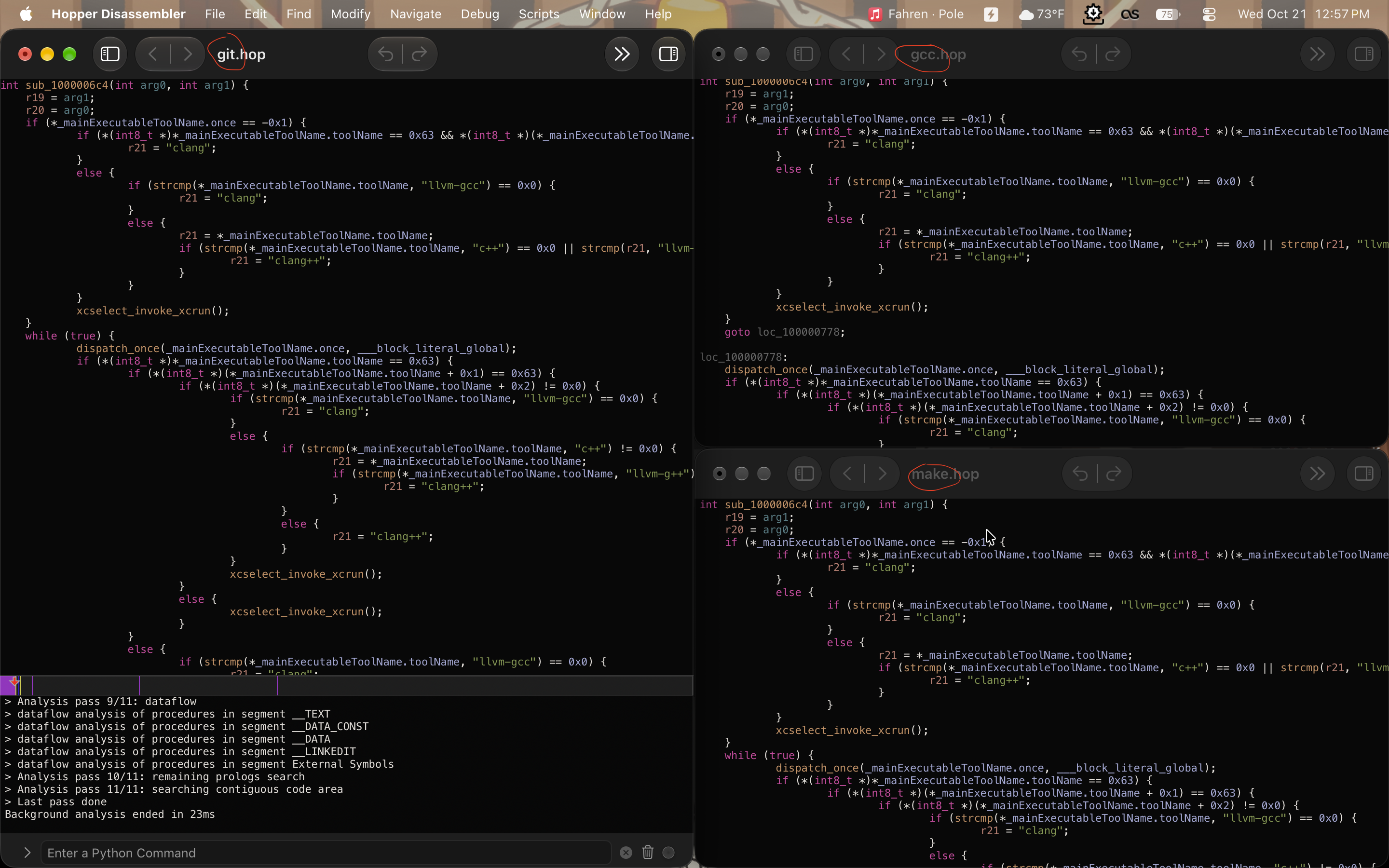
int sub_1000006c4(int arg0, int arg1) {
    r19 = arg1;
    r20 = arg0;
    if (*_mainExecutableToolName.once == -0x1) {
            if (*(int8_t *)*_mainExecutableToolName.toolName == 0x63 && *(int8_t *)(*_mainExecutableToolName.toolName + 0x1) == 0x63 && *(int8_t *)(*_mainExecutableToolName.toolName + 0x2) == 0x0) {
                    r21 = "clang";
            }
            else {
                    if (strcmp(*_mainExecutableToolName.toolName, "llvm-gcc") == 0x0) {
                            r21 = "clang";
                    }
                    else {
                            r21 = *_mainExecutableToolName.toolName;
                            if (strcmp(*_mainExecutableToolName.toolName, "c++") == 0x0 || strcmp(r21, "llvm-g++") == 0x0) {
                                    r21 = "clang++";
                            }
                    }
            }
            xcselect_invoke_xcrun();
    }
    while (true) {
            dispatch_once(_mainExecutableToolName.once, ___block_literal_global);
            if (*(int8_t *)*_mainExecutableToolName.toolName == 0x63) {
                    if (*(int8_t *)(*_mainExecutableToolName.toolName + 0x1) == 0x63) {
                            if (*(int8_t *)(*_mainExecutableToolName.toolName + 0x2) != 0x0) {
                                    if (strcmp(*_mainExecutableToolName.toolName, "llvm-gcc") == 0x0) {
                                            r21 = "clang";
                                    }
                                    else {
                                            if (strcmp(*_mainExecutableToolName.toolName, "c++") != 0x0) {
                                                    r21 = *_mainExecutableToolName.toolName;
                                                    if (strcmp(*_mainExecutableToolName.toolName, "llvm-g++") == 0x0) {
                                                            r21 = "clang++";
                                                    }
                                            }
                                            else {
                                                    r21 = "clang++";
                                            }
                                    }
                                    xcselect_invoke_xcrun();
                            }
                            else {
                                    xcselect_invoke_xcrun();
                            }
                    }
                    else {
                            if (strcmp(*_mainExecutableToolName.toolName, "llvm-gcc") == 0x0) {
                                    r21 = "clang";
                            }
                            else {
                                    if (strcmp(*_mainExecutableToolName.toolName, "c++") != 0x0) {
                                            r21 = *_mainExecutableToolName.toolName;
                                            if (strcmp(*_mainExecutableToolName.toolName, "llvm-g++") == 0x0) {
                                                    r21 = "clang++";
                                            }
                                    }
                                    else {
                                            r21 = "clang++";
                                    }
                            }
                            xcselect_invoke_xcrun();
                    }
            }
            else {
                    if (strcmp(*_mainExecutableToolName.toolName, "llvm-gcc") == 0x0) {
                            r21 = "clang";
                    }
                    else {
                            if (strcmp(*_mainExecutableToolName.toolName, "c++") != 0x0) {
                                    r21 = *_mainExecutableToolName.toolName;
                                    if (strcmp(*_mainExecutableToolName.toolName, "llvm-g++") == 0x0) {
                                            r21 = "clang++";
                                    }
                            }
                            else {
                                    r21 = "clang++";
                            }
                    }
                    xcselect_invoke_xcrun();
            }
            continue;
    }
}
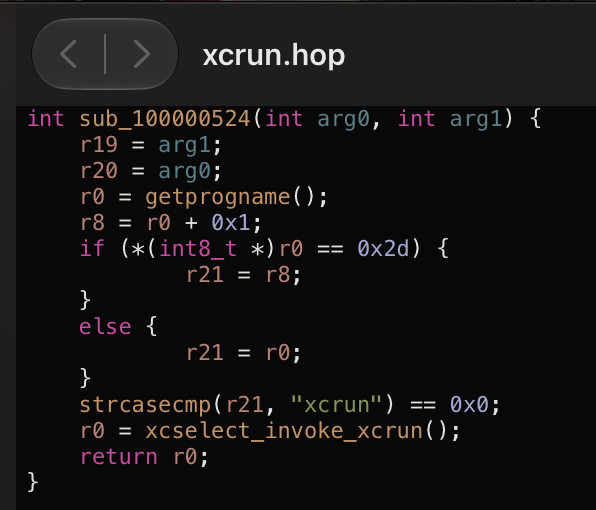
there’s some interesting stuff here(for example special logic for
checking if it’s being run as c++ or llvm-gcc specifically), but the key
thing we’re interested in is this line of code:
this is a function from libxcselect.dylib, but it’s basically the
same thing as running xcrun.(fun fact: the xcrun binary
basically just calls this function) if you
disassemble any xcode-installed developer tool, you’ll see this exact
same binary,meaning all the developer tools that xcode-select
installs on macOS are actually just being run through xcrun.1
but that raises the important
question: what does xcrun do? i’ve certainly never heard of it
before this.
well, checking the
manpage we can see that it calls developer tools from the developer
tool directory. this gives us an important bit of info: the location of
the actual gcc binary that’s being called. thankfully for us,
there is a --find command that can give us exactly
this.
$ xcrun --find gcc
/Library/Developer/CommandLineTools/usr/bin/gcc
looking in this directory, we can see that:
c++, llvm-gcc,
llvm-g++ aren’t in this directory, that’s why they’re hardcoded into the
binary itself
cc and clang++ are just alises to clang
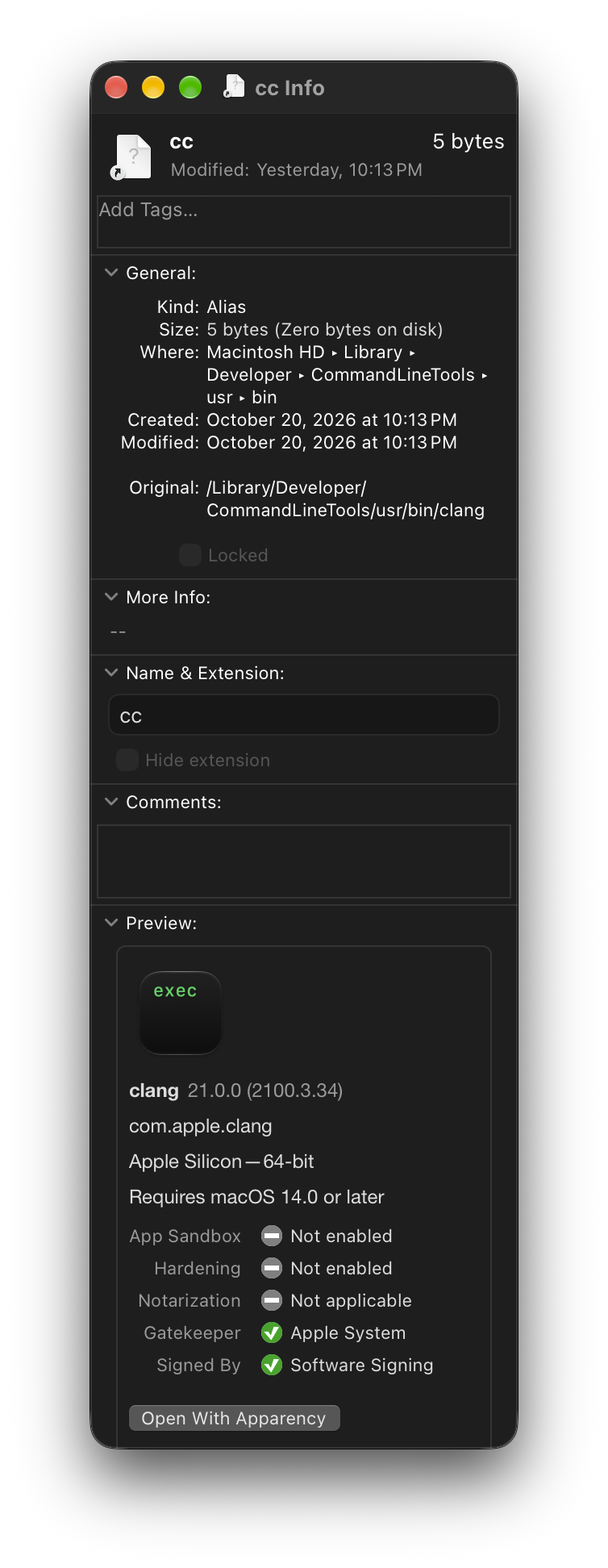
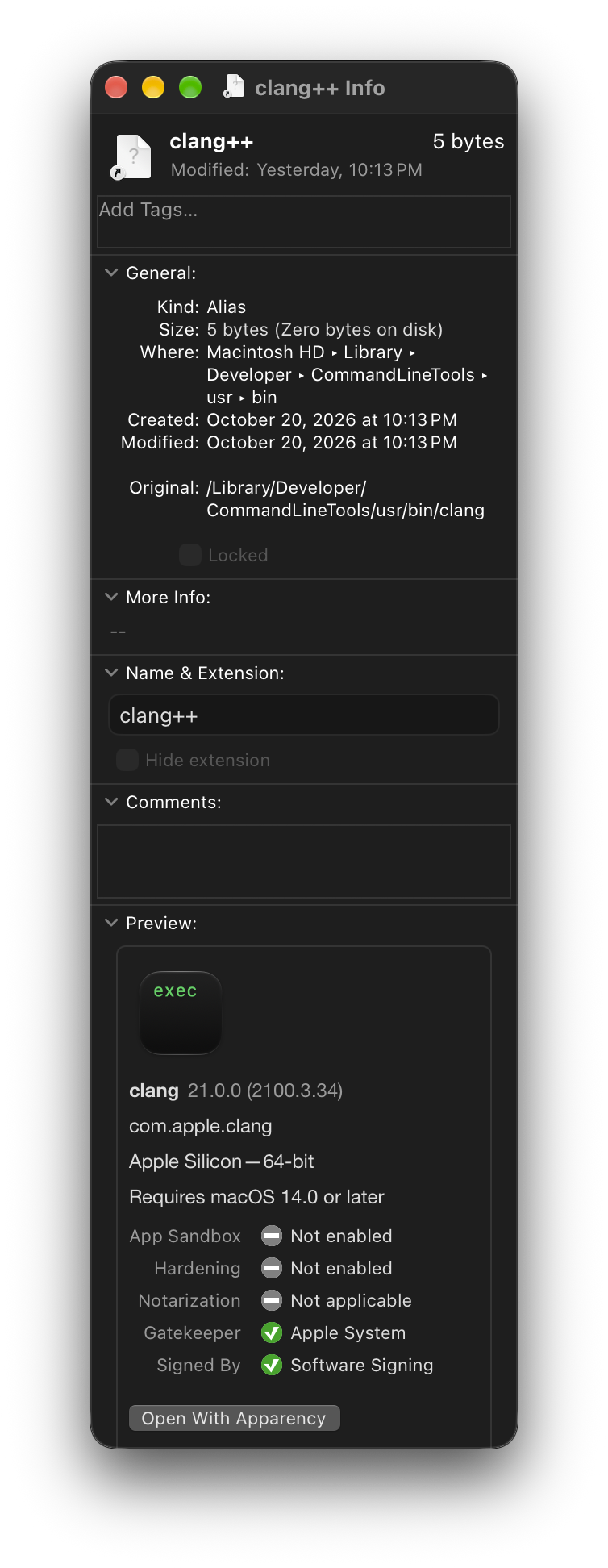
but most
interestingly, g++ is an alias to an actual gcc binary that’s in the
same directory:
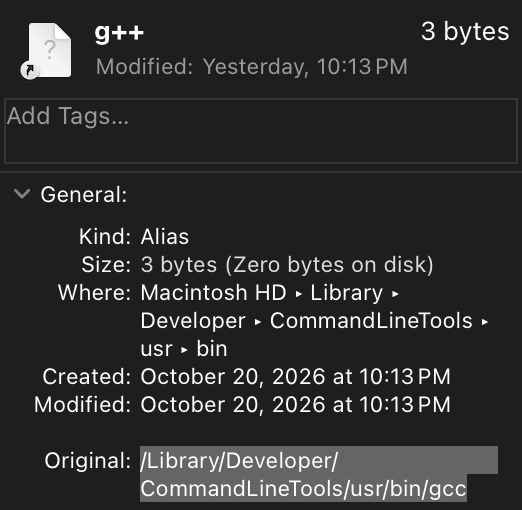
well, what
does that gcc binary do, then?
opening it in my
disassembler, we see that it… shells out to xcrun and calls clang(or
clang++ depending on how it’s called)
int EntryPoint(int arg0, int arg1) {
    r22 = arg1;
    r21 = arg0;
    asm { sbfiz      x8, x21, #0x3, #0x20 };
    r0 = malloc(r8 + 0x10);
    if (r0 == 0x0) {
            err(0x47, r1);
    }
    r19 = r0;
    *r0 = "/usr/bin/xcrun";
    r23 = *r22;
    r0 = strlen(r23);
    if (*(int8_t *)(r23 + (r0 - 0x1 << r64)) == 0x2b && *(int8_t *)(r23 + (r0 - 0x2 << r64)) == 0x2b) {
            r8 = "clang++";
    }
    else {
            r8 = "clang";
    }
    r19[0x1] = r8;
    if (r21 >= 0x2) {
            asm { ubfiz      x2, x8, #0x3, #0x20 };
            memcpy(r19 + 0x10, r22 + 0x8, r2);
            r8 = r21;
    }
    else {
            r8 = 0x1;
    }
    *(r19 + r8 * 0x8 + 0x8) = 0x0;
    r0 = execv("/usr/bin/xcrun", r19);
    err(0x47, r1);
    return r0;
}
if you’re wondering why this is, my guess is because of SIP. /usr/bin is a protected directory on macOS and i assume apple can’t update it without requiring a restart, and you can update the xcode tools without having to restart your mac. as for why they dont just add the developer tools directory to path, my guess is that they want the freedom to change this directory whenever they want↩︎