American hotels raised rooms 300% for the World Cup, now they're slashing rates to fill empty beds: 'It's a non-event'
Source: forbes.com.au
FIFA hyped the World Cup as an economic juggernaut for the U.S. – but with five weeks until the tournament kicks off, the hotel industry says advanced bookings in some host cities are on par or lagging any ordinary summer.
Key Facts
- Nearly 80% of U.S. hoteliers in 11 World Cup host cities say bookings are tracking below original forecasts, with some describing the tournament as a “non-event,” according to an American Hotel & Lodging Association (AHLA) survey of members released Monday.
- Only a quarter of AHLA respondents are “seeing meaningful incremental lift”—mainly in markets with strong baseline leisure demand or team base camps.
- The U.S. metros hosting World Cup games will “generate some GDP growth this summer,” concentrated in leisure and hospitality sectors, but those “will not have a material impact” on overall jobs and economic gains this year, according to a report released last week by Oxford Economics.
Hotel industry lowers its World Cup expectations
While the U.S. is expected to see an economic upside to hosting the World Cup, it’s clear that demand for the tournament will fall well short of the “104 Super Bowls” promised last year by FIFA president Gianni Infantino.
“It was not true when it was said and it’s not going to come true now,” Jan Freitag, national director of hospitality market analytics at CoStar, an industry benchmarking firm, told Forbes. A FIFA analysis that projected the World Cup would drive $30.5 billion in economic output was predicated on the assumption that millions of international tourists would flock to the tournament. Last year, FIFA told tourism officials in World Cup host cities to expect a 50/50 split between domestic and international visitors.
But roughly seven in 10 respondents in the AHLA survey said visa barriers and broader geopolitical concerns are significantly suppressing international demand. “The lack of international inbound is certainly going to hurt the overall economic impact,” Freitag said.
And the size of this World Cup—spanning 16 host cities across three countries—presents many logistical hurdles for international travelers.
“A key difference is that this tournament’s much bigger than other World Cups,” Alan Fyall, associate dean at the University of Central Florida’s Rosen College of Hospitality Management, told Forbes. “It’s more spread out, it’s more expensive, and travel is more complicated.”
Related
Which World Cup host cities see a ‘non-event’ for hotels?
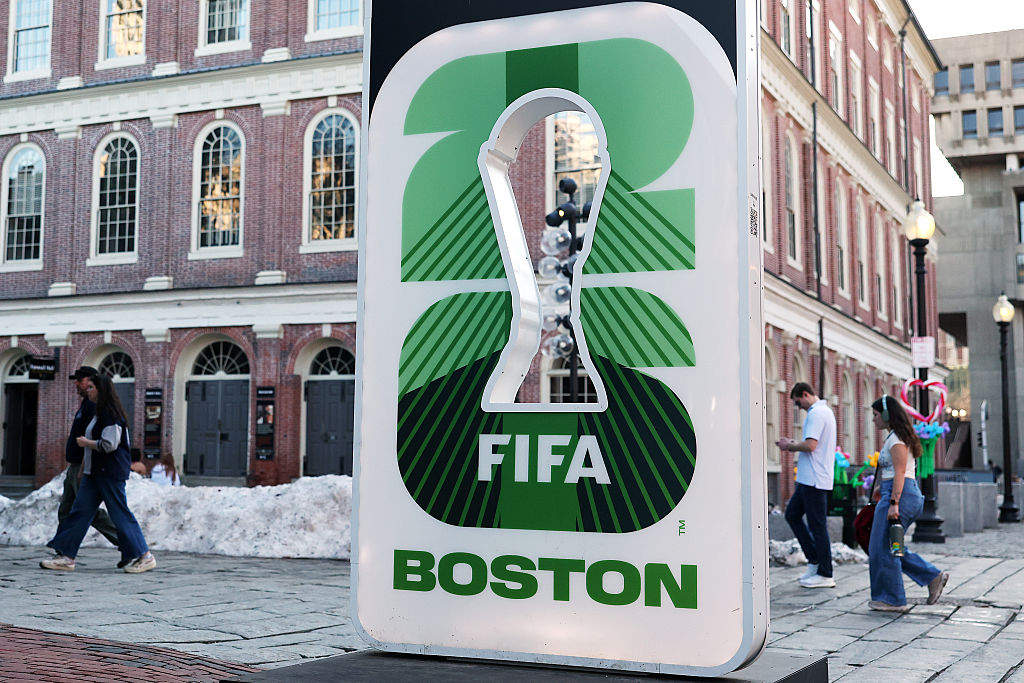
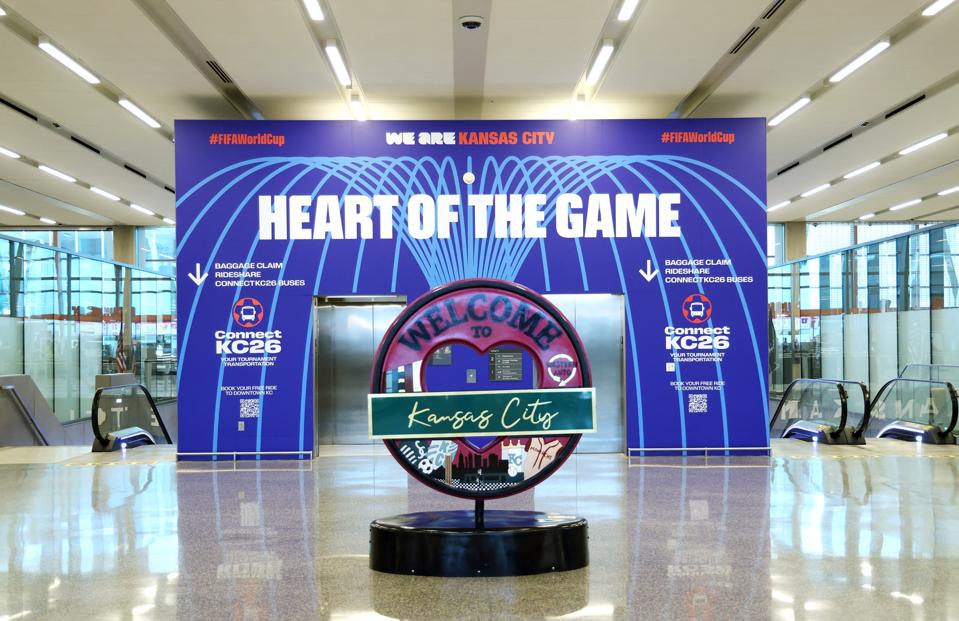
Roughly 85-90% of hoteliers in Kansas City report that bookings are trailing a typical June or July without any major events. In four host cities—Boston, Philadelphia, San Francisco and Seattle—nearly 80% of hoteliers say bookings are behind a typical summer, with many describing the tournament as a “non-event.”
In Los Angeles, nearly 65-70% of AHLA respondents report bookings below expectations, often in line with or lagging behind a typical summer.
Likewise, roughly two-thirds of New York City hotels report softer-than-expected bookings that track with normal, but not elevated, summer demand.
Which World Cup host cities see a lift in hotel bookings?
In Miami, more than half (55%) of respondents say bookings are ahead of expectations and typical summer benchmarks. Half of Atlanta hotels (50%) report bookings are in line with or ahead of expectations, and ahead of a typical June or July.
In the two Texas host cities—Dallas and Houston—roughly 70% of respondents report bookings are below World Cup expectations, though they are still broadly in line with a typical June or July, which indicates “limited incremental lift” from the tournament, according to the AHLA report.
Hope for a last-minute influx of fans
For June games, the booking window for international fans is closing. “If a team has a fan base that needs a visa, that time is getting short, or has already passed,” Freitag told Forbes.
“If a country’s fans aren’t able to get visas, then you rely on Americans that follow that team or people who have relocated here and are already in the country.”
But there’s still hope that the later stages of the tournament will deliver some robust room demand from international travelers “if they can afford a ticket,” Freitag said.
“I think prices on the secondary market are, I guess ‘robust’ is the word.” Expect to see hotel room demand lift in July, after the tournament’s early-stage rounds, Fyall told Forbes.
“If a team is doing well and fans sniff an opportunity that ‘this could be our year,’ then I think a lot of people will want to be there,” he said.
“The tournament really doesn’t heat up until the end of June. That’s where we could see pickup.” And if those international fans don’t arrive? “The stadia will be pretty full with mainly Americans. Some of them will be slam-packed,” Fyall said. “It’ll look great on TV, but it won’t be a tourism bonanza.”
This story was originally published on forbes.com and all figures are in USD.
Want to see more Forbes articles on your feed? Tap here to make Forbes Australia a preferred source on Google.
Look back on the week that was with hand-picked articles from Australia and around the world. Sign up to the Forbes Australia newsletter here or become a member here.