I have a thing for lamps. Especially designer lamps from the past. I occasionally share them on X and Instagram, and people always ask me about the brands and models. I love lamps so much that I designed one myself. So I decided to give a tour of the lamps I own.
Before I go into each one, I should say that none of these are cheap. Are they worth it? Probably not for their price, but for me they are worth every penny. At a certain point, it becomes more like collecting, and collecting things is very different from just having a lamp to illuminate a room. The lighting industry is a huge ecosystem though, and nowadays you can get really nicely designed lamps from IKEA for maybe a tenth of the price. Also, most of these can be found for very good prices at vintage stores or fairs.
Anyway, here are my lamps in no particular order. All of the photos were taken in my own house:
Artemide Tolomeo Mini
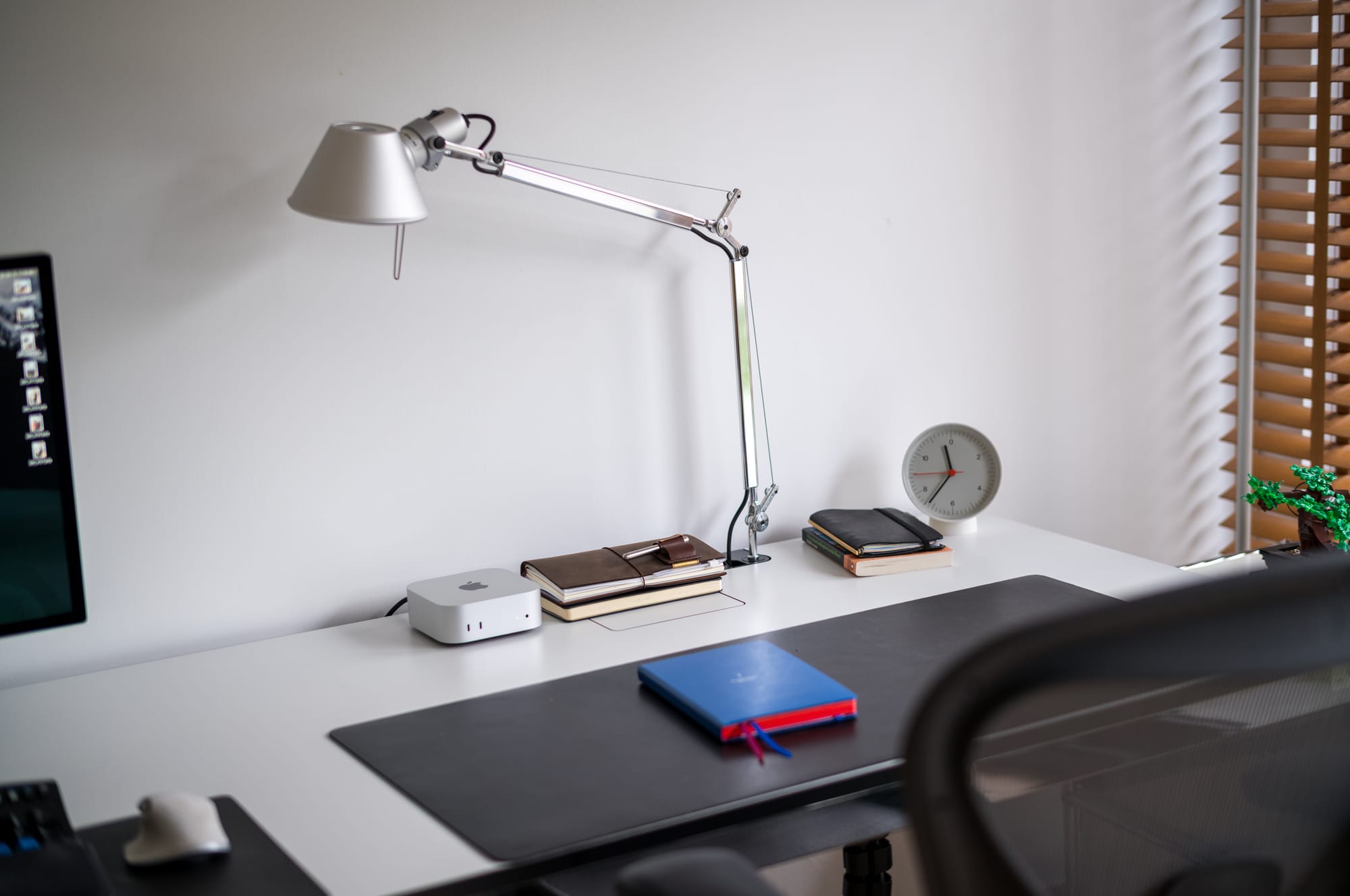
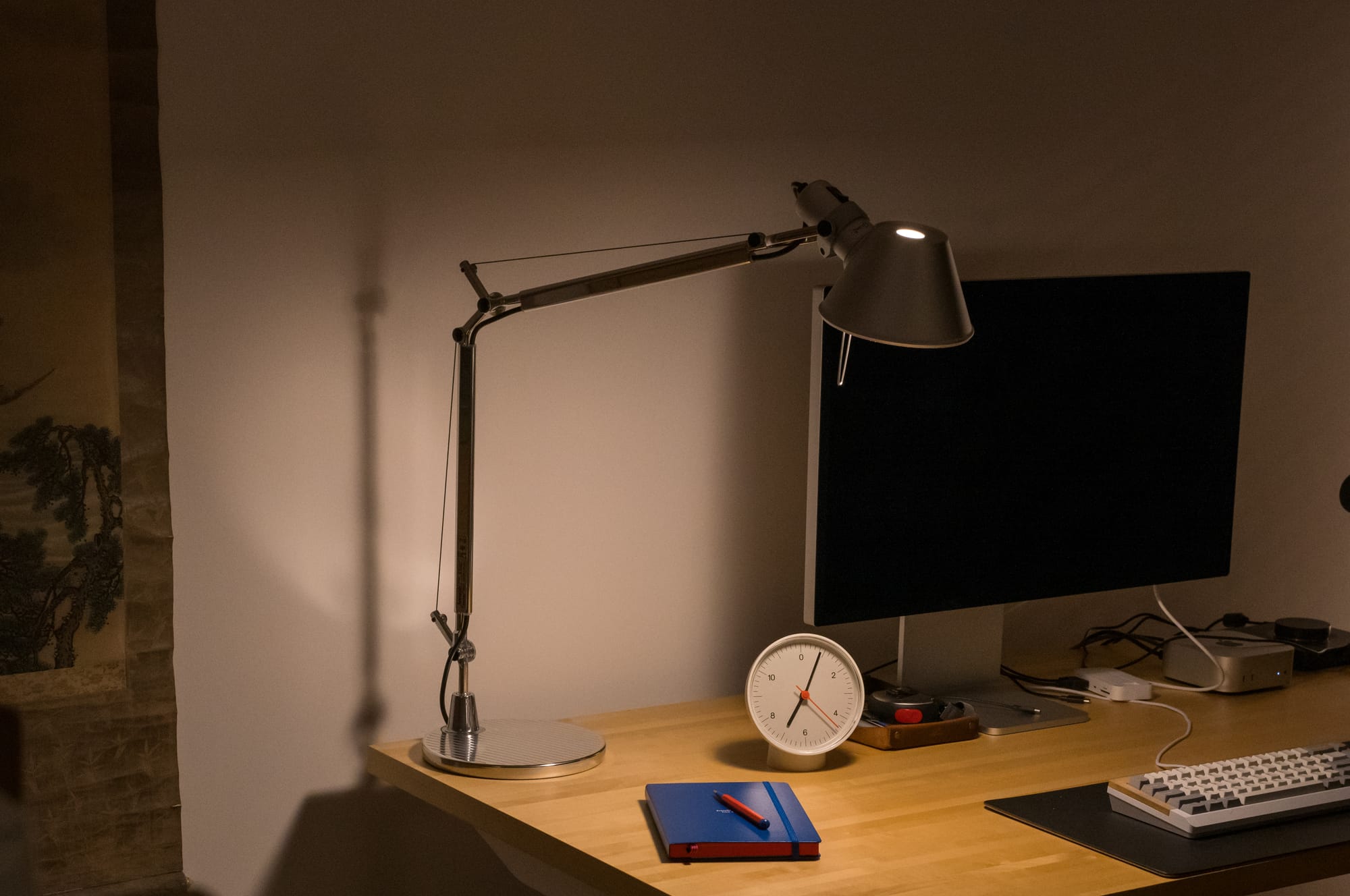
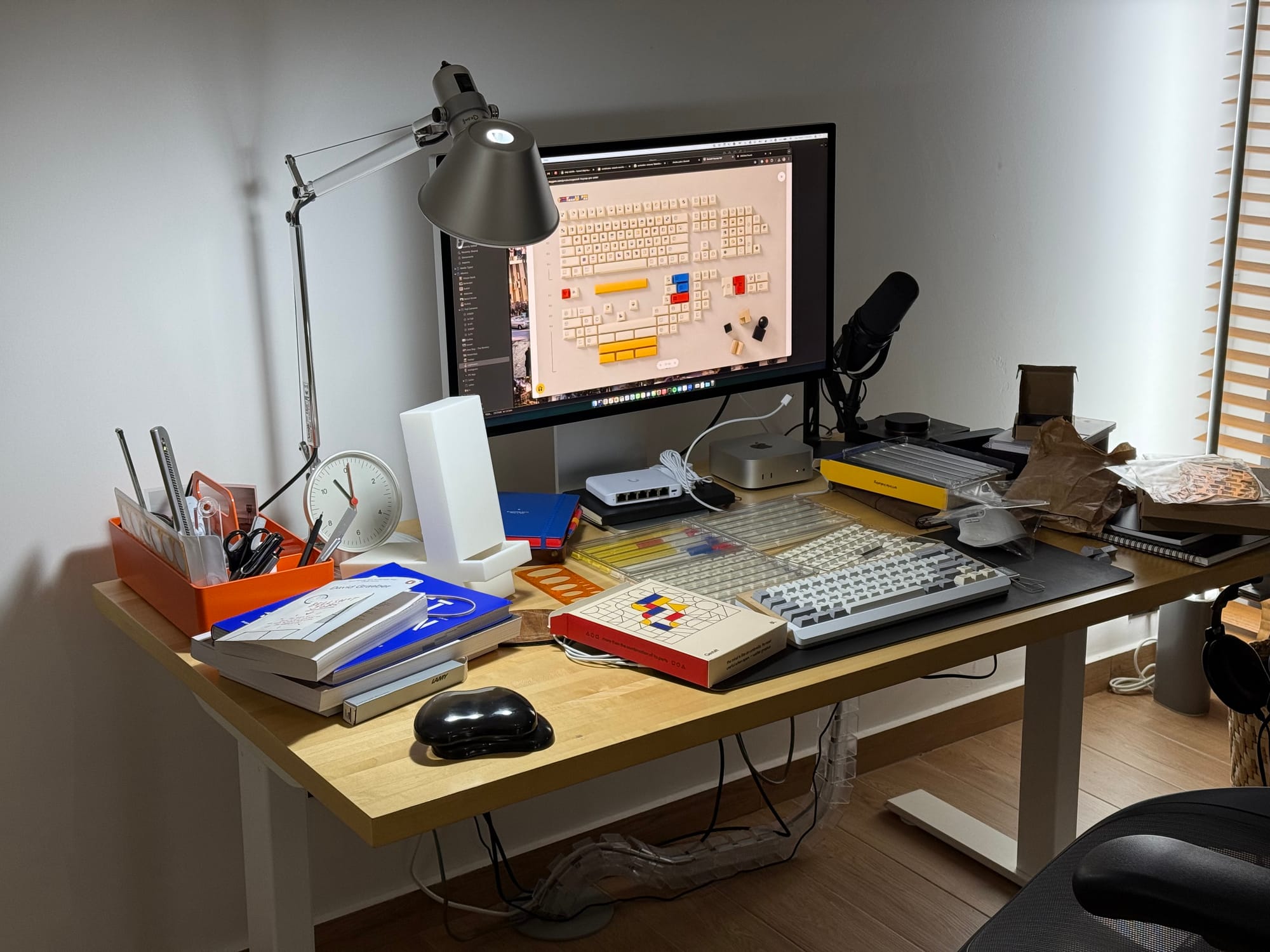
The Tolomeo was designed by Michele De Lucchi and Giancarlo Fassina in 1987. De Lucchi is one of the big names in Italian design and was also part of the Memphis movement. The lamp won the Compasso d’Oro in 1989.
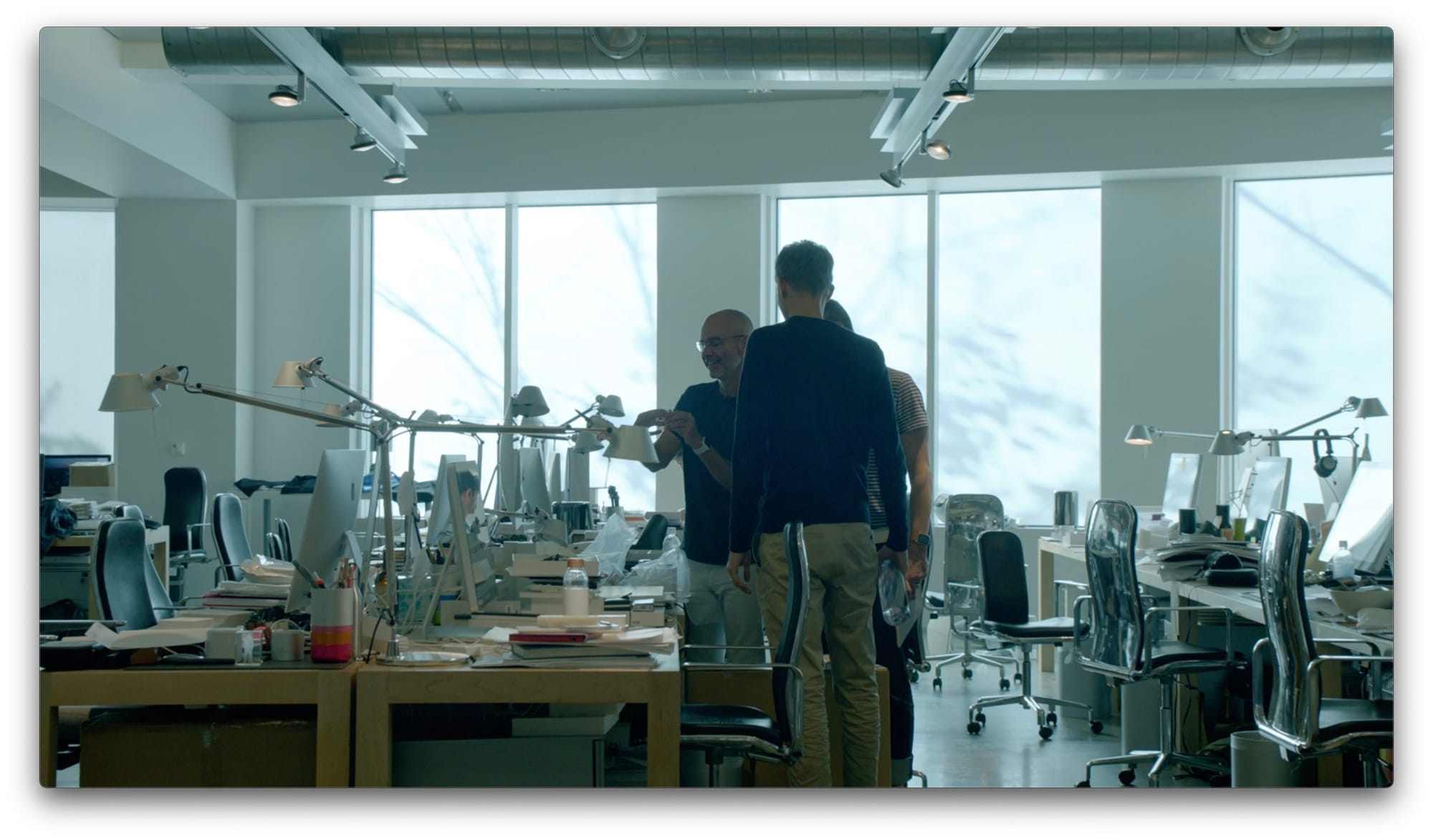
It is probably one of the most copied desk lamps ever made. IKEA and many other companies have made lamps that look very similar. A reader of my blog also sent me a photo of the old Apple Industrial Design studio, where you can see several Tolomeos on the desks.
It is simple, easy to move, and probably one of the best lamps you can have on a work desk. Lastly, I also designed a small adaptor for mine, so I can attach it directly to my USM Haller desk.
Tizio Micro
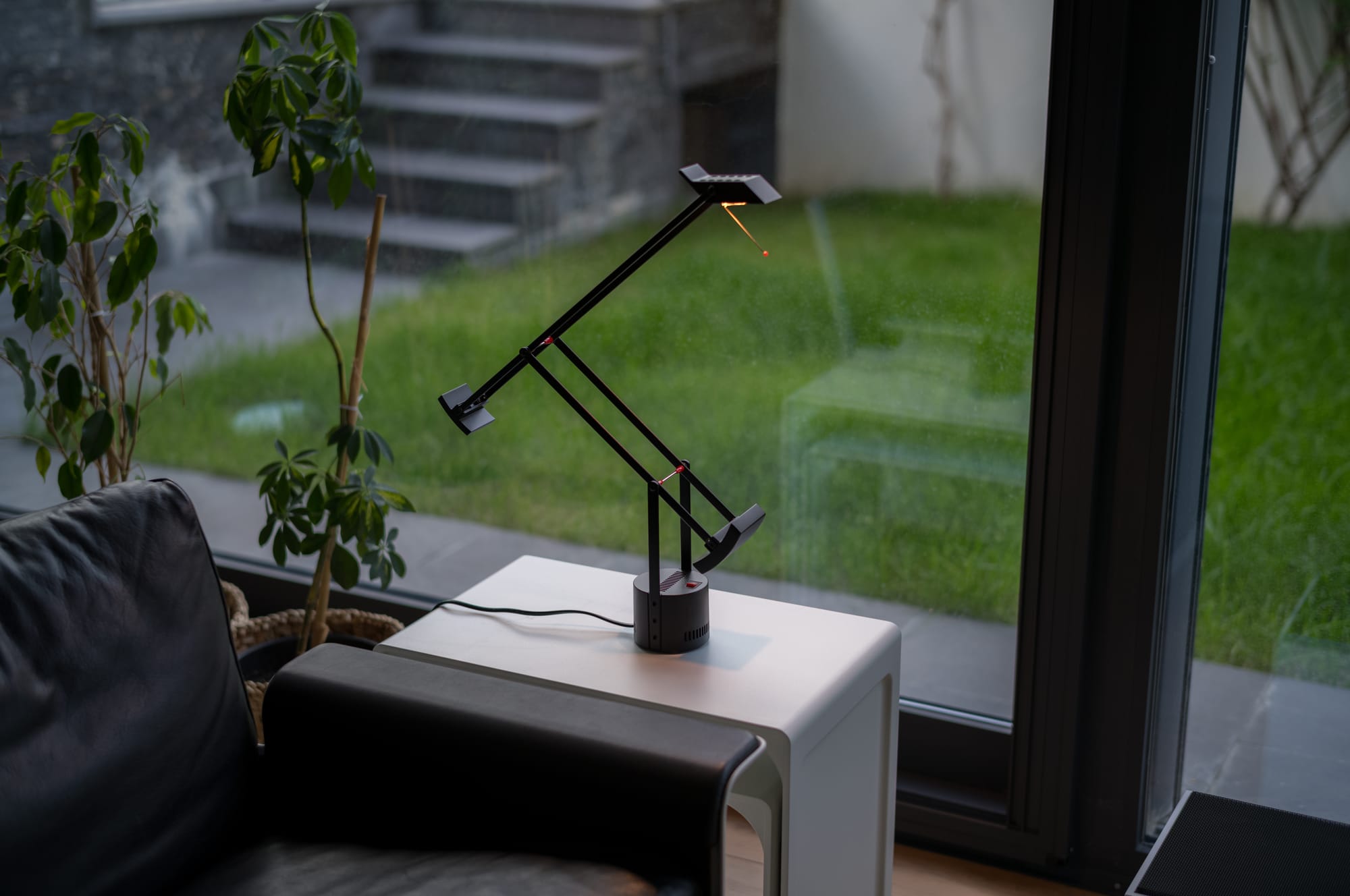
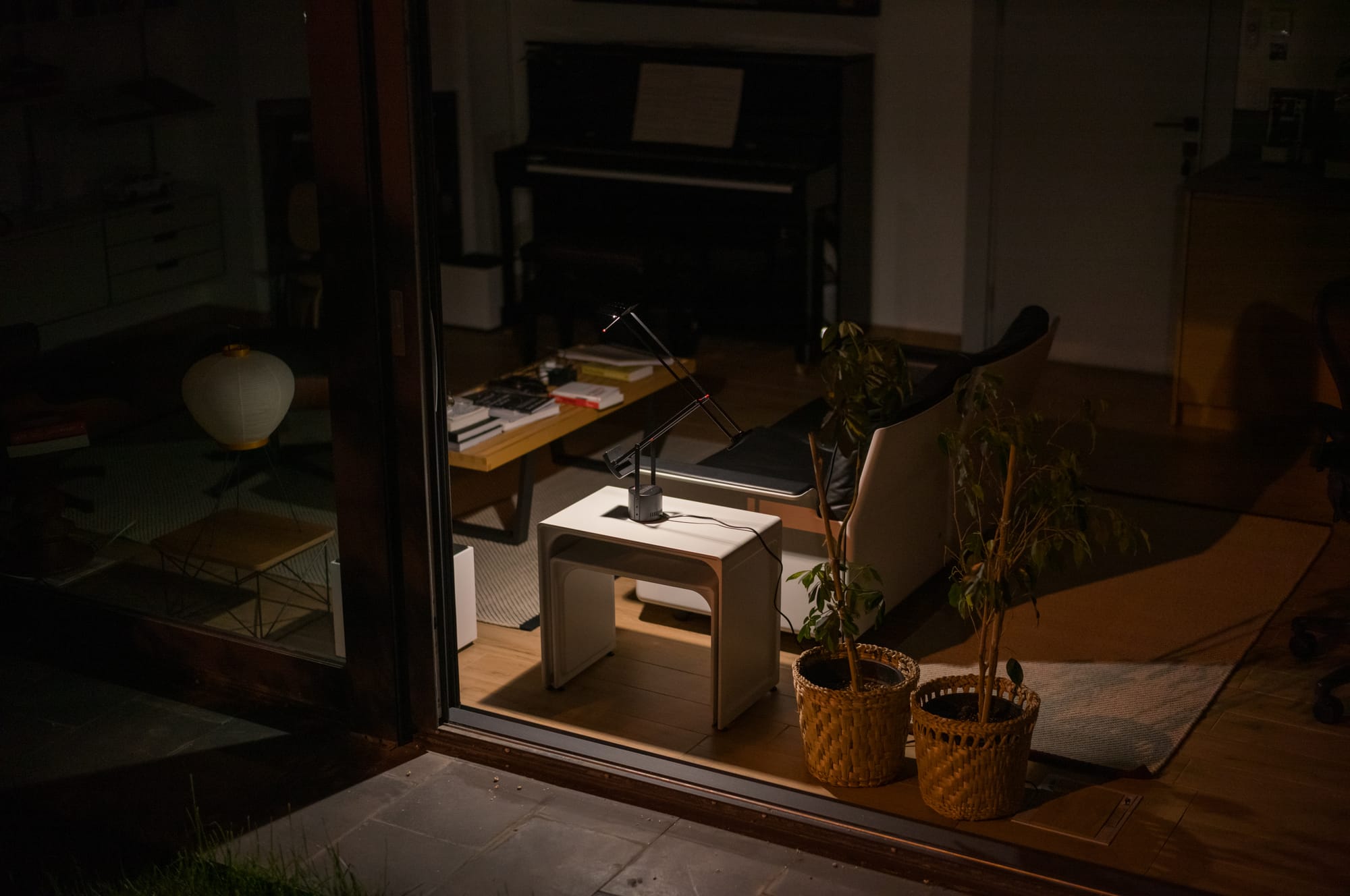
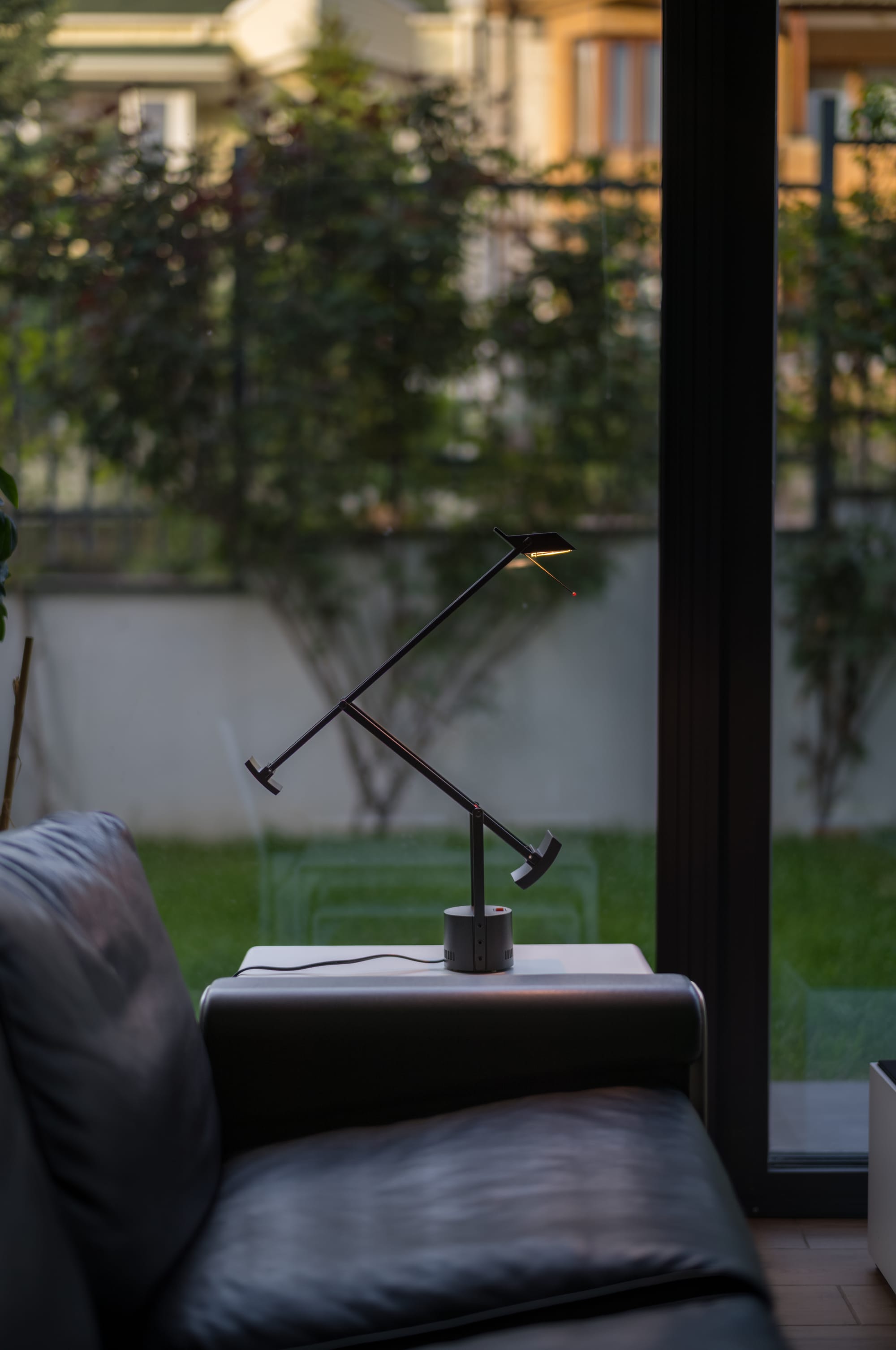
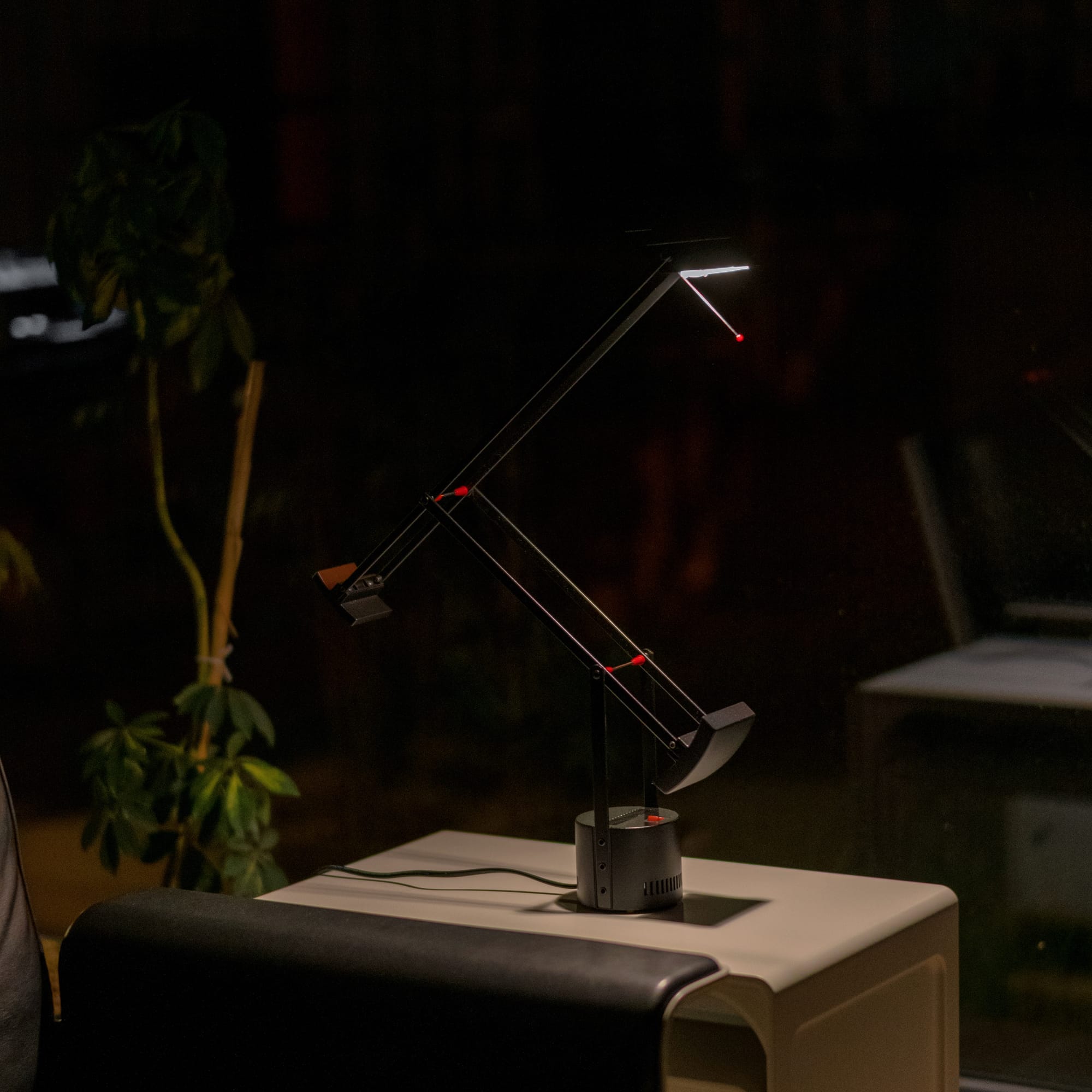
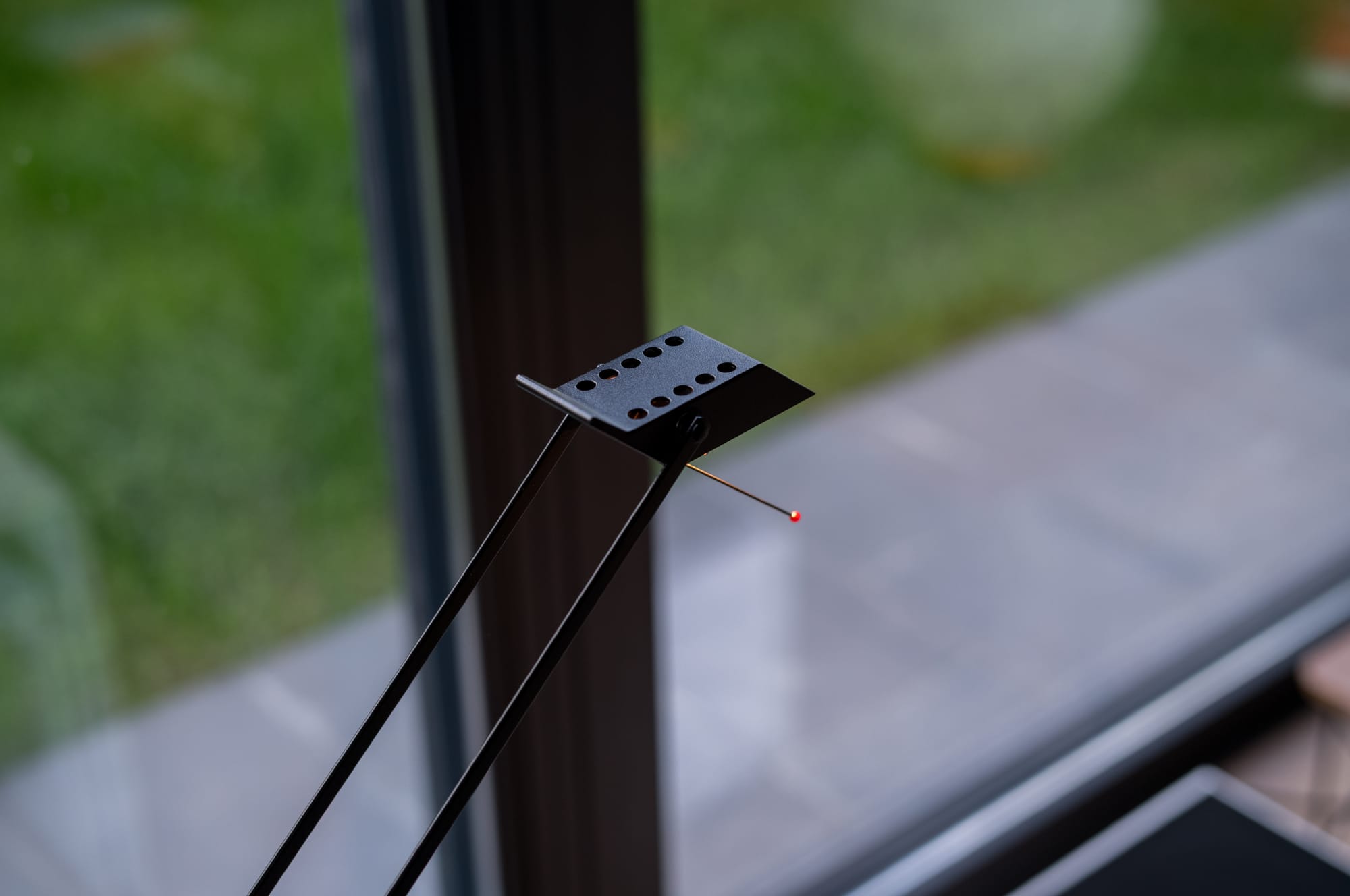
Richard Sapper designed the Tizio in 1972. He is one of my favorite industrial designers. He later designed the first IBM ThinkPad, as well as the famous 9090 espresso maker for Alessi. Tizio means “dude” in Italian.
The Tizio started because Sapper wanted a better lamp for his own desk. There are no wires running along the arms because the arms themselves carry the electricity. Counterweights keep everything balanced, so you can move the lamp with one finger and it stays there.
The small red details are Sapper's unique signature. He often used a little bit of red on black products, for example the red TrackPoint on the ThinkPad. The Micro is a smaller version of the original Tizio, and there are several versions you can choose from.
Akari 1A
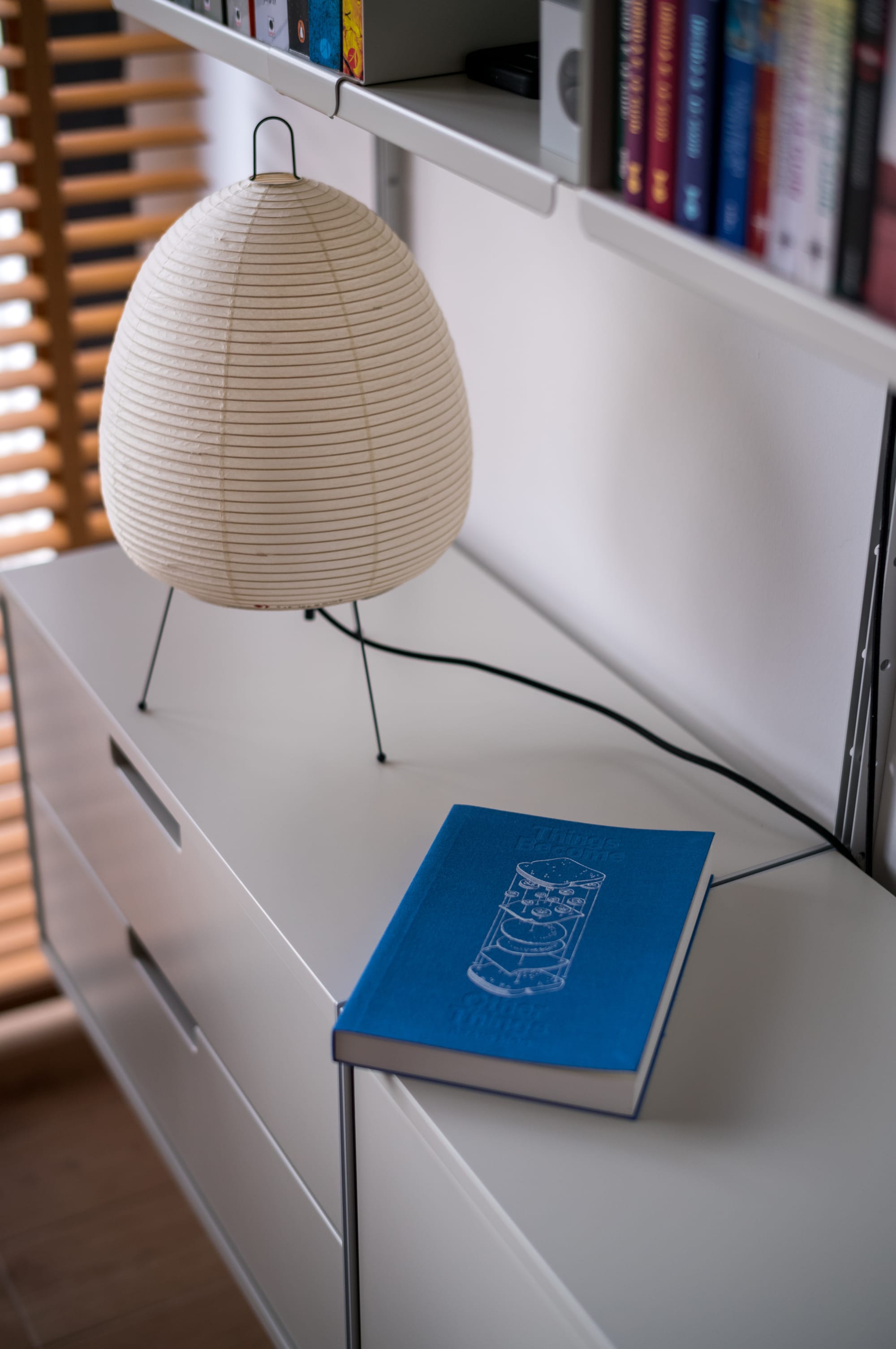
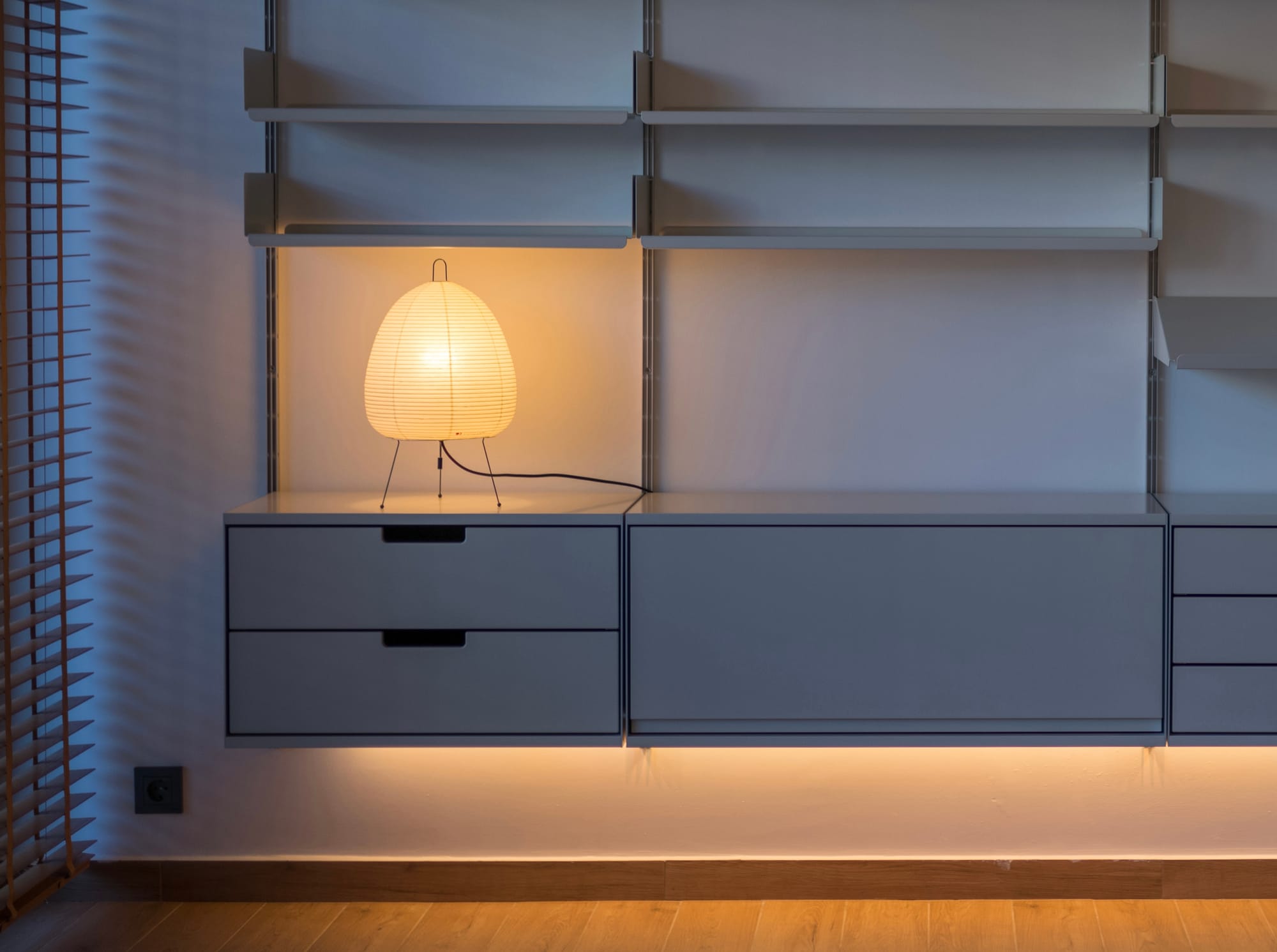
I got this lamp secondhand from Germany, and a friend brought it to me. It's made of washi, which is a traditional Japanese paper. It is thin, soft, and slightly warm in color, which gives the light a very gentle glow.
The Akari 1A was designed by Isamu Noguchi (a very famous Japanese-American designer). He started the Akari series in 1951 after a visit to Gifu, a city known for its paper lanterns. He used washi because it softened the light and also allowed him to create very light, sculptural shapes. Akaris are really more like sculptures, which Noguchi is also famous for!
Fun fact: “Akari” means light in Japanese, both as illumination and as lightness. The 1A is one of the earliest and simplest shapes. I like Akaris so much that I have a few of them sprinkled around my house.
Akari 3A
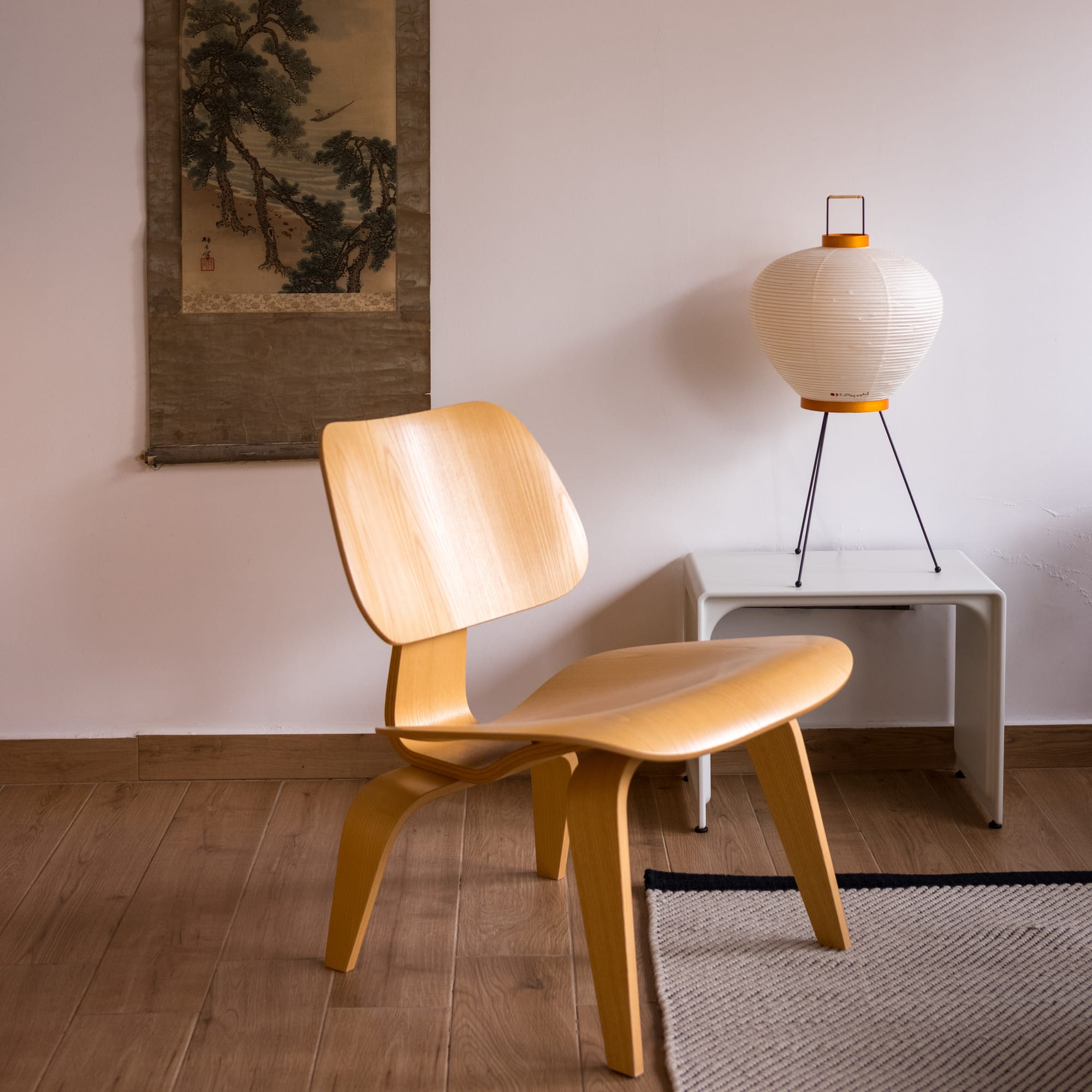
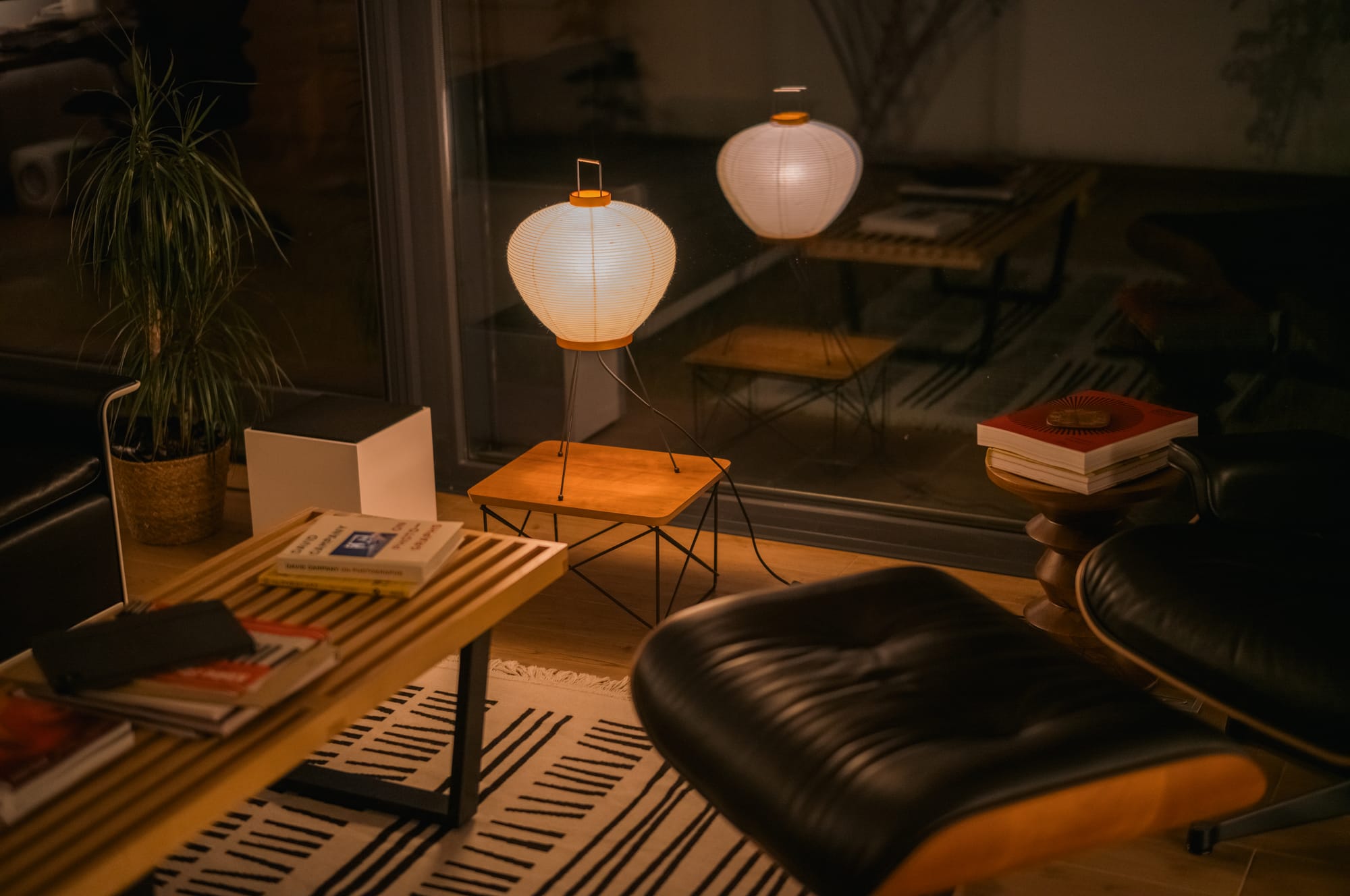
The Akari 3A is similar to the 1A, but it is taller, with longer legs and wooden trim at the top and bottom. It has a slightly awkward size. At 56 cm tall, it feels too short to sit directly on the floor, but also a little too large for a normal desk. I think it works best on a low table, sideboard, or cabinet.
Akari 16A
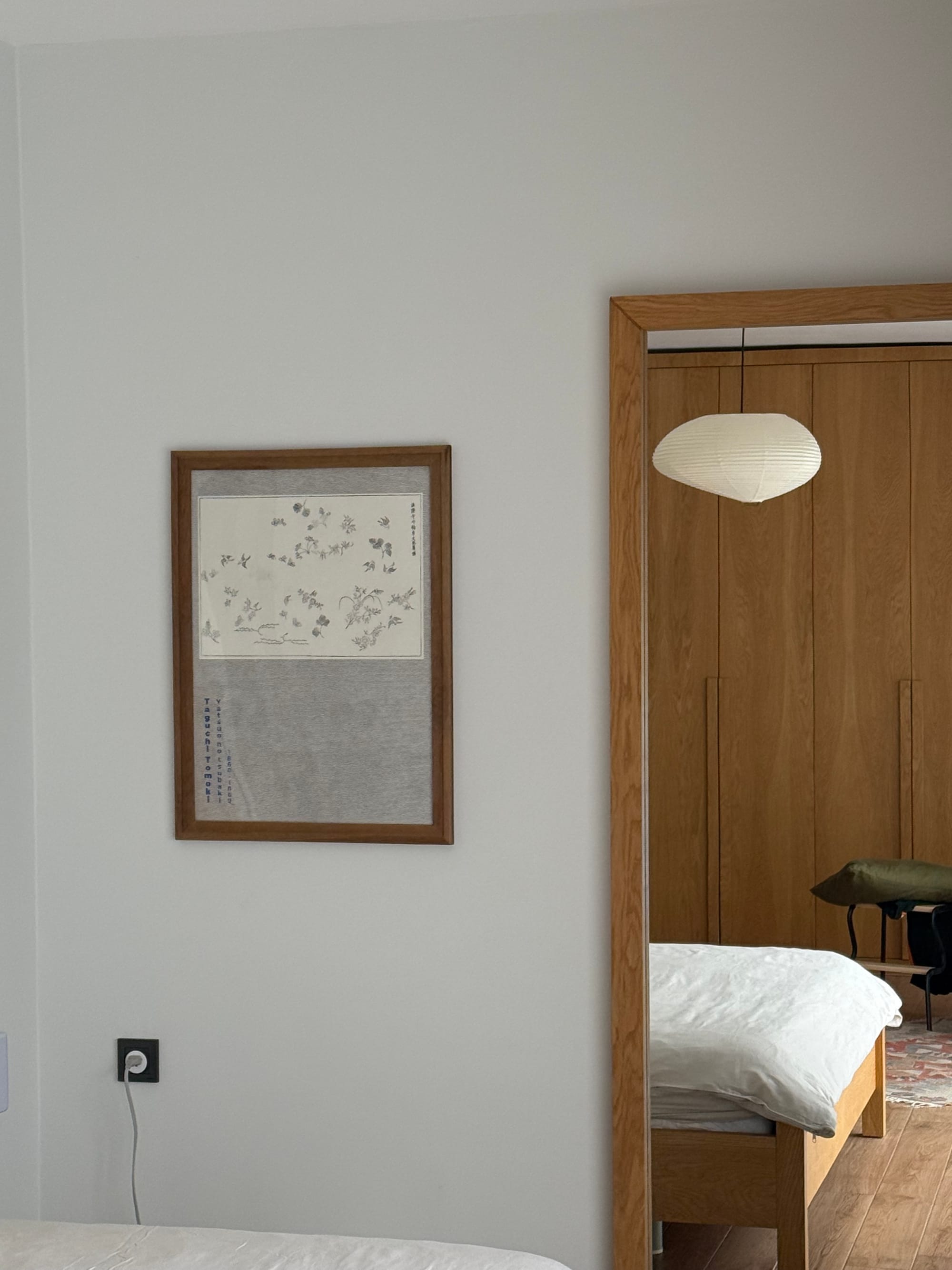
This was the first Akari I bought. I initially had it in my office, but later moved it to our bedroom. It has a very unique shape, but at the same time it almost disappears into the room. It feels incredibly light. One nice thing about Akari is that every lamp is still made by hand at Ozeki, a family-run workshop in Gifu, Japan. They still use the traditional methods that were used when Noguchi started the series.
Akari 75A
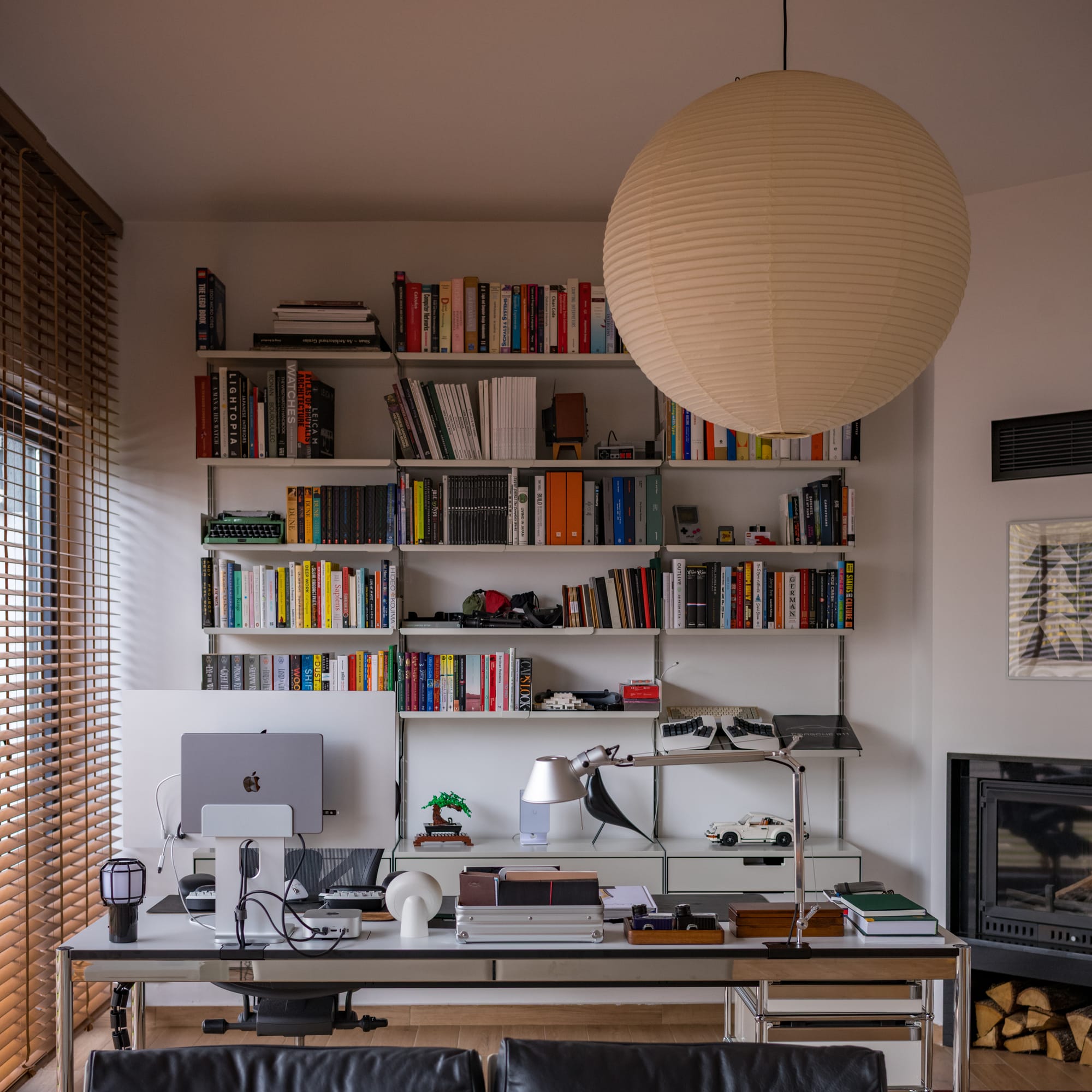
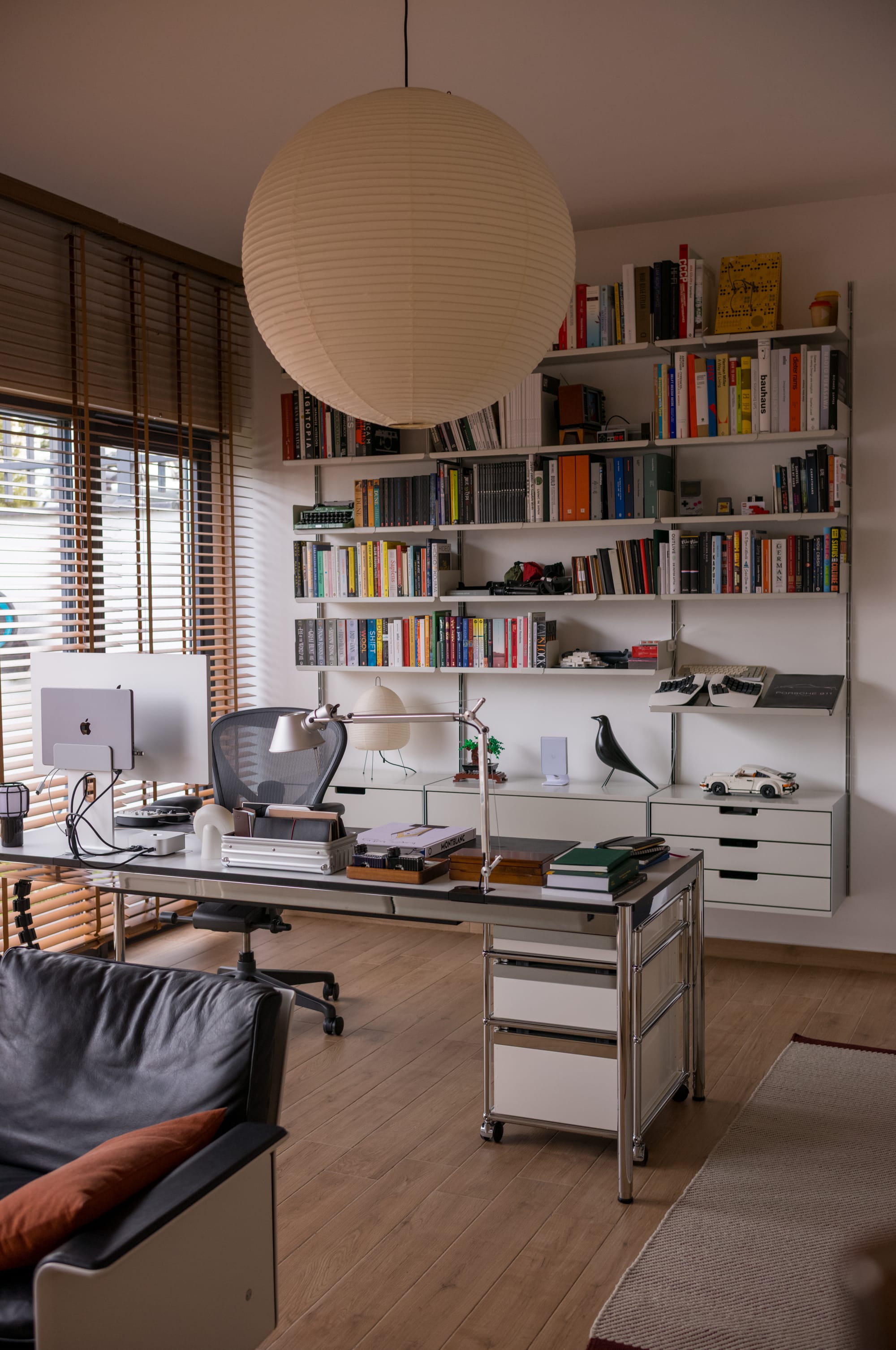
The Akari 75A is the biggest lamp in my house. It is roughly 75 cm across and completely fills the space. This is the lamp that replaced the Akari 16A in my office. Compared to the 16A, the 75A really fills the room and has a presence. Another fun fact: every real Akari carries a small red sun-and-moon stamp, which is the mark of authenticity. Noguchi designed more than 100 different Akari models during his lifetime.
Louis Poulsen PH 5
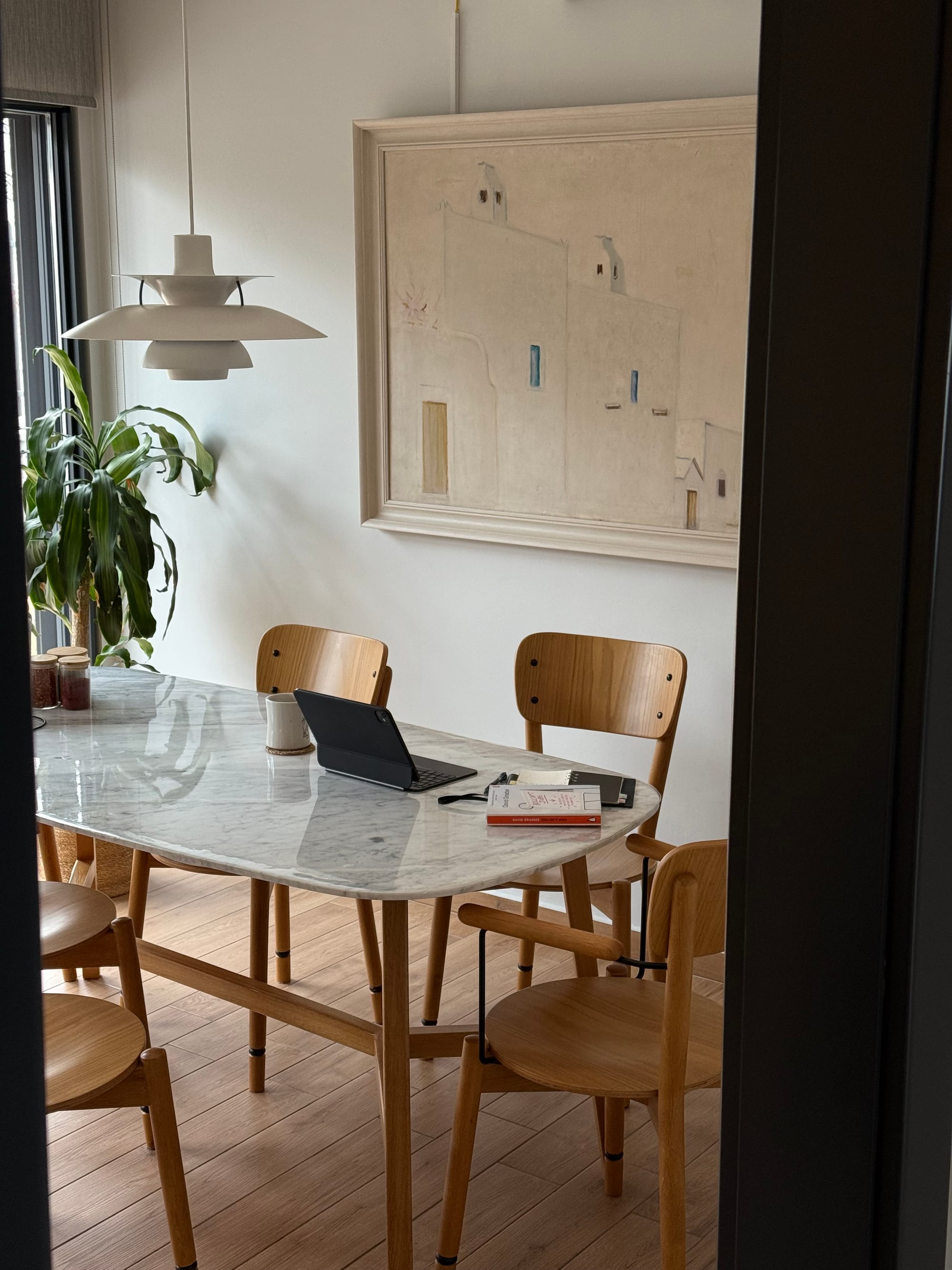
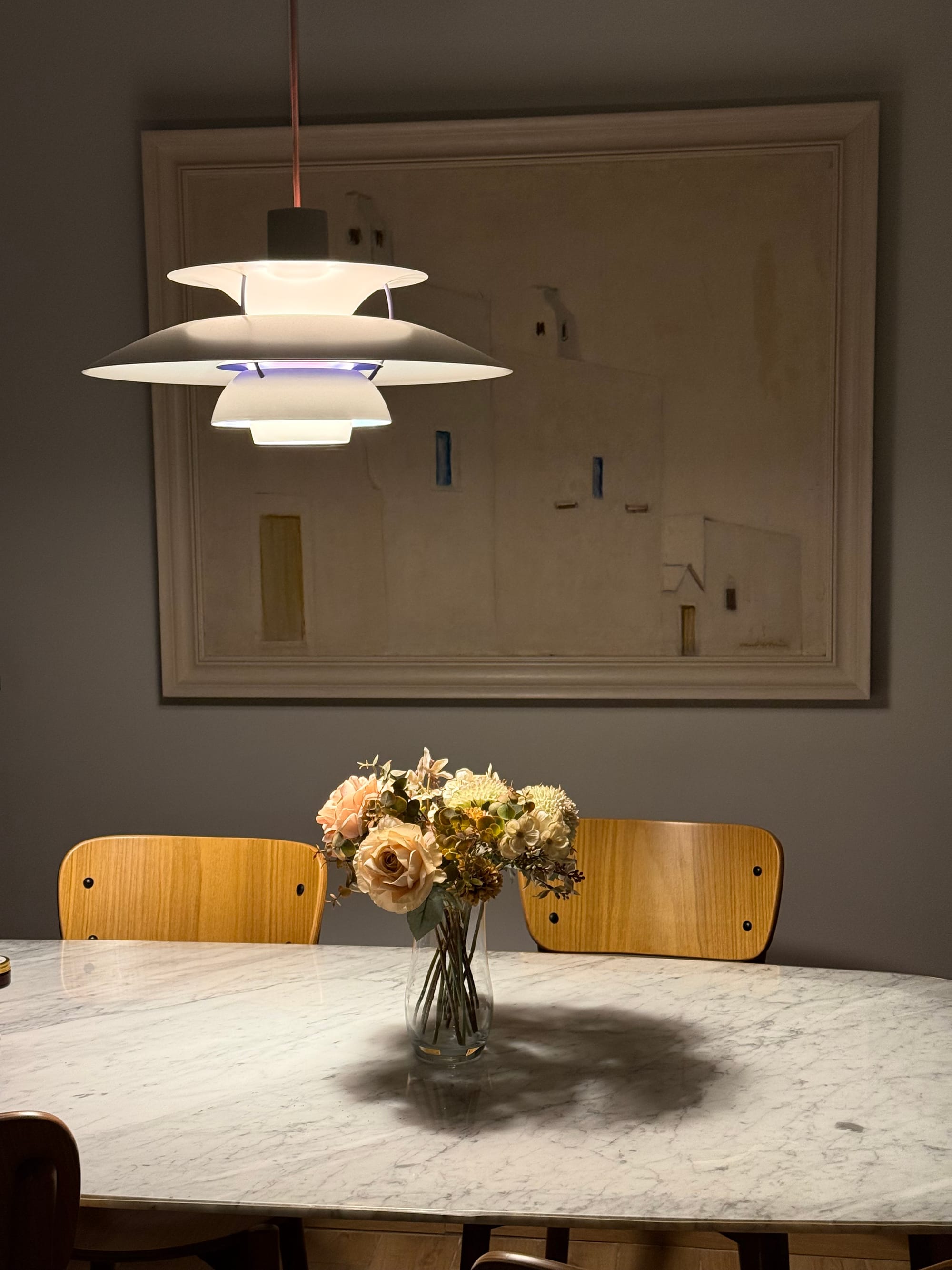
I first noticed the PH 5 in Another Round, the Danish film about teachers who start drinking heavily. The family was sitting around the dinner table, and the PH 5 was hanging right above them. Later I saw one in Dieter Rams’ house, and that was it for me. I’m a huge fan of him.
The PH 5 was designed by Poul Henningsen in 1958 and is probably one of the most famous Danish lamps ever made. It is also very common in Danish homes. The nice part is that you never really see the bulb directly, so the light always feels soft. The “5” comes from the 50 cm shade, and the small red and blue parts inside help make the light feel warmer.
Louis Poulsen PH 3/2
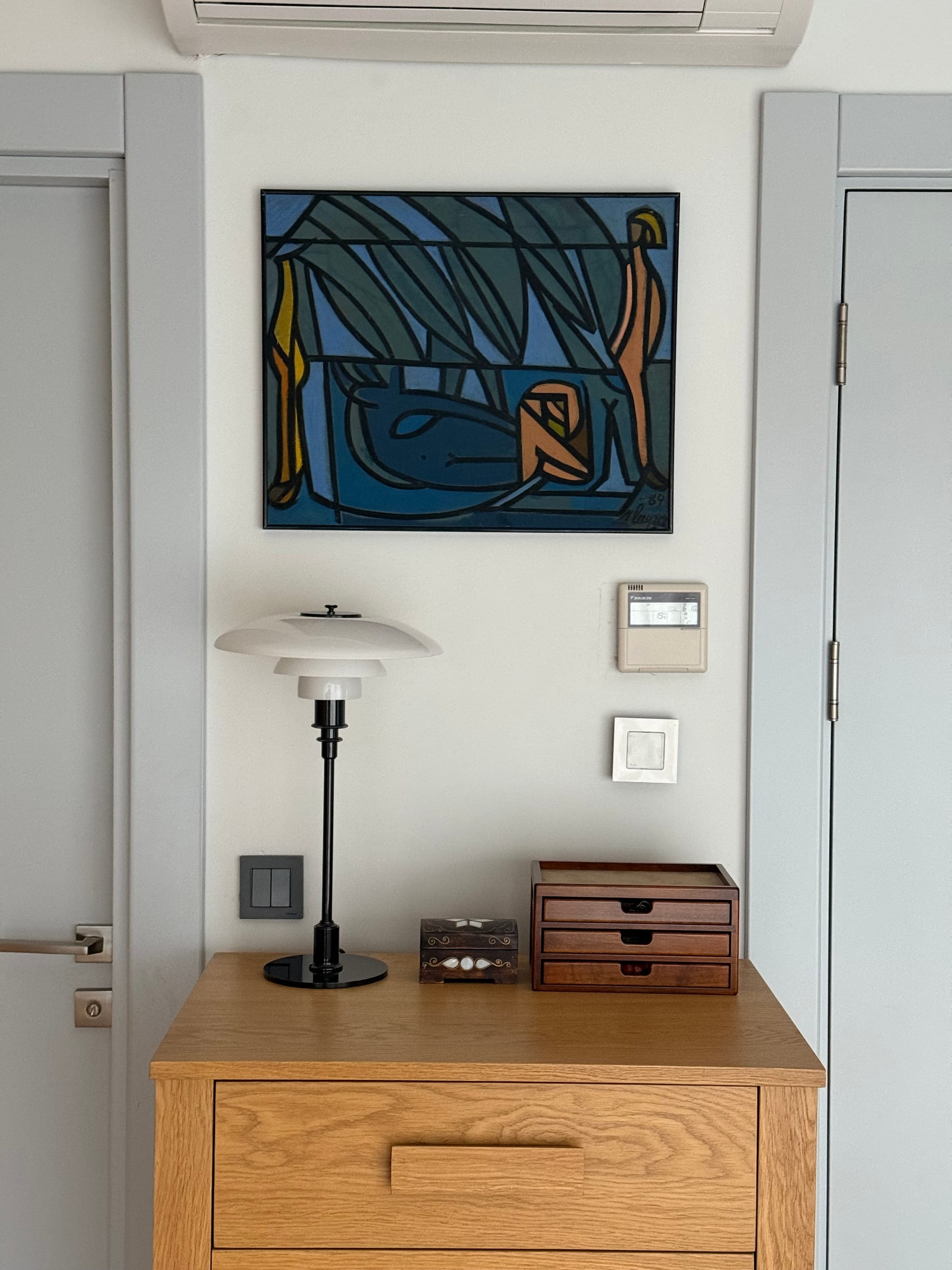
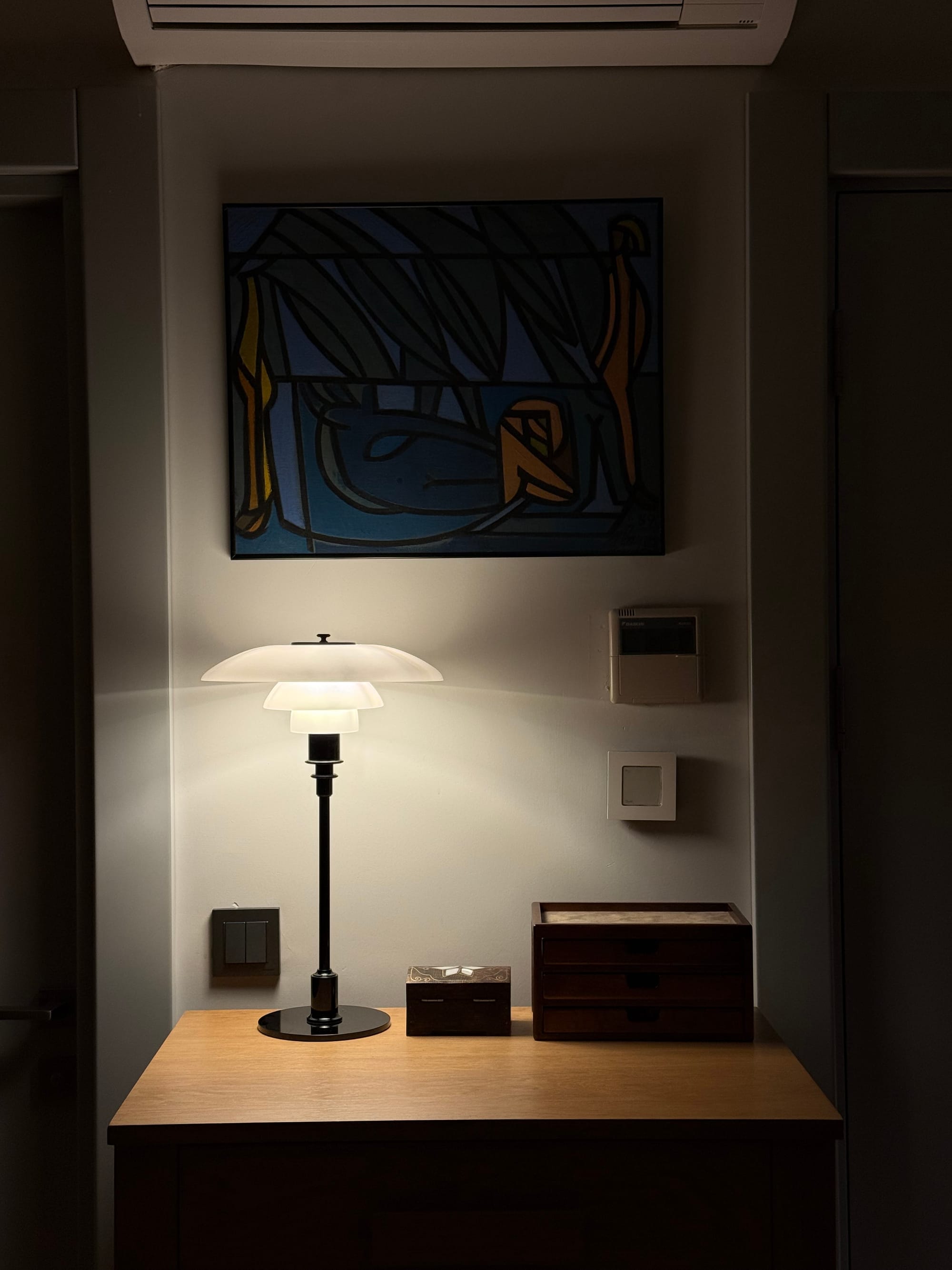
Henningsen actually created the three-shade system in 1925. The PH 3/2 was the first lamp to use this system, and it won a gold medal at the Paris exhibition that same year.
It's made out of glass (unfortunately, it breaks easily if you are not careful), and the glass is mouth-blown. I actually broke it by accident and had to wait months for a replacement. It's shiny on the outside and matte on the inside. The famous PH 5 came more than 30 years later, though. It uses the same idea of several shades to make the light softer and more comfortable.
AJ Wall Lamp
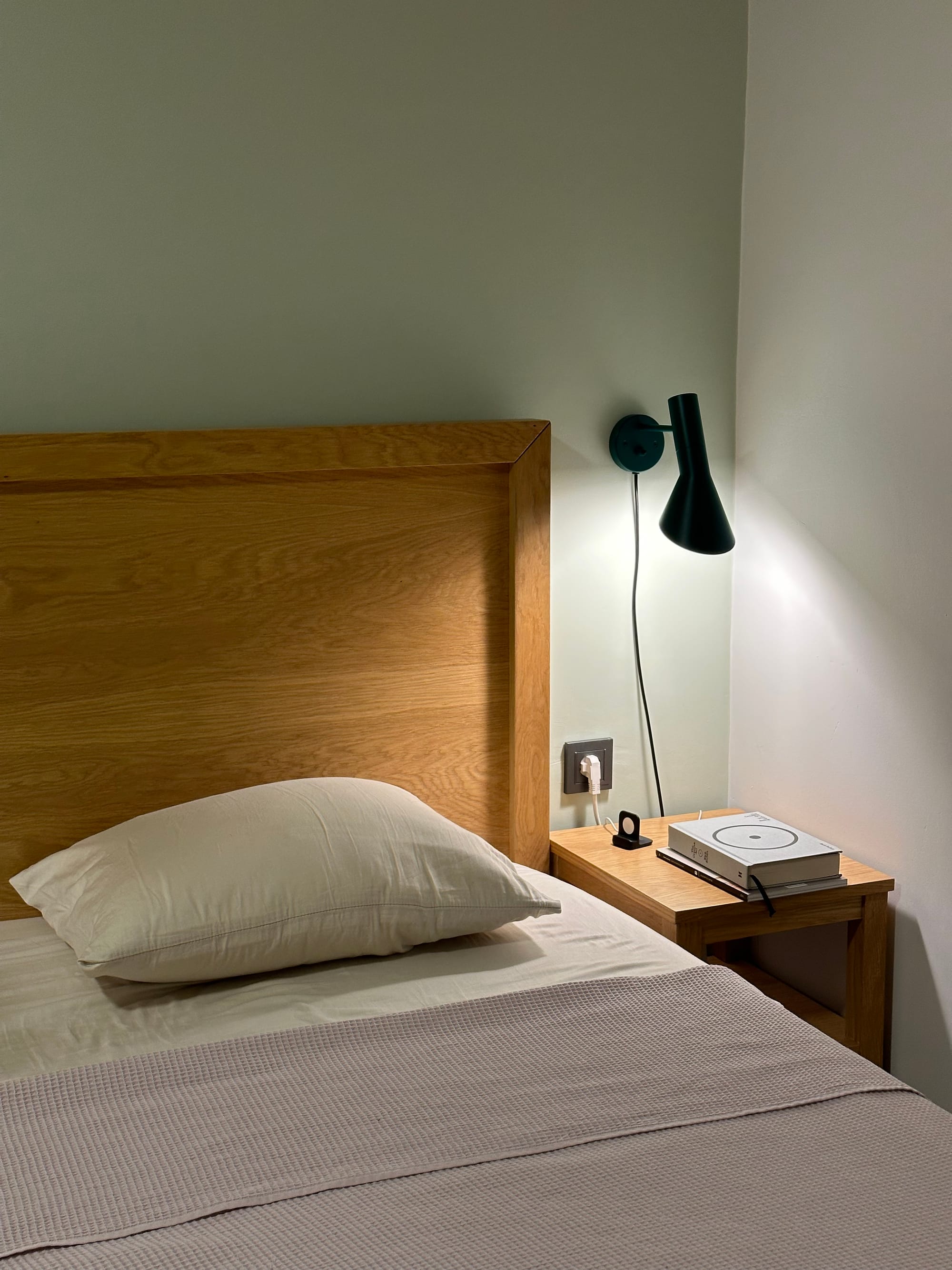
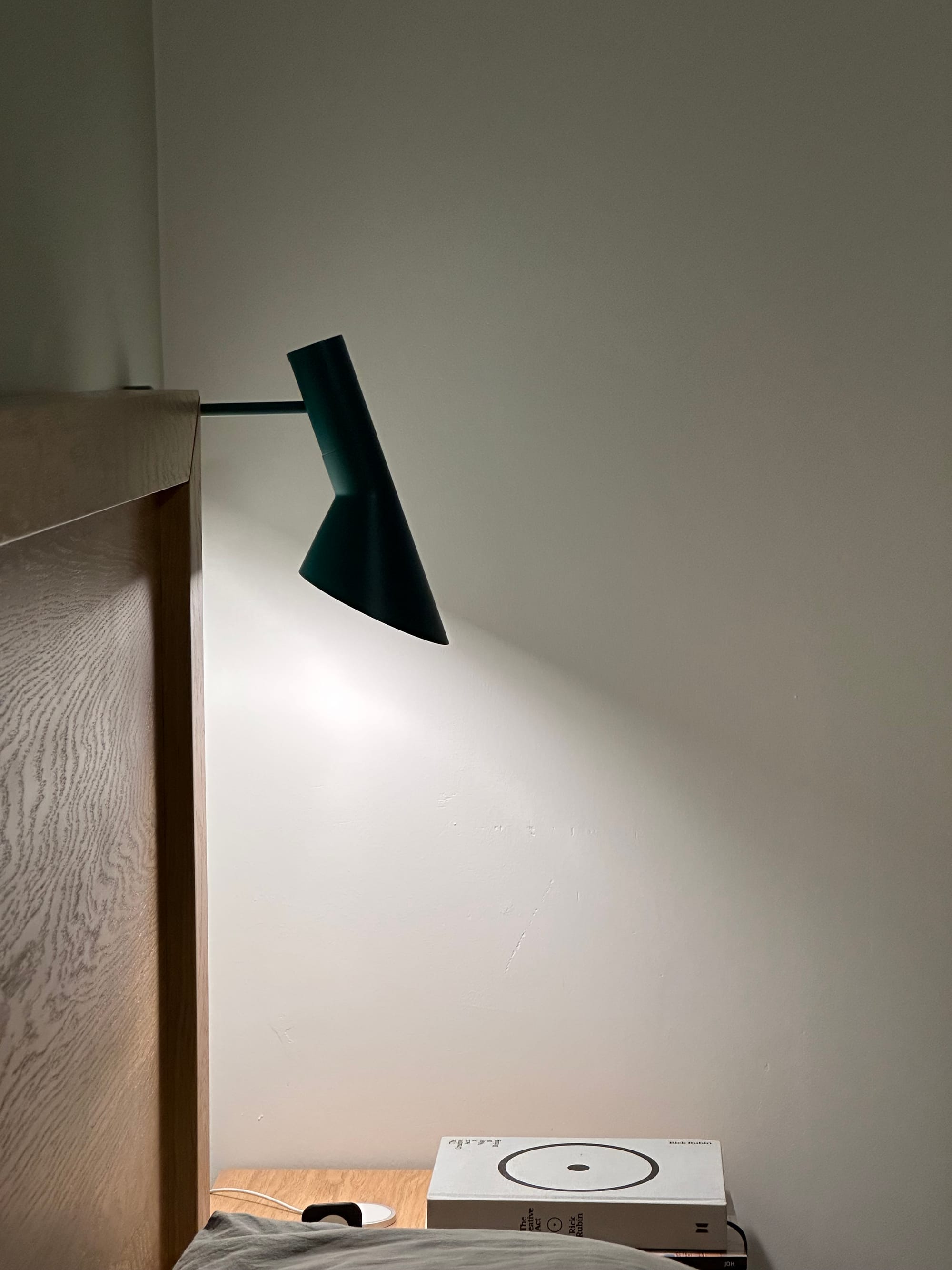
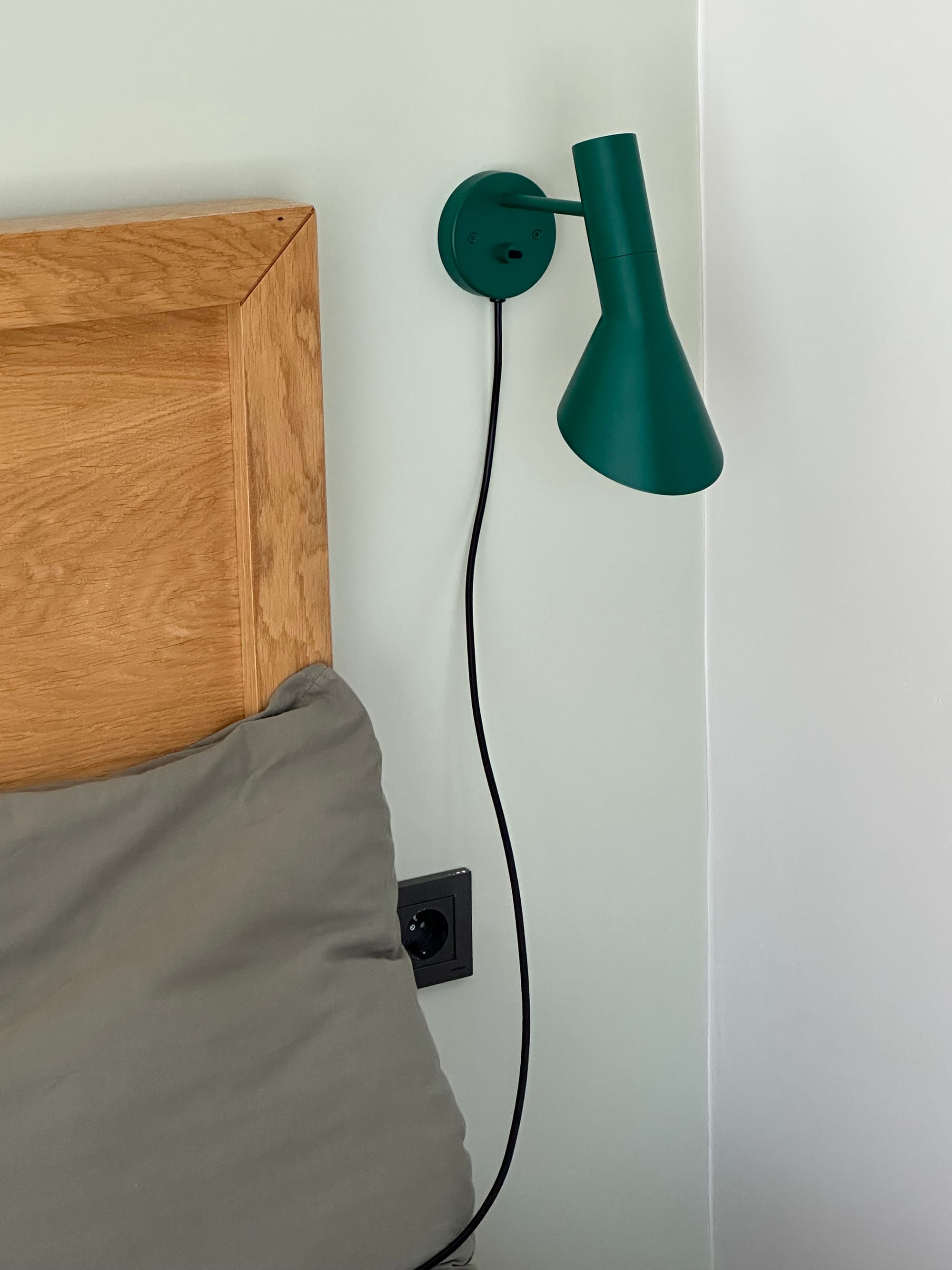
The AJ Lamp is another design icon. We have the wall version at home. Arne Jacobsen designed it in 1957 for the SAS Royal Hotel in Copenhagen, where he designed almost everything, from the furniture down to the cutlery.
Fun fact: that same cutlery later appeared in 2001: A Space Odyssey. What I like most is that you can tilt the lamp. I sometimes point it towards the wall for soft, indirect light, and when I read, I simply point it towards the book.
Lampe de Bureau (Jean Prouvé)
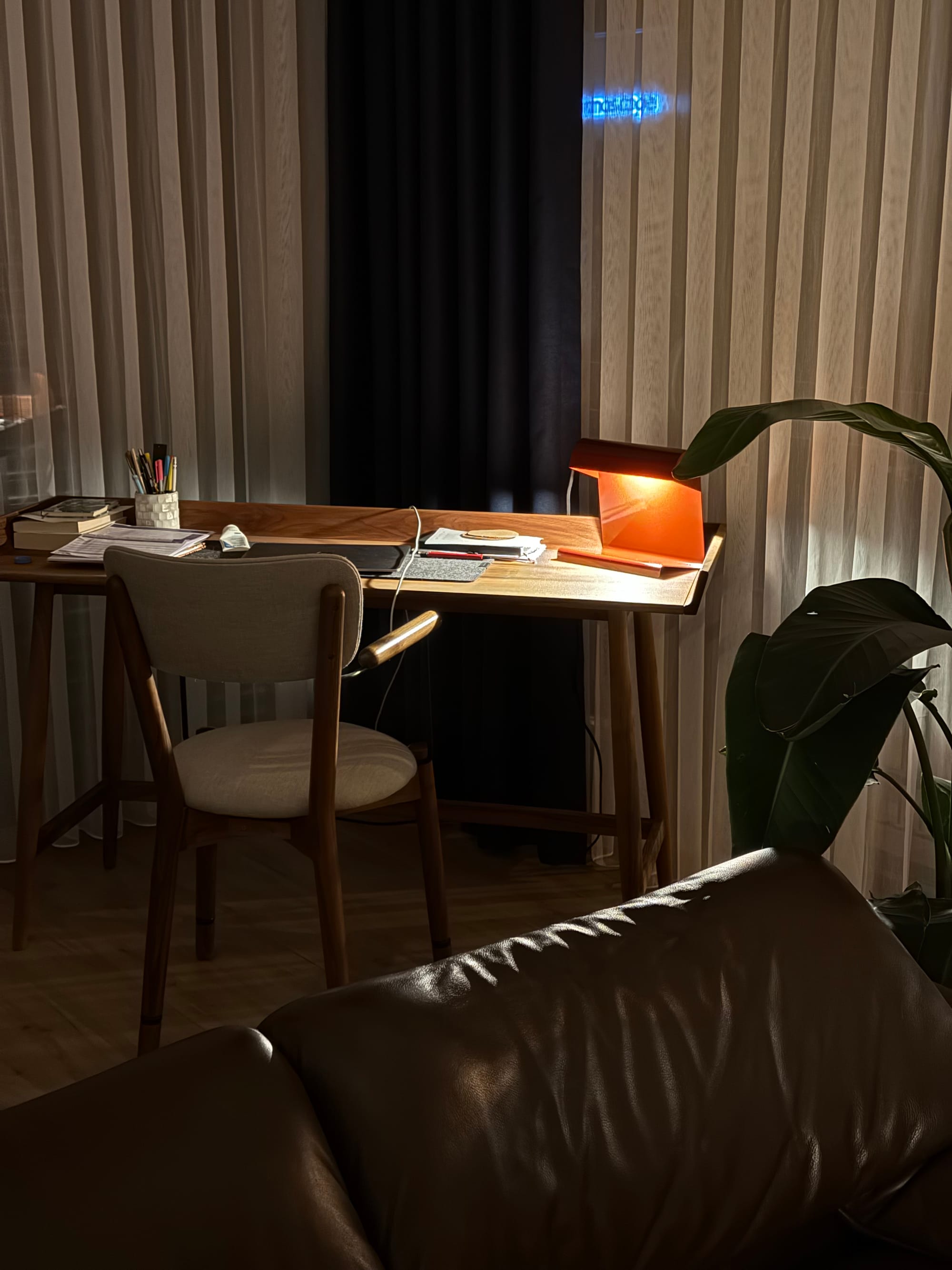
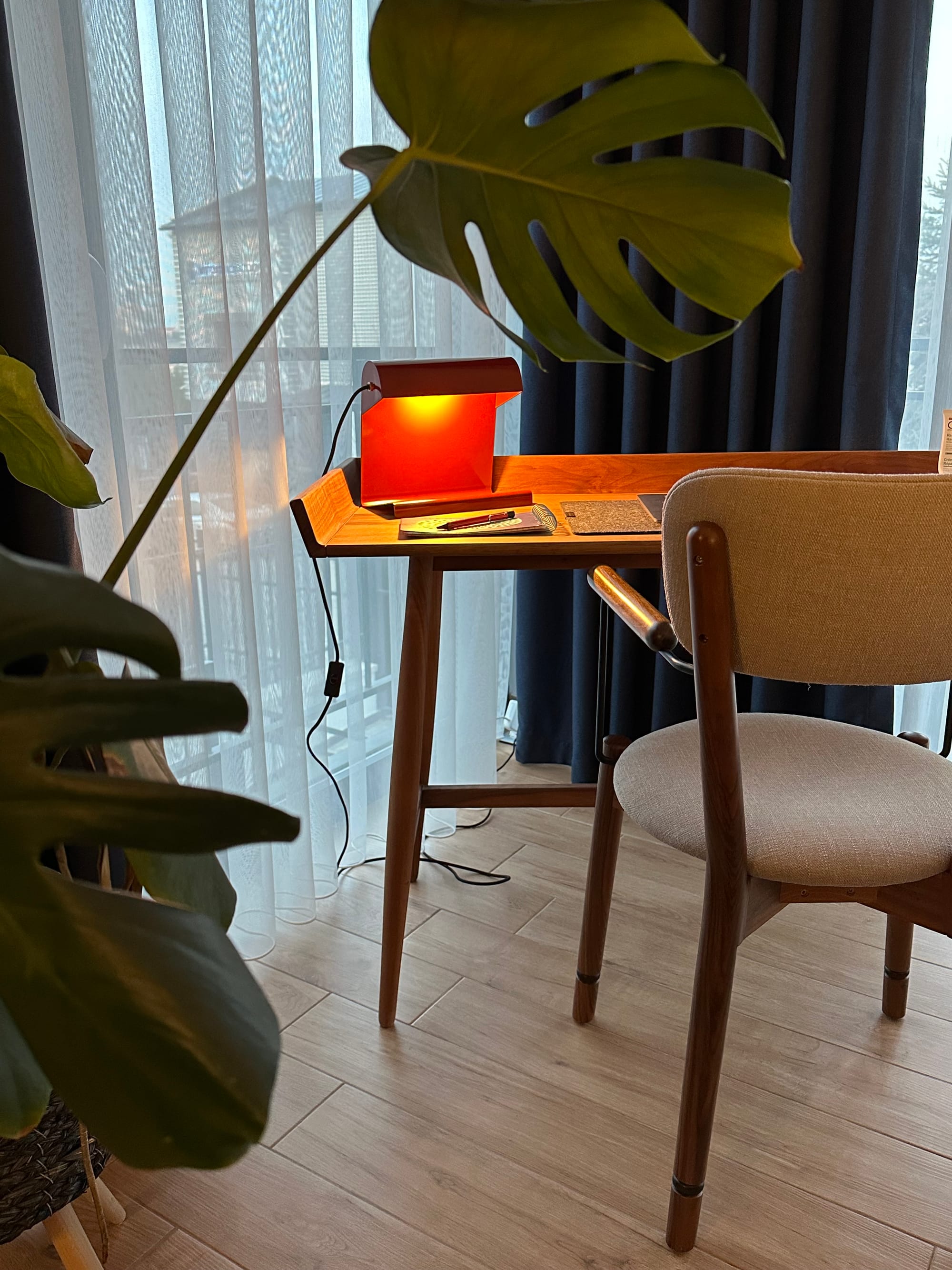
Jean Prouvé is one of my favorite designers. He was a French designer and metalworker. He is most famous for his simple, practical furniture like the Standard Chair. He designed the Lampe de Bureau in 1930 for the student residences in Nancy. It is made from a bent sheet of steel and looks more brutal/engineered than other lamps. That is typical of Prouvé; most of his work looks like that. Nowadays you can get it from Vitra in its original colors.
Chispa (Marset)
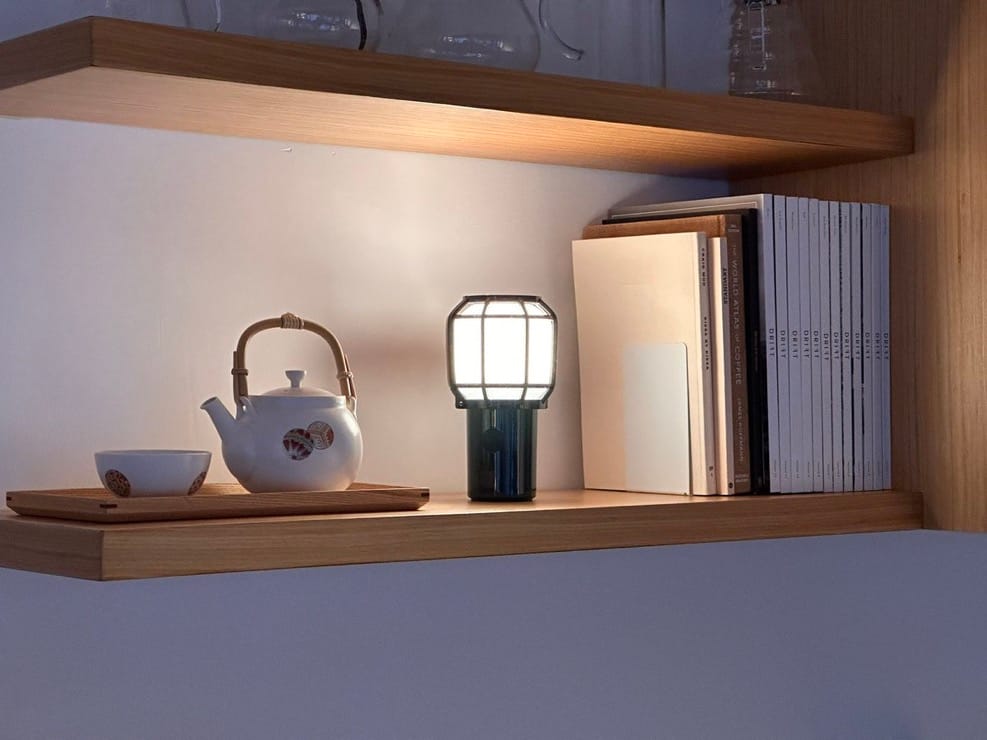
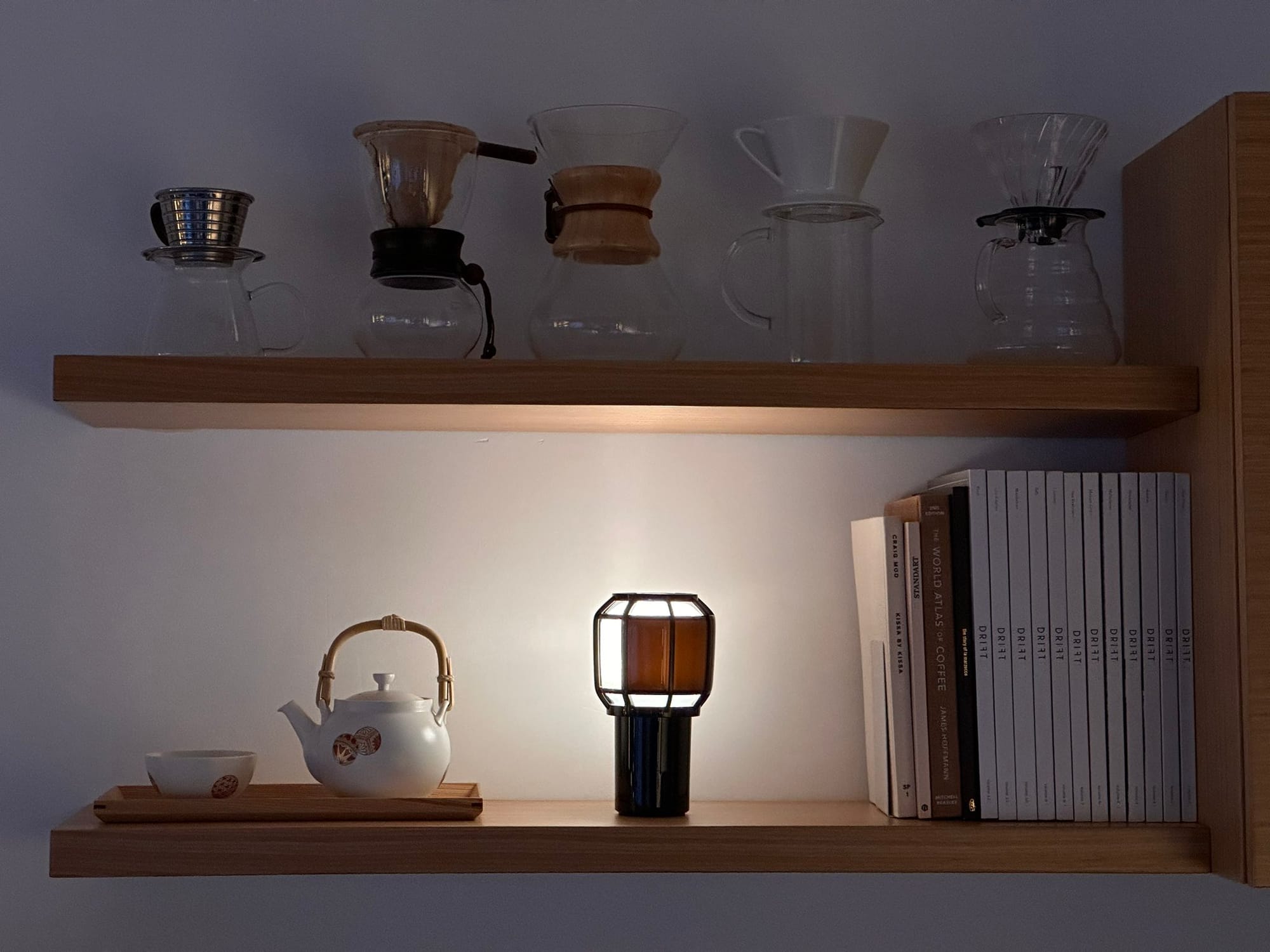
Joan Gaspar designed the Chispa in 2020, inspired by old garage lamps with a metal cage around the light. “Chispa” means spark in Spanish. It is rechargeable, water resistant, and has three levels of light, so I move it around the house quite a lot. We also use it in our garden in the summer.
Kismas Lamp 01
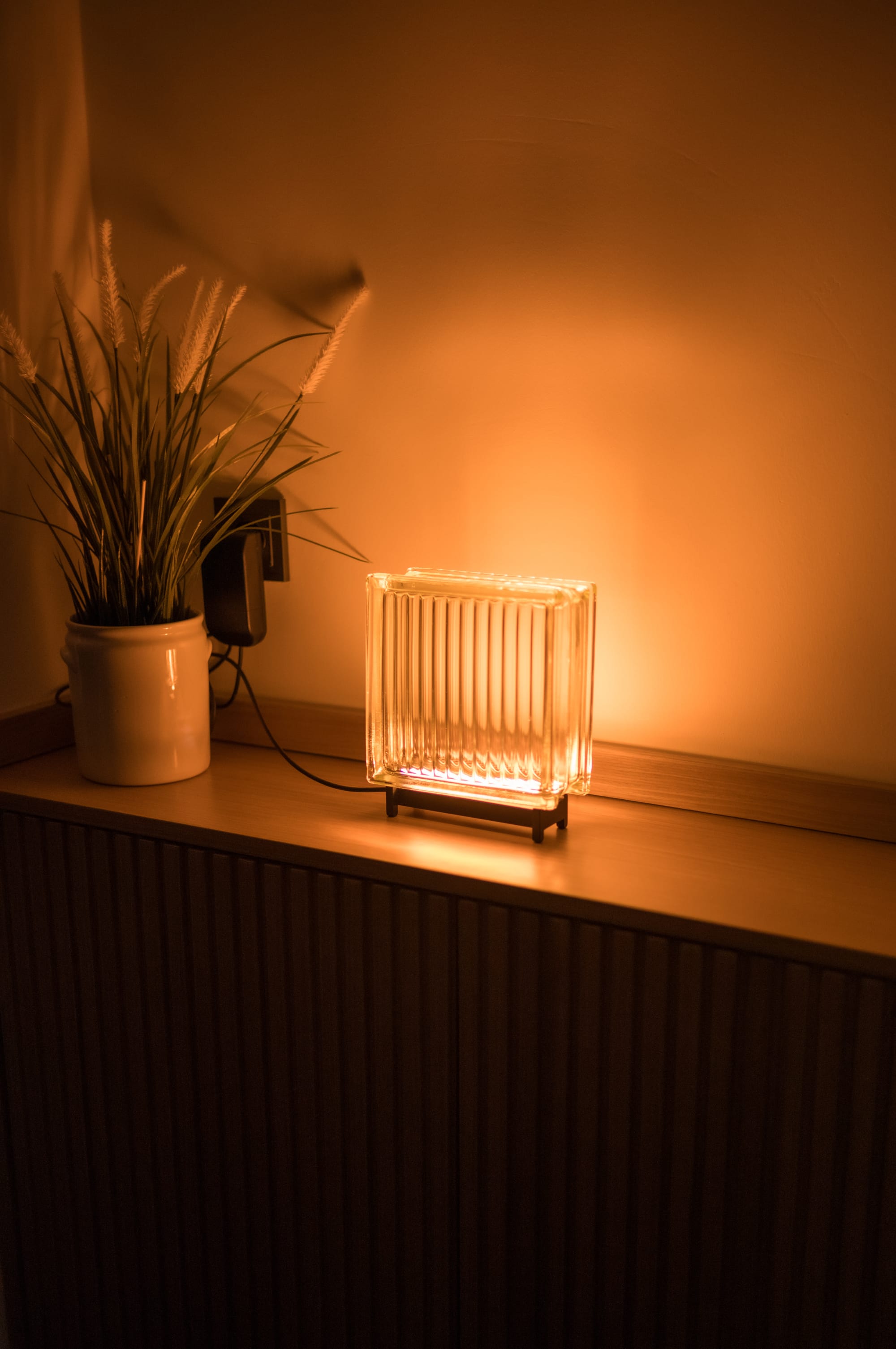
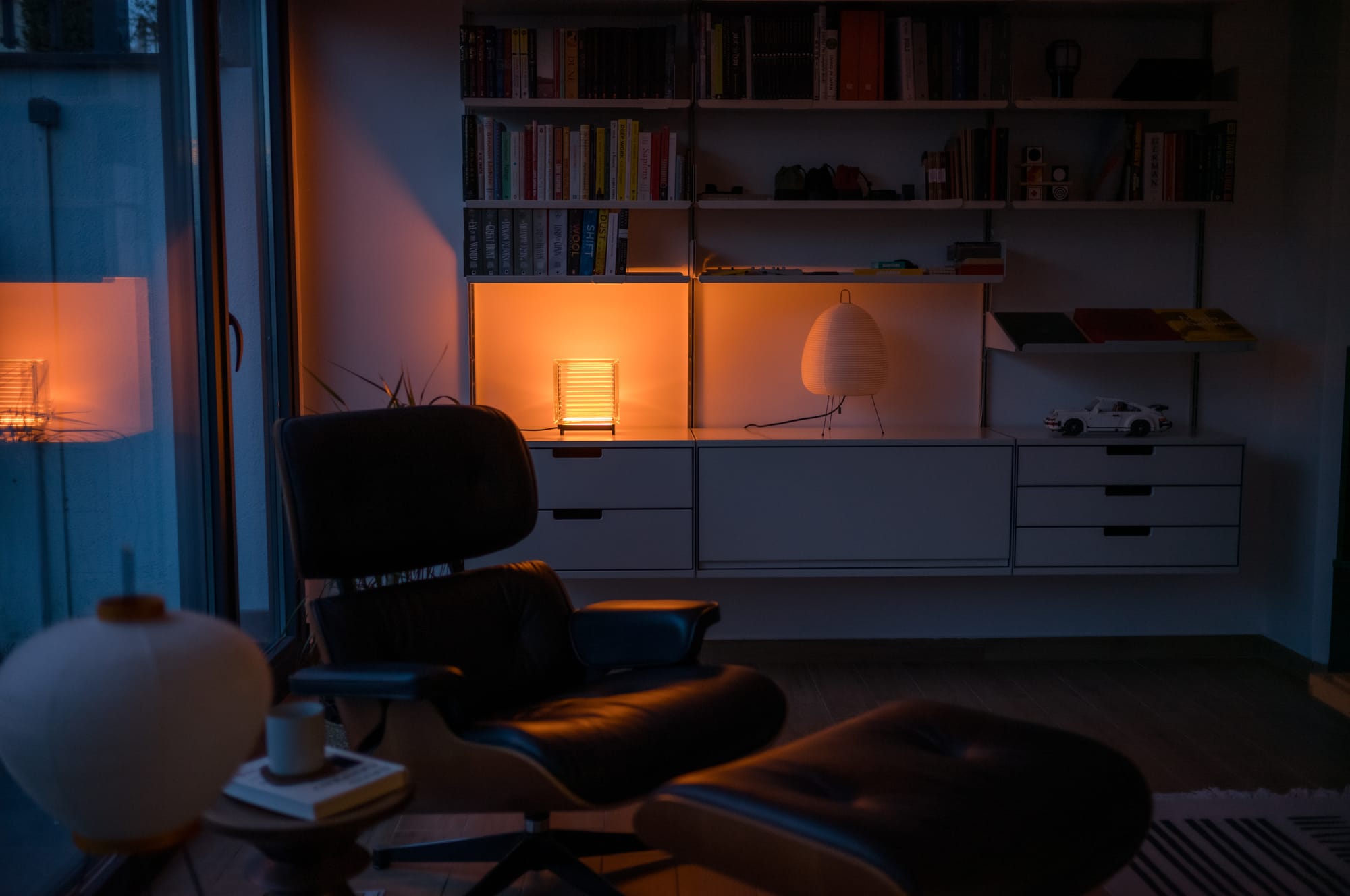
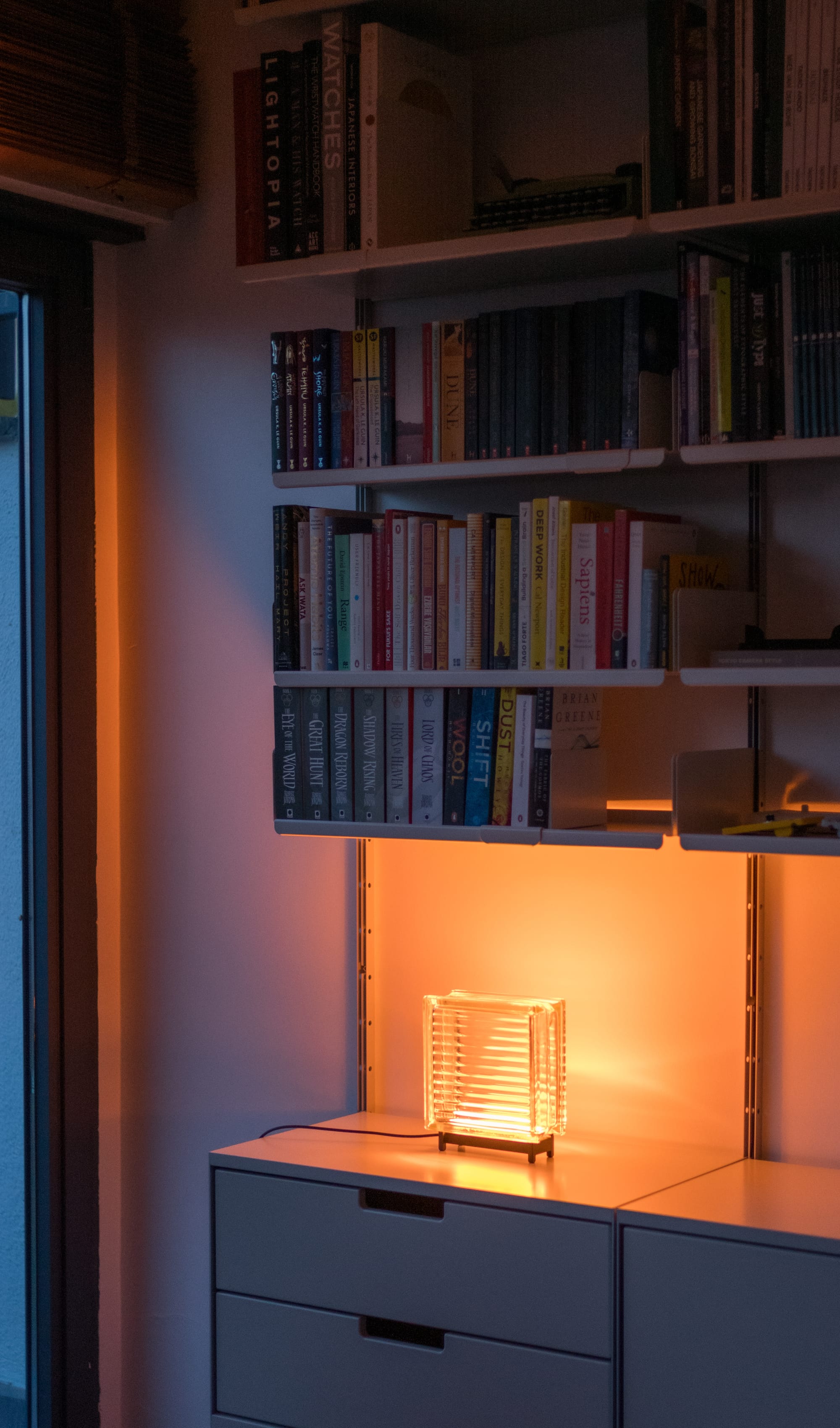
Kismas is a small design studio from Vilnius, Lithuania, started by designer Ramūnas Minkevičius. “Kismas” means change or transformation in Lithuanian.
The Lamp 01 uses real glass blocks from Soviet-era buildings from the 1970s and 80s, with a light underneath. It also comes with film and theater filters that you can place inside to change the color of the light, though I find that very cumbersome. I think it's a very artistic lamp, but not very functional.
Tokio Lamp
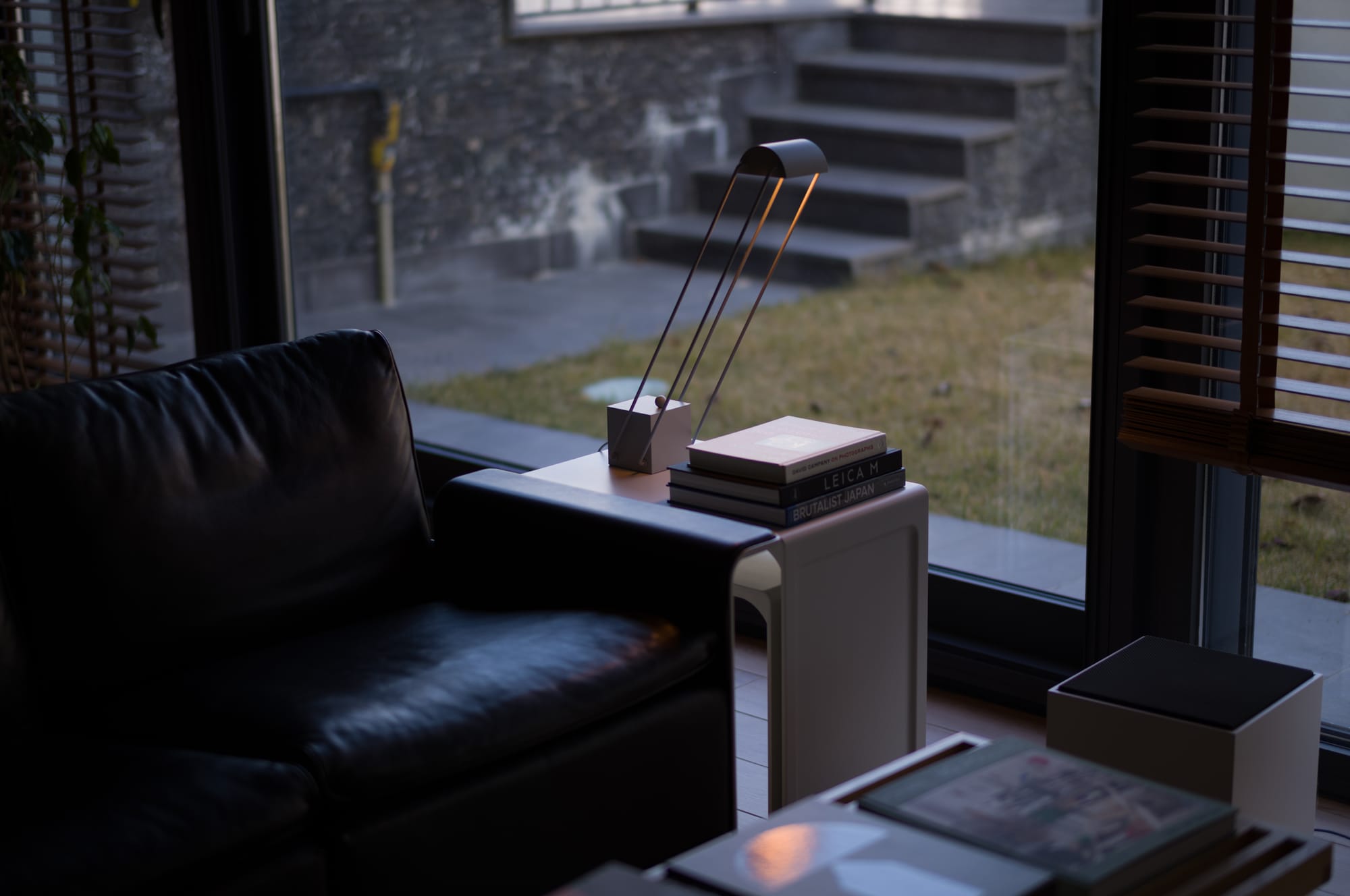
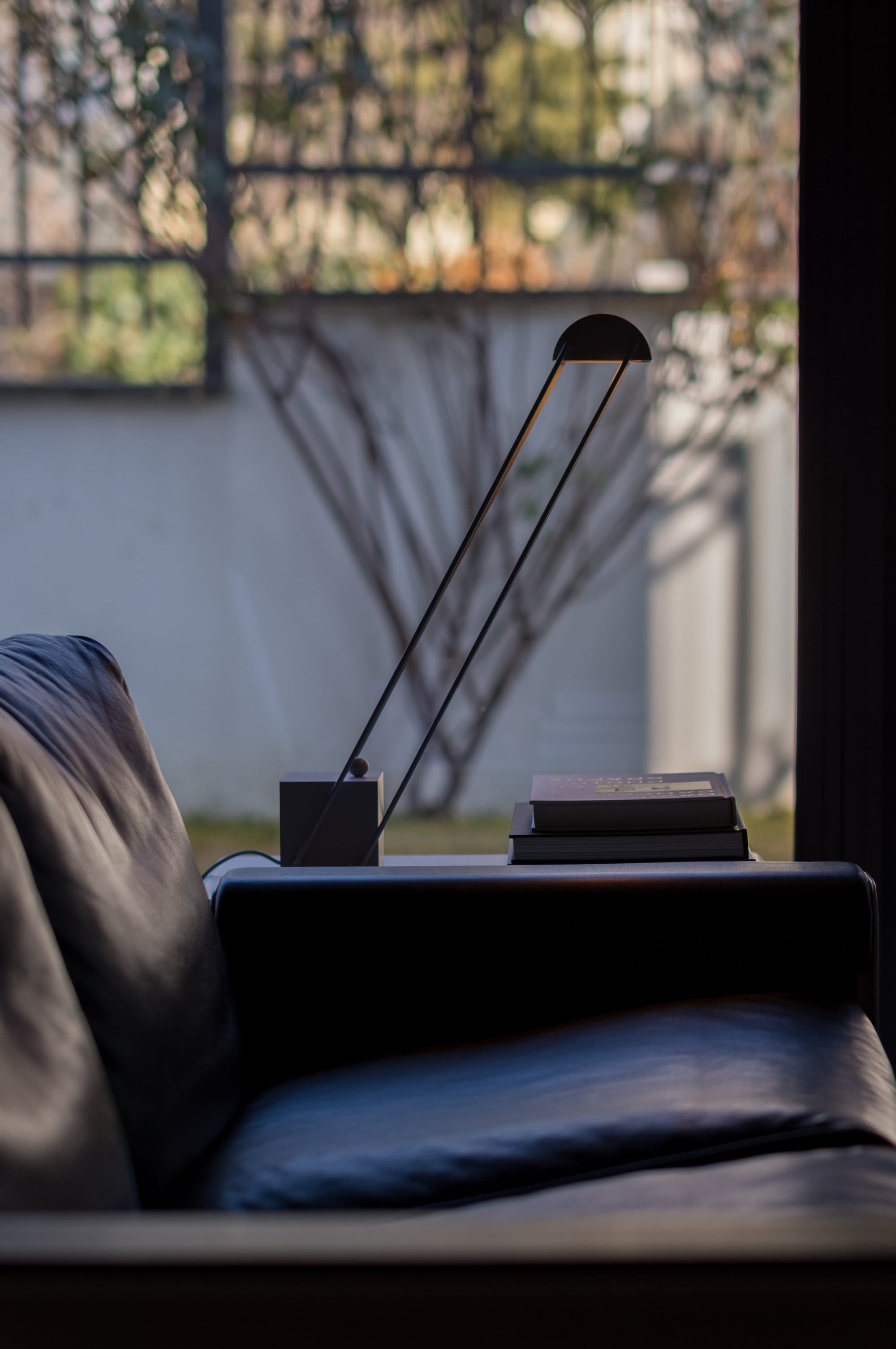
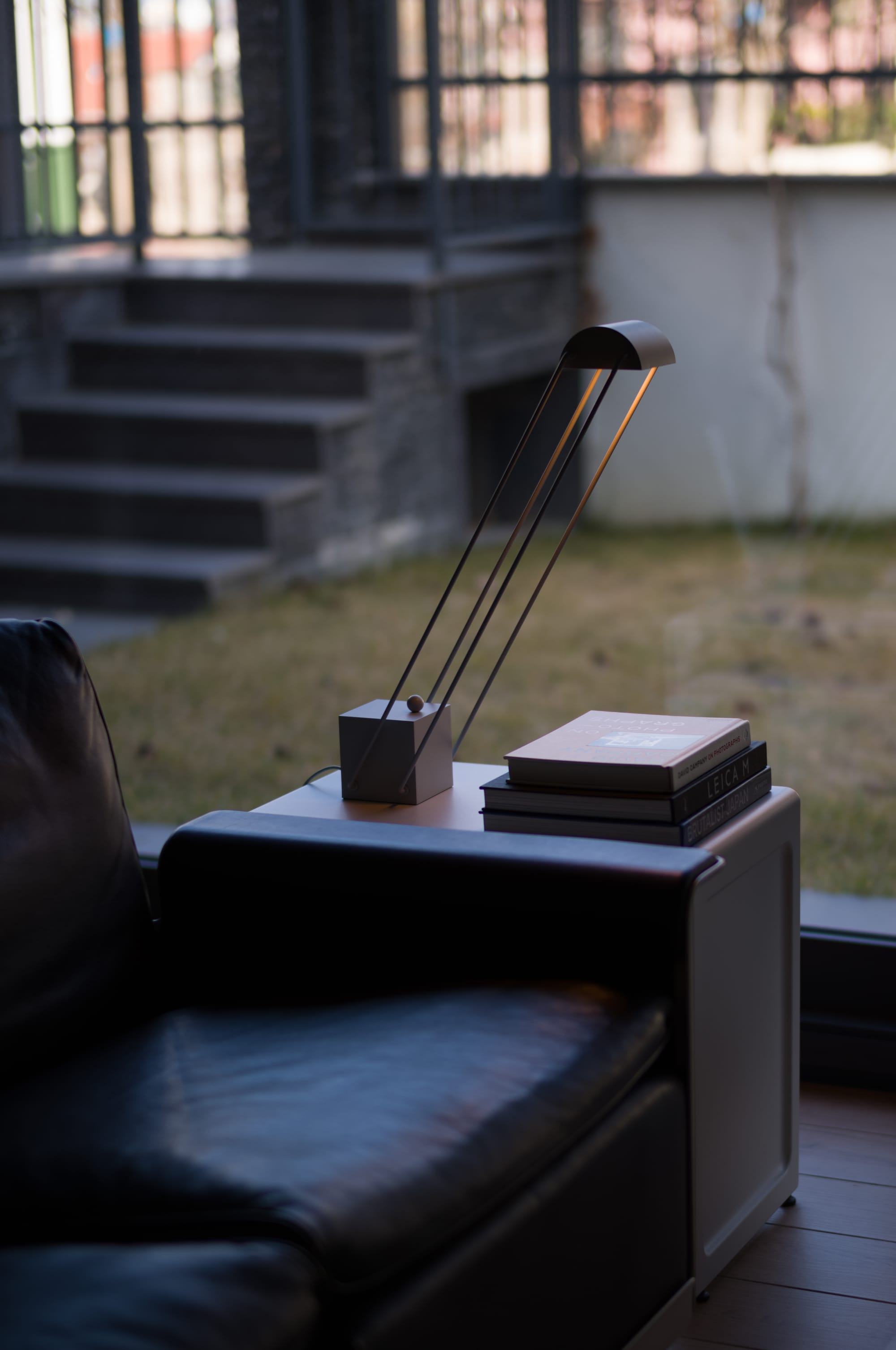
I discovered this one while walking in Copenhagen with my wife, when I saw it through a shop window. Shigeaki Asahara designed it in 1980 for the Italian company Stilnovo, with a shade that looks like a mailbox. It was forgotten for decades until the Danish brand “Please Wait to be Seated” brought it back in 2020.
Unfortunately they didn't have it in stock that day, so I later shipped it to Germany, and from there brought it with me to Ankara, Turkey. It's one of my most unique lamps.
Vision 20/20 Floor
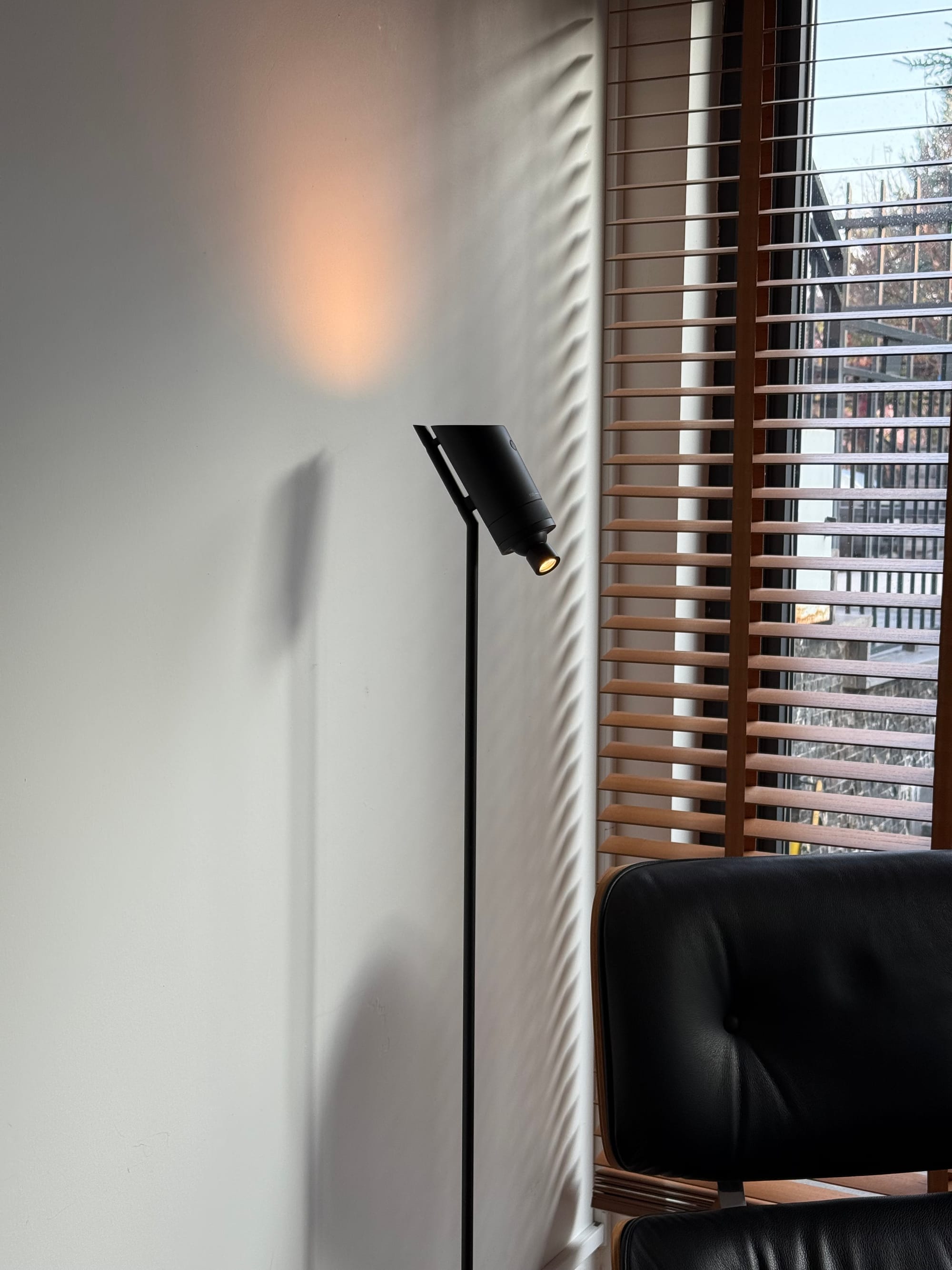
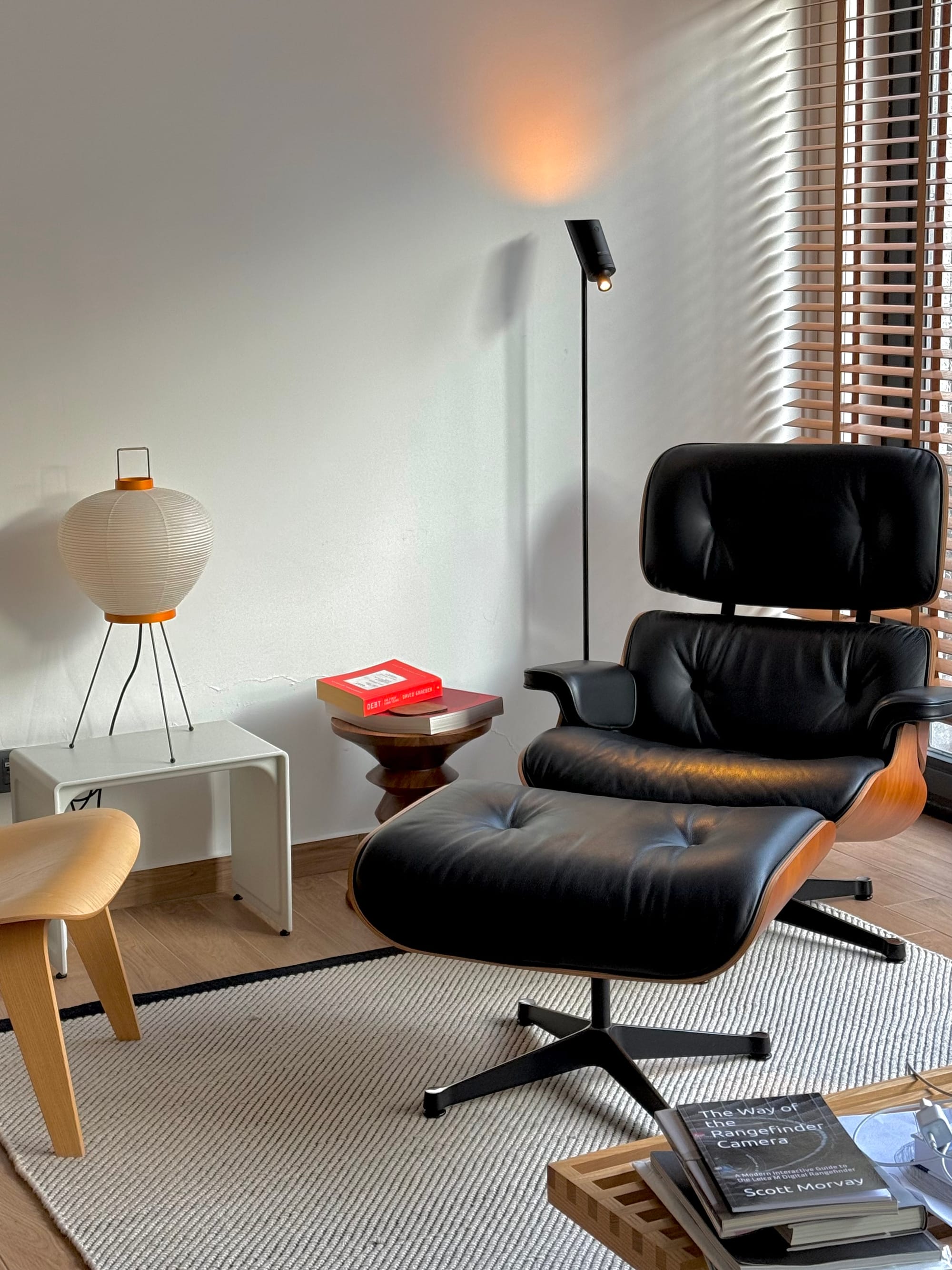
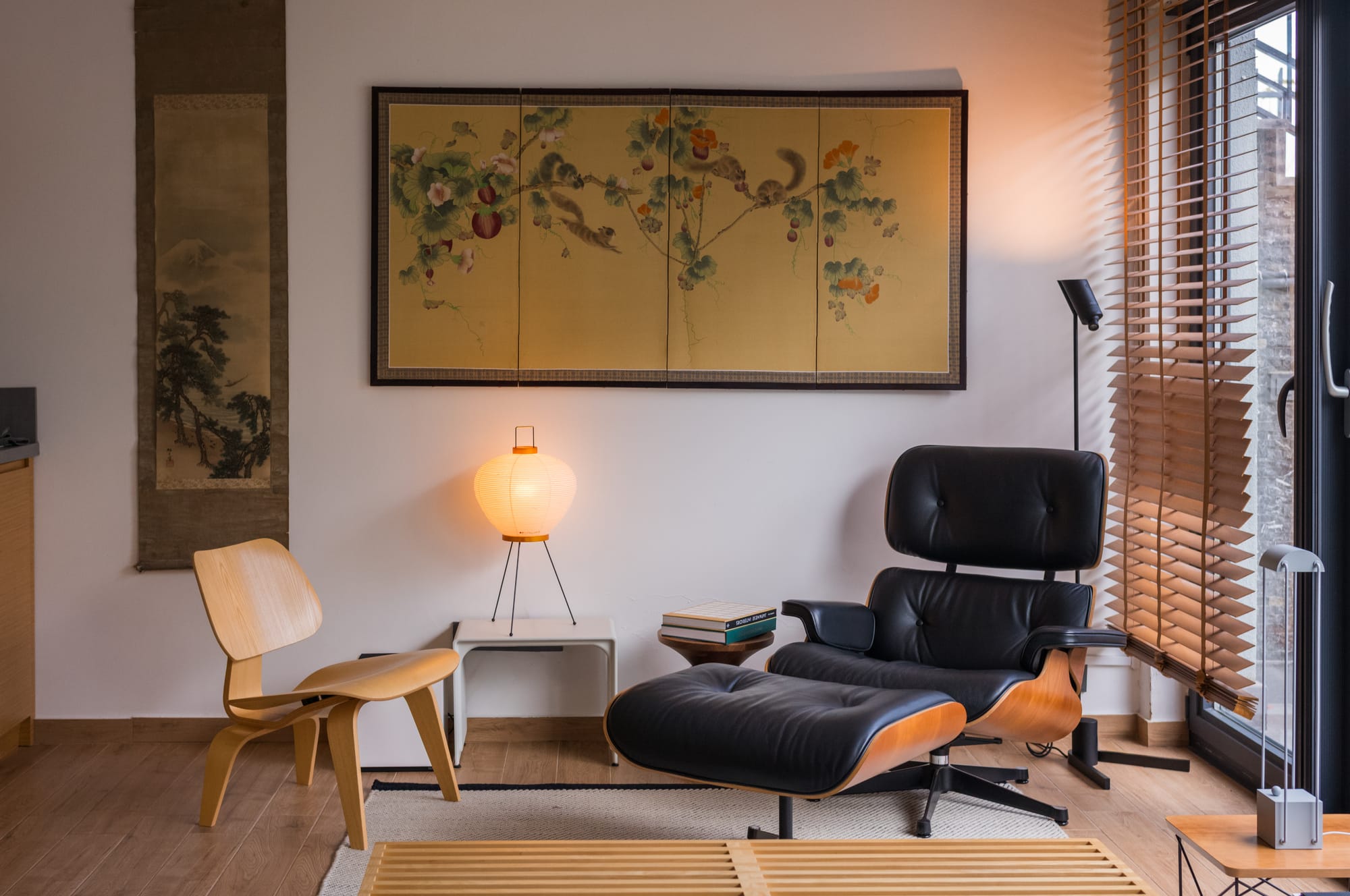
Made by DCW éditions from Paris, and named after the eye test at the optician. The base slides under a sofa, and it has two lights, one pointing up and one down, each with its own dimmer. It's very functional and made especially for reading. It sits next to my Eames chair, and I turn it on whenever I'm deep into reading a book.
HAY Apex Floor Lamp
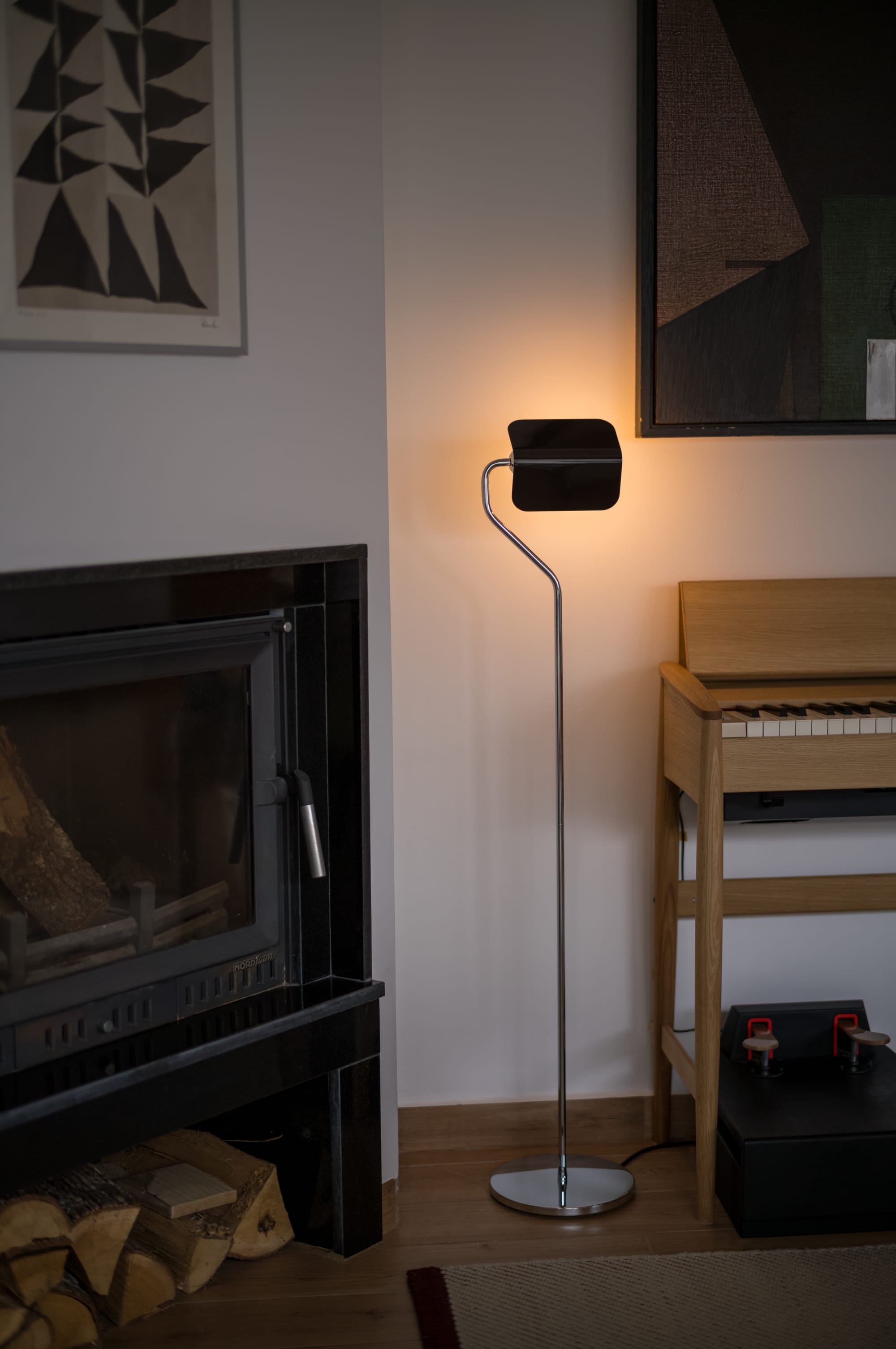
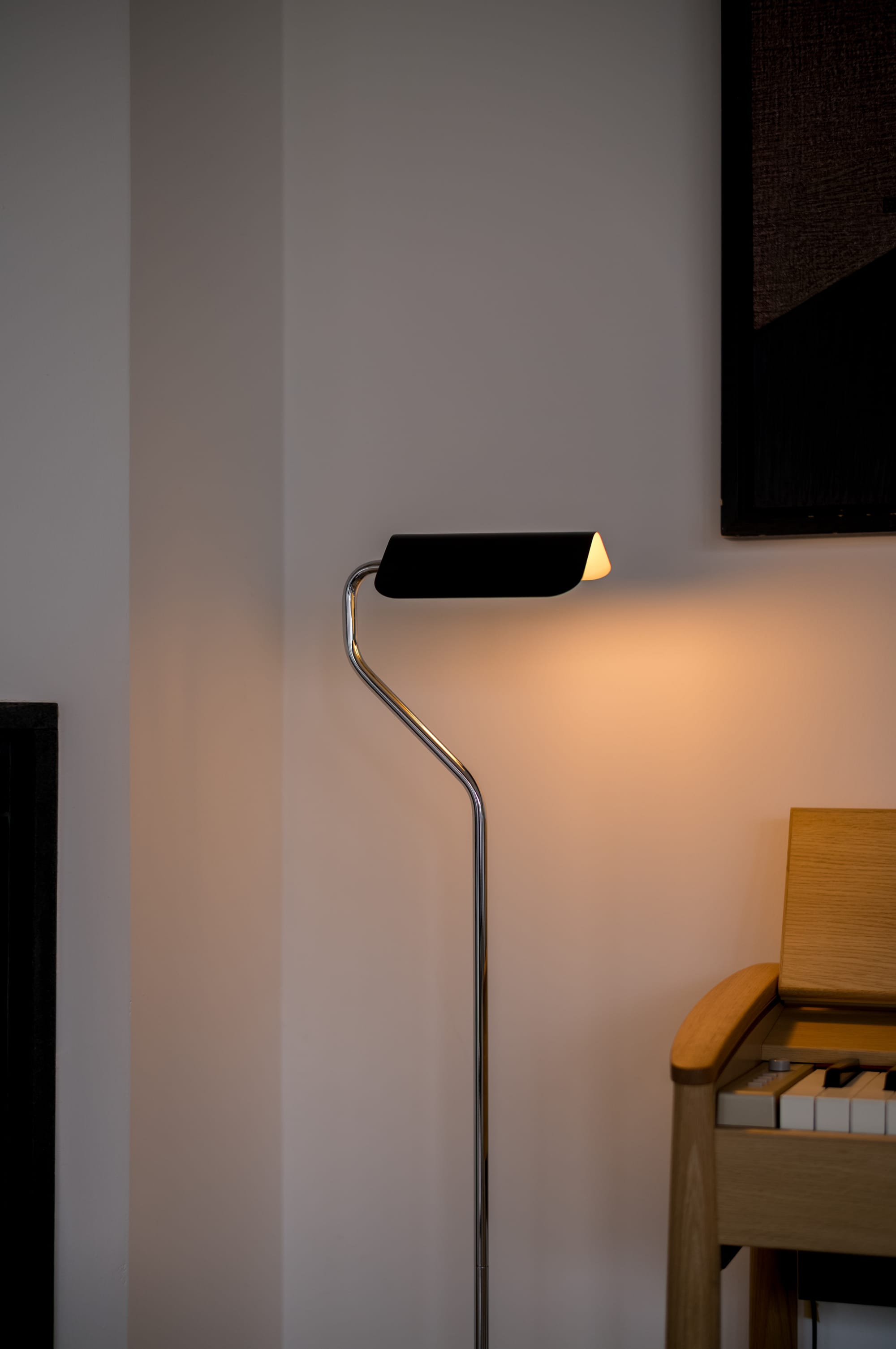
John Tree designed the Apex line for HAY in 2023. It's inspired by the classic banker's lamp. The lamp shade is a single sheet of steel folded over the bulb. For the floor version I picked up a black one. The nice thing about the metal shade is that it rotates 360 degrees. That way you can reflect the light off the wall and create a nice diffused/indirect light.
HAY Apex Clip Lamp
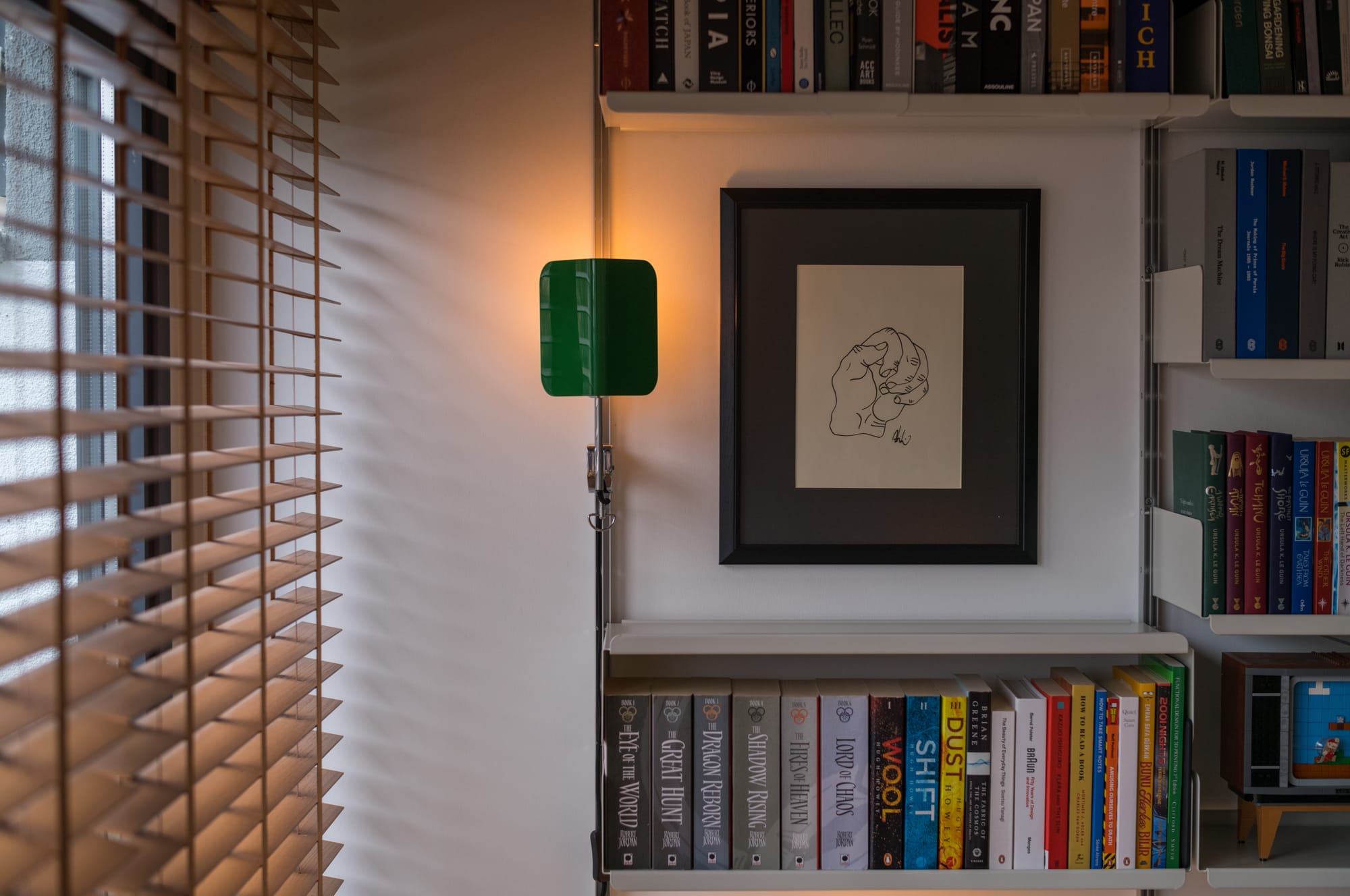
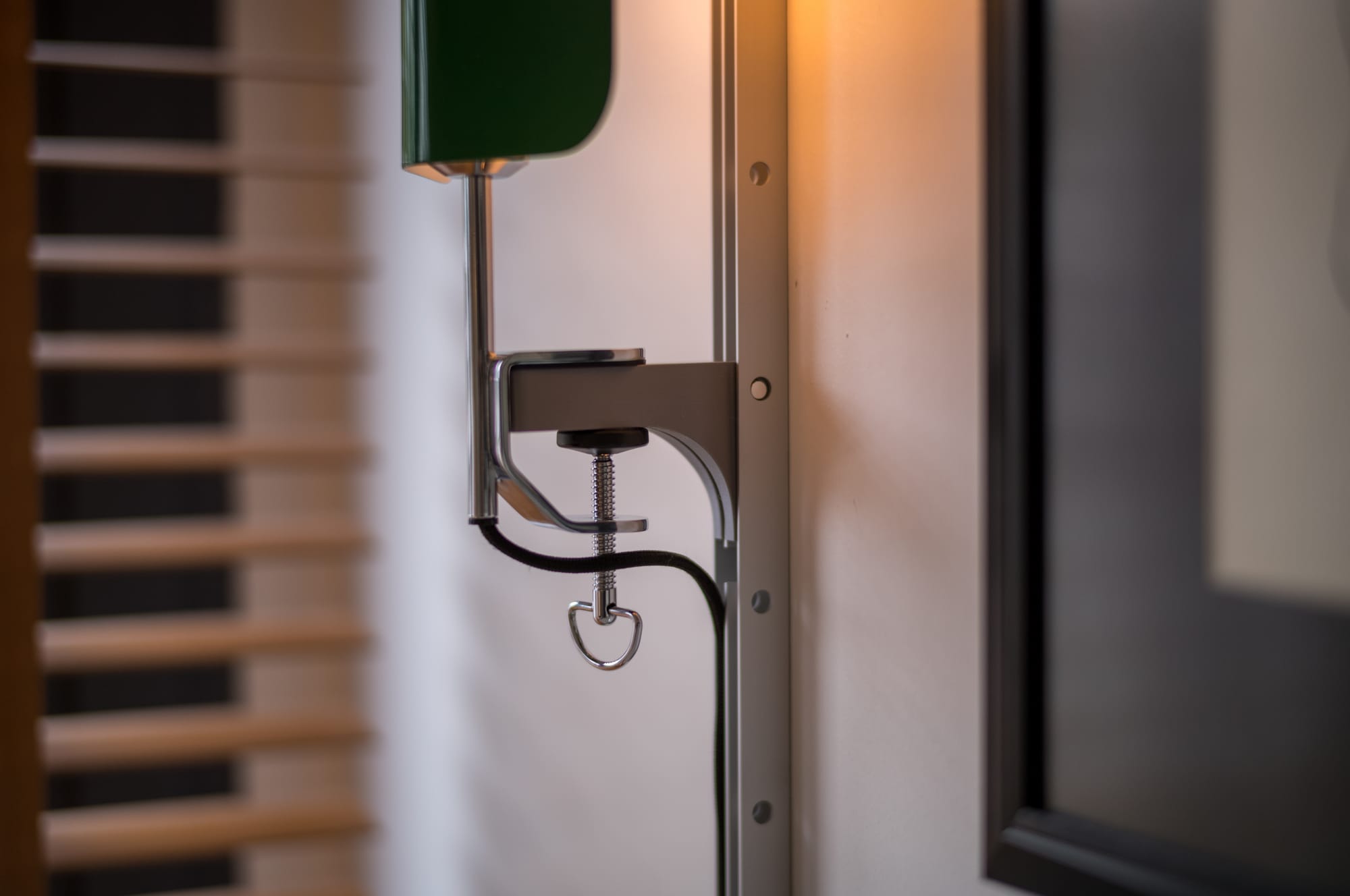
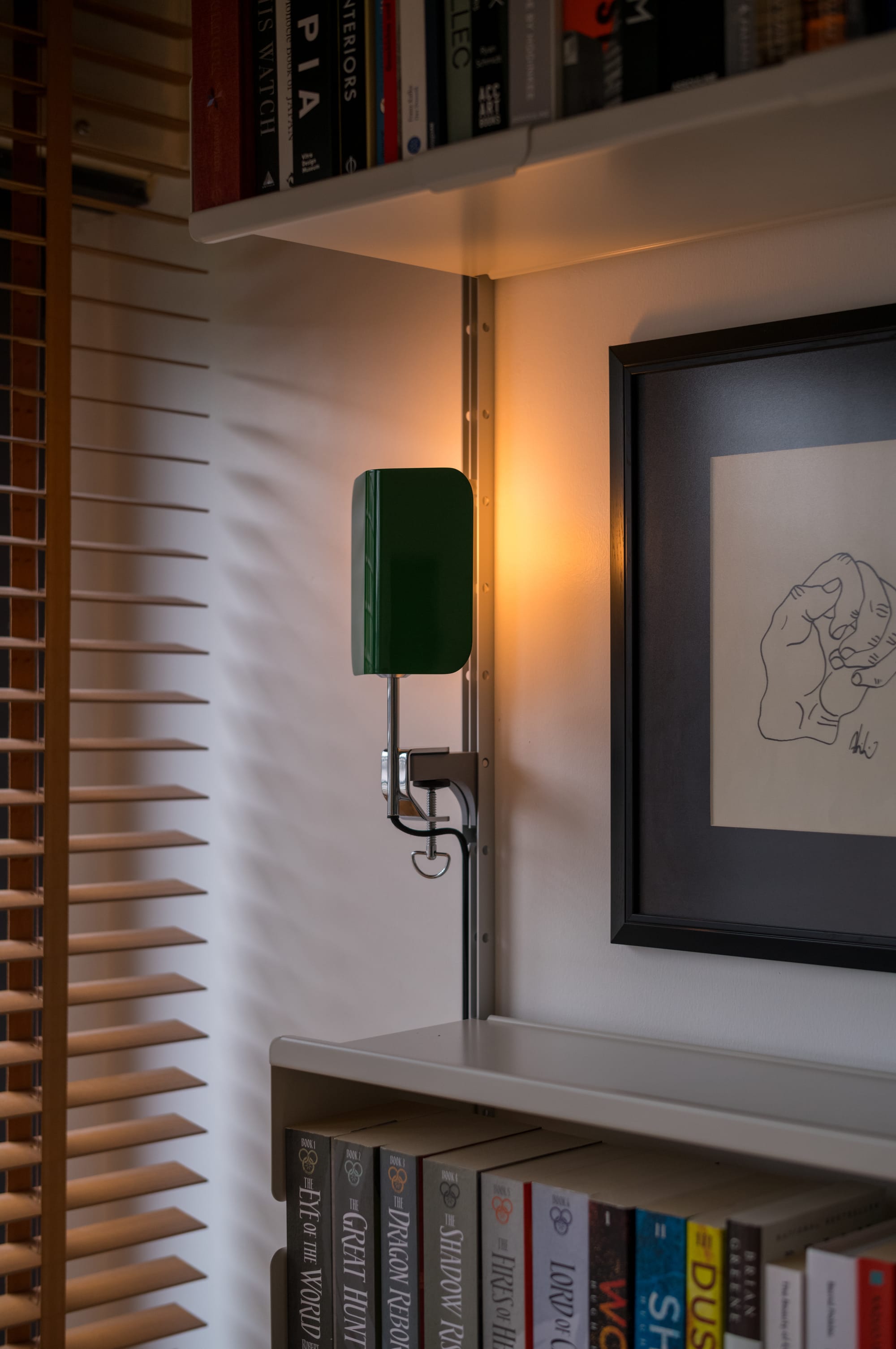
The same folded shade, but this time in green, with a clip instead of a stand. Because the clip was ugly and hard to mount on my Vitsoe 606 e-tracks, I did something myself. I designed a 3D-printed attachment. It took a few versions to get right, but now it looks really nice!
Block Lamp
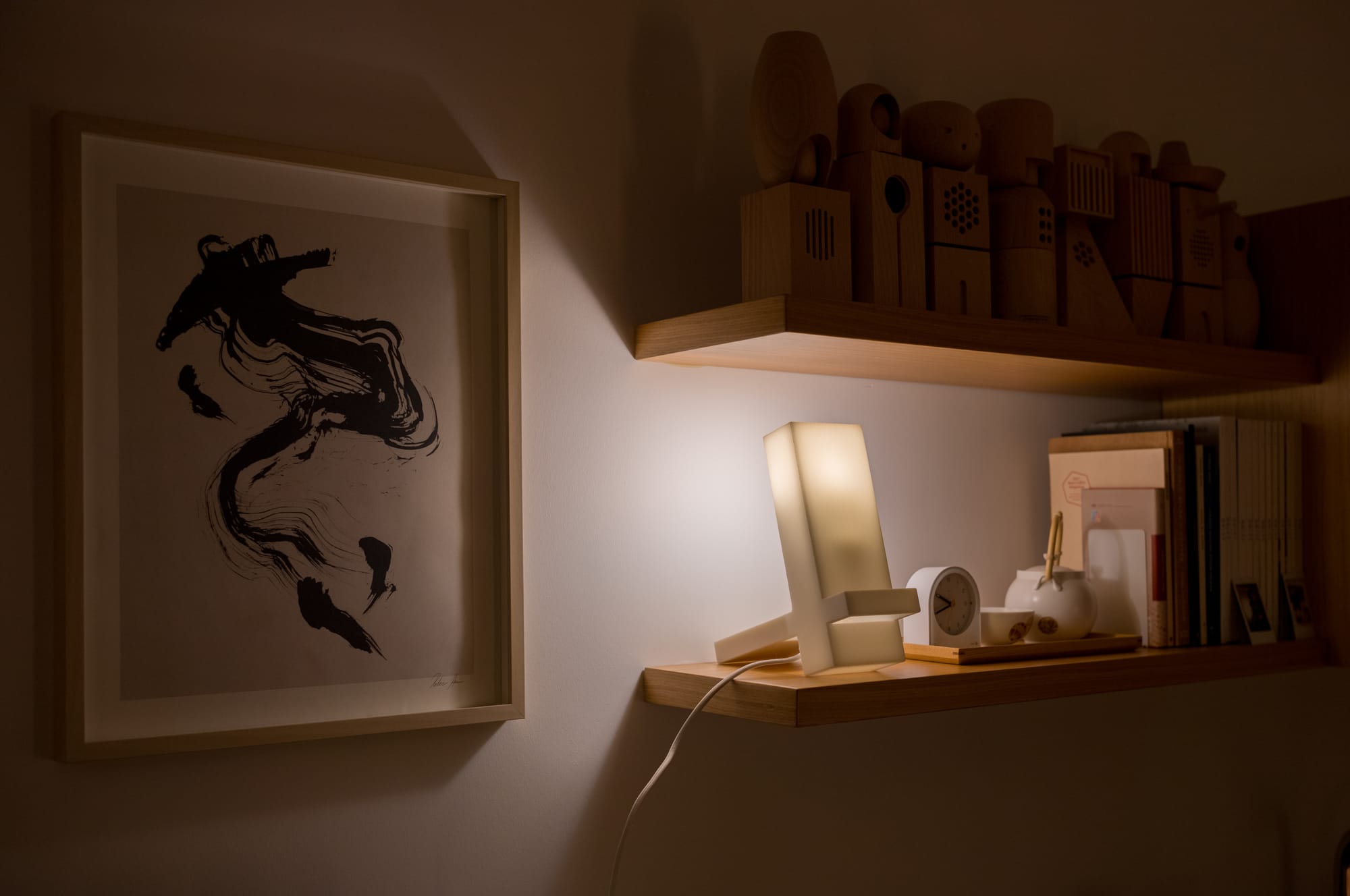
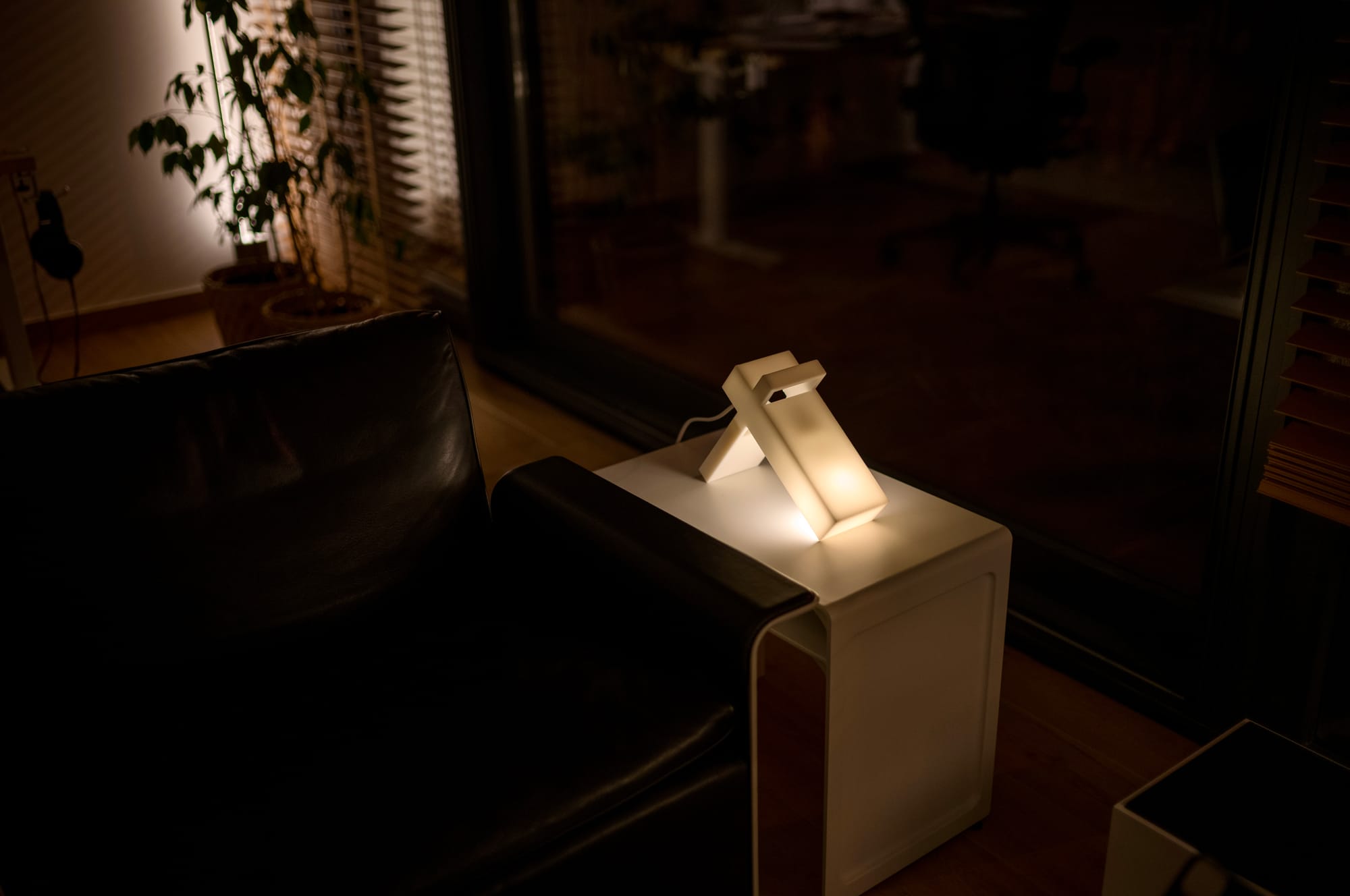
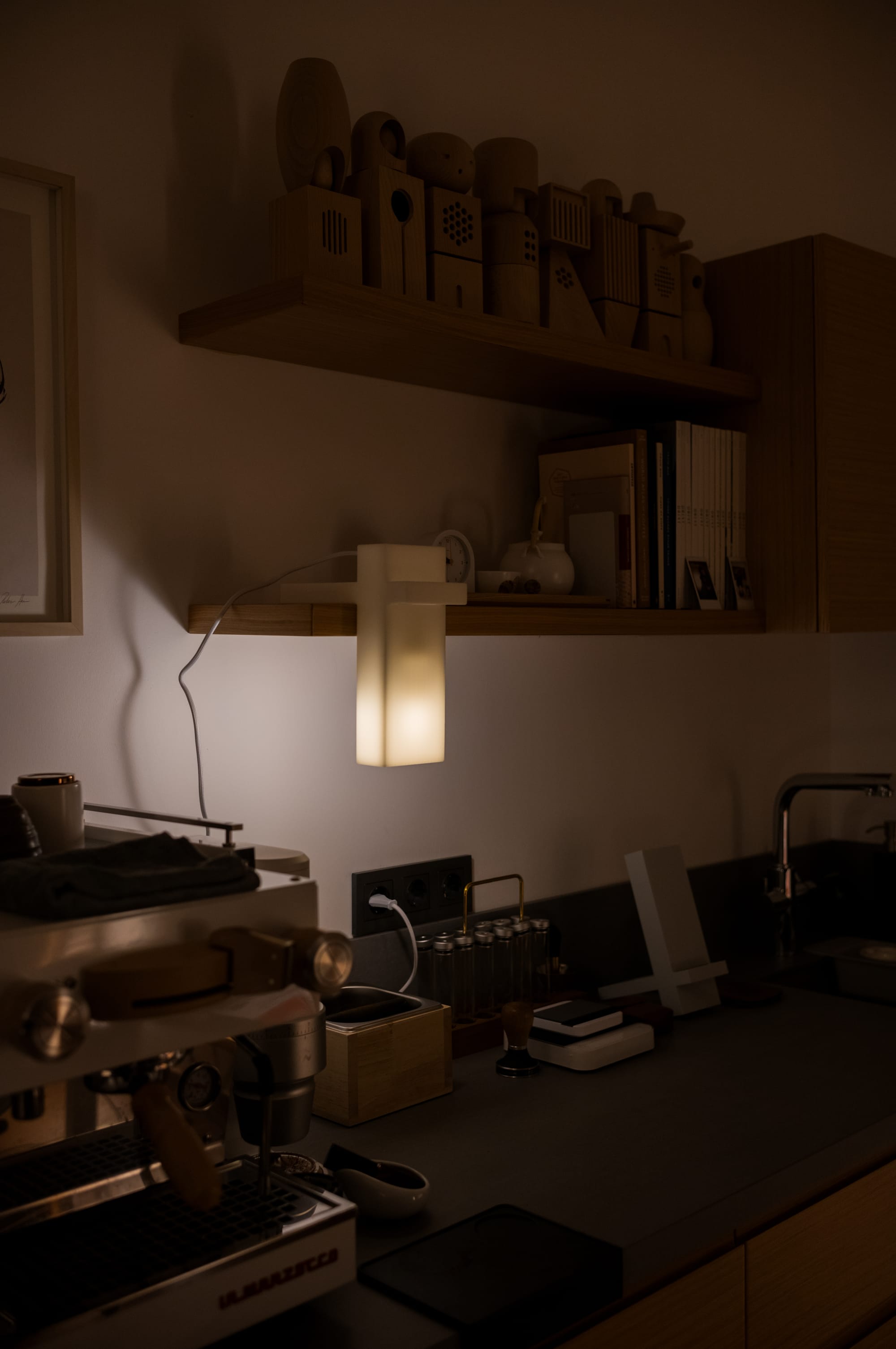
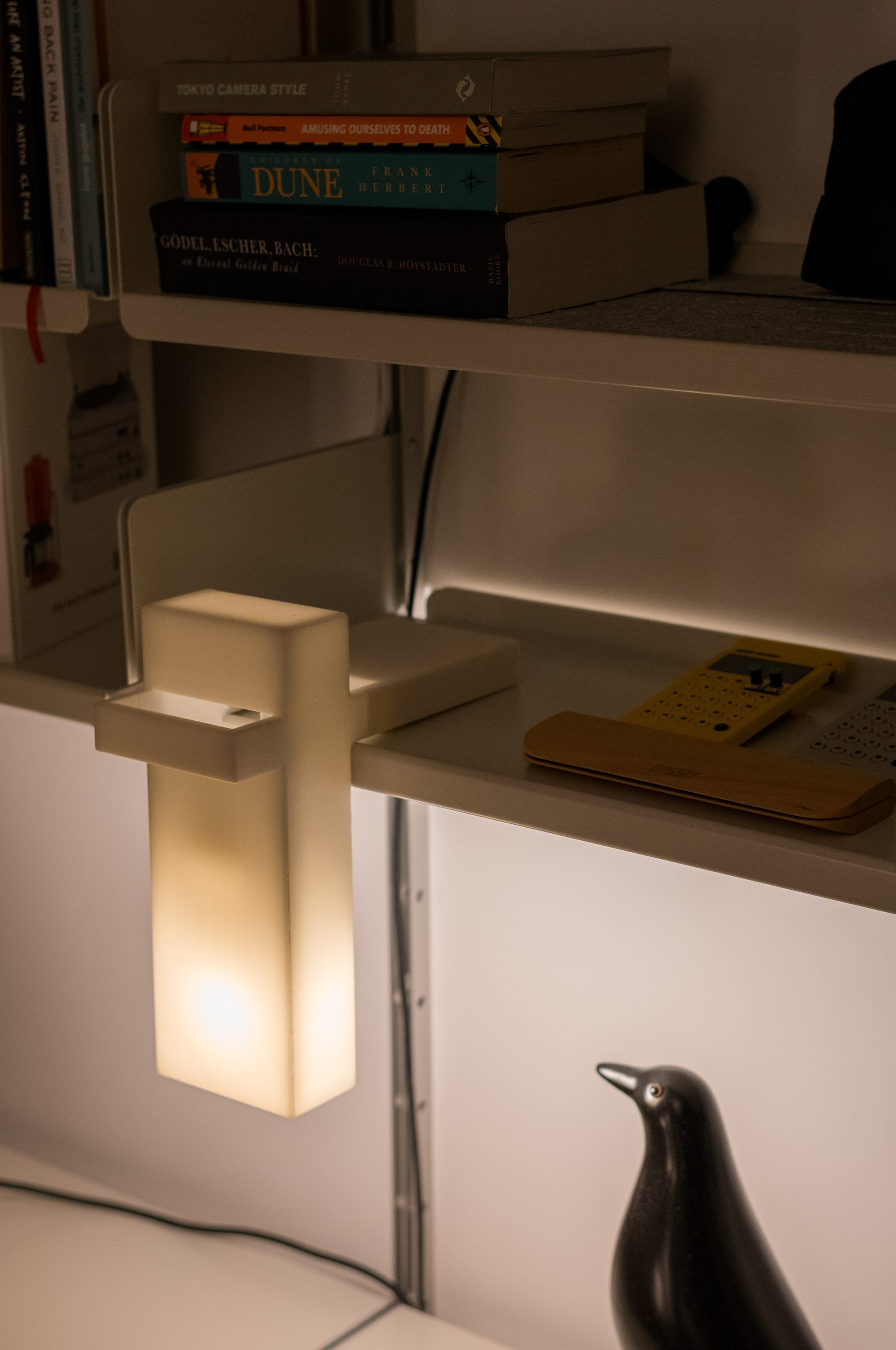
And finally, my own design. I made it in January 2025 for the shelves of my espresso bar. It's a single 3D-printed piece with no glue or bolts, and the front handle can be pulled, pushed or rotated. The best thing about the lamp is that it can be rotated and used in three different ways. Of course, because it is a 3D print, I'm limited in the choice of material. I still have some ideas for it, like adding a battery and making it portable, or using a CNC-milled or wooden housing.
That's it. The world of lighting is incredible. There are design companies that specialize only in lamps. I'm mostly interested in sleek, minimalist and iconic designs (such as the Akari, Tizio, AJ or Tolomeo).
If you have made it so far, thanks for reading! Let me know if you have any questions about any of these lamps.