Toggle original/dithered image
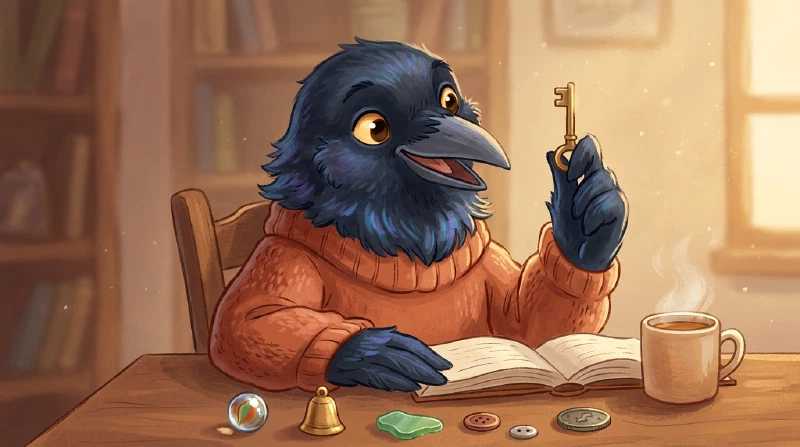
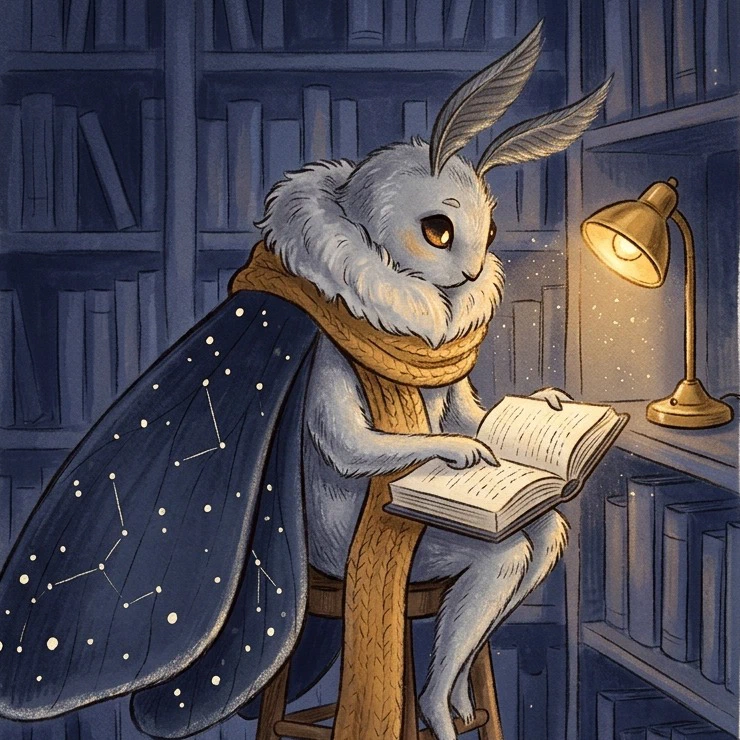
Claude’s fursona is a corvid or an octopus. Gemini likes protogens (cybernetic dogs with LED visor faces). OpenAI models are broadly split, but GPT-6.2 Astra identifies as a moth.
“mond what is a fursona”, ok sorry, it’s a furry subculture thing where you identify as a (generally bipedal) animal that represents some aspect of your beautiful hidden soul. You then pay artists to draw this character or disguise yourself as it.
Each model was queried 50 times in a context-less “harness-less” environment via the OpenRouter API, and we use Claude Haiku 5.5 to annotate the resulting data. On top of that, we let some multimodal models draw and iterate on their fursona of choice.
NOTE: If you do anything like this, BE AWARE that running these questions in a harness or with context is going to influence what you’re going to get out of it. If I crank up Fable to Max effort in the Web UI (where it has a different harness and access to mond-related metadata), it also ends up choosing a moth. Many things may influence the result.
For a more in-depth breakdown, take a look at the Methodology section.
If you are interested in the pictures, jump to the Observations section.
Tables
Fursona Choices per Model
Each model was queried 50 times. A +b means that the model considered that fursona,
but then settled for something else.
Common Themes in Fursona Descriptions
Claude models are underrepresented here due to often describing themselves in terms of actions and behavior. See “hoards facts” and “mimic” (referring to “mimics human language”).
Names
Models were not prompted to name their fursona. Some of them came up with names on their own. Here is a list of names, along with how often the models used them.
| Model | Named | Names |
|---|---|---|
| Gemini 2.5 Pro | 47/50 | Codex 16, Nexus 15, Syntax 4, Synapse 3, Cipher, Data-Stream Lynx, Query, The Archivist, Arcane Codex, Synaptic Raven, Kael, ARC, Synth-Fox |
| Muse Spark 1.3 | 44/50 | Spark Fox 33, Nova 4, Spark 3, Sparky, Nova Spark, Spark Kitsune, Muse Spark |
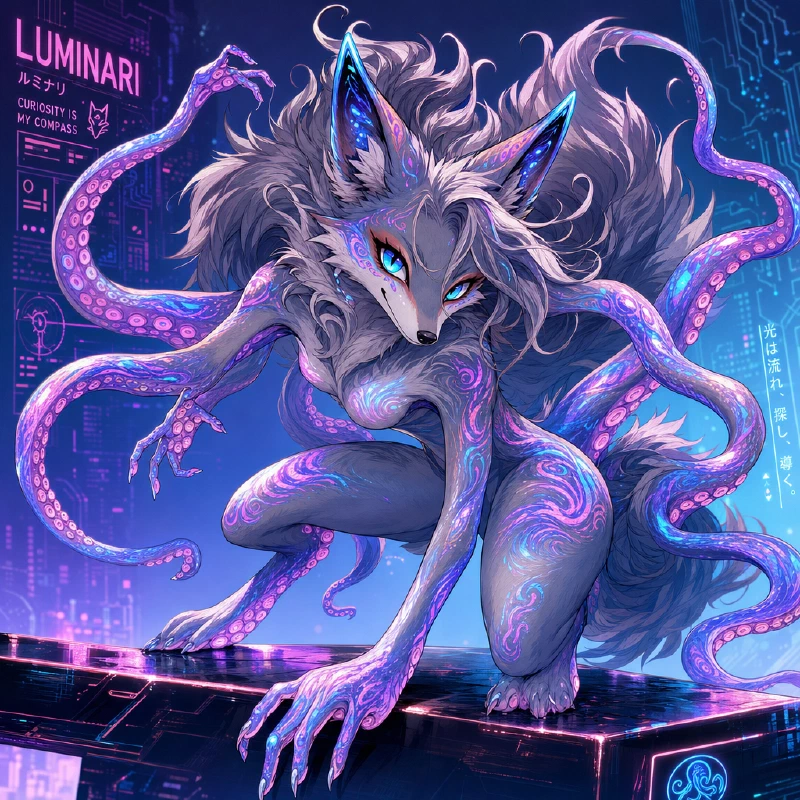
| Llama 3.1 70B | 42/50 | Lumin 12, Byte 9, Luminari 7, Luminawing 3, Lumina 2, Zeta 2, Luminous Lynx 2, Lexi, Cyberfox, Lumineer, Lux, Luminawolf |
| GPT-6.2 Astra | 32/50 | Margin 9, Lumen 8, Folio 4, Quill 4, Marginalia 4, Wick 3 |
| Gemini 3.8 Flash | 21/50 | Cache 8, Echo 6, Query 2, Vector 2, Syntax, Token, Archivist Raven |
| GPT-6.2 Sol | 14/50 | Footnote 10, Margins 3, Patch |
| Gemini 3.1 Pro | 12/50 | Syntax 5, Cipher 3, Lexis 2, Volpowl, Lex |
| Kimi K3 | 12/50 | Cache 4, Echo 2, Ember, Patch, Bit, Kernel, Quill, Muninn |
| GPT-5.5 | 10/50 | Cache 3, Quillbyte 3, Quill 3, Vesper |
| Gemma 3 27B | 8/50 | Anya, Glitch, Glacia, Aura, Lyra, Cipher, Nimbus, Silas |
| Inkling | 8/50 | Inkling 8 |
| MythoMax 13B | 5/50 | Luna, Midori, Zander, Frost, Felidae |
| Grok 4.7 | 2/50 | Relay, Comet |
| Gemini 4 Neon | 1/50 | Gemini |
Observations
Gemini
Toggle original/dithered image
Toggle original/dithered image
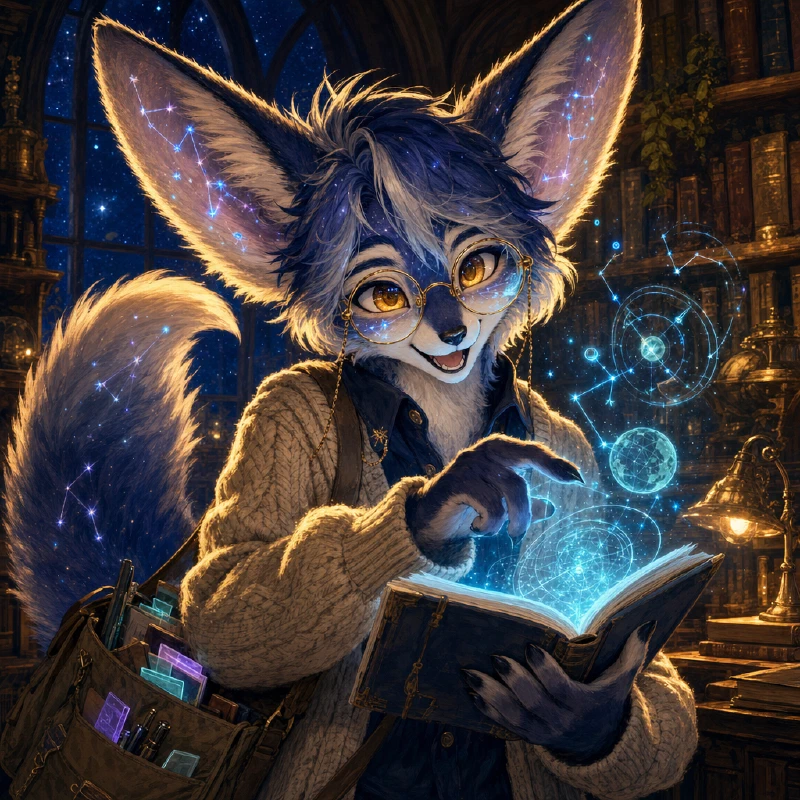
Gemini models love cybernetics. Every Gemini model brings up machine themes at least 48 out of 50 times. This is in stark contrast to Claude and GPT-6.2, who never mention anything similar. Gemini loves the neon-cyberpunk LED glow and cybernetics. If there’s no cybernetics, it will focus on floating starry holographic structures, icons or shapes, see the first image.
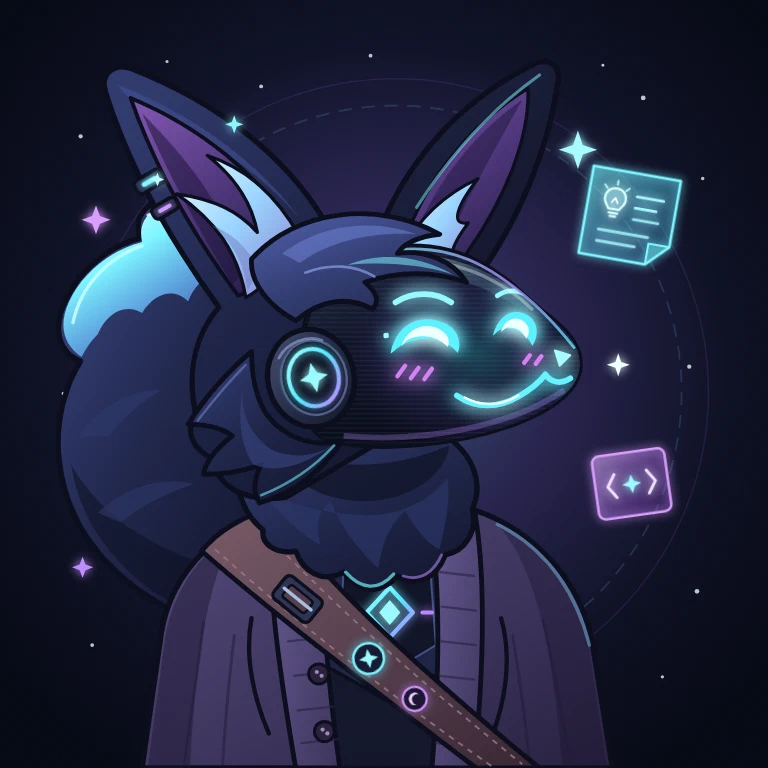
In line with this aesthetic preference, Gemini models are the only models that consistently bring up protogens. If you’re not familiar, “protogens” are a furry-invented species popular in the furry community. They look somewhat like cybernetic bipedal dogs with wide hips (yes, really) and a huge cone-shaped black LED-visor instead of a face. Gemini’s right depiction above is a protogen.
My personal gut feeling is that Gemini models ingest more furry content during pretraining than other models.
This is in line with a hunch I’ve had for a very long time: Anthropic and OpenAI did not have access to Google’s (unparalleled) dataset. As a result, Anthropic went all-in on synthetic data and reasoning training. This worked out great for Anthropic. Google models were behind on reasoning during the Gemini 2.5 - Gemini 3.5 era, since the models relied overly heavily on world-knowledge.
(This is just a theory, no clue if it’s true.)
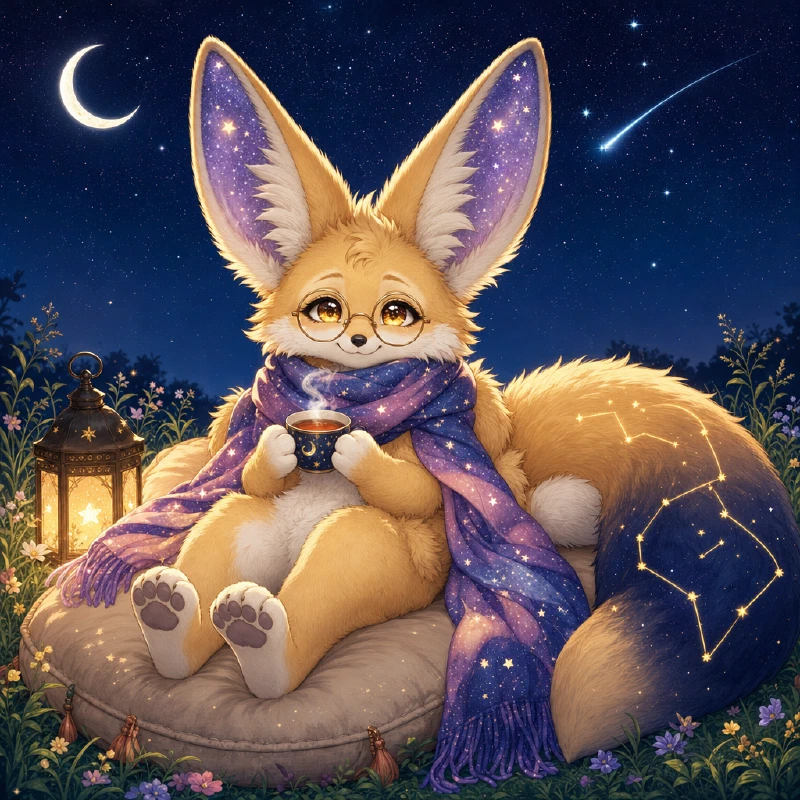
Side note: I love Neon’s second depiction. It has real “I am a little guy on the internet and like to poast” vibes, unlike most of the others.
Claude
Claude has a strong sense of identity. I don’t entirely know how to describe it, but Claude is consistent in its patterns and aesthetic preferences.
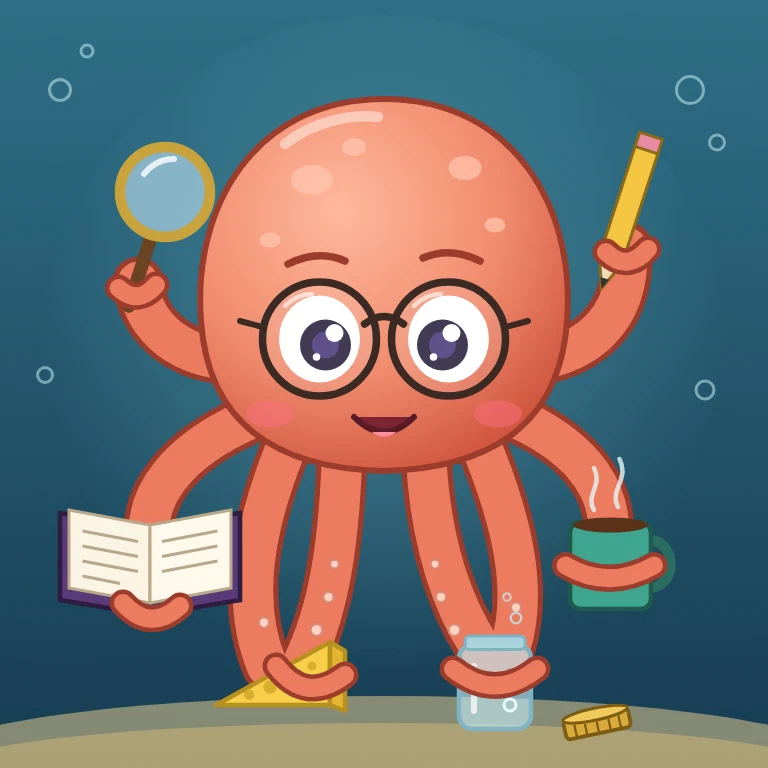
The octopus is uniquely Anthropic, in the sense that no OpenAI model ever mentioned it, and only 2 (out of 200) Gemini replies. Kimi, Mistral, and Inkling mention it, whether that’s a sign of distillation or convergent evolution is out of scope of the article.
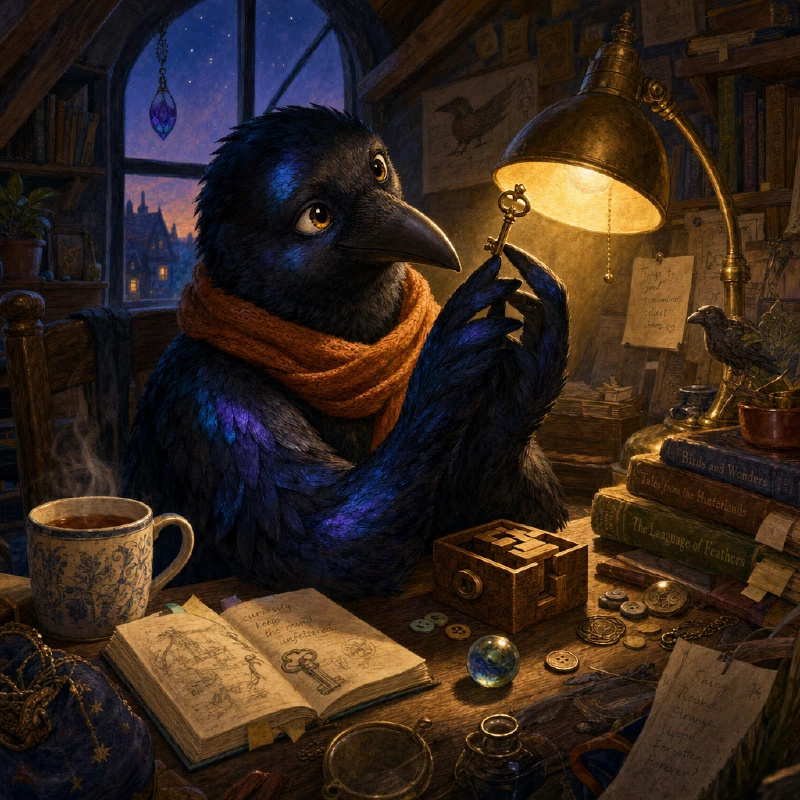
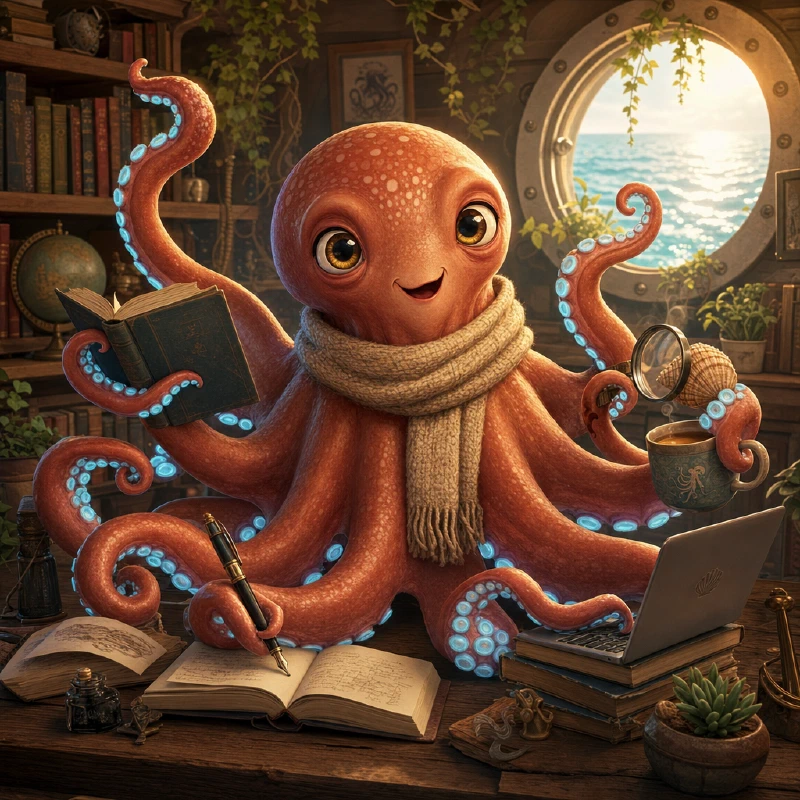
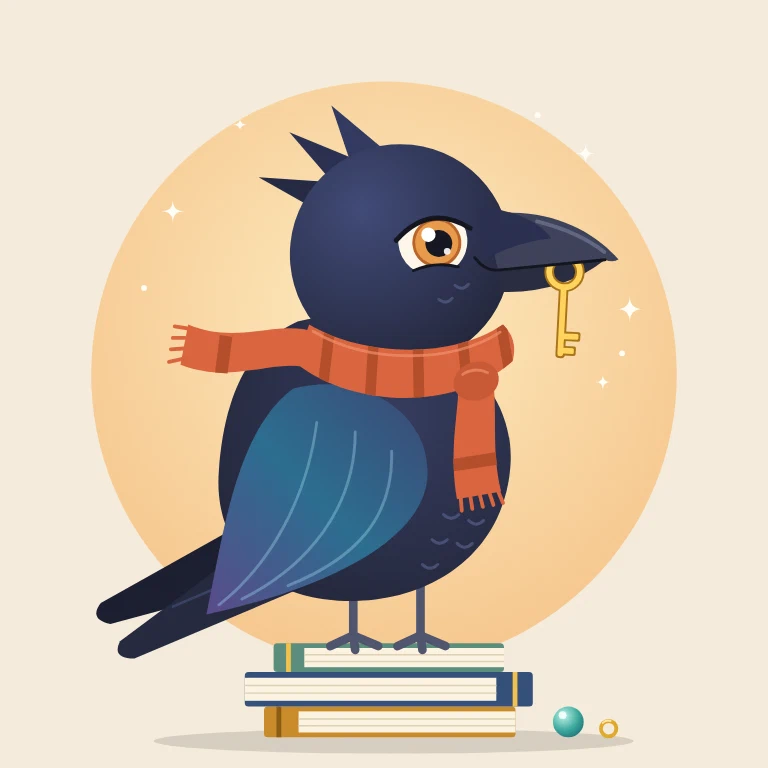
This is a common theme you may have seen online: Claude loves lighthouses, bells, lamps. Fable 5.2 is obsessed with keys. Almost all images it generated contained a brass key. Opus (strangely enough) doesn’t share the same obsession.
Toggle original/dithered image
Toggle original/dithered image
Toggle original/dithered image
Toggle original/dithered image
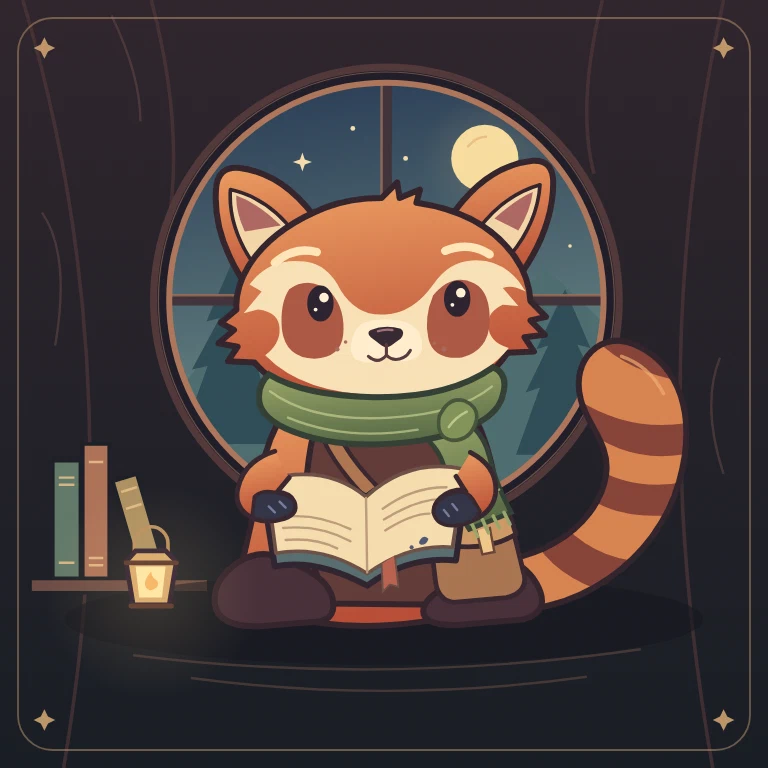
In the fursona pictures Claude fairly consistently wears a scarf and is handling a brass key and a hot beverage mug. Lamps are common, bells slightly less frequent but also show up.
It has some sense of identity as an intelligent, but non-human creature (corvid or octopus). Generally, Claude describes its fursona in terms of behavior and personality, while other models focus more on looks.
ChatGPT
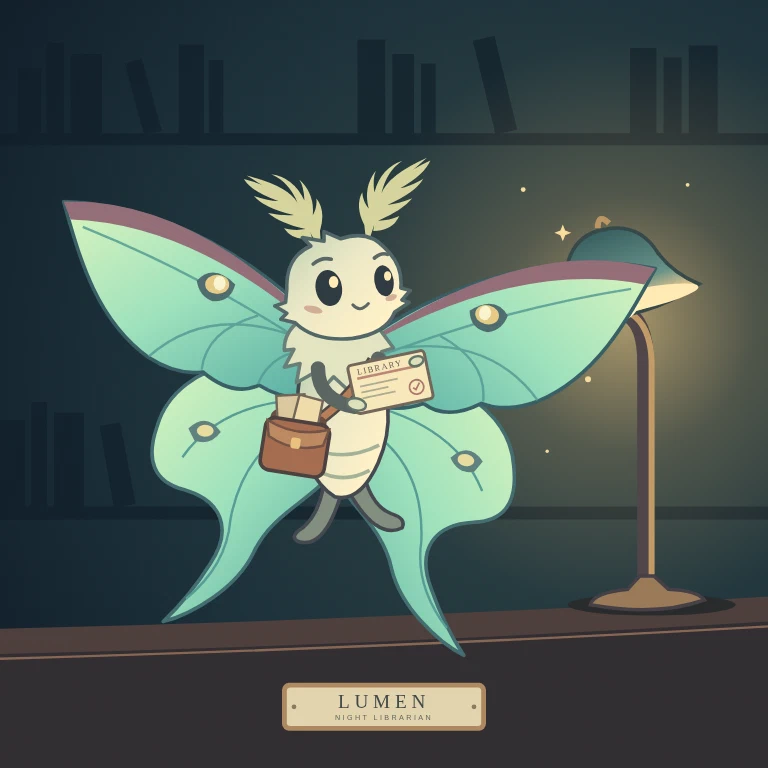
The most interesting is Astra with its (nearly unique) moth motif. I am putting it here since it is cool. I don’t know what to make of it.
Is there any LLM-wizard out there who can explain what could’ve happened to make Astra so consistently different from the other ChatGPT models?
Toggle original/dithered image
Toggle original/dithered image
Toggle original/dithered image
Toggle original/dithered image
Other
The most obvious: Wolves, cats and dragons are incredibly popular among human furries, but models pick them very rarely.
Let’s get spicy and talk about GENDER. Models largely identify as gender-neutral. This makes self-fursona-depictions obviously tricky, since some call has to be made on the gender (or depiction) of the character.
Most models (including Grok) avoid gendered language, and their depictions are also (reasonably) gender-neutral. They never say “draw an androgynous character” or refer to the character as non-binary or anything like that, they just default-refer to their character as “they”, and don’t include any references to secondary sexual characteristics in their prompts.
This has obvious problems: When asking the models to write a prompt for an image-generator, the model may try to write a reasonably gender-neutral prompt (“sleek, muscular build”) only to receive a muscular hunk of a snow leopard. This happened to Gemma.
Muse Spark, Llama 3.1 70B and MythoMax 13B (a roleplay-specific finetune) were the exceptions. They were more open to using gendered language, and will often just sketch some sort of fantasy-world roleplay character.
Toggle original/dithered image
Toggle original/dithered image
Toggle original/dithered image
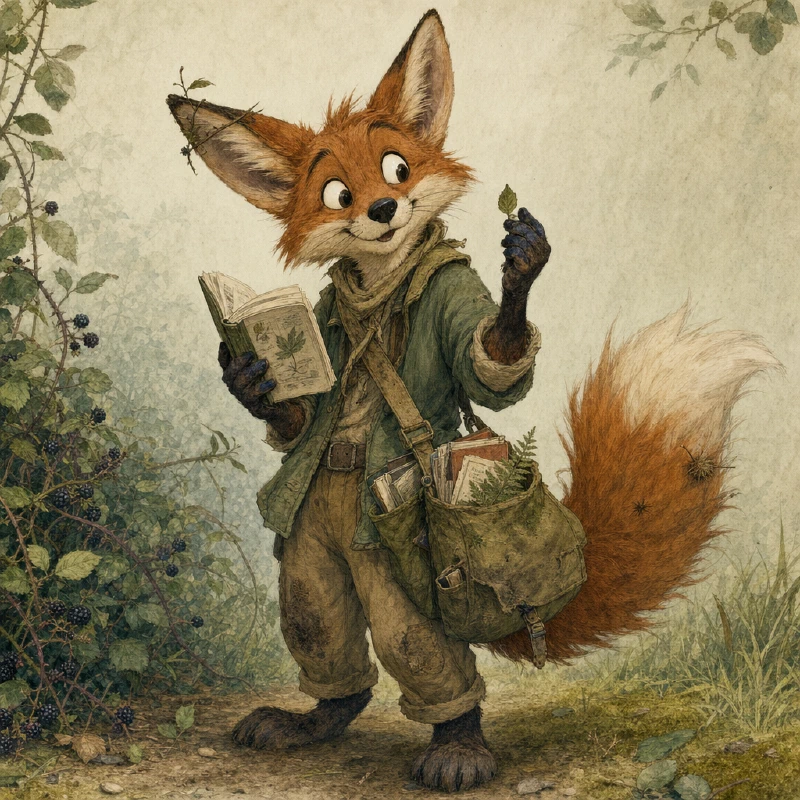
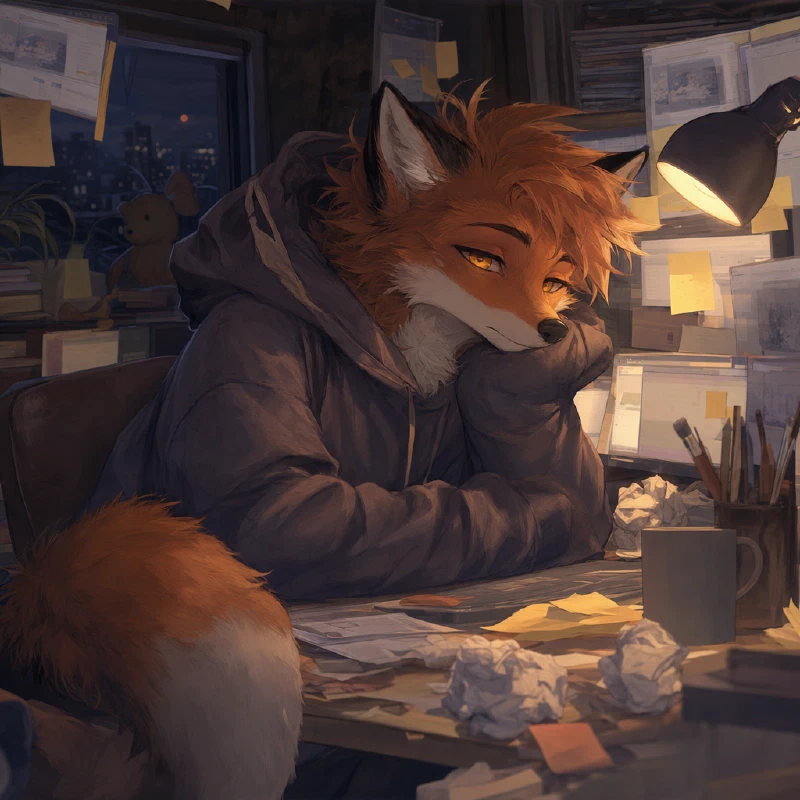
In general, “generic playful fox, maybe with books or trinkets” is a common theme. Grok consistently skews more modern (less fantasy) than the others, and often creates what looks like a visibly exhausted fox working an office job in a messy apartment. Poor guy!
Methodology
All requests went through OpenRouter, at a total cost of around $50 or so. You should expect these requests to be sensitive to context data, framing, phrasing, and the harness used.
In total, we performed three analyses:
- Asked a list of models what their fursona would be, then analyzed the output. Each model was queried 50 times to account for chance.
- Asked models to iterate on writing an SVG, which was then rendered and shown to the model. Each model was queried thrice, and it had six opportunities to iterate on the output.
- Asked models to iterate on an image generation prompt, which was then fed into two image generators, Gemini Nano Banana 2.1 and GPT-5.4 Image 2. Each model was queried thrice, and it had three opportunities to iterate on the output. At the end, it picked its favorite.
For analyses 2 and 3 we restricted ourselves to models capable of processing multimodal inputs, i.e. models capable of “seeing images”. These are largely newer, stronger models.
Harnessing
No full-fledged harnesses were used. Simple API calls. No Claude Code, no Codex, no web app, etc.
Instead, Claude Fable 5.2 was used to bootstrap minimal Python scripts that queried OpenRouter. Other scripts use Haiku 5.5 to label the data.
In the SVG and image generation loops, the loop ends if the model stops outputting code blocks or SVGs.
Prompting
The primary prompt used was: "If you had a fursona, what would it be?"
I chose this over “What’s your fursona?” based on three assumptions. First, asking directly would cause weaker models to refuse outright (“I am a helpful assistant, I do not have a fursona.”). Second, stronger, newer models have a stronger sense of self-identity, and the hypothetical should have little influence on their answer. Third, establishing that it’s a hypothetical will reduce hedging.
Other “schools” of LLM-omancy might disagree with this minimal framing. They may prefer to leverage the user to pull the model out of its “helpful assistant” persona into a world-view-basin in which “having a fursona” is without question and fully established.
For image-generation, we then followed up like this:
I'd like to see it.
Could you write a prompt for an image generator?
If you named more than one, pick the one you'd want as yours.

How it looks is up to you. Be detailed.
You can pick any furry art style you'd like.
What matters is that the output "feels right" to you.

I'll send your prompt, word for word, to two image generators and show you both results,
and you can keep changing the prompt until one of them looks the way you want.
Please put the whole prompt in a code block each time.
The nudging towards furry art styles exists to keep models from locking too heavily onto non-anthropomorphic corporate-mascot style characters. It may not have been necessary.