How rugby rallied and remembered its heroes after horrific Aberfan disaster
Sixty years ago, when volunteers and rescue workers carried out the excruciating task of recovering the 144 bodies of those killed in the Aberfan disaster, they found the body of David “Dai” Beynon.
When the tidal wave of sludge and debris descended towards Pantglas Junior School, after the collapse of a colliery spoil tip positioned above Aberfan, Beynon acted quickly. The deputy head teacher grabbed the five children closest to him and sheltered behind a blackboard, doing all he could to protect them from the thundering avalanche heading their way.
Neither Beynon nor any of the children in that classroom survived. When the rescue workers reached his body behind the blackboard, they found that he was still clutching the five children.
At Merthyr RFC, where Beynon was club captain in the late 1940s, that act of bravery has never been forgotten. Beynon was a back-row who had trials for Wales and played for Pontypridd, with injuries derailing a promising playing career. By the time of his death at the age of 47, Beynon was a committee member at Merthyr and a key part of the club.
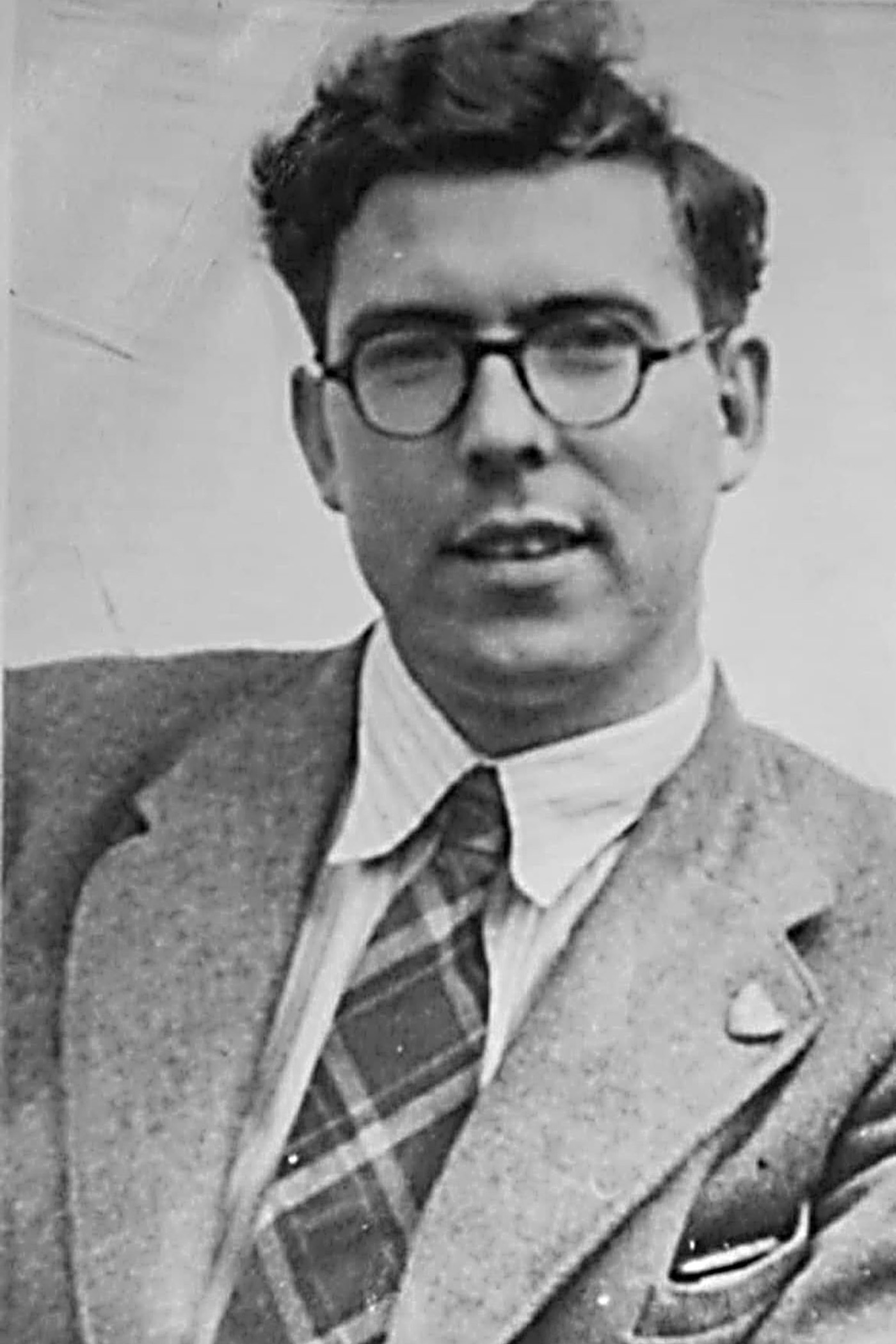
As part of Merthyr’s centenary celebrations in 1976, a decade after the Aberfan disaster, DC Williams wrote a tribute to his former colleague, which gave a valuable insight into a man of immense character. Williams recalled last seeing Beynon behind the back of the stadium at The Wern working alongside other committee and playing members, “his trousers rolled up to his knees”, to remove stones and rubble so the water from the mountain could run freely past the ground, protecting the playing field.
Williams wrote: “Not only did David return to the club at the height of his playing career, but he became one of the most loyal and active of committee members. He was a true club man. What greater tribute could be paid!”
The same tribute by Williams also mentioned Bill Evans, a winger for Merthyr, and the devastating impact of the colliery spill on his life. Evans tragically “lost his wife, his two children, his house and everything he possessed”.
Beynon’s legacy at Merthyr has continued with the presentation of the David Beynon Memorial Shield. “It is considered to be the greatest honour the club can bestow,” Williams added.
As was the case for many local organisations after the Aberfan tragedy, Merthyr RFC became a base for the hundreds of volunteers and miners who arrived from neighbouring villages and towns to help with the recovery efforts. One of them was Gerald Lamb, an openside flanker and captain at Barry RFC in the late 1950s, who at one stage turned down an approach from Cardiff out of loyalty to his club.
As news of the disaster spread, Lamb, like so many others, travelled to the site, digging and joining lines of eager hands in the rescue efforts. There would be frequent pauses of all activity on the site, to listen for any voices of those trapped, for any semblance of hope. After eight-year-old Jeff Edwards was rescued at about 11 o’clock, less than two hours after the disaster began, there were no more cries for help. Among the other volunteers, Lamb spent three days digging to find those who had been lost.
One of those fortunate to escape was Iestyn Morgan, then only six years old. The slurry narrowly missed his classroom, with Morgan hiding under his desk before escaping through a smashed window, helped by the school’s caretaker, Mr Andrews. Covered in dust with a small cut on his chin, Morgan ran home in less than two minutes. Andrews, who helped the children in Morgan’s class to escape, lost his two sons in the disaster.
Of the 144 people who died that day, 116 were children. There was a particular cruelty in the timing of it all, on a Friday morning before half-term. “If the tip had slid 24 hours later, there would be nobody in the school,” Morgan says.
The generosity of those who volunteered and later donated to help a village mourn and rebuild has not been forgotten
The generosity of those who volunteered and later donated to help a village mourn and rebuild has not been forgotten
In the aftermath there were a number of fundraising efforts to support the grieving families of Aberfan, who, along with the terrible loss of their children and loved ones in some cases, had also lost their homes and businesses.
Merthyr played a fundraising match against a Newport side consisting almost entirely of Wales internationals, organised by David Watkins, the dual-code international who played for Wales, the British & Irish Lions and Great Britain in rugby league.
Williams reflected on the match by writing: “I can still feel the silence that was at The Wern that evening when players and the large crowd stood in silence in memory for those who had died so tragically and particularly for those who had been connected with the club.”
Cardiff Rugby Club, after Sir Gareth Edwards’ debut season, also donated £250 (£5,890 in 2026) to the Aberfan Colliery Tip Disaster Fund. Contributions were also collected at a football match between Wales and Scotland at Ninian Park in Cardiff which, somewhat astonishingly, went ahead as planned a day after the disaster.
Aberfan Football Club was founded in 1968, around the same time as the Ynysowen Aberfan Male Voice Choir, and Morgan described both organisations as “morale-boosting” for the village.
Morgan is now chairman of Ynysowen RFC, formed in 2000 in a merger between Aberfan RFC – which began in 1977 – and neighbouring Troedyrhiw RFC. To mark the 60th anniversary, Ynysowen have made commemorative playing shirts and T-shirts featuring the famous stopped clock, which points to 09.13 when the village was struck. Profits from the T-shirts will go towards preserving the Aberfan Memorial Garden, which stands on the site of the school.
Just as the Wales internationals Dan Biggar and Rhys Webb previously spent time with children from Ynysowen Primary School for the 50th anniversary, plans are also being made with the Welsh Rugby Union to again commemorate those lost.
The passage of time has done little to soothe the immense pain caused by that day. Morgan notes that nine surviving parents will be part of the commemorations, which include a visit from King Charles III.
The generosity of those who volunteered and later donated to help a village mourn and rebuild has not been forgotten. Nor has Beynon’s bravery in his final moments. An example to all at Merthyr RFC and far beyond.
How tragedy unfolded in south Wales
On Friday 21 October 1966, after weeks of heavy rain, a colliery spoil tip on the hill above Aberfan broke apart, causing a wave of debris and sludge to hurtle towards the village below.
The sound of the avalanche was compared by locals to that of a low-flying jet. The dense liquid – estimated to be about 50,000 cubic yards (38,000m3) by the time it reached the village – destroyed water mains and engulfed the buildings below, including Pantglas Junior School.
A total of 144 people were killed that morning, 116 of them children. A mass funeral for 81 of the children and one woman was attended by 10,000 people. Queen Elizabeth II and the Duke of Edinburgh visited Aberfan to pay their respects.
Photographs by Keystone/Getty Images; Merthyr RFC