The never-ending murder story: Peter Mitchell has been waiting five years for answers to the unexplained death in Kenya of his sister Kate, a BBC charity worker, but has encountered only a web of obstruction, contradictions and institutional silence. [November 2026]
Suddenly, at the end of one of the hearings, they gave his sister’s phones back to him.
“They hadn’t been cleaned, either,” he says. “There was still blood on them.”
He goes to fetch them from another room of his home in Fenham in Newcastle. “I’ve thoroughly cleaned them now,” he shouts.
You know, I say, this is quite traumatic for you, Peter.
He laughs: “It was a bit, yeah.”
He puts the phones on the table between us when he returns. “Blood stained,” says a label on one of them. When I listen back to the recording of the interview, I hear myself say: “Good God.”
Later, he emails me, asking if I can hold back on descriptions of gore when I write it up. “For Mam’s sake,” he says. “She finds that stuff very difficult.”
You may know Peter Mitchell. He can be a bit of a grot-bag on X (tweeting mean things about people I quite like). You may have read his nonfiction Imperial Nostalgia (Sathnam Sanghera named it one of his favourites in The Observer’s best books of 2021). Or you may know him from what happened to his 42-year-old sister, Kate Mitchell, who was murdered on 19 November 2021, while working for the BBC in Nairobi, Kenya’s capital.
Her body was found in a hotel room. Her suspected murderer’s body was found outside, eight floors below the room’s window. For the past year, Mitchell has endured the Kenyan inquest and shared material with me, including witness statements, exhibit lists, postmortem reports and a video of his sister’s funeral.
I don’t know why, but the aspect of it all that sticks with me the most is how he comports himself. He apologises when describing horrific details. He smiles and jokes as he shows me evidence. One day, I ask if he’s forcing himself to be like that, to avoid being distraught. “I don’t know,” he says.
During another conversation, I tell him he seems stressed. “I am fucking stressed. It’s just been a really hard year, actually.” I ask if he has counselling. He was, he says, but stopped this month. He says it’s worse when he gets back from Kenya. He says he has “wobbles”, and I ask what a wobble is.
“You know, I’m a freelancer,” he says. “And I’ve found that I spend four days in Kenya, and I get back, and it’s not like not being able to get out of bed, but I’ll just be very stupid and very tired for about two weeks and, yeah, by the end of this year, I was just very, very sad.”
Because no answers are coming?
“I think just the experience of repeatedly going out there and, I mean, the thing about going to Kenya is it was a little bit exciting sometimes. It was better than sitting at home feeling the immense futility of living in the aftermath of something like this.
“But every time I went, I’ve not known what I was going to hear when I went into court, and I’d be sitting being watched while people came out with new details about my sister’s murder, and there’s quite a lot of that which, once it’s in your brain, it’s not coming out.”
When his sister’s body was flown back home in a coffin in a crate five years ago, police asked Mitchell to go to the hospital in Newcastle to identify her. “I sort of wiggled out of it,” he says. “I was like: ‘She’s been ID’d and autopsied twice. Like, fuck off. You know who this is now’.
“So I said no. For a couple of years, I was really guilty about that. I felt I’d failed her in some way, like I should have done that, but I think I’ve kind of made up for that now.” He stops talking and seems like he’s trying to gather himself, or control himself. He does that regularly when speaking.
Later, he emails, in a chirpy, almost apologetic way. “Hallo, and sorry for loading you with more stuff unbidden! I’ve just been thinking about your questions re: me demeanour around all this stuff, because I hadn’t thought about it before and it stayed in my head a bit.
“Since this happened, I’ve had the opportunity to think about how violence (especially this kind) gets represented, and the scripts that people follow around it. I’ve been really wary of providing anything that feeds into a kind of pornography of suffering and sentiment.
“Being in a support group with some other people who’d lost loved ones to homicide made me feel really viscerally how helpless most relatives of murder victims are in controlling their own representations and the way their loved one’s deaths get produced for an attention-based market.
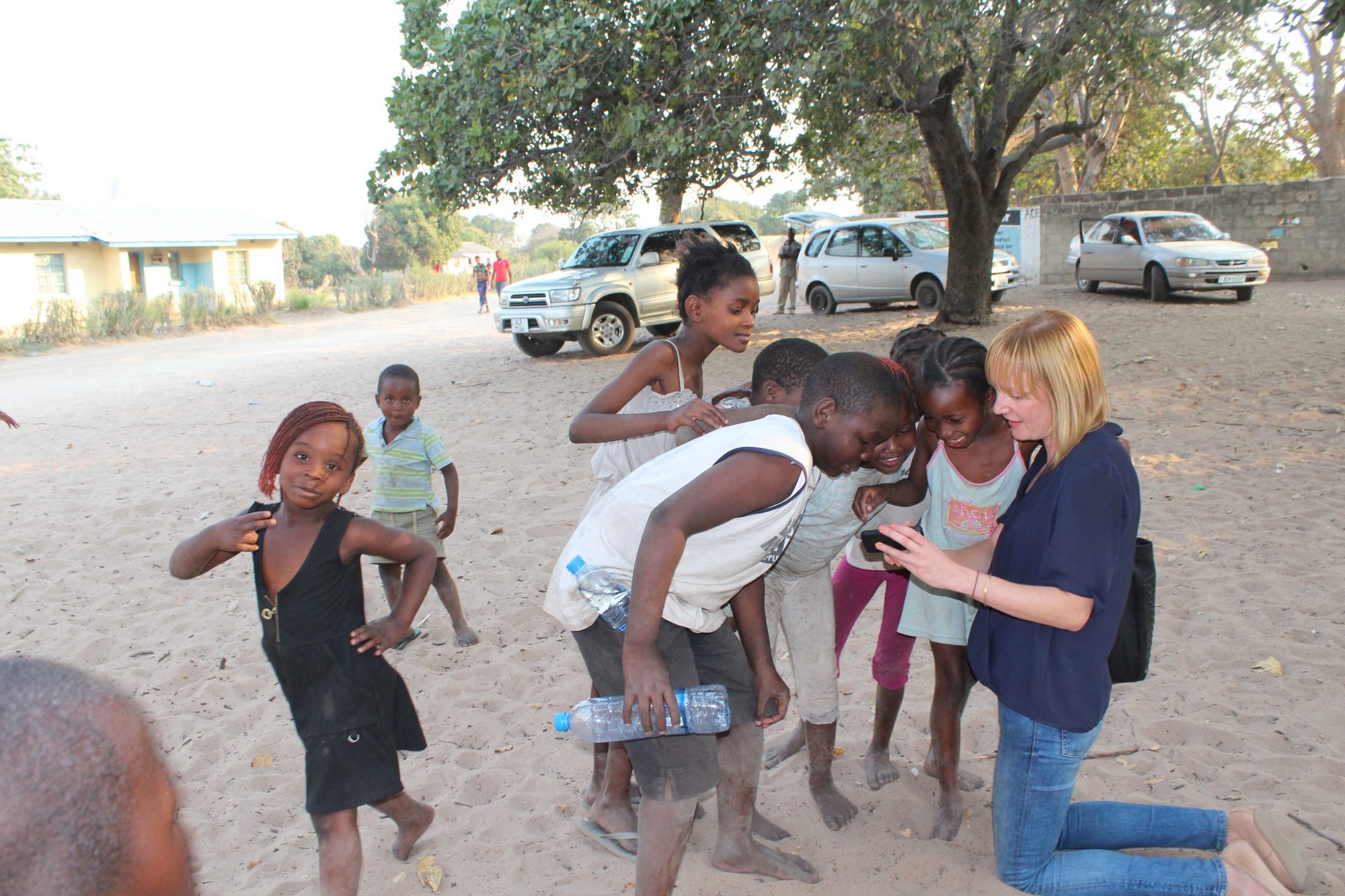
Kate Mitchell in Zambia, working for BBC Media Action
“It’s also just a really exposing experience for anyone, and even the most respectful approach feels violating on some level; you become really concerned for the dignity of the dead person, and every rehearsal of their deaths feels like a continuation of the atrocity on some level.”
He writes about the “stiff-upper-lip thing” and his dad’s death from cancer when he and Kate were children. “We grew up sharing a hatred of the pieties and platitudes you get around untimely or traumatic deaths and bereavement,” he says.
I reply, saying I’m sorry if I’m causing more anguish, though I don’t stop asking questions. I tell him I’m worried about him and the strain of trying to behave as he is. He replies, referencing something else I recently wrote about death, and that strange need to do things well and calmly in the wake of grief.
“The first thing I did after getting the phone call about Kate,” he says, “was to write an impressively precise and courteous email to the team of volunteers I was managing at the time telling them I’d be away for a bit and giving them my line manager’s email, and then write to her saying what’d happened, apologising for not finishing a particular bit of work and promising I’d be properly back at my desk in a couple of weeks, which was, in retrospect, insane.
“I think that immediate shock, while obviously non-sustainable, becomes a model for the kind of weird, slightly zombified stoicism with which you then, a little bit later, return to normal life – making a living, being a person in the world apart from this unassimilable thing that’s happened, caring for children or parents – and it certainly has its uses, because how else are you going to get those things done?”
All Mitchell wants to know is what happened to his sister. After five years, he realises he’ll probably never know. Instead, he’s reduced to merely plodding through the inquest procedure. “That’s literally it,” he says, “because there’s so little in this for me. There’s no real end point. There’s no answers. There’s no justice or anything.”
He was expecting the inquest to end on Wednesday 18 November.
The seemingly agreed facts are these.
Kate checked into room 810 of the Ibis Styles hotel, an ugly, grey and beige building with a rooftop bar in the Westlands suburb of Nairobi, on 16 November 2021. The booking was for 14 nights.
She’d been working in Ethiopia for the international development charity BBC Media Action (which is “an independent charity and part of the BBC family”, it told me, adding: “We support local independent media to deliver trustworthy, often lifesaving information to those on the frontlines of global crisis”).
It said she was helping deliver information to local people there about things such as Covid, employment and female rights. However, BBC Action Media told Kate to leave Addis Ababa because of the war, and booked her into the hotel in Nairobi.
Two days after she checked in, on 18 November, another woman, Michelle Darlene Akinyi, a 24-year-old radio presenter, checked in. She and her two co-hosts were scheduled to do an outside broadcast at the hotel the following day. Rooms were booked for them to stay the night before their show.

Mitchell died in Nairobi in 2021
According to her witness statement, Akinyi (who I tried contacting but didn’t hear back) invited her fiance, Tamati Oyondi Mauti, 29, who lived in Nairobi, to join her. They arrived by Uber together and, after entering their room on the seventh floor at about 4pm, Mauti went to the room of Akinyi’s radio co-host Shaquille Oduk.
Over the next few hours, Mauti returned to Akinyi’s room regularly, telling her he was drinking gin with Oduk in the other room. She ordered dinner via room service and phoned Mauti to tell him it had arrived. Mauti returned to their room, ate his dinner, but left before she finished her food.
At about 9pm, Akinyi went to the rooftop bar to order a bottle of gin, then went down to Oduk’s room, where people had gathered. “They were taking drinks and making loud noises,” Akinyi’s statement said. She suggested they go up to the rooftop to avoid disturbing other guests.
Upstairs, her statement said she took her co-hosts Oduk and Sean Murigu Prewitt aside and told them the hotel manager had complained about noise from the room. Mauti walked over and claimed they weren’t making noise. Akinyi said she argued with him, then headed to the lift to return to her room.
“[Mauti] followed me and he tried to talk to me but I avoided him as he appeared drunk,” her statement said. “He stood at the entrance of the lift and asked me why I am speaking to him as if he was a stranger to me. I told him he is a grown up man [and] he can do whatever he wants to and when he is done drinking he knows where to find me.”
She left and went to her room. “It was the last time I met him alive.”
In Oduk’s witness statement, he said he and Mauti wanted to smoke. “At the bar there was a white lady seated alone in a separate table and we decided to ask her for cigarette.” Kate was using her laptop and gave them cigarettes.
According to Oduk’s statement, Mauti stayed talking to the woman, but Oduk left the bar. In Prewitt’s witness statement, he said he left the bar at about 12.30am. “Mauti had hooked up with a lady who was white,” his statement said, and Mauti was still talking to her when Prewitt left.
In another witness statement, a waitress said Kate was alone at the table and ordered a glass of wine and a wrap. (Mitchell says Kate talked to their mum by phone while in the bar, telling her she was saving half the wrap for the following day.) At around midnight, she was joined by a man, ordered a glass of wine and a White Cap beer for him, then another round. They left while the waitress was delivering room service.
At about 3.35am, an alarm was triggered in room 810. A security guard said he knocked on the door but there was no answer. The door was on its chain so a technician used a hacksaw and screwdriver to open it. The security guard said the room was “highly disturbed” and he could see blood. He saw an injured, naked woman lying on the bathroom floor and left the room.
Security staff called the police and medics, who confirmed Kate was dead. The police began investigating and saw that the hotel room’s window was open and the glass was cracked. There was also blood around the window. They looked out and saw another body eight floors down.
The officer in charge of the investigation said in a statement: “Katherine was seen on CCTV camera leaving the sky bar together with [Mauti] at around 01.30hrs while carrying a packed food from the kitchen opposite the bar then to her room.
“[Mauti] followed her and both entered the elevator (lift) together and alighted at seventh floor where they hugged and parted ways at the lobby. Katherine went through upstairs/stair case to her room while Mauti went as if he was heading to his fiancee’s room, made a U-turn and followed Katherine upstairs to her room from a distance without her notice.
“He was not seen again captured on CCTV cameras.” The investigating officer believed Mauti tried to escape through the window after security knocked on the door.
We don’t know what happened between about 1.30am and about 3.35am, when the alarm was triggered. A pathologist in the UK said: “Ms Mitchell had been subjected to a blunt force assault which included some form of direct compression of the neck.”
Mitchell was in London when his mum phoned to tell him Kate was dead. She couldn’t speak, so passed the phone to a police officer. Mitchell took the train to her house in Cullercoats, North Tyneside, and he thinks it was the next morning when he had his first Zoom call with the Foreign, Commonwealth and Development Office.
Three days after her death, it emailed him links to brochures: “Kenya bereavement information”, and “Victim support homicide service leaflet”.
He has a case officer at the Foreign Office, and each of the four times he’s flown to Kenya, using money from his sister’s BBC pension, he’s met with staff from the British high commission, which has offered condolences and asked what it can do for him, though he’s never sure what help it can give that he can ask for.
There was an inquest in Newcastle in February 2025, though with limited evidence having been provided from Kenya. Four years after her death, Mitchell was still waiting for an inquest in Kenya to start. Kate’s laptop and phones had still not been returned to him and his mum. Finally, after he hired a lawyer in Kenya, the inquest started there in November 2025, with sporadic days scheduled since then.
He shows me photos of the Kibera law courts in Nairobi. It’s a two-storey building with rubble in the car park. The inquest is in English, but some cases are in Swahili. He also has an image from a licensing dispute he witnessed. Crates of beer were stacked in the court in front of him.
On one of his trips, he was invited to the high commissioner’s residence for tea on the veranda. “I didn’t eat,” he says. “I didn’t even have tea. I had a sparkling water. I really wanted a tab [cigarette]. I don’t smoke at home. I smoke when I’m in Kenya. It’s what Kate would have wanted.”
The high commissioner offered sympathy. Mitchell says he eventually said to the high commission’s staff: “I keep getting the impression I’m walking into rooms where everyone knows more about what happened to my sister than I do.” They told him they didn’t know anything more than he did.
When I first talked to Mitchell about his sister, back in February, he described a feeling of “being immersed in a paranoid world” around her murder. Earlier this month, his lawyer told me she’s “99%” sure a third person was in the room when Kate was killed. I understand why he feels lost.
At times, I’ve wondered too, but then I reread the witness statements. I tell Mitchell a few times that I think it was Mauti who clearly killed Kate. “Yeah, I think it probably was,” he replies. He’s less sure how Mauti ended up dead, eight floors down from her hotel window.
He apologises for being “grim”, and says some witness statements said there was blood on the floor where Kate was found and others said there wasn’t. “I don’t know what to do with the details, never mind not knowing what to do with the contradictions, and whether it means anything.”
His home is filled with African art Kate collected. The order of service from her funeral is on a shelf in his living room. There are lots of photos of her. One is her as a child at their house in Cullercoats, where their mum still lives. Their dad died of lymphoma in 1989.
“I don’t really remember him not being ill,” Mitchell says. “Kate did because she had three years on me, I’d just turned seven and she’d just turned 10. Our mam brought us up on her own through all that, in what must’ve been unimaginably difficult circumstances, because she’s nails.”
Mitchell and his sister went to school at the coast in North Tyneside. “She was a proper tearaway,” he says of Kate, but she was liked by teachers, some of whom went to her funeral. She was generous, inviting children who were having a hard time in their own homes to stay at her mum’s, sometimes for months.
Kate didn’t do A-levels. She cleaned ferries, worked in a chip shop, tended bars, worked in a bridal shop and in Ibiza. She volunteered. She travelled. She visited her brother while he taught English in Moscow. She visited her mum (a former teacher, like their dad), who volunteered in Malawi in south-east Africa for nine years.
Kate was living in Queen’s Park, north-west London, when she started working for BBC Media Action. It sent her to Zambia, then South Sudan. “She came back from that a lot older and wiser and very tired,” he says. “Then she went to Addis [Ababa]. She’d been there a year or two when Covid hit. You can see why people might think there’s an intelligence thing going on with these kinds of careers.”
To be clear, Mitchell does not think Kate was involved in intelligence work, but the long wait for answers, frequent unexplained delays during the inquest process, mystery about how her alleged murderer died, the failure of police or the hotel to share CCTV footage with him, his lawyer’s suspicion about a third party: all of it seems to have fomented as distrust, confusion, paranoia, and a desperation to know what happened.
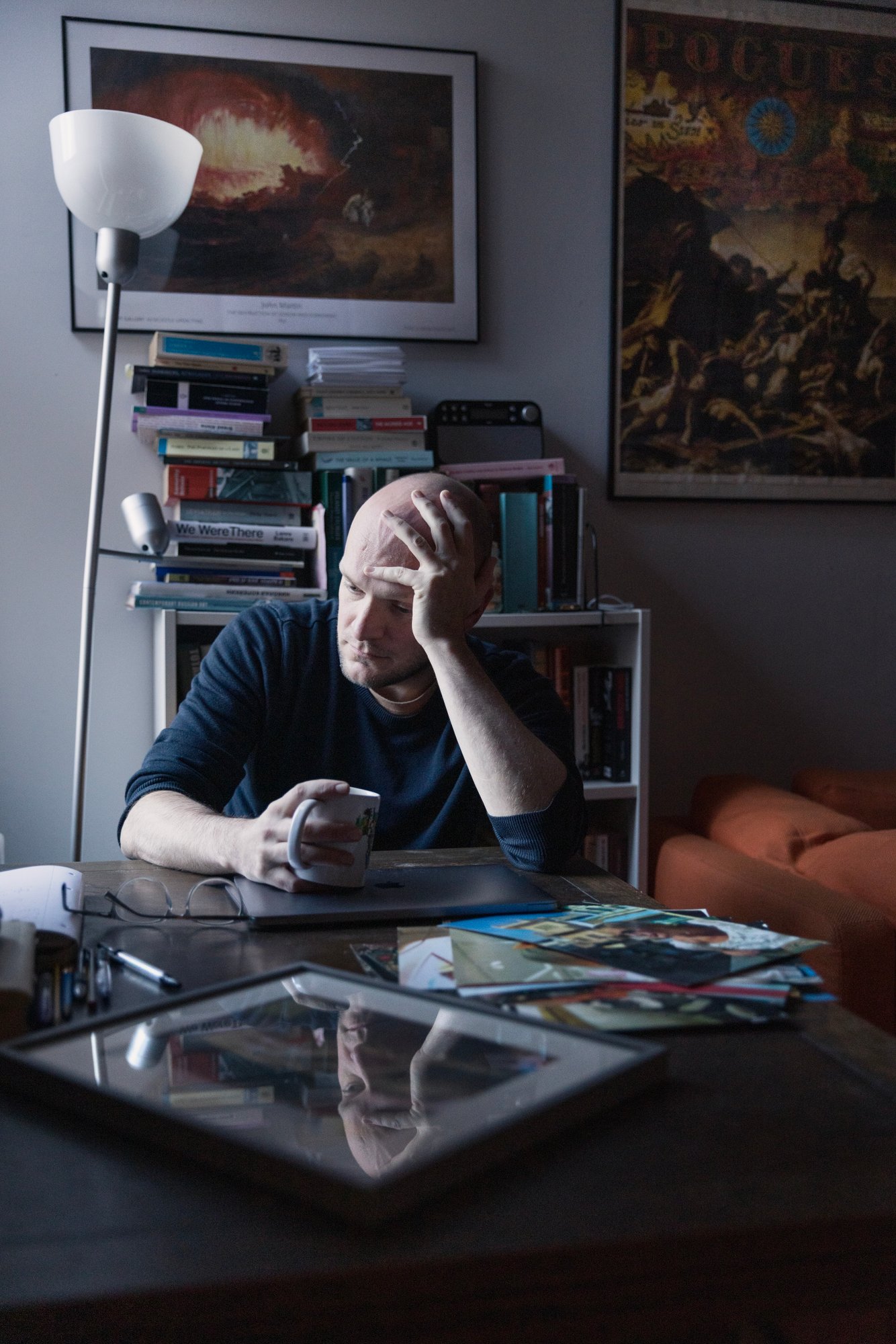
Kate’s brother Peter has been searching for an explanation for five years
Conversations with journalists in Nairobi further fuelled his misgivings. “A journalist who lives there described it to me as a place where things go bump in the night,” he says. When I ask what he means, he says: “He was talking about kidnappings, assassinations, disappearances.”
He pulls a book off his shelf. “One of me favourite books is a memoir of this lass being an anthropologist in communist Romania. She says: ‘I got accused of being a spy all the time but, actually, was I a spy?’” The book’s called My Life as a Spy by Katherine Verdery. I read the back cover, which says the author writes about how fieldwork and spying can be confused.
“I can’t have known everything my sister was doing,” Mitchell says, “but I think the question with how this case has gone is less about there being provable ties to specific intelligence stuff as just that paranoia that bleeds into the whole atmosphere in which everything happens.
“When I first went to Kenya, I reached out to a few journalists and one said: ‘Yeah, I remember that happening, and I remember there were loads of disappearances and weird stuff happening around the Ethiopian war at the time.’ I thought it was quite chilling.
“And the whole miasma of this paranoia and zero trust that’s engendered by corruption is that no one knows what anyone else’s interest is, so everyone always assumes the worst.”
The result is him sitting on the high commissioner’s veranda drinking sparkling water, feeling lost in a mystery and a nightmare.
“I’m trying to read signs that I don’t know how to read,” he says.
It’s 6.45am on Wednesday 18 November. Mitchell is sitting at his desk in his home office. He’s waiting to be let into a Teams meeting to watch what he hopes will be the final day of Kate’s inquest. He hasn’t flown to Kenya because tomorrow is 19 November, the fifth anniversary of her death. He wants to be with his mum.
I sit in an armchair beside him. (I was here yesterday too, when we couldn’t get into the Teams meeting to watch the first witness, but saw the second, followed by discussion of why some police officers scheduled to appear as witnesses didn’t – they had exams.) He makes a pot of coffee while we wait.
At 7.15am, Mitchell is let into the meeting. Today’s session begins. The magistrate, who leads the process, is in one box on the screen. Mitchell’s lawyers are in other boxes. Another lawyer is in one box. Kate’s colleague Rose Radido-Odundo is in another box with a lawyer. Radido-Odundo will be giving evidence.
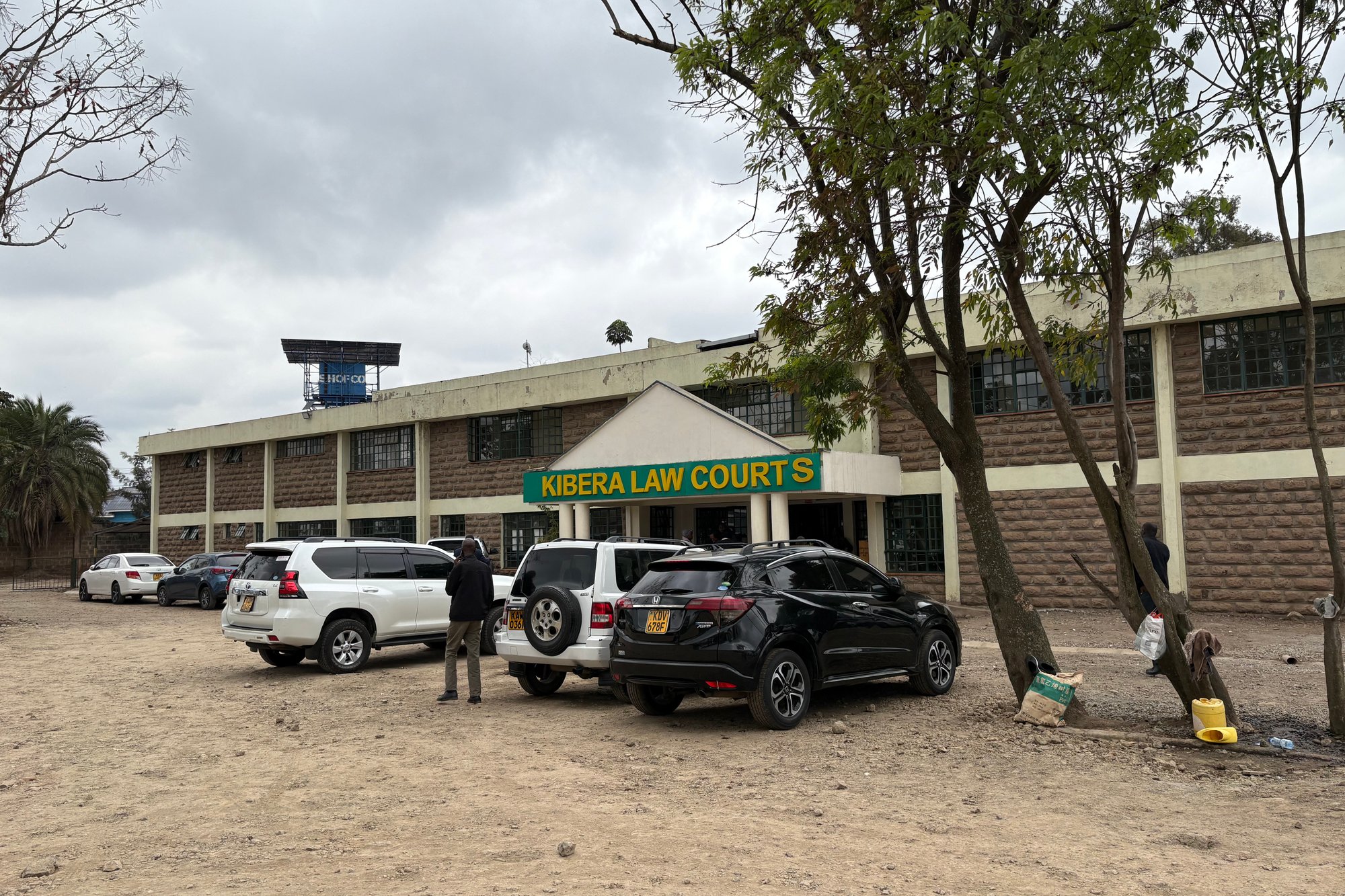
The court in Nairobi where inquest hearings have taken place
The magistrate asks Radido-Odundo to swear an oath, but the screen freezes. “Your honour, we seem to have lost the witness,” says Mitchell’s lawyer. The magistrate tells Radido-Odundo’s lawyer to log back in, which he does, and Radido-Odundo describes trying to phone Kate, then going to the hotel. “I was told she was no more,” she says.
The magistrate says she can’t hear Radido-Odundo. She says she may have to attend court, but the lawyer reconnects and Radido-Odundo continues, describing going to the mortuary with another BBC colleague, Lynn Morris, to identify Kate’s body. There’s nothing horrible on the screen, but Mitchell looks away.
His lawyer asks Radido-Odundo some questions. She describes going to the hotel room with Morris to collect Kate’s belongings. (Later, someone from BBC Action Media tells me the room hadn’t been cleaned properly when Radido-Odundo and Morris had to gather Kate’s things, so it was traumatising.)
After Radido-Odundo finishes giving evidence, Mitchell’s lawyer asks the magistrate to issue a summons to compel police officers to attend the next hearing. The magistrate says she spoke to a police representative in court the previous day and they know they must attend next time. It’s clear the inquest will not finish today.
“The 4th of February – is it convenient for counsels?” asks the magistrate. Mitchell makes a note on his pad. The meeting ends. “Fuck me, that’s annoying,” he says. He and his mum face another three months of waiting for answers, which he doesn’t believe will come. He throws his glasses on his desk.
Photographs courtesy of Peter Mitchell