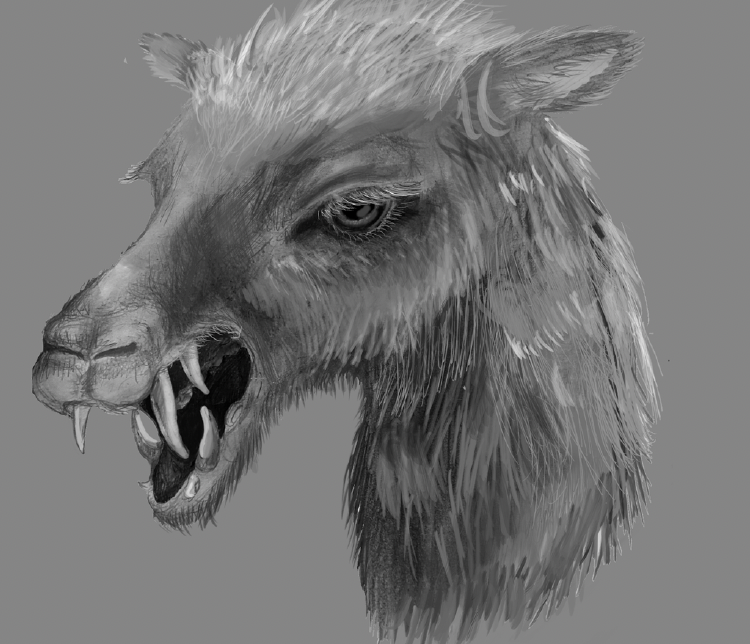
A giraffe-like “vampire” camel with unusually large and curved canine teeth resembling fangs roamed North America about 11 to 12 million years ago, a study of previously overlooked fossils reveals.
The peculiar long-legged camel, named Vampyrocamelus welshi, lived in parts of what are now Texas, Oklahoma, and Nebraska, according to a study published by the New Mexico Museum of Natural History and Science.
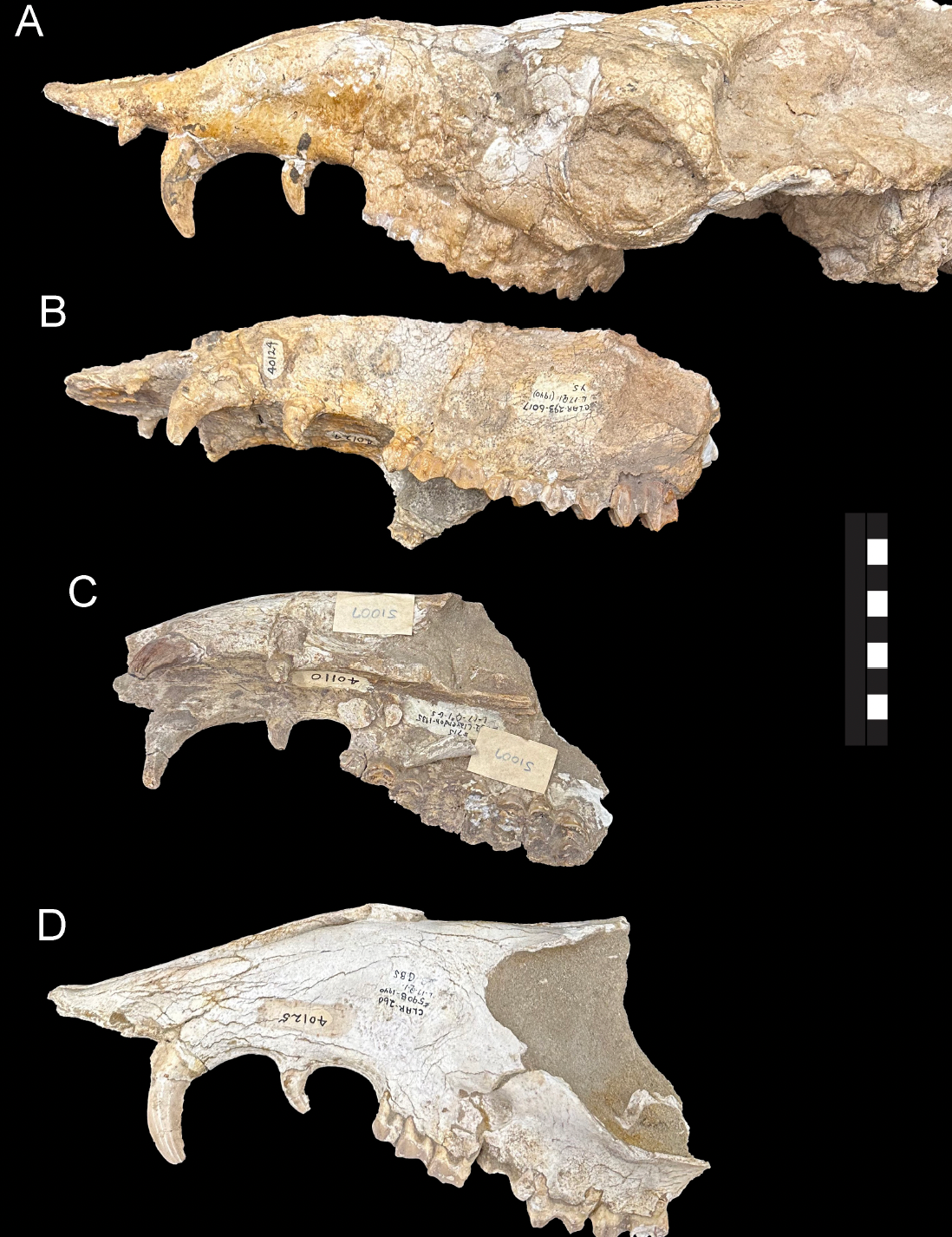
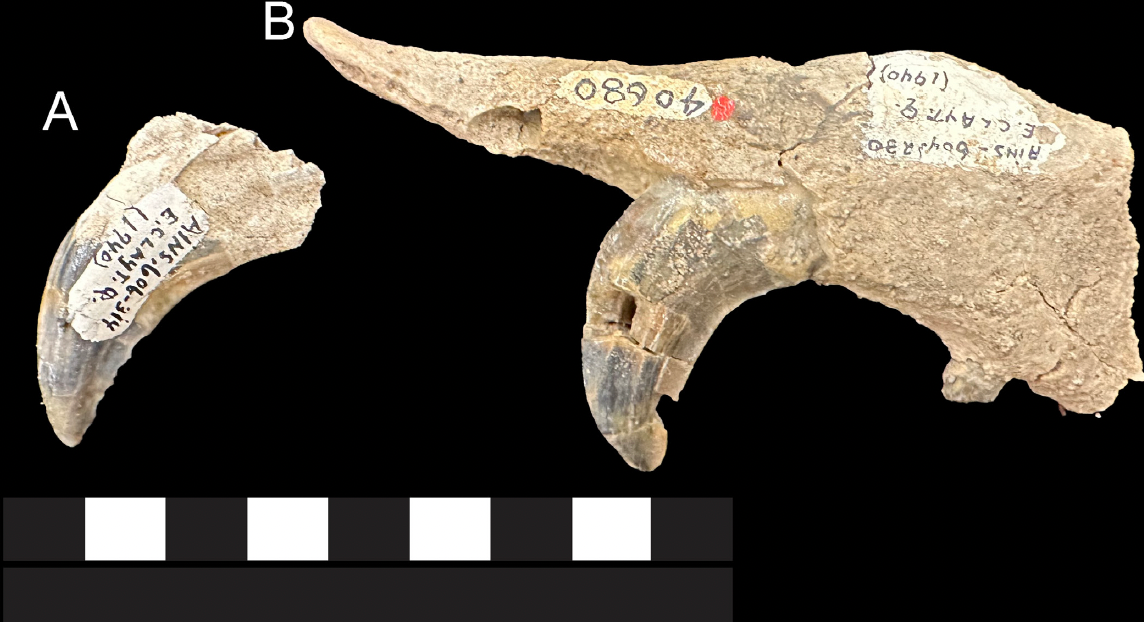
It had two pairs of enormous, curved teeth in its upper jaw, resembling fangs, with all four teeth seemingly more enlarged and ending in sharp points in males.
The camel’s first upper premolars were also enlarged and curved, but were not as long as the canines.
In the female skull specimen, canines were much smaller, peg-like versions, according to scientists.
“The upper canine and upper first premolar in presumed male skulls are both very large and recurved, and almost like fangs, much more so than in any other known camel,” scientists wrote in the study.
The discovery was possible thanks to a large collection of fossils held at the American Museum of Natural History in New York.
In the research, scientists examined more than 100 catalogued bones attributed to the species that had remained overlooked for years.
These fossil bones were collected from the Clarendon beds in Donley County, Texas and included numerous skulls, jaws and isolated parts of the snout, as well as teeth and bones from the limbs.
Some other fossils of the extinct camel, including shoulder blade, upper arm bones, forearm bones, thigh and lower-leg bones, and several bones from the hands and feet, were also analysed in the study.
Many of the fossils were collected extensively in the Clarendon beds from around 1929 to 1960.
“It is abundant in Texas and Oklahoma, but very rare in the well-sampled beds of Nebraska,” researchers wrote.
However, there are still no fossil remains of the camel’s vertebrae, complete pelvic bones, ankle bones, and toe bones, making some features difficult to interpret.
Overall, the fossils reveal that the animal had a long-limbed build, with slender and elongated forearms.
Scientists measured the fossil bones, comparing their proportions with those of other North American camel species to identify the extinct animal's distinguishing features.
This comparison helped establish Vampyrocamelus as a new genus and V. welshi as its only known species.
The species name is a nod to palaeontologist Ed Welsh for his contributions to the study of Cenozoic mammals, including fossil camels.
It was likely an early member of the llama-related camel lineage, researchers say.
Other than the four peculiar canines, V. welshi ‘s teeth resemble those of other camels, with ridges and grinding surfaces used to process food.
Scientists suspect that it was herbivorous, but whether it lived on leaves and shrubs, or also grazed on grasses remains unclear.
The large canines in the male camels of the species likely served the purpose of display, intimidation and competition with members of the same species, similar to deer antlers.