Blood test for multiple cancers clears crucial hurdle on track to FDA approval

If approved, the test could help catch cancers early—but more research is still needed, experts say
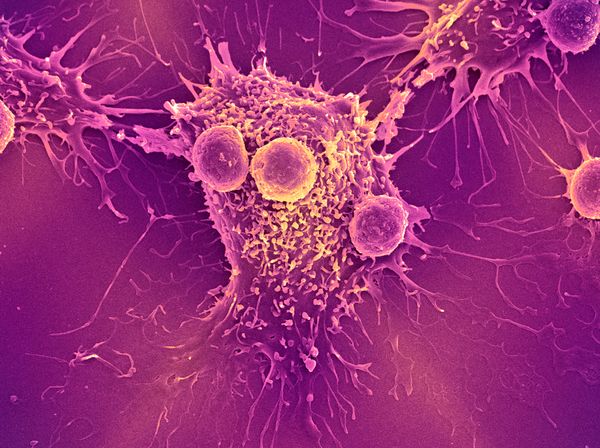
T lymphocytes and a cancer cell.
STEVE GSCHMEISSNER/SCIENCE PHOTO LIBRARY/Getty Images
A U.S. Food and Drug Administration advisory panel voted in favor of recommending that the agency approve a blood test for multiple cancers on Wednesday. The assay, called the Galleri test, is designed to help screen for cancers before symptoms appear, according to its maker, Grail.
The 10-person panel unanimously agreed that Grail showed that the Galleri test was safe, but there was less agreement over whether it was effective or had benefits that outweighed the risks: the panel voted 6–4 in favor of effectiveness and 7–2 in favor of the question of benefits, with one panelist abstaining from the latter.
The panel’s favorable vote “represents an important step forward for the field,” says Ajay Goel, a professor and chair of the department of molecular diagnostics and experimental therapeutics at City of Hope, a cancer research and treatment organization.
On supporting science journalism
If you're enjoying this article, consider supporting our award-winning journalism by subscribing. By purchasing a subscription you are helping to ensure the future of impactful stories about the discoveries and ideas shaping our world today.
Ultimately, however, he says that “I would still view it as an encouraging step rather than the final word on the clinical value of this type of testing.”
Some cancer screening tools exist on the market already—including for breast, lung, prostate and other cancers—but no early-detection tests for multiple types of cancer have been approved by the FDA, according to the American Cancer Society. Having such a test would be clinically useful, enabling doctors to potentially detect a variety of cancers early and affording people more time to respond to a diagnosis. Galleri is currently designed for people age 50 and older.
The test, experts say, is promising but not perfect. In a study of more than 35,000 participants that was published on Tuesday in the journal Nature Medicine, Galleri detected signs of cancer in 287 people, about 60 percent of whom were later diagnosed with the disease. The test was also able to accurately predict the area of the body where the cancer originated in about 91 percent of true-positive cases.
Grail emphasized in its FDA application, however, that a negative test result does not definitively rule out cancer.
“Galleri has shown that we can detect signals from many different cancers with very high specificity using a simple blood test, including cancers for which we currently have no routine screening,” Goel says. “That is an important advance.”
But the “real goal,” he adds, is not just to find more cancers. “It is to find them early enough to change what happens to the patient.”
“We still need longer-term evidence showing that this leads to fewer advanced cancers and ultimately fewer cancer deaths,” Goel says.
Colin Pritchard, a professor and a cancer researcher at the University of Washington, says the Galleri test may be beneficial for people who have a high risk of developing cancer, such as those with a family history of the disease. But for people with a low cancer risk, false positives could result in unnecessary harms such as expensive imaging or biopsies.
“More research is warranted on which populations should be offered this type of testing and on guidelines for follow-up after a positive test result,” Pritchard says.
In making approval decisions, the FDA considers, but is not required to follow, the advice of its expert panel.
If the FDA approves Galleri, Goel says, it should be viewed as “an additional screening tool, not a replacement for established cancer screening.”
Editor’s Note (9/23/26): This is a breaking news story and will be updated.
Subscribe to Support Independent Journalism
Great science journalism requires human expertise, time, effort and creativity. And it costs money. That’s why I and the journalists here at Scientific American hope you’ll join our community.
When you subscribe, you are supporting staff and freelance journalists who are passionate about telling science stories that are true, important and compelling. Our editors and reporters are often experts in their fields, which means they understand the nuances of big discoveries and can untangle the breakthroughs from the hype. With a subscription, you are also supporting rigorous fact-checking to ensure the words we publish are precise and accurate. And you’re supporting original illustrations, graphics and photos that bring you closer to an advanced laboratory, an ice sheet in Antarctica or a space mission in orbit. You’re helping us craft other types of high-quality journalism as well: Our newsletters are carefully written, edited and curated by staffers you have or will come to know and love. Our Science Quickly podcast is based on original reporting, collaboration with editors and scientists and exacting production.
Subscriptions keep this engine running so we can continue to deliver thoughtful, rigorous and independent science journalism to you. In an era of viral misinformation, this work is crucial. If you value what we do, I hope you’ll consider joining us as a subscriber