I tagged along to Secret Studios with my friend Jon for a jam session and realized why I’d never finished a song as a teenager.
I left a little ashamed of how I’ve gotten in my own way, but also inspired by what I now feel empowered to do.
The first thing Jon and I did was triangulate towards something that was alive for both of us that day. We talked a lot about flow. For me it was writing, or breaking. For Jon it was music and skating. We loved the moments when we were totally absorbed and everything else just faded to the background.
“It all just falls away” became the foundational hook for our chorus.
As a teenager, I’d written plenty of riffs and fragments but that was as far as I’d gotten. I was so obstinately opposed to doing it the easy way that I was never good enough to do it any way at all.
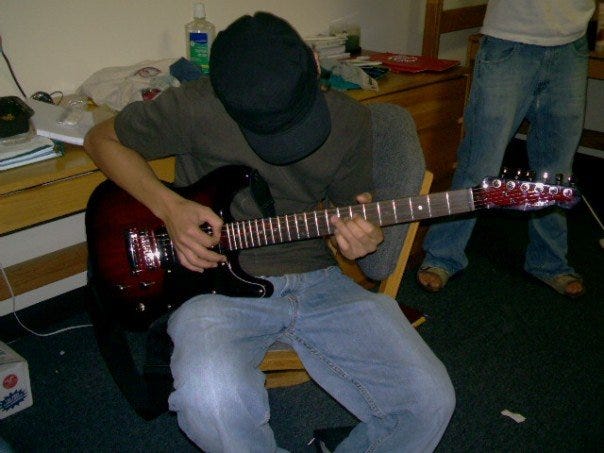
I was so afraid that if I watered down my songs with too many choices other people had made, they would no longer be mine. So if people liked my work, it wasn’t because they liked me, it was just because they liked them.
Jon wasn’t worried about that at all.
First we borrowed from other artists early and often. As soon as we had our direction, we made a playlist of songs with the right energy. Next we studied them. When multiple songs were 90 BPM, that was a good sign. When a few of them shared chord progressions, we adopted those.
Then we stole even more directly. We converted a guitar riff we liked into our vocal rhythm. We found a drum loop that sounded like one of our inspirations, and spliced in the hi-hat that was missing. Jon composed a bass line on the keyboard that was mostly roots and fifths to get us a rhythmic feel.
None of these were exactly right, but they didn’t have to be.
We weren’t making the finished song. We were just sketching.
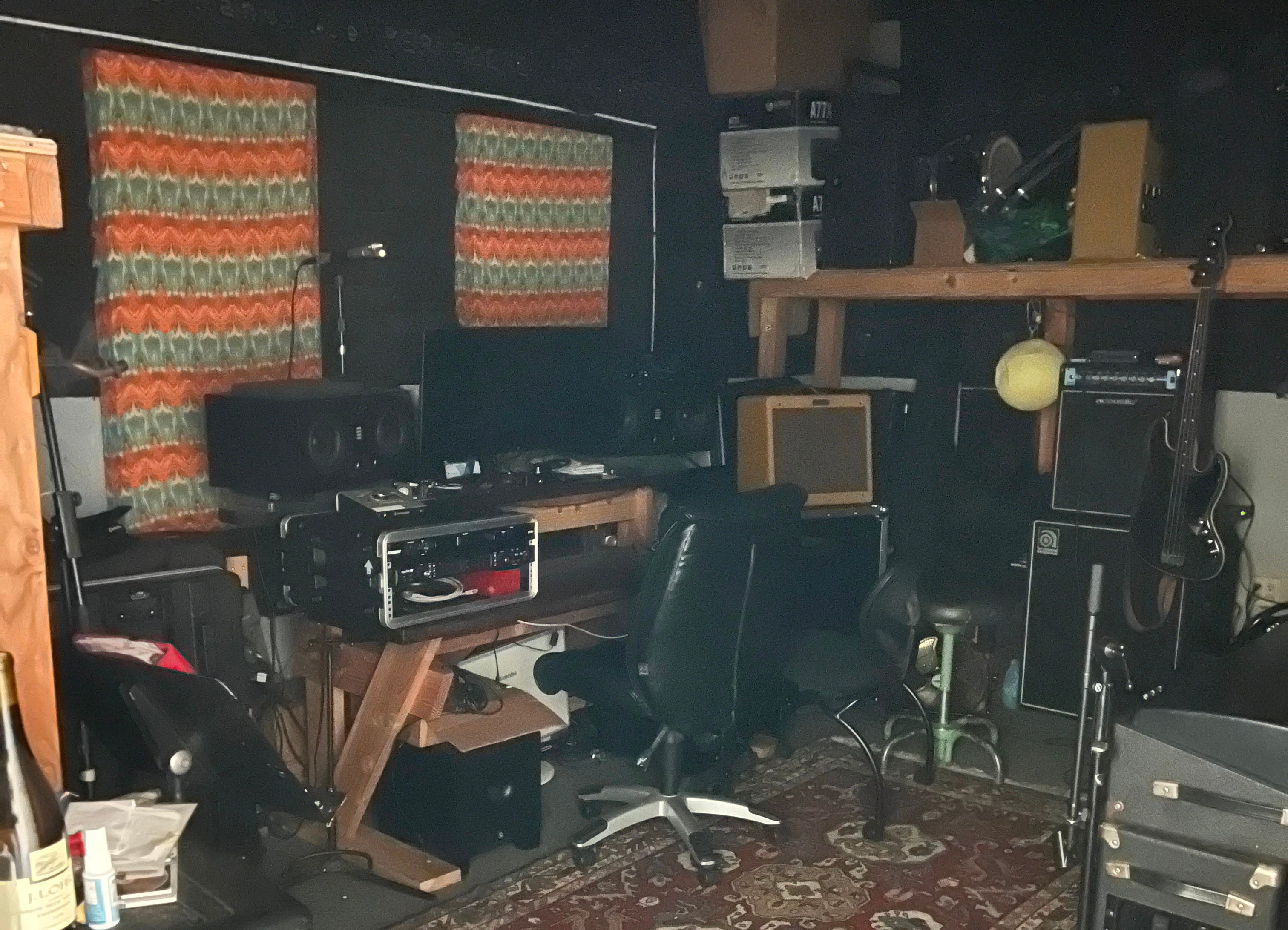
Some of the things we tried were great. Others we pulled out. We tried five or six different melodies over our vocal rhythm. Our musical collage gave us enough information to know whether or not it was working.
Past me would have had so much pride caught up in each of these choices, but to Jon it was just a demo. As he would say, “make decisions in service of the song, not the parts.”
That fear came from a scarcity mindset. I was scared I might only have a few creative ideas in me, and that if I didn’t put myself in every single decision, I’d waste them.
But jamming with Jon, I saw abundance. We could write so many songs. Sure, most of them don’t stand out, but the path to writing a great song really is through hundreds of mediocre songs.
I used to take it as a dig that all pop songs use the same chords. But now I think it’s beautiful how much creative expression exists inside the same constraints. None of these songs sound the same.
The key is to spend your energy on the right things. You can’t possibly reinvent the entire discipline. You need to focus your creativity where it counts most.
What’s crazy is that I’ve learned these lessons before! I’ve even written about how important constraints are to creativity! In my professional life, software engineers often want to build all their own custom tools, or switch to the latest and greatest stuff rather than choosing boring technology.
Startup founders run into their own versions of this. As Antonio García Martínez put it colorfully in Chaos Monkeys, “The classic sign of a shitty startup idea is that it requires at least two (or more!) miracles to succeed.”
Over and over I’d learned that your unique creative expression can be narrow, and yet the whole work can still be yours.
The rest just falls away.
I’m shadowing as many artists as I can to understand how they make their creative choices. It’s amazing how short experiences with great practitioners can permanently raise your own expectations. If that sounds interesting to you, follow along for more.
And if you have a craft of your own, hit me up if I can tag along for a session. I’d love to learn from you too.