Four lessons COVID taught us about the immune system

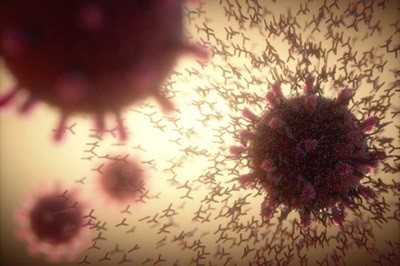
Epstein–Barr virus (coloured electron microscope image) is among several in the body that can be reactivated by severe bouts of COVID-19.Credit: James Cavallini/Science Photo Library
A severe bout of COVID-19 can wake up an army of dormant viruses hiding inside the body.
That’s according to a study of more than 1,000 people hospitalized with the disease that is published today in Nature1. The analysis finds that this reactivation of pathogens is linked to especially intense bouts of COVID-19 and to the development of long COVID.
If further research reveals that reactivated viruses can cause people to become seriously ill, it could open the door to new treatments for COVID-19 and even long COVID, says Esther Melamed, a physician-scientist who studies neuroimmunology at the University of Texas at Austin and who is a co-author of the analysis.
Although the study didn’t dive into how COVID-19 prompts viruses to reawaken, Melamed says that the disease “probably induces the stress that triggers the reactivations, and then these reactivations further amplify the inflammation” caused by COVID-19. In these cases, she adds, “COVID is not really acting on its own.”
Nearly everyone is infected by a variety of viruses throughout their childhood and adolescence. A handful of these pathogens are never fully cleared from the body. Instead, they hide quietly inside cells for a lifetime, kept in check by a healthy immune system.
Four lessons COVID taught us about the immune system
Researchers have seen hints that these bystander viruses are reactivated in people with long COVID. So Melamed and her colleagues studied the situation systematically, collecting blood, nasal swabs and lung fluids from individuals hospitalized with COVID-19 in 2020 and early 2021. Nearly half of the participants experienced a reactivation of common viruses lurking in their bodies, the researchers found.
These pathogens included herpesviruses such as cytomegalovirus and Epstein–Barr virus, which causes glandular fever (mononucleosis), as well as anelloviruses, which are typically harmless and don’t cause symptoms. More than 90% of the global adult population has been infected with at least one of these pathogens2.
The team found that these viruses do not reawaken all at once after a person contracts the coronavirus SARS-CoV-2, which causes COVID-19. Instead, different viral families reactivate on their own timelines. Epstein–Barr virus and anelloviruses tend to surge early during a bout of COVID-19, peaking shortly after hospital admission. By contrast, cytomegaloviruses and herpes simplex viruses emerge around three weeks later, mainly in the respiratory system.

Could long COVID be linked to herpes viruses? Early data offer a hint
The “most striking” result is that this reactivation happens even in people with otherwise healthy immune systems, says Resia Pretorius, a physiologist at Stellenbosch University in South Africa. Some scientists had thought that a reawakening of viruses could happen only in people with a weakened immune system, such as those with HIV. But this study “overturns” that assumption, she adds.
Some people included in the study were receiving immunosuppressive drugs during their hospital stay for various conditions. However, this didn’t make them any more likely to experience virus awakenings than those who were not taking such medication. This suggests that the stress of a coronavirus infection alone can overload the immune system.