The slow death of table tennis in Sierra Leone, longform on what happens when an entire sport's infrastructure was held together by three people
Eighty players. No training venue. No office. No government funding. And an annual tournament that only happens because a foreign embassy writes a check. This is table tennis in Sierra Leone.
A Sport That Once Thrived
It wasn't always like this.
In the late 1980s and through the 1990s and 2000s, table tennis in Sierra Leone was alive. The sport had sponsors, supporters, and an executive committee that didn't wait for outside help. The people running the association were financially strong and deeply passionate about the game. They funded coaching courses, training camps, national tournaments, and international competitions out of their own pockets.
They didn't rely on the government. They didn't rely on international bodies. They built it themselves.
That era lasted roughly three decades. Sierra Leone had a table tennis community that competed, trained, and grew. Players had opportunities. Officials had structure. The sport had momentum.
Then it fell apart.
The Decline
The decline didn't come from a lack of talent. It came from within.
For years, the association was led by presidents of Lebanese descent, Sierra Leoneans born in the country, but with Lebanese heritage. Fawzy Hassan led the association from around 2005 to 2015. Alie Lakish succeeded him in 2015. Both men invested heavily in the sport, funding tournaments, training camps, and coaching programs from their own pockets.
But their heritage became a point of contention. Disgruntled athletes and stakeholders within the association argued that leaders with Lebanese backgrounds should not be running the sport. The late Fawzy Hassan faced these challenges throughout his presidency. When Lakish took over, the same pressures followed.
Eventually, Lakish felt discouraged and unappreciated. He stepped down before the end of his tenure.
When these leaders left, they took the infrastructure with them. Not out of spite, but because they were the infrastructure. The funding they personally provided disappeared. The events they personally organized stopped. The connections they personally maintained went quiet.
What replaced it was silence.
The Current Reality
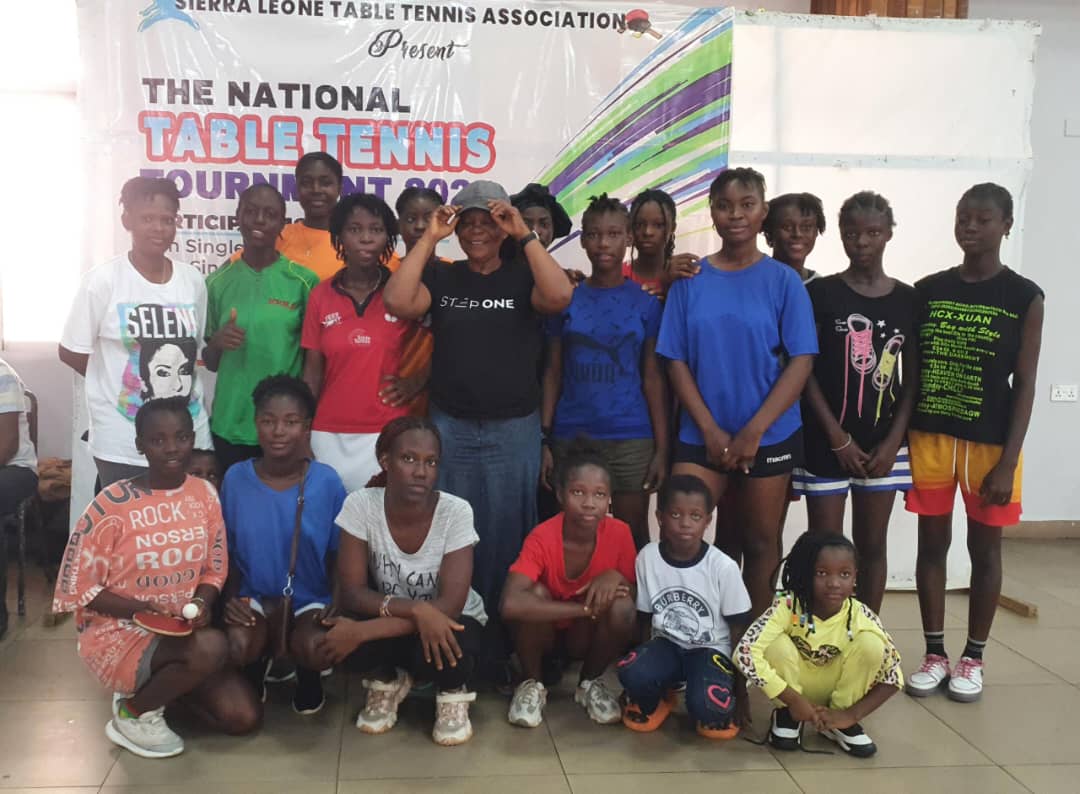
Today, the Sierra Leone Table Tennis Association has roughly 80 players. That number includes competitive players, casual players, and whatever remains of youth interest. There is no development program. There are no youth academies. There is no pipeline.
The athletes don't have a training venue. Some go to a private club in Freetown. Others train in a rented classroom. That's it. No national training center. No dedicated facility. No permanent home for the sport.
The association itself doesn't have a physical office. Administrative work happens without the most basic infrastructure. There is no consistent income, no reliable funding stream, and no financial support from the Ministry of Sports or the National Olympic Committee.
The Ministry of Sports provides some technical and supervisory support, travel documentation, and logistical assistance. But in terms of actual funding? Nothing significant.
Meanwhile, football receives the support it needs. Other sports receive varying degrees of attention. Table tennis is at the bottom of the priority list.
One Tournament
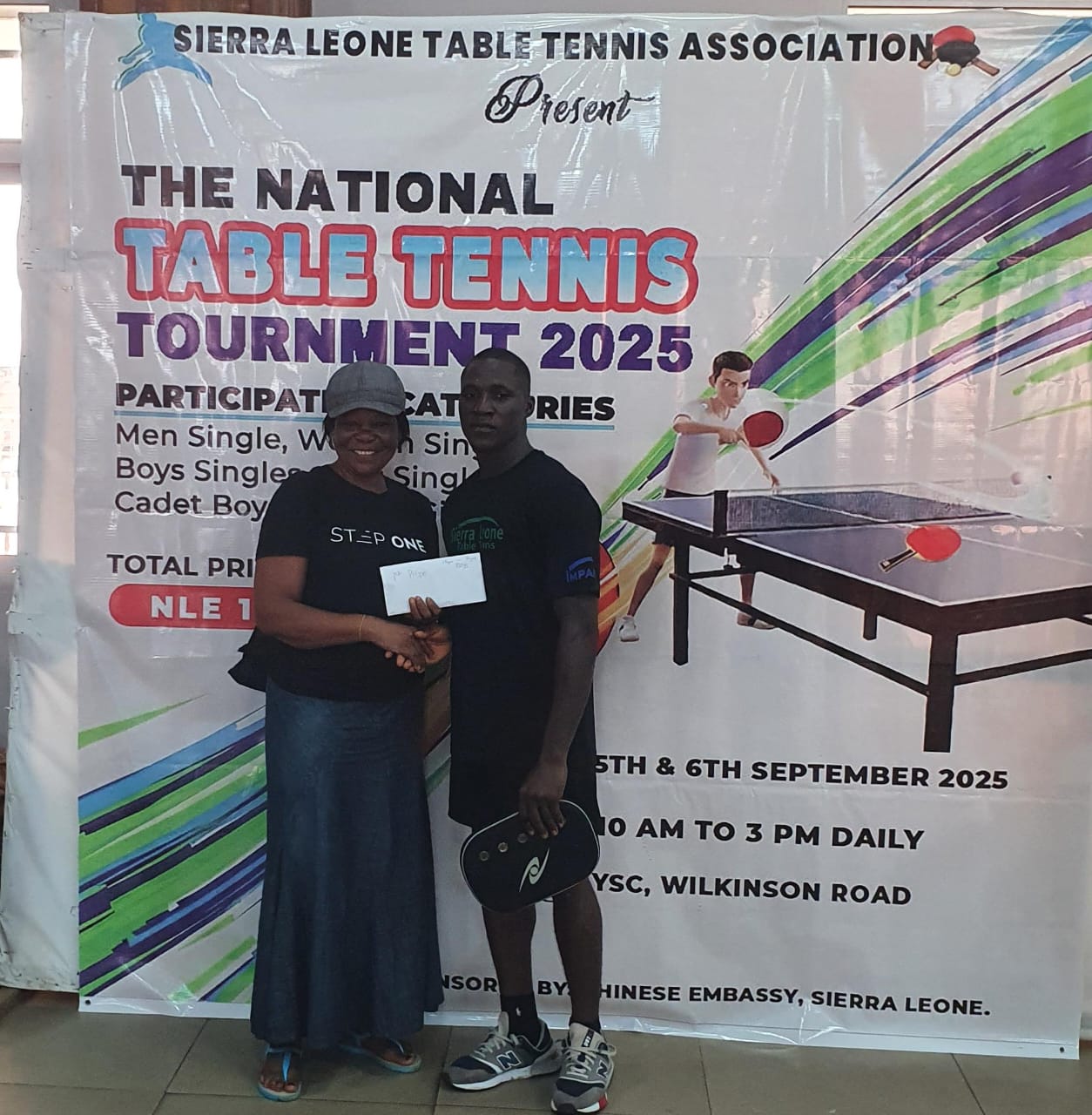
Every year, the Chinese Embassy sponsors a national table tennis tournament. It used to be held at the Bintumani Hotel, but in recent years it has moved to a private club on Wilkinson Road in Freetown.
This tournament is the lifeline of Sierra Leonean table tennis.
For the athletes, coaches, and officials, it's more than a competition. It's a reunion. It's a revival. It's the one event each year that brings the entire community together. Players look forward to it. They prepare for it. They compete for attractive prize money and trophies.
If the Chinese Embassy stopped sponsoring this tournament, it would be devastating. There is no backup plan. There is no second source of funding that could replace it.
The only other reliable event comes from the diaspora. For the past twelve years, a Sierra Leonean table tennis community member living in the United States has sponsored an annual tournament in honor of his late brother. The Everett Warburton Memorial Tournament. Players look forward to that one, too.
Two tournaments a year. One funded by a foreign embassy. One funded by a man honoring his brother's memory from across the ocean.
That's the competitive calendar.
The Invisible Costs
What most people don't realize is that running a sporting association costs money even when nothing visible is happening. The Sierra Leone Table Tennis Association is required to pay annual subscriptions to both the African Table Tennis Federation and the ITTF. There are National Sports Authority certification renewal fees. Volunteers need stipends. Transportation costs money. Internet costs money.
The people keeping this association alive are doing it for free while also funding their own expenses. They pay out of pocket to keep the sport's administrative existence intact.
It is, by any measure, an act of love. And it's not sustainable.
Where Are the Young Players?
Most young people in Sierra Leone do not show interest in table tennis anymore. Without school programs, without community exposure, without visible role models or accessible facilities, the sport is invisible to the next generation.
In countries where table tennis thrives, children discover the sport through school, through clubs, through public tables, through television. In Sierra Leone, none of those entry points exist. There are no tables in schools. There are no clubs recruiting youth. There is no media coverage creating curiosity.
The 80 players who remain are largely those who fell in love with the sport during the era when it was thriving. The generation that came after has had no reason to pick up a racket.
What Revival Would Look Like
A realistic revival of table tennis in Sierra Leone doesn't start with international tournaments or world-class facilities. It starts with three things.
First: a physical office. The association needs an administrative home. A place to organize, plan, and coordinate. Running a national sports federation from personal phones and personal data plans is not viable long-term.
Second: a training and tournament venue. Players need somewhere to train consistently. The sport needs a home court. Without a venue, there is no daily practice, and without daily practice, there is no development.
Third: school and community introduction programs. Table tennis needs to be brought to schools, universities, and communities across the country. The sport needs to be seen. Children need to touch the table, hold the racket, hear the sound of the ball. That's how every table tennis nation in the world started. Sierra Leone is no different.
The people who benefit from these programs, the athletes and community members, also need to show appreciation for whatever support comes their way. One of the lessons from Sierra Leone's decline is that when the people funding the sport feel unappreciated, they leave. And when they leave, everything collapses.
A Pattern We've Seen Before
Sierra Leone's story is not unique. We've seen it in Peru, where the federation was in debt with no passwords to its own social media before a new president rebuilt everything in less than a year. We've seen it in Zambia, where a six-time national champion trains without sponsors and went through nights with no food. We've seen it in Ethiopia, where a youth program started with one table and no roof.
The pattern is the same everywhere: passionate people holding a sport together with nothing but love, while the systems that should support them look the other way.
What makes Sierra Leone's situation especially urgent is how close the sport is to disappearing entirely. Eighty players. Two annual events. No youth pipeline. No venue. No funding. This is a sport on life support.
But the people haven't given up. The association still pays its ITTF dues. Officials still volunteer their time. Players still train in rented classrooms. The Chinese Embassy still writes the check. A man in America still honors his brother's memory with a tournament every year.
Table tennis in Sierra Leone is barely surviving. But it is surviving.
The sport that once thrived here can thrive again. The talent hasn't disappeared. The passion hasn't disappeared. The people haven't disappeared. What disappeared was the support.
From thriving community to 80 players and two annual tournaments, Sierra Leone's table tennis story is a warning about what happens when infrastructure collapses, and a testament to the people who refuse to let a sport die.