Illustration by Rey Velasquez Sagcal
The Heritage Citizen
A few years ago in Springfield, Diana Daniels says, “you couldn’t swing a cat without hitting 10 Haitians.” Her mission became getting them out.
By
Read the first part of Slate’s dispatch from Springfield, Ohio, here.
Diana Daniels was preparing for the City Commission meeting in Springfield, Ohio, an event where she was well known, even after weeks away. Preparing, she clarified, “to get thrown out again.”
It was Monday afternoon at the Bicycle Stop, on 1st Street, where Daniels has worked for the past 23 years. Where, she said, “everybody’s equal. If you expect to get special treatment because you bought a more expensive bike, you can fuck off.” She makes sure the store is a safe gathering point for homeless people—some of them are her former students—and sets aside old tires for them to use. “My job is to change lives, one bike at a time,” she said.
On that slow, gray afternoon, she was brainstorming for her long-anticipated comeback to the biweekly municipal gathering. She had a similar mission there: to change how things work in this town. She had just completed her sentence, a six-meeting ban—12 weeks in absentia—after violating various rules during the public comment portion. And she was raring to return.
Daniels felt the rules were capricious, and perhaps personally tailored to obstruct her: the prohibition on props, the three-minute time limit, the penalty of “trespass” for those in violation. Even though it was a random draw, she felt like Republican Mayor Rob Rue always called her up first, to get her out of the way faster. “Our mayor is a fascist, pasty white, with a stick up his ass,” she said. Now, she would show him.
If Daniels seems furious about what has been happening to her neighbors here in Springfield, well, that is true of some of them. But she does not feel that way about the Haitians.
Daniels is one of the most public faces of the anti-Haitian activism in Springfield. Though much had changed in her 12-week absence—“temporary protected status” withdrawn, the Immigration and Customs Enforcement raids, the Haitian community in hiding, the suicide of Pierre Damas Bel, the 20-year-old who had been fitted with an ankle monitor—she remained as impassioned as ever. “I got nothing to lose,” she told me. “I don’t have family here. I don’t have kids. I’ve not really fought for much.”
But she won’t stop until the Haitians are gone. “TPS has expired—you’re here illegally, that’s how it is,” she said.
She was deciding what to say at the meeting; she was deciding what to wear. Would it be her Weinergate T-shirt, a reference to an ongoing scandal with the city manager sparked by an anonymous letter alleging sexual misconduct, or another favorite, which read: “Stay on Track, They All Go Back”? She had her speaking themes picked out. She would rail against amnesty, against a pathway to citizenship. “The right,” she warned, referring to herself and her fellow conservative activists, “will chew you up.”
Daniels came to Springfield in 1988, a transplant, after growing in northwest Pennsylvania and working all over the heartland. In the 1990s, she started working in Springfield at public schools, in physical education.
She watched Springfield shrivel. Once, the town was called the “Champion City,” because of its industrial might. That felt like a taunt as deindustrialization bled the city out. Throughout the 1990s, Clark County, where Springfield sits, lost 22,000 high-paying blue-collar jobs that never returned. The population cratered, from a one-time high of more than 80,000 to less than 60,000 by 2020. From 1999 to 2014, median household income for three-person households dropped a staggering 27 percent, more than in any other metropolitan area in the country. The rest of Rust Belt Ohio was practically booming by comparison.
“This is a poor town,” Daniels said. “The common denominator is that everyone is fucking poor.”
Daniels saw the public schools disappear. From 10 elementary schools to eight; five middle schools to four; two high schools to one. She said she advocated for tearing down abandoned houses that were being used as drug dens, got up early to chase pimps off the streets near her school, and threatened junkies who would steal lunch money from her students. “It was the best time of my life, being among people I understand. There were no Black neighborhoods. We all lived together,” she said.
In 2014, at the very bottom of Springfield’s income collapse, Daniels was working at Horace Mann Elementary, onboarding the new kindergarten class, when she realized something was amiss. A few months earlier, the City Commission had passed Resolution 5844, the “Welcoming City” resolution, to encourage immigrants to move to the community. A few weeks later, Dole announced it was expanding its vegetable processing plant. That fall, as the school year began anew, her incoming kindergarten class had eight Hispanic students. A few years prior, it had only been one.
Jobs were finally returning, but they came back cheap: A 2016 NPR story found that truck manufacturer Navistar (now International Motors) was hiring at $15.68 an hour for an entry-level job in its Springfield plant. Twenty years prior, in 1995, the starting hourly wage was $17.65, not adjusting for inflation. And the people coming back for them were not the European descendants of yore. By 2020, there were 27 Hispanic children in her incoming class, enough for an entire kindergarten. By 2021, she quit the school to focus full time on the bike shop.
But the 3,000-odd Hispanics were nothing compared to the 12,000 to 20,000 Haitians, the first of whom also began arriving in 2014, but who really began coming in larger numbers after the assassination of Haiti’s President Jovenel Moïse in 2021, the country overrun by horrifying gang violence. Daniels thought the real number was 30,000. All of a sudden, she said, “you couldn’t swing a cat without hitting 10 Haitians.”
It was enough immigrants to account for nearly all the losses Springfield had suffered over the years. For the first time in eight decades, Springfield was repopulating, growing its economy. New plants were opening. By many accounts, it was a great success story.
Daniels didn’t see it like that at all. Soon enough, she was getting cut off on her bicycle in traffic by a woman she felt was clearly Haitian. That had never happened before. Meanwhile, some residents were convinced that traffic accidents were skyrocketing due to reckless Haitian driving, though police records didn’t really support it. The refusal to acknowledge it, Daniels felt, just made it worse.
Rents shot up in Springfield, and landlords loved it. Some took advantage of Haitians, charging $200 a week just for a bed. Sometimes the houses they were renting didn’t even have working electricity. In fact, landlords preferred to rent to Haitians who were willing to pay higher prices, and even withdrew 200 properties from a federal housing-voucher program for low-income families. Other property owners cashed out. Haitians filled up the especially depopulated neighborhoods on the city’s south and east sides.
The employers were ecstatic. “Labor shortages,” sometimes considered a euphemism for wages so low that no one would take the jobs, were quickly filled, in warehouses and factories. Plants around the region added third, overnight shifts, staffed by Haitians. “Temporary protected status,” noted Daniels: “like temp agency.”
Haitians were getting handouts, she said; “we know that.” Haitians, as legally residing noncitizens, were ineligible for SNAP benefits, welfare, or Medicaid. But Daniels wasn’t technically wrong. Thanks to the 1980 Cuban/Haitian Entrant Assistance Act, many Haitians who entered the country on humanitarian parole were eligible for one year of refugee benefits, which extended meager cash assistance and help finding work and housing. Meanwhile, the immigrants were using the public programs they could legally access. As such, the city’s free clinics and public schools began to feel a strain.
Haitians were eating the cats and the dogs, said Daniels—“we know that’s true.” The future president and vice president said that, too, though famously no evidence of it was ever found.
Meanwhile, religious groups and nongovernment organizations were chipping in money and support for the new arrivals. Immigration fanatics, Daniels called them. Where was that support in the downturn? Plus, some of the Haitians didn’t need assistance; they showed up with money. Some were doctors. And the ones who weren’t getting aid and were just working hard, well that was bad, too, essentially stealing from the Americans, even though the city has since seen higher wage growth than the rest of Ohio and the rest of the country.
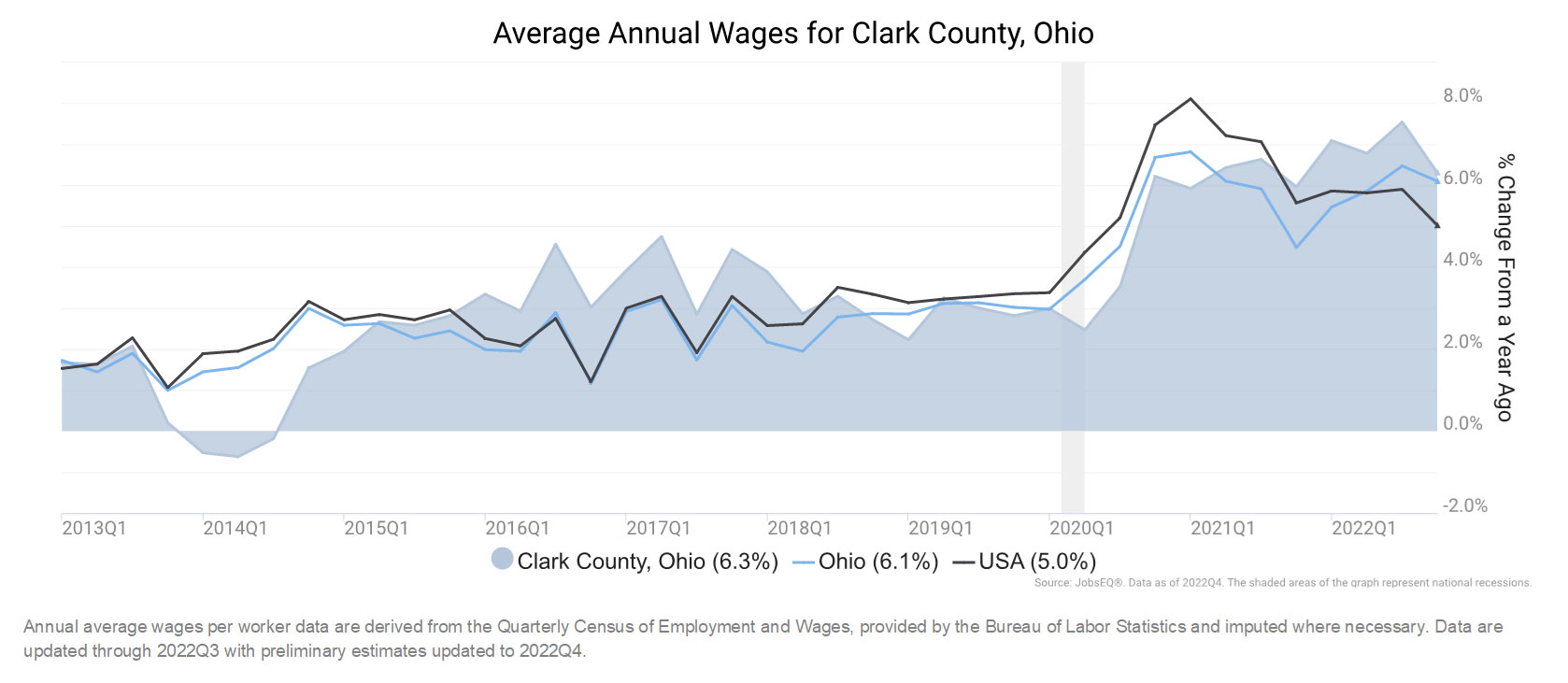
The Haitians were paying taxes and refurbishing the downcast city; sometimes, they even refurbished houses they were only renting. Daniels saw mostly higher rents, crowded public services, traffic, and happy corporations: Where was the benefit in that? “All this talk of ‘residents,’ no one seemed to be concerned about ‘heritage citizens.’ Where is your empathy for any of us?” she asked.
After a Haitian driver in a minivan on a foreign driver’s license struck a school bus in August 2023, killing an 11-year-old and injuring 23 other children, Daniels had had enough of the Haitians. She had been at nearly every City Commission meeting since, save for the two she missed for knee-replacement surgery, her six-meeting ban, and one other.
Now, she had the whole nasty plot mapped out, with the help of some friends, and the YouTube videos of right-wing personalities like Nick Shirley and Jack Posobiec, starting with the “Welcoming City” resolution. The United Nations, Catholic Charities, the federal government, local pastors, and NGOs, state and federal attorneys general, the Biden administration: They were purposefully repopulating the country with people from the third world, she said.
The way she saw it, there were two victims here: “Us, who were not asked, dismissed, demeaned, and called racist.” And the Haitians, too, “who thought they would be welcome.” “Poor Pierre—he was murdered, plain and simple,” she said. “An impressionable young man, did what he could do to relieve his immense pain. What a beautiful face.”
Now, it was Tuesday, just a few hours before the meeting, and Daniels was hyping herself up.
“My nickname is Thundertroll. My mantra is ‘I’m bringing hellfire,’ ” she said.
Daniels, who was wearing an American-flag hat, had forgotten both the “Weinergate” shirt and the “Send Them Back” tee.
She had slept terribly the night before, in anticipation. “Even though I talk well, it causes me great anxiety to go up in front of the City Commission,” she confessed. “Last night was bad; I had night terrors. Yeah, last night was bad.”
“There are times I go to the bathroom and throw up before I get called up,” she told me. Her activism had come at immense cost to her own well-being. “But somebody’s gotta do it, and I guess it’s gonna have to be me.”
The door to Bicycle Stop opened, and a man came in.
“I can take care of ya, I hope,” Daniels greeted him.
The man needed gloves, he told her, and she recommended a pair.
“All right there, handsome,” she said, as she rang him up at the register. The man thanked her, and left.
She sat back down next to me. “He was Haitian, and obviously an American. Worked with his hands, I could tell. So it’s possible, with a concerted effort, to get command of the English language,” she said. “Of course, the minute you become an American citizen, you’re not worth anything.”
Daniels closed up shop at 6 p.m. and headed for City Hall. The meeting began at 7. “Those who are determined to have provided false information will not be permitted to speak at this meeting or the next scheduled meeting,” the mayor warned at the beginning.
Daniels was picked fourth, following a man asking if anyone knew an Army guy he had met in the Vietnam War. “Last time I saw him was in July of 1970,” he had offered.
“Good evening,” Daniels began, reading, rushing. “I kind of wonder what topic the immigration fanatics will seize on, since all the screaming and gnashing your teeth and waving of signs has had the desired effect,” she said. She was the only one to mention the Haitians all night, and her speech ran five seconds over. But she did not get thrown out.