[ Removed by moderator ]
Last summer I polled the great art houses of Europe with a seemingly straightforward question: Had they had any recent experiences with mold in their collections?
Mold is a perennial scourge in museums that can disfigure and destroy art and artifacts. To keep this microbial foe in check, institutions follow protocols designed to deter the familiar fungi that thrive in humid settings. But it seems a new front has opened in this long-standing battle. I’d recently heard rumblings that curators in my then home base of Denmark have been wrestling with perplexing infestations that seem to defy the normal rules of engagement. I wondered how pervasive the problem might be.
My survey did not make me popular. Some museums responded quickly—too quickly, perhaps, to have checked with their curators. Ten minutes after receiving my inquiry, the press office at the Uffizi Gallery in Florence assured me unequivocally that there was no mold at the Uffizi. The museum declined to connect me with the curatorial team or restoration department. Many institutions—the Louvre, the British Museum, the Musée d’Orsay—didn’t respond to my calls and e-mails at all. I eventually came to suspect the Vatican Museum had blocked my number.
On supporting science journalism
If you're enjoying this article, consider supporting our award-winning journalism by subscribing. By purchasing a subscription you are helping to ensure the future of impactful stories about the discoveries and ideas shaping our world today.
Frustrating though it was, this is the reception I expected. Asking a curator if their museum has problems with mold is like asking if they have a sexually transmitted disease. It’s contagious, it’s taboo, and it carries the inevitable implication someone has done something naughty.
Consequently, mold is spoken of in whispers in the museum world. Curators fear that even rumors of an infestation can hurt their institution’s funding and blacklist them from traveling exhibitions. When an infestation does occur, it’s generally kept secret. The contract conservation teams that museums hire to remediate invasive mold often must vow confidentiality before they’re even allowed to see the damage. But a handful of researchers, from in-house conservators to university mycologists, are beginning to compare notes about the fungal infestations they’ve tackled in museum storage depots, monastery archives, crypts and cathedrals. A disquieting revelation has emerged from these discussions: there’s a class of molds that flourish in low humidity, long believed to be a sanctuary from decay. By trying so hard to protect artifacts, we’ve accidentally created the “perfect conditions for [these molds] to grow,” says Flavia Pinzari, a mycologist at the Council of National Research of Italy. “All the rules for conservation never considered these species.”
These molds—called xerophiles—can survive in dry, hostile environments such as volcano calderas and scorching deserts, and to the chagrin of curators across the world, they seem to have developed a taste for cultural heritage. They devour the organic material that abounds in museums—from fabric canvases and wood furniture to tapestries. They can also eke out a living on marble statues and stained-glass windows by eating micronutrients in the dust that accumulates on their surfaces. And global warming seems to be helping them spread.
Most frustrating for curators, these xerophilic molds are undetectable by conventional means. But now, armed with new methods, several research teams are solving art history cold cases and explaining mysterious new infestations.
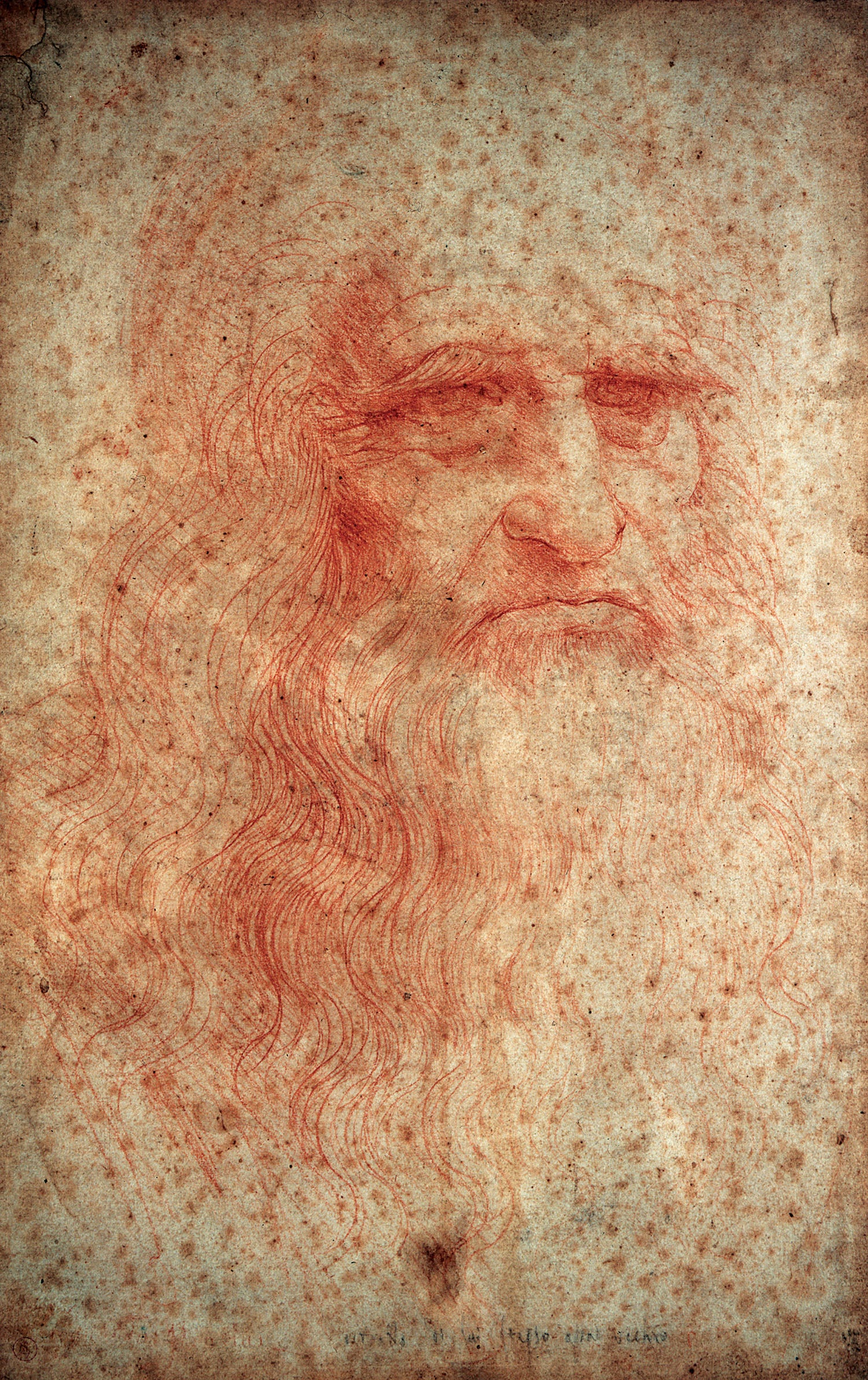
Rust-colored stains have been present on Leonardo da Vinci's most famous self-portrait, drawn in red chalk on paper, since at least the 1950s. Researchers have determined that the culprit is the xerophilic fungus Aspergillus halophilicus.
Photograph of a drawing by Leonardo da Vinci by Ann Ronan Pictures/Print Collector/Getty Images
The xerophiles’ body count is rising: bruiselike stains on Leonardo da Vinci’s most famous self-portrait, housed in Turin. Brown blotches on the walls of King Tut’s burial chamber in Luxor. Pockmarks on the face of a saint in an 11th-century fresco in Kyiv. It’s not enough to find and identify the mold. Investigators are racing to determine the limits of xerophilic life and figure out which pieces of our cultural heritage are at the highest risk of infestation before the ravenous microbes set in.
Scandinavian museums have been some of the first to confront the effect of climate change on molds. Whereas certain parts of the planet are growing drier as temperatures rise, the Nordic countries are among those that are becoming wetter. Higher temperatures allow the air to hold more moisture, and extreme rainfall events called cloudbursts are occurring more frequently. Sea-bound Denmark, for example, which is already rainy, could receive more than 50 percent more winter rainfall by the end of this century.
In decades past local museums in Denmark could get away with storing their treasures in drafty basements, sheds and even barns—practices that are typical for small museums around the globe when funding is limited and they don’t have the luxury of purpose-built facilities. But rising humidity and increasing floods led to runaway mold infestations at several Danish institutions in the 2000s. In response, Danish museums invested tens of millions of dollars to develop centralized, climate-controlled storage facilities.
It’s a pattern that’s playing out in many parts of the world. As the climate becomes more erratic, museums are tightening the temperature and humidity controls for their collections to prevent mold growth. But paradoxically, these efforts may be creating the perfect niche for a different kind of mold.
In 2012 Danish museum conservator Camilla Jul Bastholm was patrolling one such climate-controlled facility—a newly retrofitted warehouse about an hour outside Copenhagen—when she spotted subtle white shimmers on a variety of items, including hats and cloaks. “It was tricky to see with the naked eye,” Bastholm says of the discoloration—“a whitish, brittle layer on the surface of the artifacts.”
Conventional wisdom would have suggested that these shimmering patches were pesticide blooms, an unfortunate legacy from past generations of conservators who sprayed their collections with pesticides such as DDT to keep insects and molds at bay. These chemicals absorbed into artifacts only to bubble up to the surface later in the form of white blotches. But Bastholm had seen these little white dots before. She was working in another repository as a contract conservator, the kind of consultant museums hire after a flood or leak. After eight hours in that facility, a colleague had “reacted like she had the beginning of the flu—her eyes running; she had a migraine.” To Bastholm, that sounded like exposure to a fungus, not a chemical.
A close examination revealed that about half of the objects in the Roskilde Museum’s facility bore these worrisome white marks. Two museum employees developed the same flulike symptoms Bastholm had observed before. The staff were convinced they had a mold outbreak. Yet the building’s envelope was intact, with no evidence of leaks.
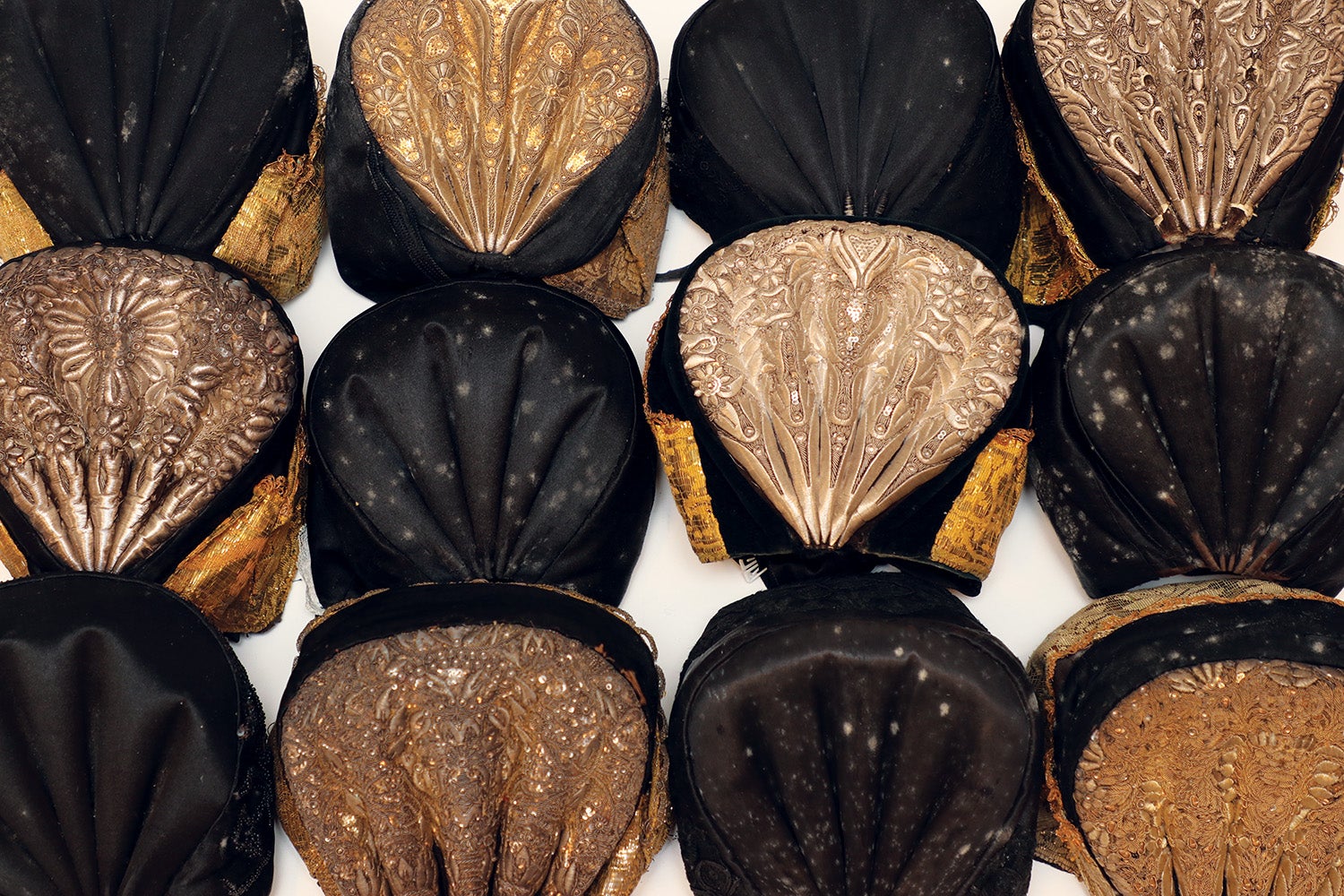
Hats from Denmark’s Roskilde Museum that have been stored in a climate-controlled warehouse outside Copenhagen exhibit shimmery, whitish patches from xerophilic molds.
Trine Sejthen
Twice, museum leadership called in outside technicians to test for mold, a process that involves rubbing samples of potentially contaminated material onto a fungal growth medium—a gelatinous goo packed with nutrients and moisture to jump-start mold growth in a petri dish. The dishes bloomed black, yellow, brown and green with common molds, but nothing matched the enigmatic white marks.
When Bastholm became the Roskilde Museum’s lead conservator in 2014, she ordered the facility—with its tens of thousands of historical objects—closed to all but essential traffic while she tried to solve the mystery. Three years later Bastholm got her first break. A Dutch mycologist who specializes in molds that affect food production suggested she cook up a very unusual fungal medium: a petri dish environment that would kill most fungi. When she cultured the samples on this inhospitable medium, with far too little water available to sustain most molds, her petri dishes suddenly looked like snow globes, covered with shimmering white flakes. Genetic analysis revealed they were four related species of xerophilic molds in a group known as Aspergillus section restricti.
Around the same time Bastholm discovered the xerophile outbreak in Denmark in 2012, Flavia Pinzari, then a biologist at the Italian Ministry of Cultural Heritage in Rome, was investigating a fungal mystery of her own. Pinzari had been monitoring mold infestations at libraries and archives in Rome, Genoa and Modena over the previous decade. Staff reported feeling ill, and small white dots peppered ancient manuscripts and book bindings at six institutions—among them the Bibliotheca Angelica in Rome, Europe’s oldest public library and one of the world’s great collections of rare and ancient books. She wondered whether a classic conservation technique could be inviting a stealthy class of fungi into the collections.
In the 1600s the Bibliotheca Angelica was run by Augustinian friars, an order of religious scholars that the pope charged with determining which texts would become libri prohibiti—forbidden books destined for the Catholic Church’s bonfires of heretical material.
Texts on astrology, alchemy, science and unorthodox religious thinking passed through the Augustinians’ hands. “The Augustinians studied them and censored them, but they did not destroy them,” Umberto D’Angelo, former director of the Bibliotheca Angelica, said in a press release. “Fortunately for us, they are all still here.” Today the Bibliotheca’s holdings include exquisite 11th-century illuminated manuscripts, one of the earliest copies of Dante’s Divine Comedy—and all those precious libri prohibiti.
The infestations Pinzari observed were unusual because they were happening in institutions with, as far as she could tell, adequate climate control. The only factor connecting the six infestations was the institutions’ use of mobile shelving systems called compactus units, refrigerator-size shelf blocks that slide on rails. Compactus units have been a fixture of museum and library storage since the 1950s because they save space and have an airtight seal, protecting their contents from invasive dust and mold spores.
Pinzari couldn’t get any of the white molds to grow on any fungal media. But she did have access to a high-powered microscope. Peering through the viewfinder, she saw fibrous tendrils with a riot of hairs—the signatures of Aspergillus section restricti.
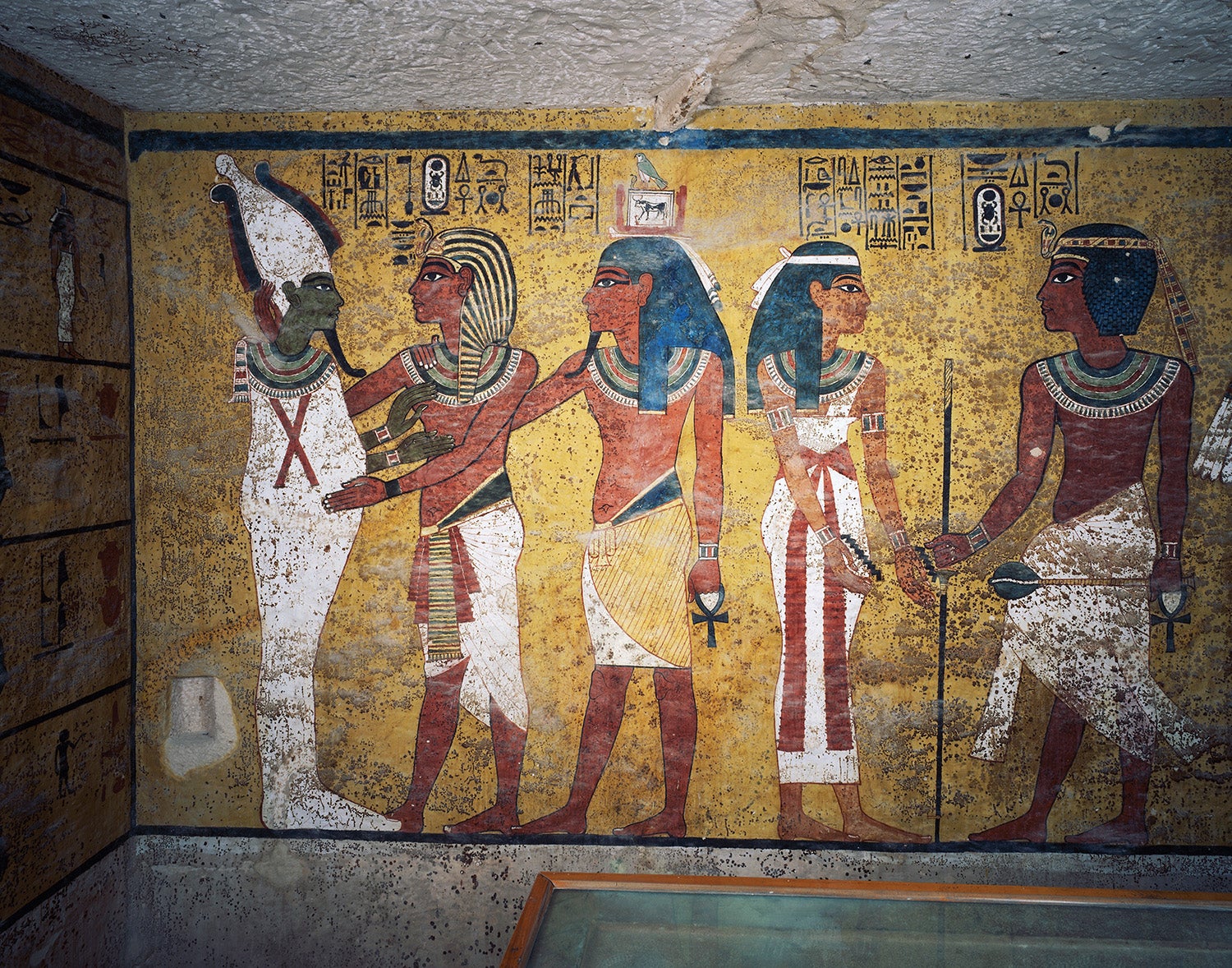
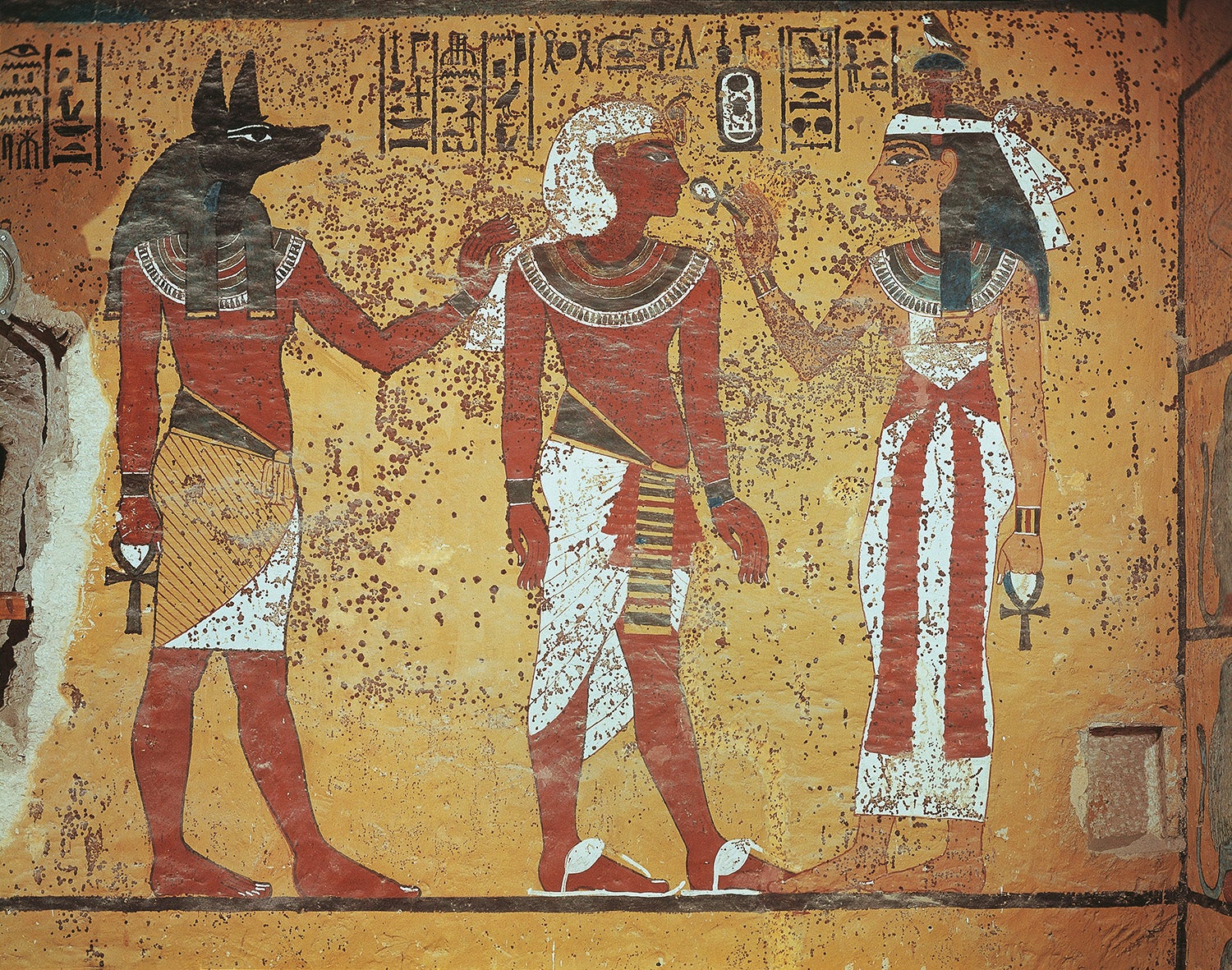
In 1993 Japanese microbiologist Hideo Arai used special fungal growth media to identify the mold that has caused extensive staining on the walls of King Tut’s burial chamber. The brown blotches are the result of an Aspergillus penicilloides infestation.
DeAgostini/S. Vannini/Getty Images (top); DeAgostini/G. Dagli Orti/Getty Images (bottom)
How the mold might find a home in the compactus shelves was a mystery at the time. But in the decade since, Pinzari and other researchers have started to learn how these xerophilic species thrive where other molds can’t. They seem to remodel their environment, turning desert into oasis one tiny inhospitable patch at a time.
Take Aspergillus halophilicus, one of the species behind both the Danish infestation and the Italian library outbreaks. Once a spore of A. halophilicus lands, Pinzari says, it sends out exploratory tendrils called hyphae that twist through cracks and crevices to search for nutrients. “It’s looking for water,” Pinzari explains, but if none is forthcoming, it’ll settle for salt crystals.
Salt crystals are extraordinarily effective at absorbing moisture from the air. That’s why the contents of your saltshaker will turn into a solid block unless you put rice in it. A. halophilicus can collect salt from the environment and re-excrete it in the form of a salt-rich exopolymer—a kind of briny jelly that covers its hyphae. Researchers hypothesize that the exopolymer prevents the mold’s tissues from drying out and helps the mold maintain a layer of humid air in its immediate vicinity.
Pinzari believes that by trying so hard to control conditions inside compactus shelves, collection managers have accidentally handed the reins over to xerophilic fungi. With no airflow to disrupt their tiny artificial atmospheres, the molds have been able to reshape their surroundings to suit their needs. Ironically, artifacts might have been better off in those drafty Danish barns.
From a conservator’s perspective, there’s lots to worry about in a xerophile’s remodeling plans. Sometimes xerophilic or xerotolerant fungi eat a museum artifact directly—munching on the egg-based tempera in a fresco, the cotton canvas of a painting or even the salty flesh of mummies.
Other times the spores land on something the mold can’t directly consume, such as metal, glass, rubber, plastic or limestone. But some of the restricti species are “capable of living on almost nothing,” Pinzari says, surviving off the nutrients in motes of dust. In these cases, damage to artifacts is collateral, resulting from the mold’s remodeling activities and digestive processes and from the dying off of the hyphae.
That’s what researchers think happened at St. Sophia’s Cathedral, a 1,000-year-old holy site in Kyiv that has been described as the soul of all Ukraine. In 2010 brown blotches began to pockmark the cathedral’s precious 11th-century frescos, starting with the altar to the martyr St. Sophia. “It’s very painful because people love this cathedral very much,” says Marina Fomina, a microbiologist at the National Academy of Sciences of Ukraine.
In 2025 Camilla Jul Bastholm received messages from institutions around the world that have experienced mold infestations they expect might be xerophilic but haven’t necessarily been made public.
The saint’s breakout came as a surprise on two counts. Not only has the cathedral been climate-controlled since the 1950s, but its wall paintings are buon frescos, meaning they were made of mineral compounds that contain no organic materials for mold to live on.
Fomina reached out to Pinzari after reading about her skirmishes with xerophiles in the Italian libraries. On Pinzari’s advice, Fomina tried to culture mold from the frescos on special fungal growth media. Nothing grew. The Ukrainian team was so alarmed about the damage that it arranged for costly molecular genetic analysis of samples from the paintings, which confirmed the presence of A. halophilicus.
To understand what was happening to the frescos, the managers of the cathedral gave Fomina permission to cut out some mold spots from a section of the fresco that had been restored in the 1950s. Under the microscope, she saw the unmistakable shape of A. halophilicus—it can resemble a tangle of spaghetti with fine, downy hairs—tunneling between layers of plaster, causing the surface of the fresco to crumble and flake. But curiously, these hyphae appeared to be covered with tiny crystals, like rock candy.
It seems that when A. halophilicus is surrounded by calcium, as in the chalky plaster, it secretes organic acids that turn calcium ions—which appear to be harmful to the mold—into benign crystals of calcium malate. The dark spots themselves were another by-product of this protective mechanism. The higher the concentration of the calcium minerals, the darker the mold’s pigments become, Fomina explains.
Xerophilic fungi aren’t entirely new to museums and cultural heritage sites. Italian archivists in the mid-1900s described outbreaks identical to the ones Pinzari observed, and orange stains that have been present on da Vinci’s most famous self-portrait since at least the 1950s have since been conclusively attributed to A. halophilicus. But it wasn’t until decades later that researchers began routinely using growth media with low levels of water available for microbial processes to coax out xerophilic fungi. One of the first to adopt these low-water activity media to test for elusive fungi on cultural items was Japanese microbiologist Hideo Arai, who used them to isolate mold on hemp-paper paintings in Byōdo-in Temple in Uji, Japan, in 1984. Later, in 1993, Arai used these specialized media to identify Aspergillus penicilloides as the culprit behind an infestation on the walls of King Tut’s burial chamber. The dark blotches from the mold had vexed researchers since soon after archaeologist Howard Carter opened the tomb in 1922.
Yet despite such high-profile cases, experts still believed that true xerophilic infestations were rare, a notion that persisted because the tools to detect them were so hard to obtain. Even today, decades after Arai’s pioneering work, access to these low-water activity media is extremely limited. “You can’t buy them industrially—nobody produces them,” Bastholm says. “If you want to detect these xerophilic fungi, you have to collaborate with research laboratories.”
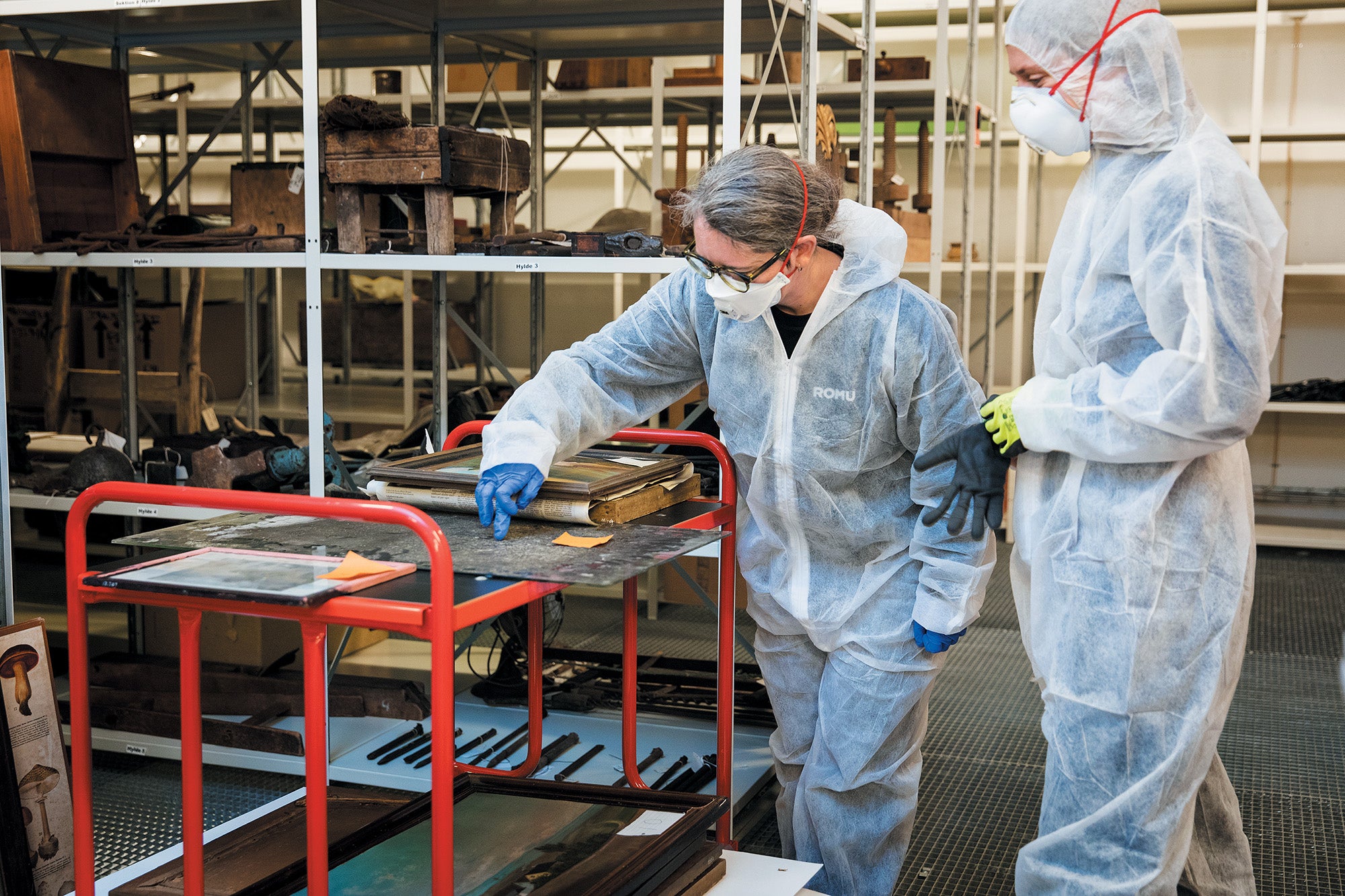
Curators from the Roskilde Museum inspect objects in the museum’s storage facility for mold.
Ty Stange
What’s more, some species are so persnickety that even low-water activity media won’t do the trick consistently. Fomina and her colleagues still haven’t been able to cultivate samples in the lab from the St. Sophia infestation, despite more than 10 years of trying. They keep at it because until scientists discover what makes a xerophile feel at home in a petri dish, there won’t be tests that museums can use to catch them without resorting to genetic testing that many institutions can’t afford.
Fomina and Pinzari suspect that part of the reason A. halophilicus is so hard to culture is that it may already be dead by the time conservators notice the infestation. Often found together with other xerophilic species, A. halophilicus seems to work as a pioneer: it arrives in an inhospitable environment and does its extraordinary DIY, and then other, less industrious molds swoop in to take advantage of the better growing conditions—potentially using dead A. halophilicus tissues as a resource to jump-start their own growth.
That’s how xerophilic fungi seem to have flown under the radar for so long. When a moldy artifact is swabbed on conventional, high-water activity media, only garden-variety fungi grow. Museums assume they’ve done something wrong with the storage—that humidity had risen higher than they realized, or a leak went undetected—and keep the matter under wraps, for fear of looking careless. The xerophilic molds elude detection and continue to wreak havoc. The problem “is much more diffuse than we might think,” Pinzari asserts.
Once a museum identifies a mold infestation, it faces the difficult question of how to stop it. Through the 1970s conservators deployed biocides, chemicals—including antibiotics and formaldehyde—that wipe out microbes indiscriminately. That’s what experts used in 1963 when green algae threatened the 17,000-year-old depictions of aurochs, horses and deer found in France’s famed Lascaux Cave. But just as broad-spectrum antibiotics can wreak havoc on the human gut by eliminating good bacteria along with the bad, biocides can open the door to even more harmful microbes by clearing out the competition.
Scientists think decades of treatment with biocides in Lascaux led to the proliferation of a fungus called Fusarium solani that covered the cave like snow in a matter of days. The biocides are also thought to have allowed antibiotic-resistant strains of bacteria and fungi to grow unchecked in the cave, as well as pigmented fungi that left permanent dark stains on the Ice Age images. In Europe, the use of biocides is now tightly restricted.
One of the only options for large-scale infestations—for example, in libraries and archives—is fumigation. But some of the substances used in fumigation leave residues that can eventually degrade the material, says Katherina Derksen, a painting conservator and microbiologist at the Academy of Fine Arts in Vienna. Some of these chemicals can also pose a risk to human health.
When a mold’s takeover of an artifact must be stopped, there’s gamma radiation—pelting it with electromagnetic energy from radioactive decay to kill fungi and spores. But this technique penetrates deeply and can extensively damage materials. In some cases, “you lose both microbes and the object you’re trying to save,” says Katja Sterflinger, a geomicrobiologist and heritage scientist at the Academy of Fine Arts in Vienna.
That leaves conservators with only a basic tool kit for containing a fungal outbreak: quarantine infested objects, vacuum off the worst of the mold, and treat affected items with ethanol when possible. That’s what they ultimately had to do at the Roskilde Museum, the Danish institution where Bastholm found the xerophiles.
In 2023, nine years after Bastholm closed off the Roskilde Museum’s storage facility, the museum’s governing board decided it was time to reclaim the place. “We’ve been afraid of it,” says Isabella No’omi Fuglø, the museum’s chief of collections. In 2025, after two years of strategizing, a small group of conservators finally suited up in protective gear and headed into the mold-ridden warehouse.
One day last fall I donned a mask and protective clothing to tour the storage facility, then several weeks into its rehabilitation. My guide was curator and collections manager Maja Lindholm Kvamm. Kitted out in a white cloth jumpsuit and respirator, with an industrial-grade vacuum in tow, she looked like a Ghostbuster in an astronaut helmet.
Over the course of the summer Kvamm and a team of about 15 people, including student assistants from a local conservator’s school, had handled more than 100,000 objects—from oyster shells to paintings and carriages—inspecting them for mold and scraping off the dirt and dust of the ages.
Kvamm says they were relieved to find the museum’s archaeological treasures—among them stone age relics and Viking artifacts discovered by hobbyist metal detectorists—were largely spared from contamination, although the same couldn’t be said for the boxes containing them. But other items were beyond saving or too fragile to clean with conventional means. “A big part of the cleaning process is figuring out what the object can handle—even just being touched,” Fuglø says.
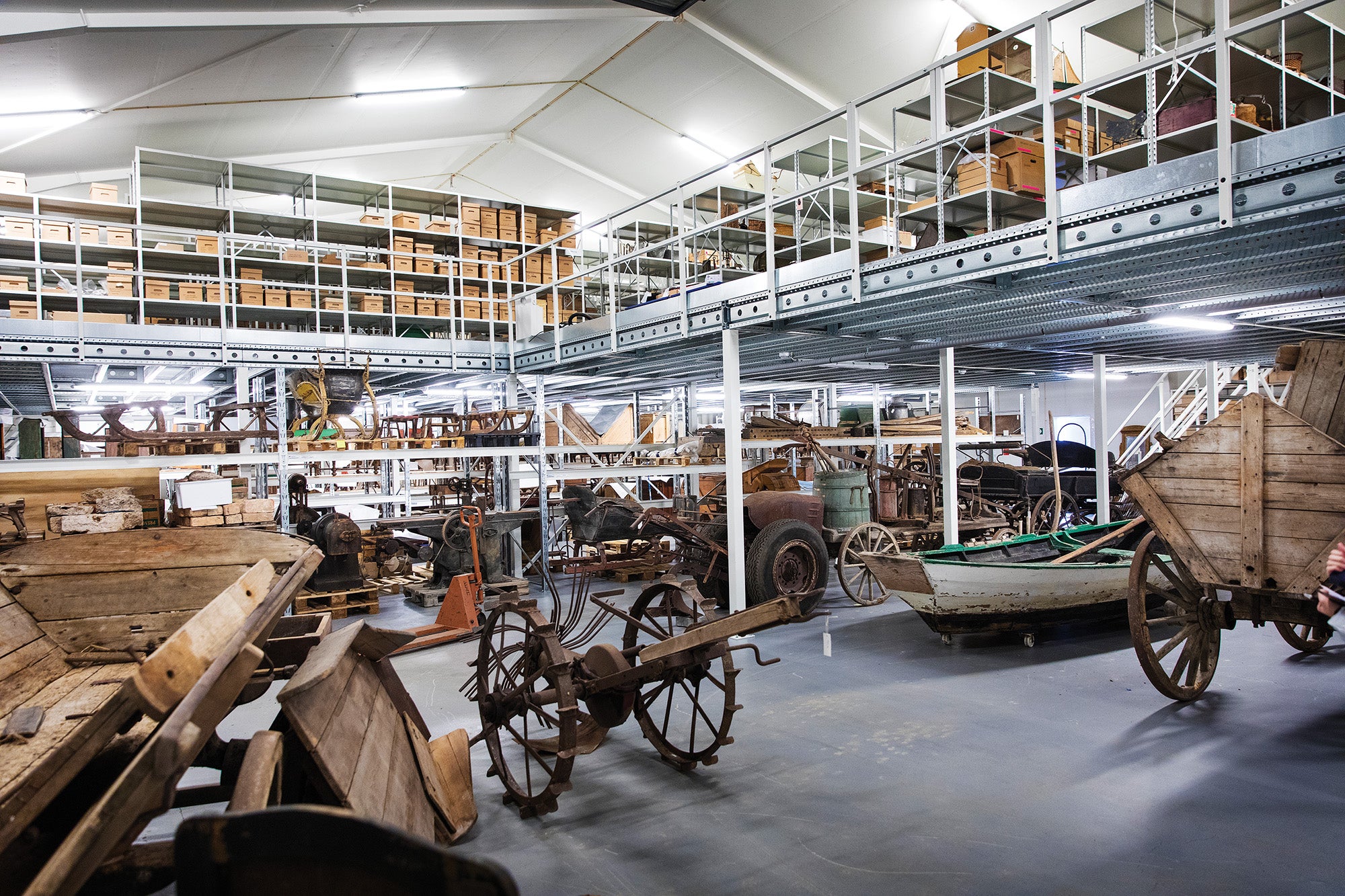
A team of 15 conservators and assistants examined and cleaned some 100,000 objects from the Roskilde Museum’s collections last summer.
Ty Stange
As I wandered aisles stacked high with boxes of paintings, antique furniture and the occasional Viking age skeleton, I found several parcels wrapped in plastic and labeled “SKIM!!!”—short for skimelsvamp, “mold” in Danish. Inside one was fish skin so riddled with mold “it was basically alive,” Kvamm recalls. It falls to Kvamm to determine what mold-damaged objects are worth the effort to stabilize and restore, she explains. “Is the story [behind the object] interesting enough? Do we know where it’s from? Do we have similar objects?”
Disposing of a mold-eaten object in a museum’s collection is a bureaucratic nightmare. “You have to ask other museums if they might be interested,” Kvamm explains. “You have to [try] to track down the person who donated the item and ask them if they want to have it back.” Once those hurdles are cleared, she anticipates a multimonth dialogue with the Ministry of Culture before she will finally be allowed to do away with her gross fish skin.
For moldy items in the Roskilde Museum collection that are deemed salvageable, Kvamm makes several passes with her vacuum hose interspersed with gentle scrubbing with a brush. She then caps off those efforts with a judicious spritz of ethanol.
But even the objects that have no signs of mold receive the tender ministrations of Kvamm and her team. They delicately wipe off motes of dust to make it harder for mold to take up residence again. “We don’t have anything else we can do now but clean it and then just keep checking on it,” Fuglø admits.
To figure out better ways to prevent and treat xerophilic mold infestations, scientists need a better understanding of the molds’ basic biology—namely, the conditions under which they falter and thrive. To that end, Sterflinger and her team in Vienna are busy trying to determine just how little water xerophilic molds can survive on. Yet even if researchers do identify a moisture level that’s safe from xerophilic molds, Sterflinger says it’s untenable to bring overall humidity levels in storage facilities down much lower than they already are: climate control is expensive and a major source of greenhouse gas emissions, which museums are under pressure to curb.
Instead they’ll have to determine which materials are most vulnerable to xerophilic and xerotolerant molds, Derksen says. That way collection managers can decide which items need more stringent and energy-intensive storage conditions. Future storage facilities could designate a small space with the tightest climate control for more sensitive objects, she says.
Derksen is conducting mold censuses in “healthy” museums without infestations so they can develop surveillance techniques that will detect surges in particular mold species before they’ve reached a level visible to the human eye.
The researchers agree we need to learn all we can from the organisms found in the artificially extreme environments of museums. The lessons aren’t just relevant to art conservation. These weird species—some of which are new to science—are likely to pop up in other places that people are trying to keep unnaturally sterile.
Xerophilic fungi have infested food-production facilities from Belgian chocolate factories to meat-curing operations in Italy. In 2024 an infestation of Aspergillus flavus—a xerophilic mold species involved in some museum outbreaks—was discovered in Denmark’s biggest hospital, sickening pediatric cancer patients and contributing to several deaths, including that of an 11-year-old boy. Xerophilic molds can colonize human tissue in immunocompromised people—doctors found colonies of Aspergillus fumigatus, another mold involved in museum infestations, in one Danish woman’s brain, chest and lungs after she had been treated for leukemia in the contaminated wards. Other scientists hope to put the xerophiles’ remodeling powers to good use, deploying them to break down pollutants and sequester harmful metals.
The museum mold hunters are thankful for the institutions taking them into their confidence. Letting go of the shame is the only way we can learn about these molds, Pinzari says. Bastholm says that in 2025, she received a flood of messages from institutions around the world that have experienced mold infestations they suspect might be xerophilic but haven’t necessarily been made public—from across Europe, the U.S., Pakistan, Israel and Asia. Still the stigma remains strong. None agreed to be interviewed on the record for this article.