'Right-to-compute' laws may be coming to your state this year
Montana passed the first “right-to-compute” law shielding AI from regulation. Now similar bills are spreading.
Key Takeaways
- Montana became the first state to pass a “right-to-compute” law shielding AI and computational systems from certain regulations.
- Backed by model legislation from ALEC, similar bills are advancing in multiple statehouses.
- Critics warn the broad definition of “compute” could make AI oversight, audits and safety rules vulnerable to legal challenge.
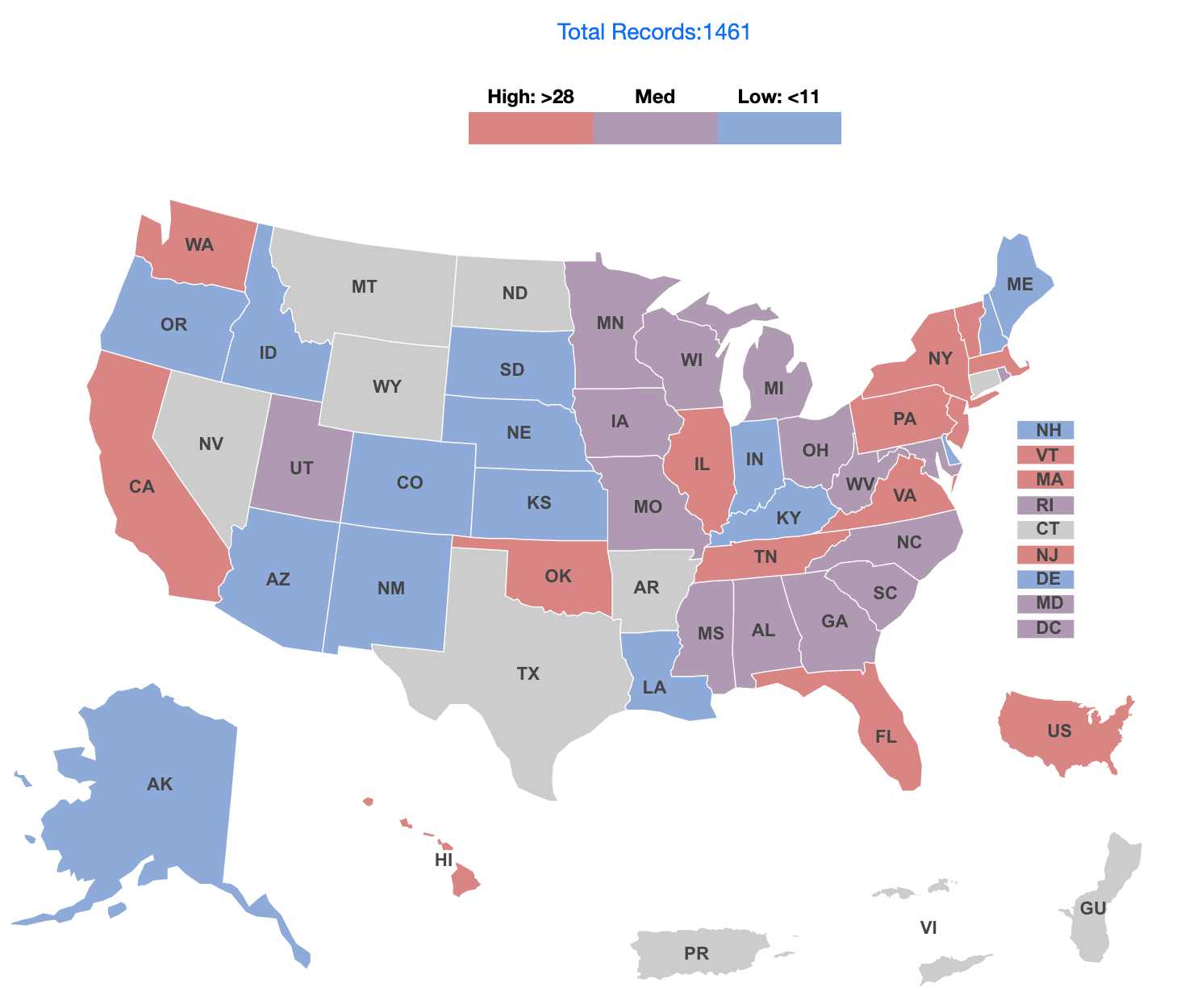
Almost 40 states have passed or are considering laws limiting how businesses may use artificial intelligence (AI), according to the National Council of State Legislatures. This has led both the US Congress and President Donald Trump to attempt to forbid such laws.
Now, some states are taking the opposite tack: Bills that block such regulations by protecting AI and computing, a movement dubbed “right-to-compute.”
Table of Contents
- What Is Right-to-Compute?
- Montana Leads the Right-to-Compute Movement
- Copycat Bills Spread Beyond Montana
- The Problem With Right-to-Compute
- The Risk of Regulatory Paralysis
- Right-to-Compute Poised for a Multi-State Push
- Federal Momentum — or Political Dead End?
What Is Right-to-Compute?
Right-to-compute is modeled after property rights, as well the First Amendment’s right to free speech (and, according to some, the Second Amendment's right to bear arms). Using a printing press doesn’t invalidate one’s right to free speech, so a computer shouldn’t either, the argument goes.
That doesn’t mean people could use computers to harass other people, create and post nude photos of women and children or similar activities. Similar to how free speech doesn't mean you can yell “Fire!” in a crowded theater, computer-based activities that harm other people wouldn’t be protected, proponents say.
Common Questions on Right-to-Compute
No. Most proposals are statutory, not constitutional amendments. However, they are designed to trigger heightened judicial scrutiny similar to how courts treat speech or property rights.
Potentially. If enacted broadly, businesses could argue that previously passed rules violate their right to compute and seek judicial review.
Depending on how broadly “compute” is defined, regulations limiting infrastructure, energy use or zoning could face legal challenges.
If Congress enacts national AI standards, federal law would generally supersede conflicting state provisions, potentially narrowing the impact of state-level compute protections.
Montana Leads the Right-to-Compute Movement
Right-to-compute has been under discussion for some time, said Adam Thierer, senior fellow at the R Street Institute, a Washington, DC-based market-oriented think tank.
“I have been advocating for 34 years the idea of ‘freedom to innovate’ and ‘right to compute’ in a broad sense,” he said, adding he wasn’t involved in writing the original bill. “This is a targeted effort to apply to algorithmic and computational systems.”
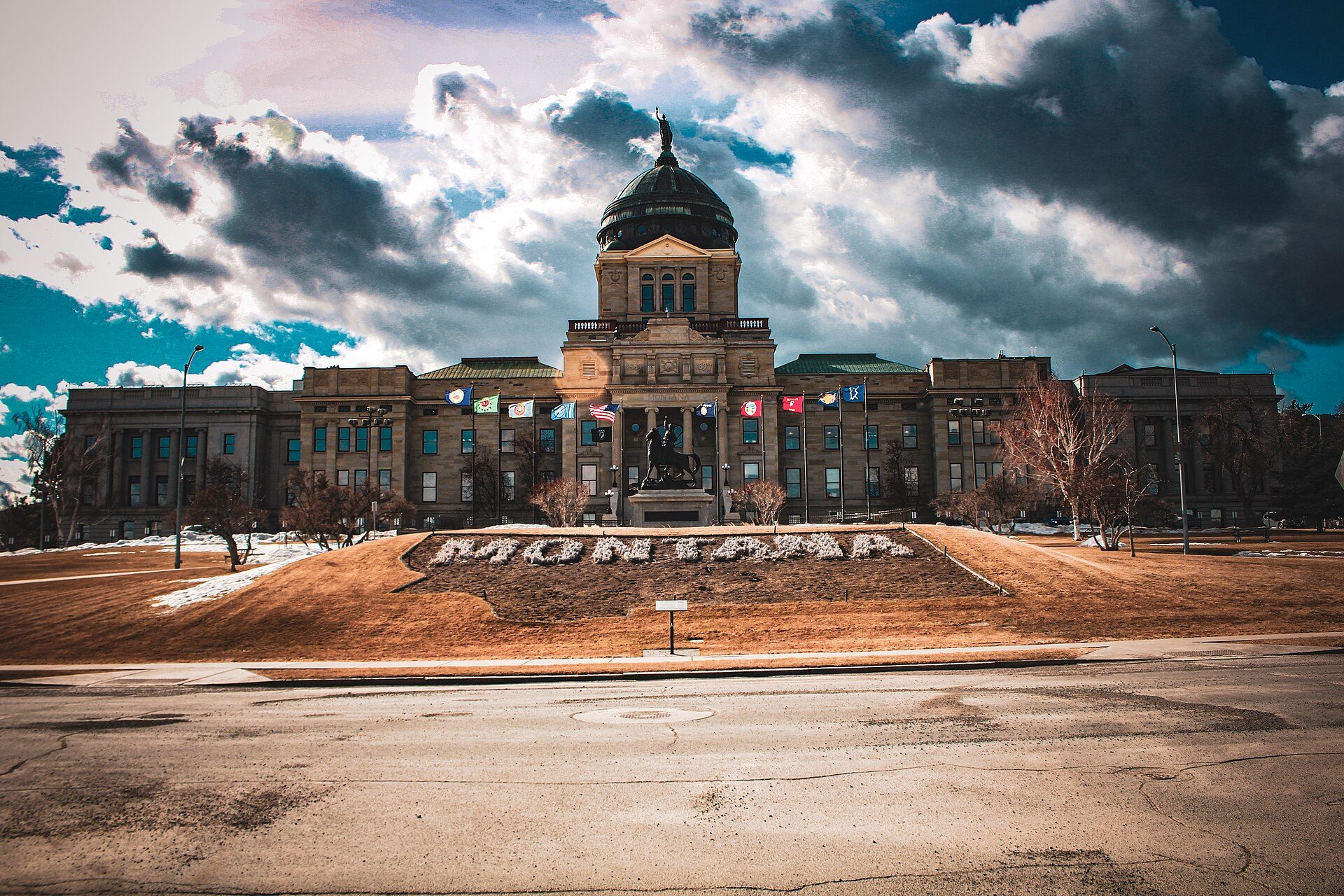
Montana was the first state to pass right-to-compute legislation, in April 2025. Daniel Zolnikov, a state senator representing the district that includes Billings, said the idea was brought to him by the Frontier Institute, a nonpartisan, nonprofit think tank founded in Montana in 2020 that focuses on free market issues. “I’ve run a lot of technology privacy laws, so it was a pretty logical fit,” he said. The point was to paint Montana as a “yes” state for supporting AI development.
Zolnikov summarized the law as: “Everything is legal except for what’s not,” with exceptions to be added such as deepfakes or posting inappropriate pictures of children. “Unless it’s because of safety or security, other jurisdictions cannot limit the use of AI or computation,” he said.
“The right to compute also does not include using computational resources to conduct cyberattacks against critical infrastructure,” added Caden Rosenbaum, the tech policy director for the Reason Foundation, a libertarian think tank, and who testified in favor of an Ohio bill.
The Frontier Institute credited Julie Fredrickson, a Montana-based early stage investor, with flagging the idea, said Tanner Avery, policy director of the Frontier Institute. “There’s a lot of legislative proposals out there,” he said. “It’s part of a larger philosophical vision of laws and the American vision of negative rights.”
Related Article: AI Regulation in the US: A State-by-State Guide
Copycat Bills Spread Beyond Montana
“The movement grew directly out of cryptocurrency advocacy,” said Russ Wilcox, CEO of Artifexai and chair of the AI Council for Lives Amplified. The Satoshi Action Fund, the Bitcoin mining lobby, worked with Zolnikov on “right to mine” legislation in 2023, he said.
Right-to-Mine vs Right-to-Compute
| Feature | Right-to-Mine | Right-to-Compute |
|---|---|---|
| Origin | Crypto advocacy | Broader AI + compute |
| Scope | Bitcoin mining | All computational systems |
| Goal | Protect mining from limits | Limit regulation of AI & compute |
| Legal Framing | Property rights | Property + speech rights |
“Now it’s ‘right to compute,’" said Wilcox. "They realized if you protect ‘computation’ broadly, you protect everything in one legal framework. Crypto, AI, all of it.”
While so far Montana remains the only state to pass such legislation, other states have tried it or are in progress, including:
- Idaho, which proposed similar legislation in February 2025 but which died in committee without a vote
- New Hampshire, which proposed a constitutional amendment in in January 2025
- Ohio, where it was introduced in July 2025
- South Carolina, where a proposal is going through the legislative process
According to an AI analysis, the New Hampshire, Ohio and South Carolina bills are almost identical to the Montana bill; the Idaho one is specific to AI.
“It would prohibit regulating an AI system’s underlying decision-making processes entirely,” Wilcox said. “That’s not limiting bad regulations. That’s blocking the category.”
Related Article: President Trump Signs Executive Order to Block State AI Laws
The Problem With Right-to-Compute
But in the same way that the First Amendment has had unforeseen consequences — such as the Citizens United ruling that corporate political donations are considered free speech — right-to-compute laws could have repercussions.
Right-to-compute laws work like this: “If Montana were to pass a law or regulation that was infringing on the fundamental right of free speech or property rights, someone could bring a challenge to a court and say ‘this is violating my right to compute and it should be struck down,’” Avery explained.
According to Taylor Barkley, director of public policy for the Abundance Institute, a Washington, DC based nonprofit organization focused on supporting emerging technologies, who testified for the Ohio bill, "compute" means any system, software, network, device or infrastructure capable of processing, storing, transmitting, manipulating or disseminating data or information..."
| Category | Examples Included in "Compute" |
|---|---|
| Hardware | Laptops, servers, supercomputers |
| Software | Applications, platforms |
| Algorithms | AI models, machine learning (ML) systems |
| Cryptography | Encryption tools |
| Infrastructure | Cloud, networks, data centers |
“In other words, the right to compute protects the ability to run software and process data on the kind of computers we use all day every day on laptops, PCs, smartphones, networks, private servers, cloud infrastructure, supercomputers and more,” Barkley noted.
“The bill does not eliminate any laws against fraud, cybercrime or abuse. It does not prevent regulation. Instead it puts the burden on the government to demonstrate there is a compelling reason to regulate any form of computing.”
The Risk of Regulatory Paralysis
So, hypothetically, in a state with a right-to-compute law on the books, any bill put forward to limit AI or computation, even to prevent harm, could be halted while the courts worked it out. That could include laws limiting data centers as well.
“The government has to prove regulation is absolutely necessary and there’s no less restrictive way to do it,” Wilcox said. “Most oversight can’t clear that bar. That’s the point. Pre-deployment safety testing? Algorithmic bias audits? Transparency requirements? All would face legal challenge.
"‘Compute’ doesn’t exist in a vacuum. It runs on infrastructure someone controls. Remove government oversight, leave corporate infrastructure intact and you haven’t created freedom. You’ve just changed who controls the gate.”
Right-to-Compute Poised for a Multi-State Push
Chances are that more states will propose right-to-compute bills this year. That’s because the American Legislative Exchange Council (ALEC), which creates model legislation for states, created model legislation for right-to-compute bills that is essentially identical to the Montana legislation.
Because some states are accustomed to looking to ALEC to pick up new legislation easily, they may pick up the right-to-compute bill as well. “I would hope it would encourage other states to run with it to counter the fear-based narratives” with something that is more pro-innovation and embraces opportunities, Thierer said.
ALEC Senior Director of Policy @TheProdiJake submitted written testimony to the New Hampshire House Commerce and Consumer Affairs committee about HB 124 and the research about how new and emerging technologies could impact the state of New Hampshire. pic.twitter.com/mLXSeuHbJo
— American Legislative Exchange Council (@ALEC_states) January 29, 2026
“I expect that we will see at least one or two states introduce a right-to-compute bill,” Rosenbaum added. “If they do, the Reason Foundation will certainly work with legislators in those states and provide research and support.”
Related Article: States vs. Washington: Who Regulates AI Now?
Federal Momentum — or Political Dead End?
Moreover, with Congress and the Trump Administration looking to enact national laws protecting AI, it’s possible that a national right-to-compute bill could be coming down the pike.
Montana’s Zolnikov said he wasn’t working on it, though. “Congress doesn't really do its job anymore, so I just do what I can at the state level. I’m pretty disappointed federally at the lack of policy making in Congress.”
Thierer, however, was pessimistic about the prospects of either state or federal right-to-compute bills gaining much traction this year. “There’s not much of an appetite for pro-innovation, pro-AI things right now,” he said.
So far, the bills have faced little organized opposition, other than testimony in Ohio from the Alliance for the Great Lakes, which was concerned about how the bill could limit legislation protecting water resources from data centers. And tying it to the Bill of Rights makes right-to-compute harder to oppose.
“If you want to narrow the First Amendment, you can do that if you want to,” Avery said.