Ian Buruma: "The age of American fascism"
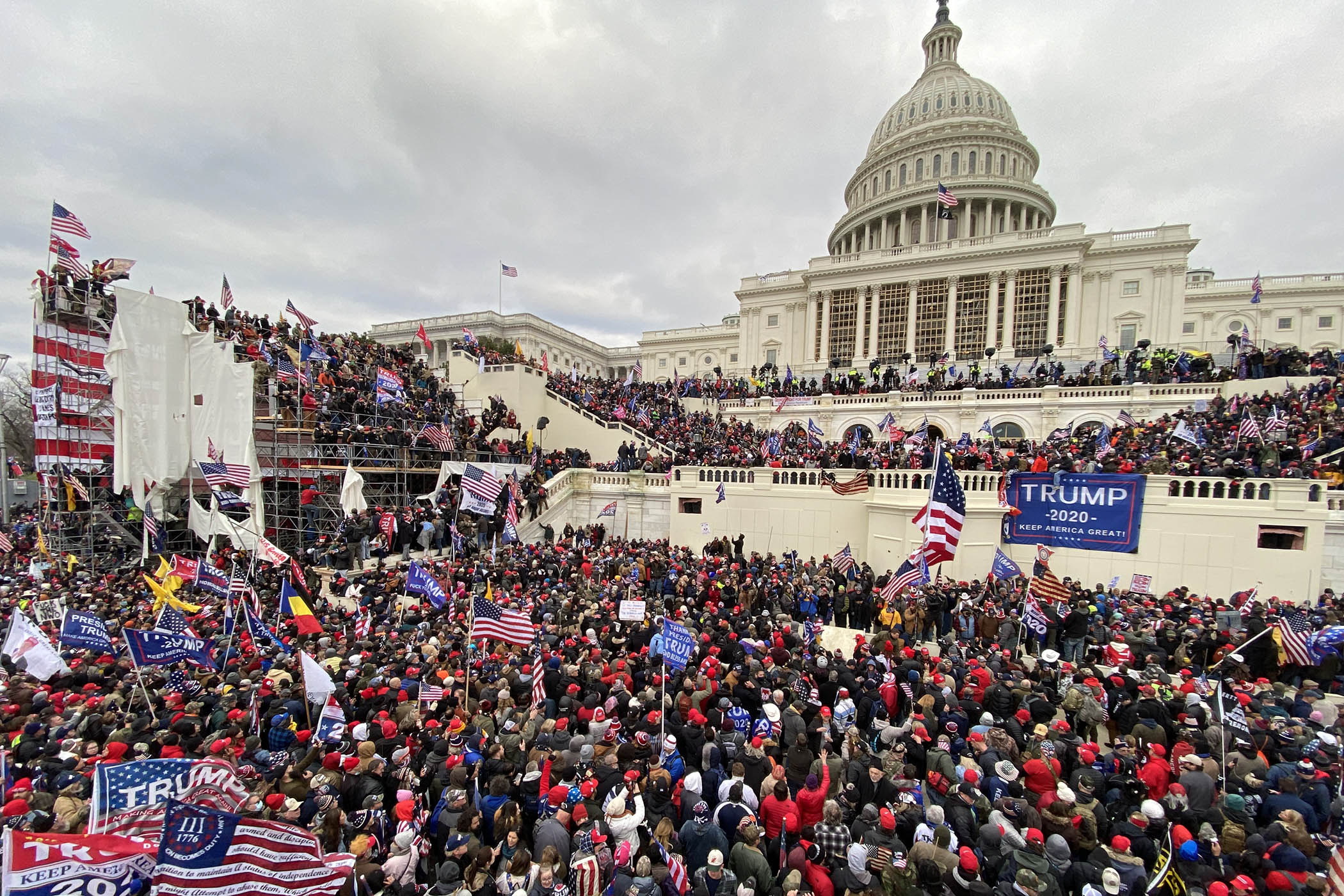
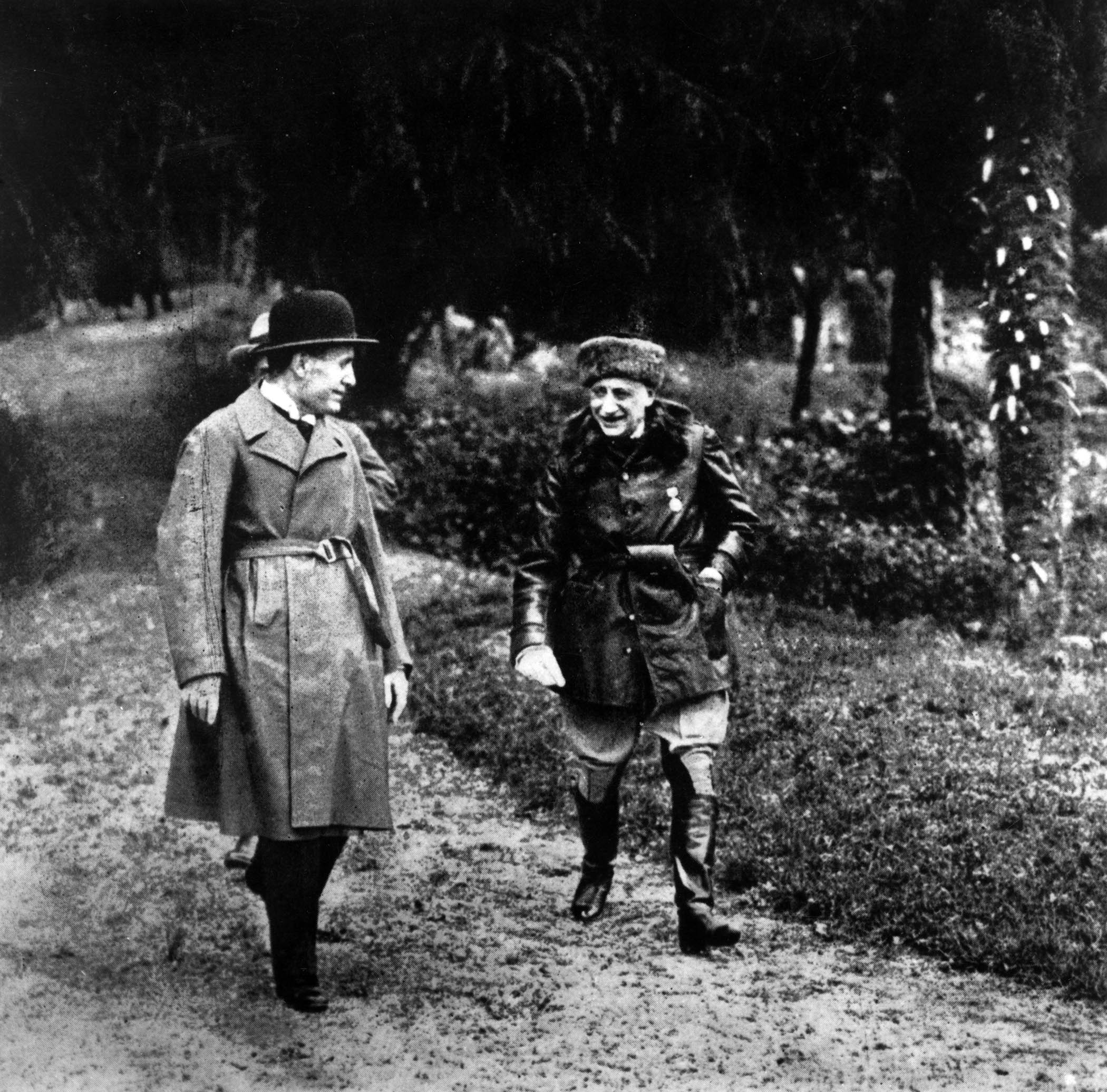
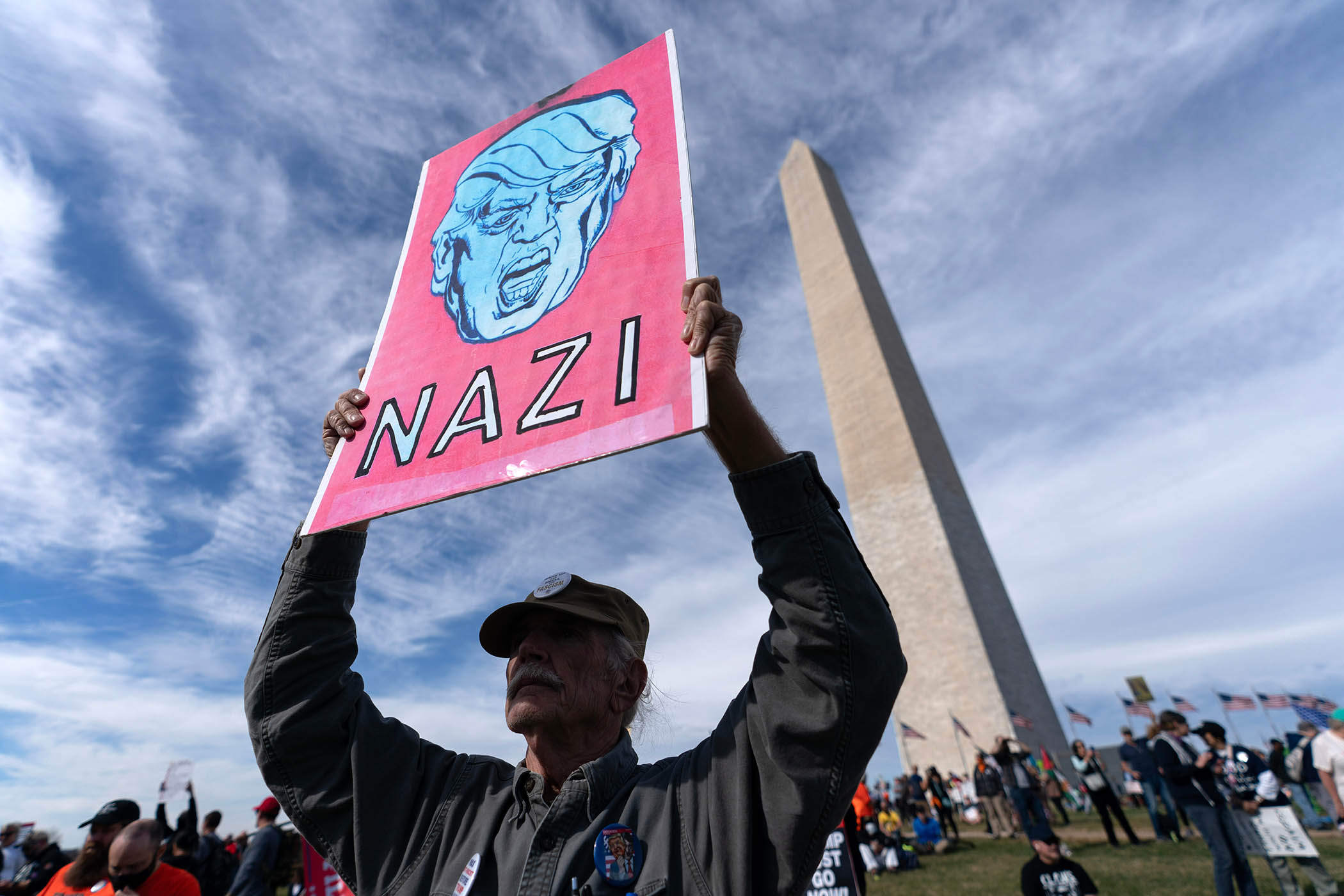
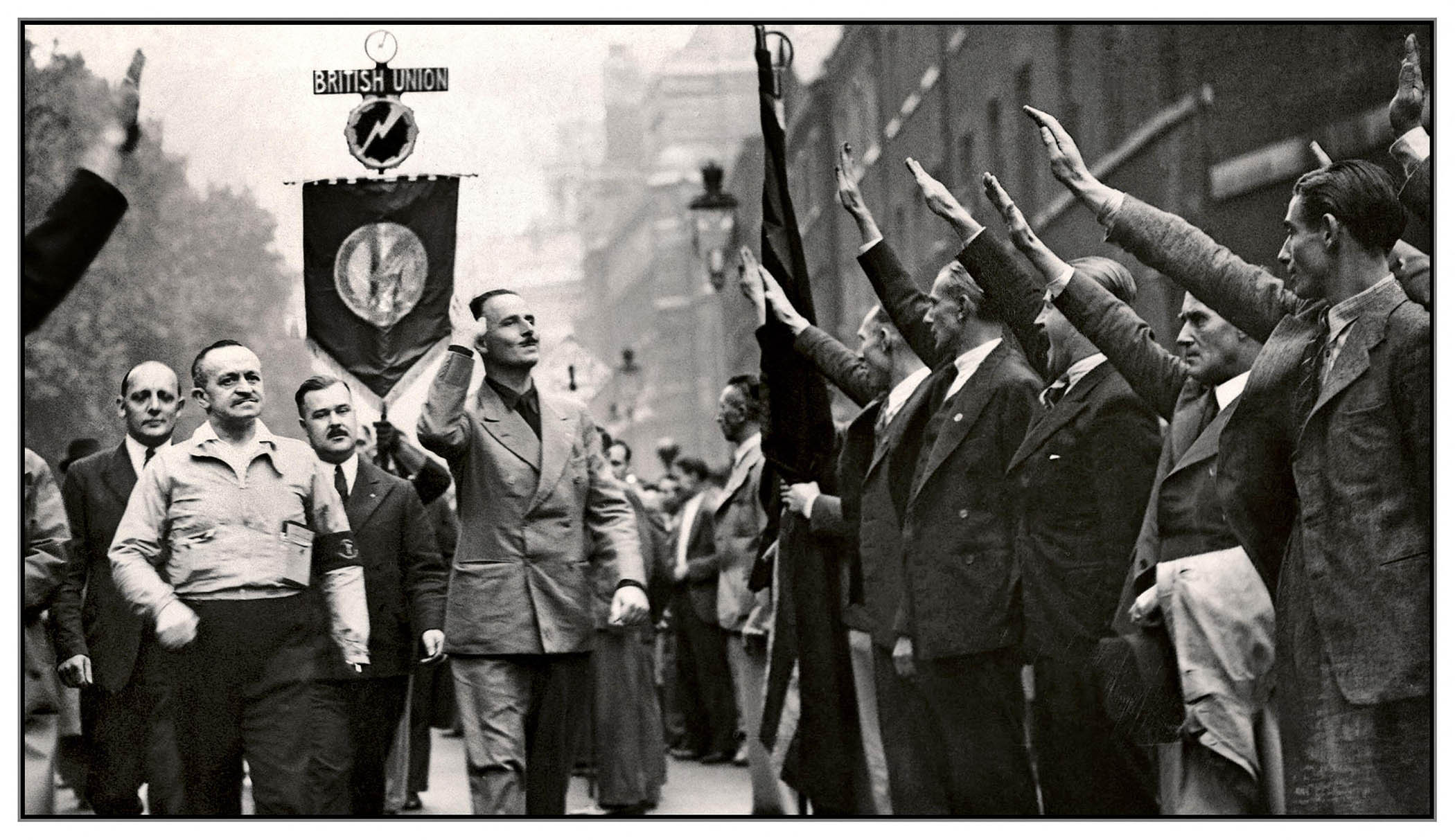
Politics Saturday 28 February 2026 Even fascists don’t want to be called fascists any more. A vague, often contradictory, rarely coherent ideological movement of the early 20th century was so badly tainted by the genocidal crimes of the Nazis and their followers that fascism became synonymous with mass murder. Starting with the communists in the 1930s, who used the word to describe anything that deviated from the correct Stalinist line, “fascism”, with its sinister hissing consonants, has become a catch-all swearword. Few people even know what fascism is any more. Especially in the US, historical references are often used so randomly that they lose all meaning. Think of Michele Bachmann, the former US congresswoman from Minnesota, who once compared high tax rates with the Holocaust; or her Republican colleague from Ohio, Warren Davidson, who believed that a government mandate to get inoculated against Covid was like the segregation, persecution and murder of the Jews. So what is fascism, really? Is Donald Trump a fascist? Serious observers, including the great American historian of Vichy France, Robert Paxton, have concluded that Trump’s Maga movement, especially after the violent storming of the Capitol on 6 January 2021, must indeed be classified as fascist. Masked government agents, kicking down doors and gunning people down in the streets, are given licence to do almost anything they want, which is a clear recipe for organised brutality. The problem with pinning down fascism, however, is that it has appeared in so many varieties: Mussolini’s quasi-Roman fascism; Franco and Salazar’s “clerical fascism”, French anti-republican fascism; Flemish ethno-fascism; Romanian Orthodox Christian fascism; Dutch fascism; Norwegian fascism; Japanese emperor-worshipping fascism; and the list goes on. They all had their own religious, political and racial distinctions. German National Socialism saw the “organic community” (a concept most fascists had in common) in racial terms; southern Europeans looked to the Catholic church, which Hitler, raised as a Catholic, despised. Trump supporters in Washington in January 2021 Perhaps any attempt to define fascism as a settled ideology is bound to fail. Fascist movements were never very big on ideas anyway; violent action was more their thing. Twentieth-century fascism was a cult of speed, modernity, youth, revolutionary elan, and a reactionary yearning for imaginary lost greatness. The word fascist first pops up in politics in the 1890s, when poor Italian workers rebelled against oppressive landowners in Sicily. They called themselves the Fasci dei Lavoratori. The “fasci” denoted a bundle of rods, an ancient Roman symbol for power and togetherness. The “lavoratori” were the workers, inspired by socialism and Christian millenarianism. Mussolini, a leftwing journalist, borrowed the fascist symbol during the first world war for his nationalist movement. He in turn was inspired by ideas of the poet Gabriele d’Annunzio, an unsightly little man whose enthusiasm for seducing women was matched by his zeal for martial heroics. Still widely read in Italy, D’Annunzio was the poet of violence. A voluptuous love of force, rhetorical and real, is something all fascist movements had in common. Mussolini had his Squadristi; Hitler had the Brownshirts; the Romanians had the “death squads” of the Iron Guard. Even Oswald Mosley, who was not quite as extreme, had his “Biff Boys” (trained by “Kid” Lewis, a Jewish boxer). Brawling militias were let loose to forge the revolution in blood. There were plenty of unemployed war veterans and other hardmen who enjoyed nothing more than a good punch-up – and plenty of bookish intellectuals who revelled in the bloodshed from behind their desks. In most revolutionary movements, violence is a means to an end, to create a new order. This was partly true of the fascists, but it was also an end in itself, a nihilistic celebration of savage vigour. The question, though, is what end the fascists had in mind. Here, too, there were considerable national differences: the Christian state; the Aryan Volk; the return to church; and absolute monarchy. It is easier to see what fascists were against. Gabriele d’Annunzio, right, with Mussolini in 1925 The brutal experience of the first world war, and in Germany the humiliation of defeat, had created a generation of men to whom liberalism was nothing more than a despicable lie to conceal man’s innate barbarism. They loathed parliamentary democracy, which they saw as a rotten system run by soft, selfish and dishonest elites corrupted by privilege and comfort. Political parties were just platforms for venal interests. They hated bourgeois intellectuals, international bankers, modern artists, the free press, lawyers and independent scientists, which meant, in many cases, that they hated Jews, who some associated with those professions. Bourgeois society had to be torn down with maximum force, to make way for a different kind of community, no longer ruled by law, or democratic elections, but by blood, soil and creed. One thing many war veterans had in common was a nostalgia for the male camaraderie of the trenches. The German writer Ernst Jünger, never a convinced Nazi, but a Prussian nationalist, exulted in the physical and spiritual rush of mass combat. This type of yearning, often misogynistic to the core, led to the formation of militant elite fraternities, often dressed in black, tall, ice cold, disciplined, dominant; in a word, the SS. Such groups would form the vanguard of a movement that set out to cleanse the rot in societies sickened by liberal individualism. In all varieties of fascism, there was a striving towards a unified state, where class differences would be dissolved under the leadership of a charismatic strongman. Parties representing different interests were banned, as were independent trade unions. The individual would be incorporated into a collective mass. Citizens became political soldiers, a term that re-emerged in British National Front politics in the 1970s. Political soldiers don’t think for themselves. They follow their leader, obedient to his every word. The leader is not bound by laws. As Hermann Goering put it: “Hitler is the law.” Any attempt to question the leader or the new order is ruthlessly crushed, for there is only one truth, which is whatever the leader and his propagandists say it is. In the ideal fascist state, there is in fact no distinction between the leader and the people, for his is the voice of the people. In Hitler’s words, spoken in 1940: “What am I? I am nothing but the spokesman of the German Volk.” A demonstrator in Washington in November 2025 The demagogues who emerged in the 1930s, worshipped by millions of roaring people flinging their arms out, rather like football supporters, were an odd bunch of misfits and losers who would never have come to power under normal circumstances. They were products of their times. For, aside from their talents for histrionics, which were often considerable, they shared a great deal with their followers. They were driven by the same resentments and fantasies of vengeance and domination over people to whom they had felt inferior before – those bankers, artists, intellectuals, professors, journalists and liberal politicians, so frequently associated with the Jews. Popular resentments are always with us, but in certain periods they can be more easily manipulated. The catastrophe of the first world war, the economic crash in 1929, and more generally, the alienating effects of increasingly industrialised societies, caused many people to feel alone, bewildered and uprooted. The promise of being bound together tightly like those Italian bundles of rods under the reassuring leadership of a strongman, with the chance to lash out at the old social or intellectual elites, was fatally alluring. Since the old elites in many European countries – as well as in Japan – were associated with capitalism, fascist populism usually had an anti-capitalist strain. In their attempt to stage a rightwing revolution in 1936, fascist rebels in the Japanese imperial army assassinated Japan’s finance minister Viscount Takahashi, a former prime minister and banker with connections to the Rothschild family. Mussolini created the corporate state, where workers and employers were mobilised to bolster the interests of the nation. Mosley had similar ideas for a state-planned economy in Britain. But, once they were in power, fascist leaders, including Mussolini, found plenty of bankers and industrialists who were perfectly happy to collaborate with the fascist state. Government contracts, a docile workforce and, in many cases, plenty of slave labour, were good for business. One other thing that most fascists had in common was a yearning for imperial grandeur and expansion. Mussolini dreamed of a new Roman empire; Hitler wanted to incorporate the whole of Europe into his Reich; Japan carved out an empire in east and south-east Asia; Czech nationalists sought to revive the Great Moravian empire of the middle ages. Even Norwegian radical nationalists had imperial aims. In their zeal to build a Norwegian sphere, they believed it was essential to grab Greenland. Where, then, does this leave Trump, who wants Greenland too, and his Maga worshippers? His use of government power to persecute political opponents, the blackmailing of law firms and universities, and his attempts to undermine the independence of the judiciary, have prompted some Americans to leave the country. Comparing him to Hitler or even Mussolini is not especially helpful. Trump might like to be a dictator, but he has not got there yet, nor has he committed mass murder. To claim, as many do, that Trump is just a narcissist who lacks a coherent ideology, doesn’t tell us much either. Most dictators, or aspiring dictators, treat ideas instrumentally, to bolster their power. “Our doctrine”, said Mussolini, “is action.” But there are disturbing echoes. The Maga movement revolves around what Germans called the Führerprinzip, the cult of the leader. Without Trump’s personal hold over his followers, and most of the Republican party, Maga would be confined to the rancid margins of society. He thrives in mass rallies, where his long meandering speeches appeal to the fear, anger and vengeful emotions of the crowd, disaffected by economic disparities, and bewildered not by industrialism this time, but by deindustrialisation and global hi-tech. People in thrall to demagogues don’t get excited by ideas, but by the threatening tone, aggressive slogans and belligerent taunts: “Lock her up!” “Drain the swamp!” As was true a century ago, revolutionary fervour is mixed with promises of restoring past greatness: make America great again. The targets of Trump’s violent rhetoric are revealing. Migrants from “shithole countries” are called “animals”; they “eat pets”; they are “not human”; they are “drug dealers, criminals, rapists” (Mexicans), or “garbage” (Somalis). This is the first step towards isolation and persecution. The verbal attacks result in mass arrests, children being separated from their parents, squalid detention camps and deportations to countries where conditions are even worse, and whose languages the victims don’t speak. Picking on specific groups for ill treatment is a classic strongman tactic. Such groups become scapegoats for the resentments, fears and discontents felt by the demagogue’s most ardent devotees. Those who are not targeted might deplore this, as many Germans probably did when Jews were beaten up, killed and sent to concentration camps in the 1930s, but they can still feel safe. This is why the recent killings in Minneapolis of Alex Pretti, a nurse, and Renée Good, a mother of three, shocked so many Americans. These were normal, white, midwesterners. If they can be gunned down in broad daylight by masked government agents, it could happen to anyone. Oswald Mosley at a rally in London in 1937 The US Immigration and Customs Enforcement (ICE) agency has existed since 2003. It was established as part of a response to the attacks on September 11, but it has never been as large and well-funded as it is now. To call ICE agents Trump’s Brownshirts or Biff Boys would be an exaggeration, but not by much. They are being used more and more as shock troops, whose brutal methods are not hidden. There is something performative about the ICE raids in Democrat-run cities, a show of force to project the image of strength and to intimidate political opponents. The open embrace of violence is yet another echo of history. At a rally in Pennsylvania, Trump said he “wouldn’t mind” if someone were to “shoot through the fake news”, gesturing at reporters, whom he called “bloodsuckers”. Brutal treatment and scapegoating migrants and refugees from poor countries is part of the politics of vengeance. The other parallel with Europe’s fascist past is the hatred of elites: universities, law firms, international financiers, journalists. There is something deeply perverse about the way this is expressed. Cracking down on “woke” Ivy League campuses, arresting pro-Palestinian student demonstrators and bullying liberal professors, is done in the name of protecting Jewish students against antisemitism. At the same time, a Trump campaign ad features photographs of George Soros, Lloyd Blankfein, and Janet Yellen, all prominent Jews in banking and finance, portraying them as an international conspiracy to steal American wealth and rob the working people. And an openly antisemitic white supremacist Holocaust-denying internet celebrity is invited to sup at Trump’s home in Florida. A further perversity of the Maga world is that some of Trump’s keenest collaborators come from the very minorities that have often been the victims of nativist bigotry. Tulsi Gubbard, the director of national intelligence, is Samoan; Kash Patel, director of the FBI, is the son of Indians who were expelled from Uganda; and the most violent agitator against immigrants, Trump’s homeland security adviser, Stephen Miller, is the Jewish great-grandson of immigrants who escaped from Russian pogroms. For information about how The Observer protects your data, read our Privacy Policy And towering over them all, in his newly gilded Oval Office, dreaming of gigantic triumphal arches and huge military parades in Washington DC, sits Trump, who in true strongman style, thinks he is above the law. His imperial ambitions include Canada, Latin America, and, of course, Greenland, which he confused with Iceland. When asked why he needed to own Greenland, where the US military already has the run of the place, he replied that it was for “psychological” reasons. And pressed on whether there were any limits on his global powers, he said: “Yeah, there is one thing. My own morality. My own mind. It’s the only thing that can stop me.” If Trump is not a fascist, his words, prejudices, methods, and – yes – his psychology, are certainly fascistic. Just as fascists in the 1930s had their distinctive national styles, so does Trump. He is a very American figure, the strongman as a huckster, TV celebrity, obsessed with “ratings”, “hits”, showbusiness and fame. The US president is also an incorrigible braggart about how much money he has made. His stream-of-consciousness rantings combine the menace of a mafia don and the salesmanship of a malevolent television evangelist. Because he is such a recognisable American stereotype, many Americans, even those who can’t bear him, find it hard to see his administration in the murk of Europe’s darkest days. A famous American public intellectual once told me that what happened in Germany in the 1930s could never happen in the US. “We Americans,” he said, “love our freedom too much.” Perhaps so. There are green shoots of opposition. American civic virtue is shown in the way local people are trying to protect immigrants against the ICE raids. Trump’s contempt for the rule of law is countered by judges who refuse to be cowed. Opposition parties have not yet been banned, elections will be held, and strongman rule might still be stopped in its tracks. The US is not a fascist state – not yet. But the signs are ominous. To paraphrase Mark Twain, history does not repeat itself, but it sure as hell rhymes. Photographs by Todd Heisler/The New York Times) /Redux /eyevine, Amerigo Petitti /Mondadori via Getty Images, Anadolu Agency /Getty Images, Alamy, José Luis Magaña/APICE raids, imperial ambitions, mass rallies and attacks on ‘elites’ have led some to claim that the US is heading toward dictatorship. The historical evidence helps to decode Trump’s politics of fear
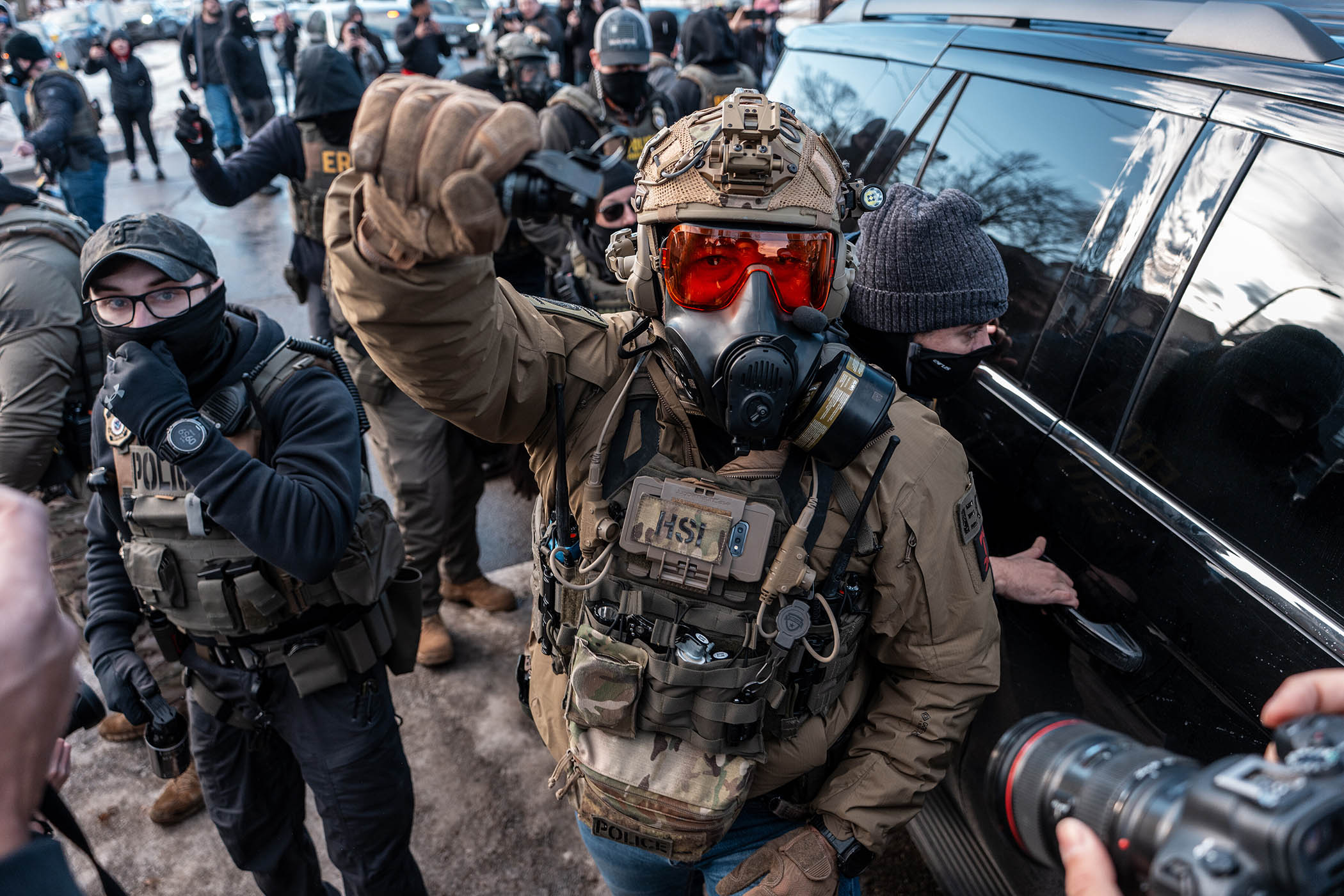
To call ICE agents Trump’s Brownshirts would be an exaggeration, but not by much
To call ICE agents Trump’s Brownshirts would be an exaggeration, but not by much
Newsletters
Choose the newsletters you want to receive
About
Join
Follow
The Observer Food Monthly